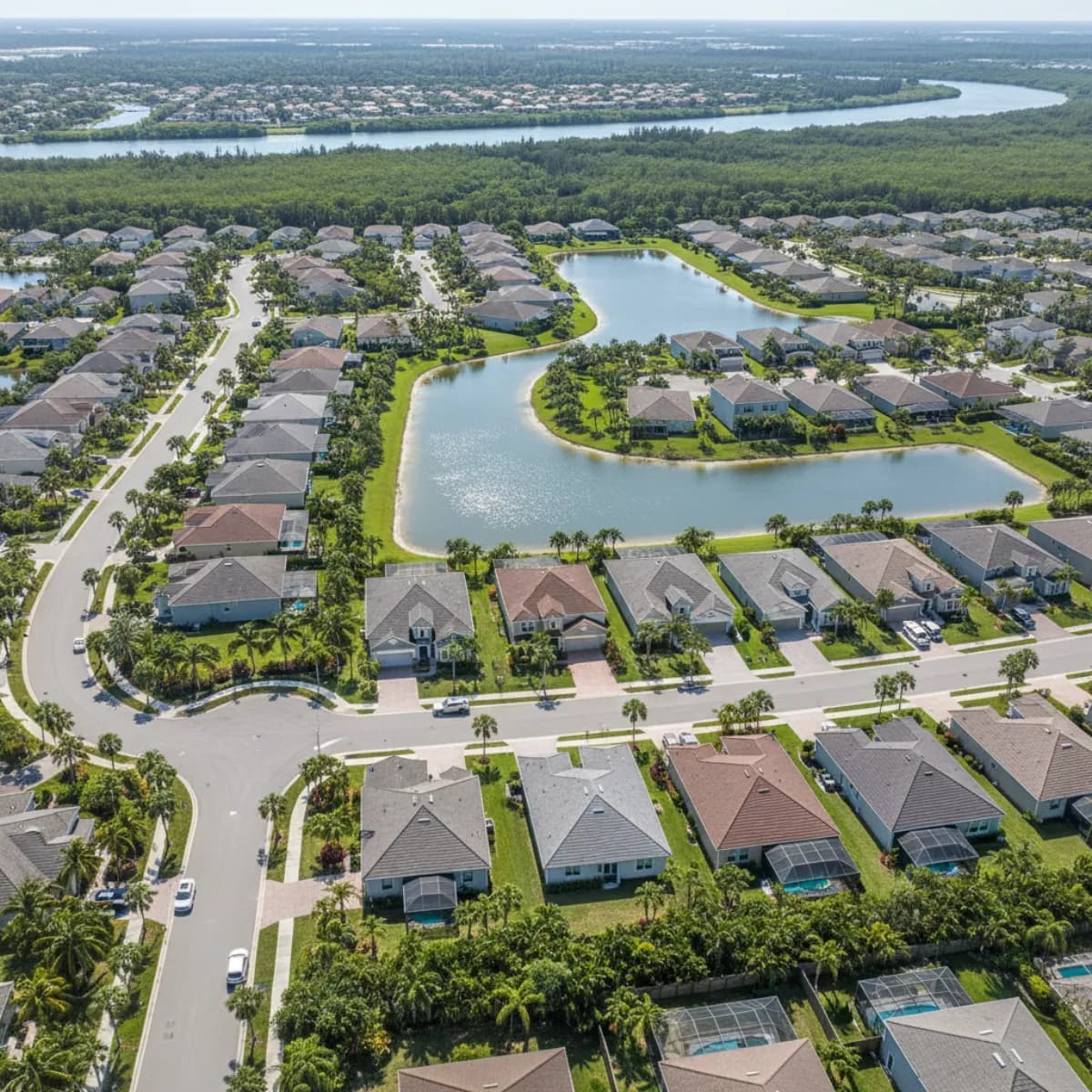
Treasure Coast's Fastest-Growing City
Instant Roof Replacement Quotes in Port St. Lucie, FL
Port St. Lucie sits on Florida's Treasure Coast in a 130+ mph wind zone, where hurricanes like Frances and Jeanne (2004) proved that roof quality is not optional. Get instant quotes from pre-vetted CCC-licensed contractors who specialize in FBC-compliant roofing across Tradition, St. Lucie West, PGA Village, and every Port St. Lucie neighborhood.
Free Quotes
no obligations ever
Contractor Bids
standardized scope comparison
Until You Choose
no spam, no lead resale
FL Contractors
CCC-licensed, insured, reviewed
Port St. Lucie at a Glance
Population
Florida's 7th largest city
MPH Wind Zone
FBC 7th Edition design speed
Frances & Jeanne
Back-to-back hurricane strikes
Permit Cost
City of Port St. Lucie permits
Concrete Tile
Most common roof material
County
Treasure Coast region
Why Port St. Lucie Takes Roofing Seriously: The 2004 Hurricane Season
Port St. Lucie homeowners understand hurricane risk in a way few American cities do. In September 2004, the city endured one of the most punishing back-to-back hurricane strikes in U.S. history. Hurricane Frances made landfall on September 5 as a slow-moving Category 2 storm with sustained winds of 105 mph, crawling across the Treasure Coast for over 24 hours and dumping more than 13 inches of rain. The prolonged wind exposure — far longer than a typical hurricane crossing — peeled tiles off roofs, tore away shingles, and drove water under every vulnerable flashing and ridge cap in the city.
Before homeowners could even complete temporary repairs, Hurricane Jeanne struck just three weeks later on September 26 — making landfall almost exactly where Frances had hit, this time as a Category 3 storm with 120 mph sustained winds. Roofs weakened by Frances failed catastrophically under Jeanne. St. Lucie County reported over 100,000 damage claims from the two storms combined, with roof damage accounting for the overwhelming majority of residential losses. Entire neighborhoods in Port St. Lucie had blue tarps covering damaged roofs for months as contractors struggled to keep pace with demand that stretched across the entire Florida peninsula.
The 2004 season permanently changed roofing in Port St. Lucie. Post-storm investigations revealed that many failures were not caused by the raw power of the hurricanes, but by inadequate installation methods — mortar-set tiles that should have been mechanically fastened or foam-adhered, 4-nail shingle patterns that code now requires as 6-nail, and underlayment systems that failed to provide secondary water resistance when the primary roof covering was compromised. The Florida Building Code revisions that followed strengthened every aspect of residential roofing, and Port St. Lucie's building inspectors became some of the most vigilant in the state.
Twenty years later, the lessons of 2004 remain deeply relevant. The 2024 hurricane season brought renewed activity to the Atlantic, reminding Treasure Coast homeowners that the next Frances or Jeanne is always a possibility. RoofVista's pre-vetted contractors in Port St. Lucie understand this history and build every roof to survive it. Our standardized quotes make it easy to compare pricing from contractors who all meet the same rigorous FBC 7th Edition standards — so you can focus on choosing the right contractor, not wondering whether they know the code.
Roofing Challenges Unique to Port St. Lucie
Port St. Lucie's position on the southeastern Atlantic coast creates a demanding combination of environmental stresses. The Treasure Coast's tropical climate, salt air exposure, intense UV radiation, and hurricane vulnerability require roofing materials and installation methods engineered for extreme conditions. Here are the factors that define roofing on the Treasure Coast.
! Hurricane Wind Exposure
Port St. Lucie's coastal position on the Treasure Coast places it directly in the path of Atlantic hurricanes tracking westward. The city's 130+ mph FBC wind zone rating reflects the real-world threat demonstrated in 2004. Unlike inland Florida communities that benefit from friction-based wind reduction as storms cross land, Port St. Lucie receives storms at near-peak intensity shortly after landfall. The FBC 7th Edition requires enhanced fastening schedules, approved roof-to-wall connections, and products carrying valid Florida Product Approvals rated for the specific wind zone.
- - 130+ mph FBC design wind speed
- - Direct Atlantic hurricane exposure
- - 6-nail pattern required for shingles
- - Hurricane straps at every truss connection
~ Atlantic Salt Air Corrosion
With the Atlantic Ocean less than 10 miles east and the Indian River Lagoon running through the area, Port St. Lucie is subject to persistent salt air corrosion. The corrosive environment is not limited to oceanfront properties — prevailing easterly winds carry salt-laden air across the entire city. Standard galvanized steel fasteners, flashing, and metal components degrade significantly faster here than in inland Florida communities. Homes in eastern Port St. Lucie, Hutchinson Island, and along the St. Lucie River face the most severe exposure, but even western communities like Tradition experience measurable corrosion effects.
- - Hot-dipped galvanized or stainless steel fasteners
- - Corrosion-resistant flashing materials
- - Marine-grade coatings for metal roofing
- - Regular inspections for fastener degradation
= Extreme UV & Tropical Heat
Port St. Lucie averages over 230 sunny days per year, with a UV index that regularly reaches 10-11 (very high to extreme) from April through October. Roof surface temperatures can exceed 155 degrees F during peak summer months. This relentless UV bombardment accelerates the degradation of asphalt-based products, dries out sealant strips, and breaks down polymer underlayments not rated for tropical climates. SBS-modified asphalt shingles, which use a rubberized polymer to resist UV cracking, are essential for achieving full-rated lifespans in the Port St. Lucie climate. Reflective tile and light-colored metal roofing help reduce attic temperatures and lower cooling costs that run 8-10 months per year.
- - UV Index 10-11 (extreme) April through October
- - SBS-modified shingles resist UV degradation
- - Reflective materials reduce cooling costs 10-20%
- - Standard shingles may lose 3-5 years of rated life
# Tropical Rainfall & Humidity
Port St. Lucie averages 56 inches of rainfall per year, concentrated in intense afternoon thunderstorms from May through October and punctuated by tropical storm events. The combination of heavy rain, sustained high humidity (often 80-90%), and warm temperatures creates ideal conditions for algae growth, mold, and moisture-related roof deterioration. Proper ventilation is critical to prevent moisture buildup in attic spaces that can rot decking and reduce insulation effectiveness. Ridge vents, soffit intake vents, and balanced attic airflow are essential components of any Treasure Coast roofing system.
- - 56 inches annual rainfall (concentrated May-Oct)
- - 80-90% humidity accelerates algae and mold growth
- - Algae-resistant shingles recommended
- - Proper attic ventilation prevents moisture damage
Port St. Lucie Roof Replacement Cost by Material
Roofing costs in Port St. Lucie reflect the Treasure Coast's position as one of Florida's fastest-growing regions, with strong contractor demand and strict FBC 7th Edition compliance requirements. Material costs include only products with valid Florida Product Approvals for the 130+ mph wind zone. Labor rates in St. Lucie County average $45-$70/hour, and the enhanced fastening, underlayment, and inspection requirements mandated by the FBC add 10-20% to project costs compared to states without hurricane building codes.
Concrete Tile
#1: Concrete Tile (Barrel & Flat)
Concrete tile is the dominant roofing material across Port St. Lucie, covering an estimated 60% or more of homes in the city's master-planned communities. The barrel (S-tile) profile is the signature look of Treasure Coast architecture, found throughout Tradition, St. Lucie West, PGA Village, and Tesoro. Concrete tile provides exceptional wind resistance through its weight (9-12 lbs per tile), a Class A fire rating, and a 50-75 year lifespan when properly installed. Post-2004, the FBC requires mechanical fastening or foam adhesive for all tile installations — mortar-set methods that failed during Frances and Jeanne are no longer code-compliant. The thermal mass of concrete tile also reduces cooling costs by absorbing daytime heat and releasing it slowly, reducing peak attic temperatures.
Best For:
Most PSL homes, HOA communities, Mediterranean styles
Lifespan:
50-75 years
Cost Range:
$18,000 - $35,000
Wind Rating:
130+ mph (FBC-certified)
Architectural Shingles
#2: Architectural Shingles (SBS-Modified)
Architectural (dimensional) shingles are the most affordable FBC-compliant roofing option for Port St. Lucie homeowners, particularly in older neighborhoods and communities without strict HOA tile requirements. SBS-modified architectural shingles are strongly recommended over standard oxidized asphalt products for the Treasure Coast climate — the rubberized polymer modification provides superior flexibility, UV resistance, and impact performance that standard shingles cannot match in tropical conditions. When installed with the FBC-required 6-nail pattern and compatible underlayment, quality architectural shingles achieve 130+ mph wind ratings. Impact-resistant Class 4 shingles (UL 2218) provide additional insurance premium savings through wind mitigation credits.
Best For:
Budget-conscious homeowners, non-HOA neighborhoods
Lifespan:
20-30 years (SBS-modified in PSL climate)
Cost Range:
$12,000 - $20,000
Insurance Benefit:
Class 4 impact rating = premium savings
Standing Seam Metal
#3: Standing Seam Metal
Standing seam metal roofing is rapidly gaining popularity across Port St. Lucie and the Treasure Coast, driven by its unmatched hurricane performance and 40-70 year lifespan. A properly installed standing seam system with concealed fasteners and continuous interlocking panels creates a wind barrier that consistently exceeds 130 mph FBC requirements — many systems test to 160+ mph. In Port St. Lucie's coastal environment, marine-grade coatings are essential: Galvalume steel with PVDF (Kynar 500) fluoropolymer coating or aluminum panels resist the salt air corrosion that degrades standard finishes within 5-7 years. Metal roofing also reflects solar radiation, reducing attic temperatures by 20-30 degrees F compared to dark asphalt shingles — a significant energy savings advantage during Port St. Lucie's 8-10 month cooling season.
Best For:
Maximum hurricane protection, energy efficiency
Lifespan:
40-70 years
Cost Range:
$20,000 - $40,000
Energy Savings:
Reduces attic temp 20-30 degrees F
TPO / Flat Roof
#4: TPO & Modified Bitumen (Flat Roofs)
While less common than in South Florida, flat and low-slope roofs exist throughout Port St. Lucie in commercial-style residential construction, pool enclosure structures, and modern architectural designs. White TPO membrane is the standard choice, providing excellent solar reflectivity (80%+ of solar energy reflected) and resistance to the ponding water that occurs during the Treasure Coast's intense summer downpours. In the 130+ mph wind zone, TPO systems must be either mechanically attached or fully adhered with FBC-approved adhesives. Modified bitumen provides superior puncture resistance for flat roofs with rooftop equipment, satellite dishes, or regular maintenance foot traffic.
Best For:
Flat/low-slope roofs, modern homes
Lifespan:
20-30 years
Cost Range:
$8,000 - $20,000
Energy Savings:
White TPO reflects 80%+ solar energy
Port St. Lucie Average Roof Cost: Architectural shingles $12,000-$20,000. Concrete tile $18,000-$35,000. Standing seam metal $20,000-$40,000. Flat/TPO $8,000-$20,000. Costs include FBC 7th Edition compliance — approved products, enhanced installation methods, and building department inspections. Get your exact price with a free instant estimate.
Port St. Lucie Building Requirements for Roofing
FBC 7th Edition Requirements
Florida Building Code 7th Edition (2023)
Port St. Lucie falls under the Florida Building Code 7th Edition, which establishes the wind zone, product approval, and installation requirements for all residential roofing in the city. All roofing products must carry a valid Florida Product Approval (FPA) — a statewide certification that verifies the product has been tested and approved for use in the specific wind zone. Port St. Lucie's 130+ mph design wind speed requires products with corresponding wind uplift ratings. The FPA database is publicly searchable at the Florida Building Commission website.
Wind Zone Compliance
The 130+ mph wind zone designation requires enhanced installation methods beyond standard residential practice. Shingles must be installed with a minimum 6-nail pattern (compared to 4-nail in lower wind zones). Roof decking must be attached with ring-shank nails at 6-inch spacing along panel edges. Roof-to-wall connections require approved hurricane straps or clips at every truss. Tile installations must use mechanical fastening or foam adhesive — mortar-set methods are no longer code-compliant. All underlayment must be self-adhering or mechanically attached with cap nails.
Permit Process (City of Port St. Lucie)
Permit applications require Florida Product Approval numbers for all materials, the contractor's active CCC license, proof of workers' compensation and general liability insurance, and a Notice of Commencement filed with the St. Lucie County Clerk. Permit fees range from $200-$500 depending on project scope. Inspections occur at the dry-in stage (deck attachment, underlayment, and secondary water barrier) and final stage (completed installation, flashing, ridge caps, and overall code compliance). The contractor handles permitting on your behalf.
HOA Architectural Review
Port St. Lucie's growth as a master-planned community means the majority of homes are governed by HOAs with specific architectural standards for roofing. Communities like Tradition, St. Lucie West, PGA Village, Tesoro, Torino, and Magnolia Lakes regulate material type, color, profile, and sometimes manufacturer. HOA approval is typically required before a building permit can be issued. Non-compliant installations may result in fines, forced removal, and legal action. Your contractor should coordinate HOA approval as part of the project planning process.
Florida CCC Licensing
Florida law requires all roofing contractors to hold a Certified Roofing Contractor (CCC) license from the Department of Business and Professional Regulation (DBPR). The CCC license is statewide and valid in all 67 Florida counties. Contractors must carry workers' compensation insurance and a minimum $10,000 surety bond. Verify any contractor's license status at myfloridalicense.com. Every RoofVista contractor on the Treasure Coast holds an active CCC license and maintains the required insurance coverage.
Port St. Lucie Communities We Serve
From the award-winning master-planned community of Tradition to the established neighborhoods of St. Lucie West and the luxury enclaves of PGA Village, our pre-vetted contractors serve every community across Port St. Lucie and St. Lucie County. Each community has unique roofing considerations based on its HOA requirements, architectural style, proximity to the coast, and age of construction.
Tradition
- - Master-planned, New Urbanist design
- - Strict HOA architectural guidelines
- - Concrete tile predominant
- - Newer construction (post-2003)
- - Multiple sub-community HOAs
St. Lucie West
- - Established planned community
- - Mix of tile and shingle roofs
- - 1990s-2000s construction
- - Many homes approaching re-roof age
- - Active HOA oversight
PGA Village
- - Luxury golf community
- - Premium tile and metal roofing
- - High-end architectural standards
- - Larger homes (2,500+ sqft)
- - Strict material and color requirements
Tesoro & Torino
- - Mediterranean-inspired architecture
- - Barrel tile roofs standard
- - Gated community HOA controls
- - Specific tile color/profile requirements
- - Higher-end material specifications
Port St. Lucie (Original)
- - 1960s-1980s original development
- - Asphalt shingle dominant
- - Many homes need re-roofing
- - Less restrictive HOA rules
- - Opportunity for material upgrades
Magnolia Lakes & River Park
- - Family-oriented communities
- - Mix of tile and architectural shingle
- - Mid-range price point homes
- - Standard HOA guidelines
- - 2000s-2010s construction
Insurance Considerations for Port St. Lucie Homeowners
The Treasure Coast Insurance Challenge
Insurance is one of the most pressing concerns for Port St. Lucie homeowners. Florida's property insurance market has been in crisis since 2020, with multiple private carriers withdrawing from the state and those remaining implementing strict underwriting criteria focused heavily on roof age and condition. Citizens Property Insurance — the state-backed insurer of last resort — has become the dominant carrier on the Treasure Coast, and its underwriting standards for roof age and condition are among the strictest in the state. For many Port St. Lucie homeowners, a new roof is not just a home improvement — it is a requirement to maintain insurance coverage at an affordable premium.
Roof Age & Insurance Eligibility
- - Many insurers refuse policies on roofs older than 15 years
- - Citizens requires inspection for roofs over 15 years
- - Coverage denied if roof has less than 5 years useful life
- - SB 4-D (2022) protects roofs under 15 years from age-based denial
- - New roof typically reduces premiums 20-40%
Wind Mitigation Discounts
- - Florida law mandates discounts for wind mitigation features
- - OIR-B1-1802 inspection documents wind-resistant features
- - Hurricane straps/clips: significant premium reduction
- - Secondary water resistance (peel-and-stick): major discount
- - Impact-resistant covering: additional 10-20% savings
- - Hip roof geometry: lower premium than gable roofs
Our pre-vetted Port St. Lucie contractors understand the direct connection between roofing and insurance. They recommend installations specifically designed to maximize your wind mitigation credits and improve your insurability, potentially saving thousands annually on premiums.
Understanding Wind Mitigation on the Treasure Coast
Wind mitigation is both a safety strategy and a financial strategy for Port St. Lucie homeowners. Florida Statute 627.0629 requires all insurance companies to provide premium discounts for verified wind-resistant construction features. A licensed wind mitigation inspector evaluates your home using the OIR-B1-1802 form and documents specific construction details that determine your discount eligibility. For Treasure Coast homeowners — where wind coverage often represents 50-60% of total premium cost — the annual savings from a new, code-compliant roof can offset a substantial portion of the replacement cost over the roof's lifetime.
Key Wind Mitigation Features Evaluated
Roof Covering
The type and age of your roof covering. FBC-compliant products installed after 2002 qualify for the highest credits. Impact-resistant materials (Class 4 shingles, concrete tile) provide additional discounts. Post-2004 installations in Port St. Lucie typically receive maximum roof covering credits.
Roof Deck Attachment
How the plywood decking is fastened to the trusses. Ring-shank nails at 6-inch spacing (Dimension A) qualify for the highest credit. Many pre-2002 Port St. Lucie homes have standard smooth-shank nails at wider spacing, which receive minimal or no discount. Re-nailing during a roof replacement upgrades this credit.
Roof-to-Wall Connection
How the roof trusses connect to the walls. Single wraps, double wraps, and hurricane clips provide increasing discounts. Many post-2002 Port St. Lucie homes already have hurricane straps, but pre-2002 construction may have only toe-nailed connections that receive no credit.
Secondary Water Resistance
A sealed roof deck using self-adhering peel-and-stick underlayment provides backup waterproofing if the primary covering is lost in a storm. This is one of the highest-value wind mitigation credits available and is especially important on the Treasure Coast, where the 2004 hurricane season demonstrated the devastating effects of water intrusion through compromised roofs.
Frequently Asked Questions About Port St. Lucie Roofing
How much does a roof replacement cost in Port St. Lucie, FL?
Architectural shingles cost $12,000-$20,000 in Port St. Lucie. Concrete tile, the dominant material across the Treasure Coast, ranges $18,000-$35,000. Standing seam metal runs $20,000-$40,000. Costs reflect FBC 7th Edition wind zone compliance (130+ mph), labor demand across the growing Treasure Coast, and material costs following active hurricane seasons.
What wind speed rating does my Port St. Lucie roof need?
Port St. Lucie is in the FBC 130+ mph wind zone. All roofing products must carry a Florida Product Approval and be installed per FBC 7th Edition high-velocity wind provisions, including enhanced nail patterns, approved underlayment, and proper roof-to-wall connections.
What roofing materials are most popular in Port St. Lucie?
Concrete tile covers 60%+ of Port St. Lucie homes, especially in Tradition and St. Lucie West. Architectural shingles are common in older neighborhoods. Metal roofing is gaining popularity for its hurricane performance. All materials must carry Florida Product Approval for the 130+ mph wind zone.
How did Hurricanes Frances and Jeanne affect Port St. Lucie roofing?
In 2004, Port St. Lucie took direct hits from Frances (Cat 2) and Jeanne (Cat 3) just three weeks apart. The back-to-back strikes caused catastrophic roof damage, exposed weaknesses in older mortar-set tile installations, and led to strengthened building codes across the Treasure Coast.
Do I need HOA approval for a roof replacement in Port St. Lucie?
Most Port St. Lucie communities — Tradition, St. Lucie West, PGA Village, Tesoro, Torino, Magnolia Lakes — have HOAs with specific roofing guidelines covering material type, color, and profile. Always obtain written HOA approval before starting your project.
How can a new roof lower my insurance costs in Port St. Lucie?
A new FBC-compliant roof with hurricane straps, ring-shank nails, peel-and-stick SWR underlayment, and impact-resistant covering can reduce wind premiums 30-50%. With Citizens Property Insurance dominant on the Treasure Coast, roof condition is the top factor in obtaining affordable coverage.
What permits are required for roof replacement in Port St. Lucie?
All roof replacements require a building permit from the City of Port St. Lucie Building Department. Applications need Florida Product Approval numbers, CCC license proof, insurance documentation, and a Notice of Commencement. Fees typically run $200-$500.
What contractor license is required for roofing in Port St. Lucie?
Florida requires a Certified Roofing Contractor (CCC) license from the DBPR. Contractors must also register locally. Verify licenses at myfloridalicense.com. All RoofVista contractors carry active CCC licenses and required insurance.
Florida Roofing Resources
Florida State Overview
All Florida roofing resources and city pages
Florida Roof Replacement Cost Guide
Detailed pricing for all FL regions and materials
Hurricane-Resistant Roofing in Florida
FBC requirements, wind ratings, and storm protection
Florida Roofing Building Codes
FBC 7th Edition and local requirements
Wind Mitigation Guide for Florida
Insurance discounts and inspection details
Florida Contractor Licensing
CCC license requirements and DBPR verification
Nearby Florida Cities
Get Your Port St. Lucie Roof Quote in Minutes
Enter your address to compare instant quotes from pre-vetted CCC-licensed Florida contractors who specialize in FBC-compliant roofing, wind mitigation, and hurricane protection across the Treasure Coast