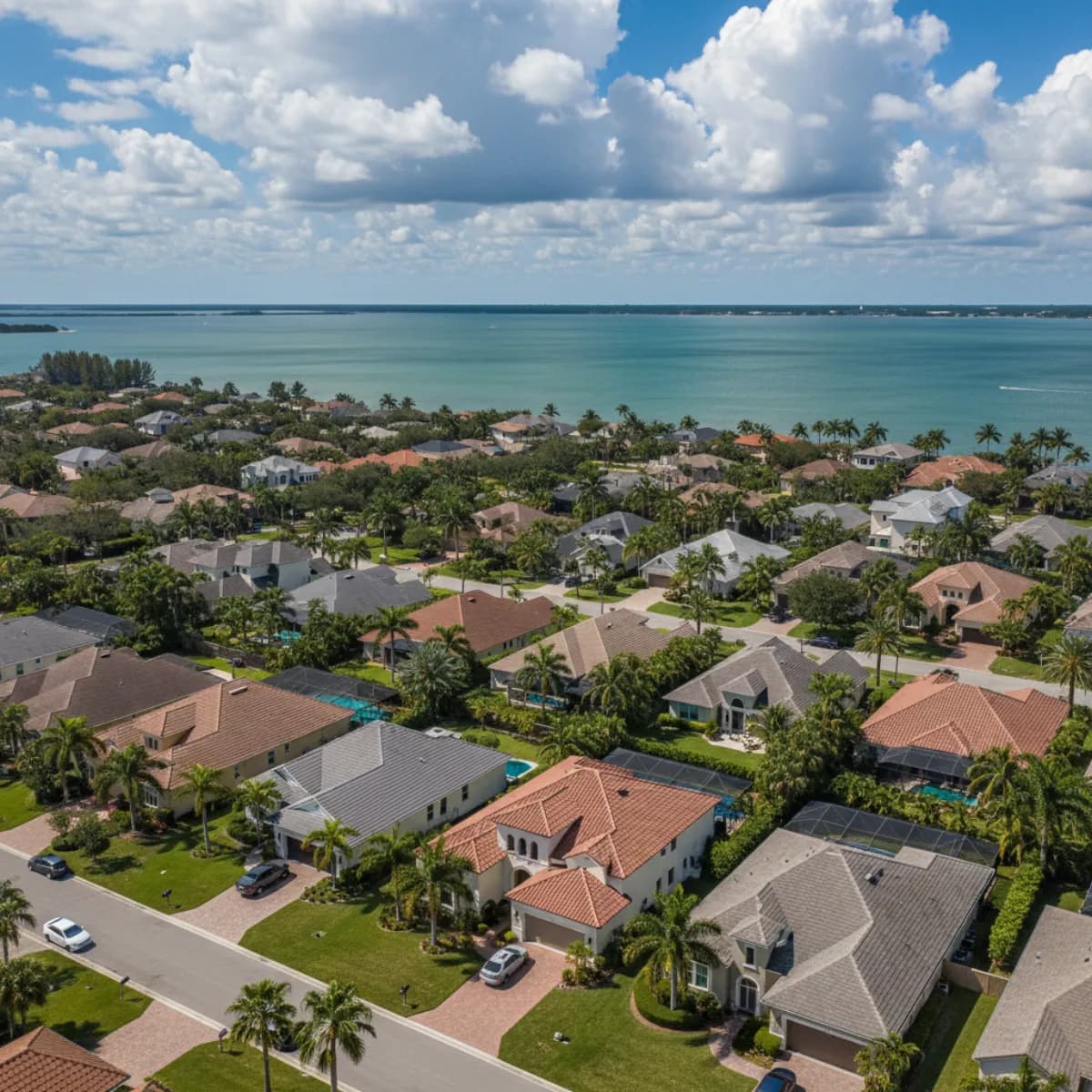
Florida's Gulf Coast Hub
Instant Roof Replacement Quotes in Tampa, FL
Over 400,000 residents across Tampa Bay need roofing that stands up to hurricanes, relentless UV, and the most lightning strikes of any city in America. Get instant quotes from pre-vetted Florida contractors for South Tampa bungalows, Hyde Park colonials, Seminole Heights craftsmans, and homes across every Tampa neighborhood.
Free Quotes
no obligations ever
Contractor Bids
standardized scope comparison
Until You Choose
no spam, no lead resale
FL Contractors
licensed, insured, reviewed
Tampa at a Glance
Population
3.2M in Tampa Bay metro
Wind Rating Required
FBC hurricane zone standard
Lightning in the U.S.
More strikes than any city
Permit Cost
Hillsborough County permits
Avg. Insurance Premium
Nearly 3x national average
Sunny Days / Year
Intense UV degradation
Roofing Challenges Unique to Tampa
Tampa sits at the heart of one of America's most weather-vulnerable metro areas. The Tampa Bay region faces a rare convergence of roofing threats: direct hurricane exposure from the Gulf of Mexico, the highest lightning strike density in the nation, extreme heat and UV that degrades roofing materials at accelerated rates, and an insurance market that has made roof condition the single most important factor in policy availability and pricing. Every roofing decision in Tampa must account for these overlapping challenges.
! Hurricane Vulnerability
Tampa Bay is consistently ranked among the top three most hurricane-vulnerable metro areas in the United States. The bay's unique funnel shape amplifies storm surge, and NOAA models project that a direct Category 4 hit could produce 15-20 feet of storm surge in parts of South Tampa, Davis Islands, and Bayshore Boulevard. Remarkably, Tampa has not taken a direct hit from a major hurricane in over a century, meaning many of the city's older roofs have never been tested by sustained 130+ mph winds and horizontal rain.
- - FBC requires 130+ mph wind resistance for all roofing
- - Sealed roof deck system mandatory on all re-roofs
- - Enhanced nail patterns (6 nails per shingle)
- - Impact-resistant materials strongly recommended
= Lightning Capital of the U.S.
Tampa earns its title as the lightning capital of the United States with an average of 25-30 lightning events per square mile annually. The Tampa Bay area records more cloud-to-ground lightning strikes than any other metro in the country, concentrated during the June through September thunderstorm season when daily afternoon storms are almost guaranteed. Lightning can damage roof structures, ignite fires, surge through electrical systems, and crack or shatter roofing materials, particularly clay tiles.
- - Metal roofing safely conducts strikes (non-combustible)
- - Class A fire-rated materials recommended
- - Proper grounding critical for metal roof systems
- - Lightning rods complement roof protection
~ Extreme Heat & UV Exposure
Tampa averages 246 sunny days per year with summer temperatures regularly exceeding 95 degrees F and heat indices above 110 degrees F. Roof surface temperatures in Tampa routinely reach 150-170 degrees F during peak summer months. This extreme and sustained UV exposure degrades asphalt shingles 25-35% faster than the national average, shortening a 30-year shingle warranty to an effective 20-22 year lifespan in Tampa's climate. UV radiation breaks down the petroleum-based compounds in asphalt, causing granule loss, curling, and cracking.
- - Reflective roofing reduces cooling costs 10-25%
- - Light-colored materials extend roof lifespan
- - Concrete tile naturally resists UV degradation
- - Metal with reflective coatings rated for extreme heat
# Insurance Crisis & Roof Requirements
Florida's homeowners insurance crisis hits the Tampa Bay area harder than almost anywhere else in the state. With average premiums exceeding $4,000 per year - nearly three times the national average - and multiple carriers exiting the Florida market entirely since 2020, your roof's age, condition, and material directly determine whether you can obtain affordable coverage. Many insurers now refuse to write or renew policies on homes with roofs older than 15 years, regardless of condition.
- - Roof age under 10-15 years often required for coverage
- - Wind mitigation inspections may be mandatory
- - Impact-resistant materials qualify for 15-30% discounts
- - FBC-compliant roof is baseline for policy eligibility
Tampa Roof Replacement Cost by Material
Tampa roofing costs reflect the reality of building in one of America's most hurricane-vulnerable markets. The Florida Building Code mandates rigorous wind resistance standards, sealed roof decks, and enhanced fastener patterns that add to material and labor costs compared to non-coastal regions. However, Tampa costs generally run lower than South Florida markets like Miami-Dade due to slightly less restrictive requirements (Tampa does not require Miami-Dade NOA product approvals). Insurance savings from upgrading to impact-resistant materials often offset the higher upfront cost within 5-8 years.
Concrete Tile
#1: Concrete Tile
The dominant premium roofing material across Tampa Bay. Concrete tile is ubiquitous in neighborhoods from South Tampa and Palma Ceia to Westchase and New Tampa, especially on Mediterranean, Spanish Revival, and contemporary Florida-style homes. Tile provides exceptional hurricane resistance when properly installed with foam adhesive and mechanical fasteners, Class A fire protection against lightning strikes, and natural heat reflection that reduces cooling costs by 15-25%. Concrete tile weighs 900-1,100 lbs per 100 sq ft, so structural adequacy of the roof framing must be verified before installation.
Best For:
Most Tampa homes, Mediterranean/Spanish styles
Lifespan:
50-75 years
Cost Range:
$18,000 - $35,000
Wind Rating:
150+ mph (properly installed)
Impact-Resistant Shingles
#2: Impact-Resistant Architectural Shingles
The sweet spot for Tampa homeowners who want maximum insurance savings without the higher cost of tile. Class 4 impact-resistant shingles (UL 2218 rated) withstand 2-inch diameter hail impacts without cracking and qualify for significant insurance premium discounts under Florida law - typically 15-30% off annual premiums. For a Tampa homeowner paying $4,000+/year in insurance, that discount can save $600-$1,200 annually, meaning the incremental cost over standard shingles pays for itself within 3-5 years. These shingles use rubberized, polymer-modified asphalt that resists both impact damage and UV degradation better than standard architectural shingles. Popular across Seminole Heights, Ybor City, and New Tampa.
Best For:
Budget-conscious with insurance savings
Lifespan:
25-30 years (Tampa climate)
Cost Range:
$10,000 - $22,000
Insurance Savings:
15-30% premium reduction
Standing Seam Metal
#3: Standing Seam Metal
Increasingly popular across Tampa Bay for its exceptional wind performance and longevity. Standing seam metal panels interlock with concealed fasteners, eliminating the exposed screw points that fail during hurricanes. Metal roofs can withstand 140-160 mph wind speeds when properly installed, making them among the most hurricane-resistant options available. Metal is also naturally non-combustible (Class A fire rating), an important consideration in Tampa's lightning-prone environment. Reflective metal coatings deflect solar heat, reducing cooling costs by 15-25%. The 40-60 year lifespan means a metal roof installed in Tampa today may never need replacement, and its durability commands top marks on wind mitigation inspections for ongoing insurance savings. Common on modern and coastal-style homes in Davis Islands, Channelside, and the growing Westshore district.
Best For:
Maximum wind resistance, modern homes
Lifespan:
40-60 years
Cost Range:
$15,000 - $30,000
Wind Rating:
140-160 mph (concealed fasteners)
TPO / Flat Roof
#4: TPO & Modified Bitumen (Flat Roofs)
Essential for Tampa's growing commercial sector and the flat-roofed buildings common in Channelside, downtown Tampa, Ybor City, and Westshore business districts. White TPO (thermoplastic polyolefin) membrane is the standard for flat and low-slope commercial roofing in Tampa, reflecting solar heat effectively and meeting Florida energy code requirements. TPO is heat-welded at seams, creating a monolithic waterproof membrane that handles Tampa's torrential rain and ponding water. Modified bitumen provides a multi-layer waterproofing solution for roofs with irregular shapes or heavy foot traffic. Both systems must be mechanically attached or fully adhered to meet FBC wind resistance requirements for low-slope applications.
Best For:
Commercial, flat, and low-slope roofs
Lifespan:
20-30 years
Cost Range:
$8,000 - $22,000
Energy Savings:
Reflects 80%+ solar energy
Tampa Average Roof Cost: Architectural shingles $8,500-$18,000. Impact-resistant shingles $10,000-$22,000. Concrete tile $18,000-$35,000. Metal $15,000-$30,000. TPO $8,000-$22,000. Tampa costs reflect mandatory FBC hurricane compliance. Get your exact price with a free instant estimate.
Tampa's Spanish Tile Roofing Heritage
Tampa's architectural identity is deeply tied to Spanish and Mediterranean influences, particularly in the city's older neighborhoods. Ybor City, founded in 1885 by cigar manufacturers from Cuba and Spain, established the Spanish Colonial aesthetic that spread across Tampa Bay. Hyde Park, Palma Ceia, and parts of South Tampa feature homes with barrel-shaped clay tile roofs that have defined Tampa's skyline for over a century. These historic tiles, while beautiful, present unique roofing challenges in a hurricane zone.
Original clay tiles in Tampa's older neighborhoods were often installed with mortar sets rather than modern mechanical fasteners. While this was acceptable under older building codes, current FBC requirements mandate mechanical attachment with foam adhesive or wire ties to meet 130+ mph wind ratings. Homeowners in historic areas who want to preserve the authentic Spanish tile appearance now have excellent options in modern concrete tile profiles that replicate the classic barrel and S-tile shapes while meeting all current hurricane codes. Replacement clay tiles are available from Florida manufacturers, though at a premium cost.
When replacing a Spanish tile roof in Tampa, our pre-vetted contractors evaluate structural adequacy (tile weighs 900-1,100 lbs per square), verify or upgrade underlayment to a sealed roof deck system, and install tiles with FBC-compliant fastening methods. The result preserves Tampa's architectural heritage while delivering full hurricane-code protection.
Tampa Building Requirements & Florida Building Code
Important Local Regulations
Hillsborough County Permits
All roof replacements in Tampa and unincorporated Hillsborough County require building permits. City of Tampa permits are obtained through the Construction Services Center; unincorporated Hillsborough County permits through the Building Services Department. Fees range from $200 to $500 depending on scope. Online applications are available through both jurisdictions. Most residential re-roof permits are processed within 3-5 business days. Inspections are mandatory at multiple stages: initial deck inspection, underlayment/secondary water barrier inspection, and final inspection.
Florida Building Code (FBC) Wind Requirements
Tampa is within the Wind-Borne Debris Region of the FBC, requiring roofing materials rated for 130+ mph wind speeds. All re-roofs must include a sealed roof deck system using either peel-and-stick self-adhering underlayment or mechanically attached underlayment with taped seams. Shingle installations require 6-nail patterns (vs. 4-nail standard) and must pass ASTM D3161 Class F or ASTM D7158 Class H wind resistance testing. Roof sheathing must be attached with 8d ring-shank nails at 6-inch spacing along panel edges and 12-inch spacing in the field.
Secondary Water Barrier Requirement
The FBC mandates a secondary water barrier (SWB) on all re-roofs in Wind-Borne Debris Regions. This is typically achieved through peel-and-stick modified bitumen underlayment applied directly to the roof deck before the primary underlayment and roofing material. The SWB protects the home from water intrusion even if the primary roofing material is torn away during a hurricane, preventing the catastrophic interior water damage that causes the majority of insurance losses in storm events.
Florida Contractor Licensing
Florida requires all roofing contractors to hold either a Certified Roofing Contractor (CCC) license (valid statewide) or a Registered Roofing Contractor (RC) license (valid in the issuing jurisdiction). Verify any contractor at myfloridalicense.com through the DBPR (Department of Business and Professional Regulation). Licensed contractors must carry workers' compensation insurance and a minimum $300,000 general liability policy. All of RoofVista's pre-vetted Tampa contractors hold active CCC or RC licenses.
Wind Mitigation Inspections
After a roof replacement, homeowners should obtain a wind mitigation inspection (OIR-B1-1802 form) documenting the new roof's hurricane-resistant features. This inspection evaluates roof covering compliance, roof deck attachment, roof-to-wall connections, roof geometry, secondary water barrier, and opening protection. A favorable wind mitigation report can reduce insurance premiums by 15-45%. The inspection costs $75-$150 and is valid until the next re-roofing.
Tampa Neighborhoods We Serve
From the waterfront estates of Davis Islands to the historic bungalows of Seminole Heights and the master-planned communities of Westchase, our pre-vetted contractors serve every corner of Tampa and the broader Tampa Bay metro. Each neighborhood has unique roofing considerations based on its architecture, age, proximity to the coast, and flood zone designation.
South Tampa & Palma Ceia
- - Historic Mediterranean-style homes
- - Spanish tile and concrete tile dominant
- - Bayshore Boulevard storm surge zone
- - Mature tree canopy creates debris issues
- - Premium home values driving quality upgrades
Hyde Park & Davis Islands
- - Waterfront and near-waterfront properties
- - Mix of historic and new construction
- - Elevated storm surge risk on Davis Islands
- - Salt air corrosion exposure from bay
- - High property values require premium materials
Seminole Heights
- - 1920s-1940s craftsman bungalows
- - Many original or aging roofs need replacement
- - Mix of shingle and tile on older homes
- - Historic character preservation important
- - Rapidly appreciating neighborhood
Ybor City
- - Historic cigar factory district
- - Spanish Colonial architecture
- - Original clay tile on many structures
- - Historic preservation considerations
- - Mix of residential and commercial roofing
Westchase & New Tampa
- - Master-planned communities (1990s-2010s)
- - Concrete tile and shingle predominant
- - HOA restrictions on materials and colors
- - First-generation roofs reaching end of life
- - Suburban lot sizes allow easy access
Channelside & Downtown
- - Growing tech hub and urban core
- - Condos and commercial flat roofs
- - TPO and modified bitumen systems
- - Water Street Tampa new development
- - Limited access for equipment staging
Tampa's Growing Tech Hub & Rising Home Values
Tampa's transformation into a major tech and finance hub has driven significant appreciation in home values across the metro. The relocation of companies and remote workers to Tampa Bay since 2020 has increased median home prices substantially, making roof maintenance and replacement an increasingly important investment decision. A new, FBC-compliant roof adds measurable value to a Tampa home and is often the difference between a smooth sale and a stalled transaction in the current market.
Real estate transactions in Tampa are heavily influenced by insurance requirements. Buyers' lenders typically require proof of insurability, and a roof that cannot pass a 4-point inspection will derail a sale. Homes with roofs older than 15-20 years frequently receive insurance contingency objections during the closing process. Conversely, a recently installed roof with documented FBC compliance, impact-resistant materials, and a favorable wind mitigation report can be a compelling selling point that accelerates the transaction and commands a premium price.
For homeowners in the St. Pete and Clearwater markets across the bay, many of the same roofing considerations apply. The Pinellas County peninsula is even more exposed to Gulf storm surge, and its dense, older housing stock presents similar insurance challenges. Our pre-vetted contractors serve the entire Tampa Bay metro, including St. Petersburg, Clearwater, and surrounding Pinellas County communities.
Insurance Considerations for Tampa Homeowners
Navigating Florida's Insurance Crisis
Tampa Bay is ground zero for Florida's homeowners insurance crisis. The region's extreme hurricane vulnerability, combined with a history of catastrophic storm losses, litigation abuse, and insurer insolvencies, has made Tampa one of the most expensive and challenging markets for homeowners insurance in the nation. Your roof is the single most important factor in determining whether you can obtain coverage and at what price.
Current Challenges
- - Average Tampa premiums exceed $4,000/year (3x national avg)
- - Multiple carriers have exited Florida since 2020
- - Citizens Property Insurance (state insurer) enrollment surging
- - Roofs older than 15 years may be uninsurable through private market
- - 4-point inspections mandatory for older homes
How Your Roof Can Help
- - New FBC-compliant roof restores insurability
- - Impact-resistant materials (Class 4) save 15-30% on premiums
- - Wind mitigation inspection documents savings-qualifying features
- - Hip roof shape earns additional credits over gable roofs
- - Sealed roof deck (secondary water barrier) is a key discount trigger
Our pre-vetted contractors understand Tampa's insurance requirements and install roofing systems that maximize your wind mitigation credits and restore or maintain your policy eligibility.
Frequently Asked Questions About Tampa Roofing
How much does a roof replacement cost in Tampa, FL?
Roof replacement in Tampa typically costs between $8,500 and $18,000 for architectural shingles on a standard 1,500-2,000 sq ft home. Impact-resistant shingles run $10,000-$22,000 but qualify for significant insurance premium discounts that often recoup the added cost within 3-5 years. Concrete tile, the most popular premium option across Tampa Bay, ranges from $18,000 to $35,000 depending on tile profile, home size, and roof complexity. Standing seam metal runs $15,000-$30,000 and delivers the longest lifespan at 40-60 years. TPO for flat commercial applications costs $8,000-$22,000. All prices include the FBC-mandated sealed roof deck, enhanced nail patterns, and permit fees. Tampa costs are lower than South Florida (Miami-Dade) but higher than inland Florida markets due to the Wind-Borne Debris Region requirements. Homes with multiple stories, steep pitch, complex geometry, or extensive tile-to-shingle conversions will fall toward the higher end of these ranges.
What are the hurricane roofing requirements in Tampa?
Tampa falls within Florida's Wind-Borne Debris Region under the Florida Building Code (FBC), which imposes the state's most stringent roofing standards outside of the Miami-Dade High Velocity Hurricane Zone. All roofing materials must be rated for minimum 130 mph wind resistance. Shingle installations require enhanced 6-nail patterns (versus the standard 4-nail pattern) and must pass ASTM D3161 Class F or ASTM D7158 Class H wind resistance testing. The FBC mandates a sealed roof deck system on all re-roofs, achieved through peel-and-stick self-adhering modified bitumen underlayment or mechanically attached underlayment with taped seams. Roof sheathing must be attached with 8d ring-shank nails at 6-inch on-center spacing along panel edges and 12-inch spacing in the field. These requirements add cost compared to non-coastal roofing, but they are non-negotiable for code compliance and insurance eligibility in Tampa.
What roofing materials are best for Tampa's climate?
Tampa's roofing environment demands materials that handle four simultaneous threats: hurricane-force winds, extreme UV and heat, lightning strikes, and torrential rain. Concrete tile (50-75 years) is the top premium choice, providing exceptional wind resistance when foam-adhered and mechanically fastened, Class A fire protection, natural heat reflection, and the aesthetic that defines Tampa's Mediterranean architectural heritage. Impact-resistant architectural shingles (Class 4, UL 2218 rated, 25-30 years) offer the best value proposition for most homeowners, balancing storm protection with insurance premium savings of 15-30%. Standing seam metal (40-60 years) delivers the highest wind ratings and longest lifespan, with concealed fasteners that eliminate the failure points that cause blow-offs. Metal is also non-combustible, making it ideal for Tampa's lightning exposure. For flat-roofed commercial buildings in downtown Tampa and the Westshore corridor, white TPO membrane provides heat reflection, waterproofing, and FBC wind compliance.
How does Tampa's insurance crisis affect roofing decisions?
The insurance crisis is reshaping every roofing decision in Tampa Bay. With average homeowners insurance premiums exceeding $4,000 per year - nearly three times the national average - and multiple carriers having exited the Florida market entirely since 2020, your roof's age, material, and code compliance are now the primary factors determining whether you can obtain affordable coverage at all. Many private insurers refuse to write or renew policies on homes with roofs older than 15 years, regardless of visible condition. Citizens Property Insurance, Florida's state-backed insurer of last resort, has seen enrollment surge in the Tampa market as a result. Upgrading to impact-resistant Class 4 materials triggers mandatory premium discounts of 15-30% under Florida law. A favorable wind mitigation inspection documenting your new roof's FBC compliance, secondary water barrier, and roof-to-wall connections can reduce annual premiums by $600 to $2,000 or more. For many Tampa homeowners, the insurance savings from a roof upgrade create a positive return on investment within 5-8 years.
What is the permit process for roof replacement in Tampa?
All roof replacements in the City of Tampa and unincorporated Hillsborough County require building permits. City of Tampa permits are obtained through the Construction Services Center, while unincorporated Hillsborough County permits go through the Building Services Department. Permit fees typically range from $200 to $500 based on project scope and valuation. Both jurisdictions offer online permit applications for faster processing. Most residential re-roof permits are approved within 3-5 business days. The FBC mandates inspections at multiple stages: an initial inspection to verify existing conditions and deck adequacy, a progress inspection after sealed roof deck underlayment installation, and a final inspection of the completed roof. Failing to obtain a permit can result in fines, required tear-off and re-inspection, and significant complications during home sales (title companies check for open or missing permits). All of our pre-vetted contractors handle the full permitting process, from application through final inspection sign-off.
How long does a roof replacement take in Tampa?
Most Tampa roof replacements take 2-4 days for architectural or impact-resistant shingles, 4-7 days for concrete tile installations, and 3-5 days for standing seam metal on a standard residential home. Tampa's subtropical climate allows year-round roofing, which is a significant scheduling advantage over northern markets. However, Tampa's weather creates its own timing challenges. The rainy season from June through September brings predictable afternoon thunderstorms that can halt work for 2-3 hours daily, potentially adding 1-2 days to the timeline. Tampa's status as the lightning capital of the United States means crews must leave the roof during any electrical storm activity - safety protocols are non-negotiable. The June through November hurricane season can cause scheduling disruption if storms threaten the area, and post-storm repair demand creates 4-8 week backlogs for contractor availability. For these reasons, many Tampa homeowners prefer to schedule replacements during the drier months of November through May when weather interruptions are minimal.
Is Tampa at high risk for hurricane damage to roofs?
Yes, Tampa Bay is consistently ranked among the top three most hurricane-vulnerable metro areas in the United States by NOAA, insurers, and catastrophe modeling firms. The bay's funnel-shaped geography amplifies storm surge - a direct hit from a Category 4 hurricane could generate 15-20 feet of surge in parts of South Tampa, Davis Islands, and the Bayshore Boulevard corridor. Tampa has not taken a direct hit from a major hurricane (Category 3+) in over a century, which means the region's existing housing stock has largely been untested by the most extreme wind and surge events. Hurricane Ian (2022) caused significant damage across the broader Tampa Bay area despite making landfall 80+ miles to the south, demonstrating the region's vulnerability even to indirect impacts. This exceptional risk profile is precisely why FBC-compliant roofing in Tampa is not a luxury - it is a necessity. Every roofing investment should prioritize wind resistance ratings (130+ mph minimum), impact-resistant materials, sealed roof deck systems, and proper roof-to-wall connections that will perform when the inevitable major hurricane arrives.
Can I get an insurance discount for upgrading my Tampa roof?
Yes, and in Tampa's insurance market, these discounts can be substantial. Florida Statute 627.0629 requires all property insurers to offer premium discounts or credits for wind mitigation features documented through a wind mitigation inspection (OIR-B1-1802 form). A qualified inspector evaluates six key areas of your roof: roof covering (FBC compliance year), roof deck attachment (nail pattern and type), roof-to-wall connections (clips, single wraps, or double wraps vs. toe-nails), roof geometry (hip vs. gable - hip roofs perform better in wind), secondary water barrier (peel-and-stick underlayment), and opening protection (impact windows/shutters). Each qualifying feature reduces your premium incrementally. The total discount can range from 15% to 45% depending on which features are present. For a Tampa homeowner paying $4,000-$6,000 annually, that translates to $600-$2,700 in annual savings. A new FBC-compliant roof with impact-resistant materials, sealed deck, and proper connections can save enough in premiums to pay for itself within 5-8 years. The wind mitigation inspection costs $75-$150 and remains valid until the next re-roofing.
Florida Roofing Resources
Florida State Overview
All Florida roofing resources and city pages
Florida Roof Replacement Cost Guide
Detailed pricing for all FL regions and materials
Hurricane-Resistant Roofing in Florida
FBC requirements and wind mitigation guide
Florida Contractor Licensing
CCC and RC license requirements and DBPR verification
Get Your Tampa Roof Quote in Minutes
Enter your address to compare instant quotes from pre-vetted Florida contractors who specialize in Tampa Bay's hurricane codes, impact-resistant materials, and wind mitigation compliance