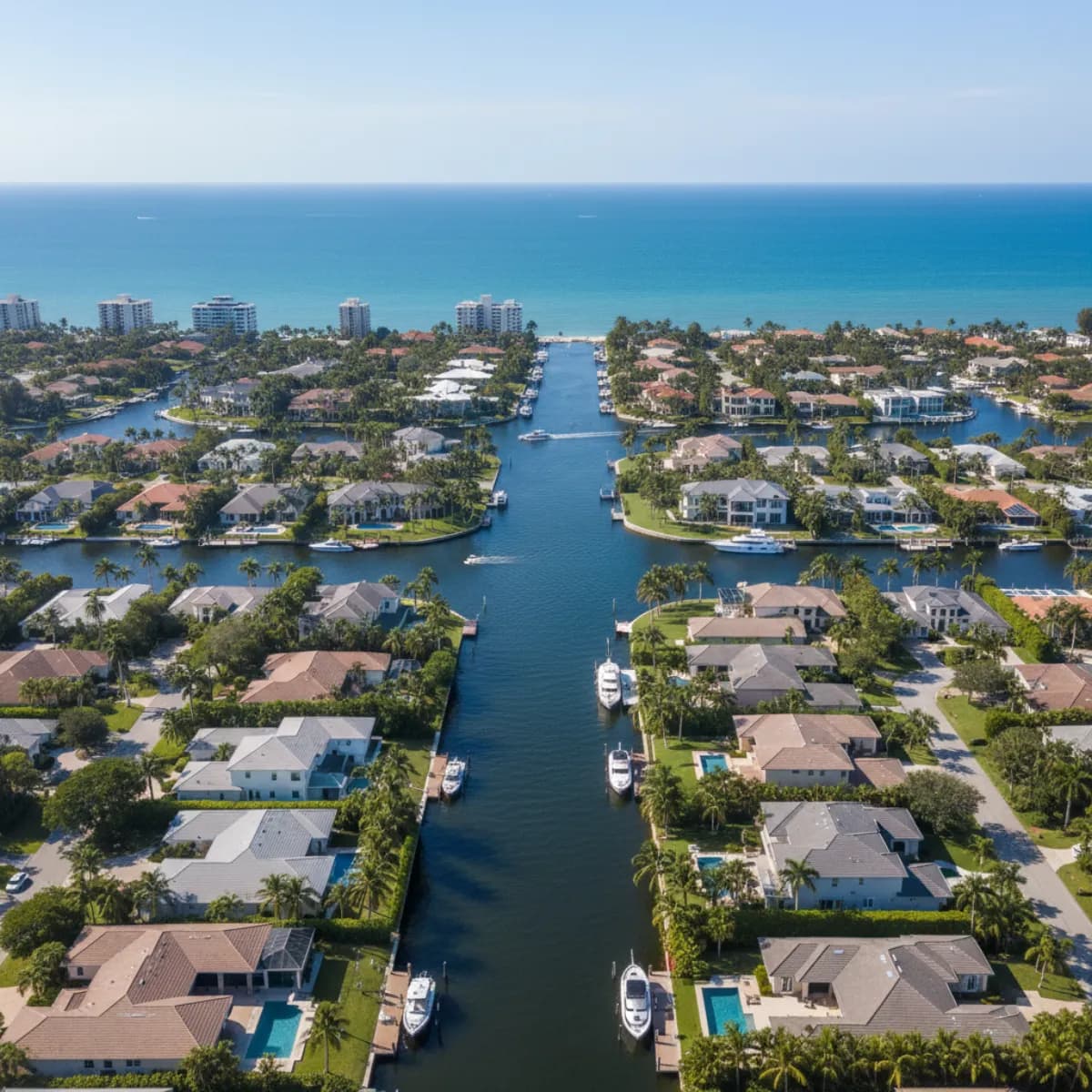
Broward County's Coastal Hub
Instant Roof Replacement Quotes in Fort Lauderdale, FL
Fort Lauderdale's 165+ miles of waterways, Atlantic coastline, and proximity to the High Velocity Hurricane Zone demand roofing built for extreme wind, salt air, and driving rain. Get instant quotes from pre-vetted Florida contractors who specialize in impact-rated materials, sealed roof decks, and Broward County's strict code compliance for Las Olas estates, canal-front homes, and Intracoastal Waterway properties.
Free Quotes
no obligations ever
Contractor Bids
standardized scope comparison
Until You Choose
no spam, no lead resale
FL Contractors
licensed, insured, reviewed
Fort Lauderdale at a Glance
Population
Broward County seat
Miles of Waterways
Venice of America
MPH Wind Rating
Required by code
Permit Cost
Broward County permits
Wilma Impact (2005)
120 mph sustained winds
Roof Deck Required
Wind-Borne Debris Region
Roofing Challenges Unique to Fort Lauderdale
Fort Lauderdale occupies a unique position on Florida's southeastern coast where the Atlantic Ocean, Intracoastal Waterway, and an extensive canal system create a roofing environment defined by two relentless threats: hurricane-force winds and corrosive salt air. Hurricane Wilma in 2005 caused catastrophic roof damage across Broward County, peeling off thousands of roof coverings and exposing the vulnerabilities of older installations that predated modern wind codes. That devastating storm reshaped building standards throughout the region, and today Fort Lauderdale enforces some of the strictest roofing requirements in the United States.
! Hurricane Wind & HVHZ-Adjacent Codes
Fort Lauderdale sits immediately north of the Miami-Dade High Velocity Hurricane Zone (HVHZ), the most stringent wind code zone in the country. While Broward County follows the Florida Building Code rather than the HVHZ-specific code, the practical requirements are nearly identical. All roofing installations must withstand wind speeds of 170+ mph, and many coastal properties face even higher design pressures based on their proximity to the ocean and building height.
- - 170+ mph wind speed design rating required
- - Impact-resistant materials mandatory
- - Enhanced fastener schedules for coastal exposure
- - Hurricane clips/straps connecting roof to walls
~ Coastal Salt Air Corrosion
With the Atlantic Ocean to the east, the Intracoastal Waterway threading through the city, and over 165 miles of canals, nearly every Fort Lauderdale property faces significant salt air exposure. This salt-laden environment corrodes standard metal components in as little as 2-3 years, compared to 10-15 years in inland areas. Properties on the barrier island, along the Intracoastal, and in neighborhoods like Las Olas Isles and Rio Vista experience the most aggressive corrosion.
- - Stainless steel or hot-dipped galvanized fasteners required
- - Marine-grade coatings on all metal components
- - Aluminum or stainless flashing and drip edges
- - Annual salt residue maintenance recommended
# Canal-Front & Waterfront Flood Risk
Fort Lauderdale's designation as the "Venice of America" reflects its extensive water network, but that network creates unique challenges for roofing. Canal-front and Intracoastal properties face combined wind-driven rain infiltration and tidal flooding during storm events. King tides and storm surge can push water levels several feet above normal, stressing roof-to-wall connections and saturating structures from below while wind-driven rain attacks from above.
- - Sealed roof decks prevent infiltration from above
- - Proper drainage systems essential for flat roofs
- - Mold-resistant underlayment for humid environments
- - Elevated equipment and ventilation components
= Intense UV & Year-Round Heat
Fort Lauderdale averages 250+ sunny days per year with summer temperatures regularly reaching the mid-90s and humidity above 75%. This combination of intense UV radiation and moisture creates a thermal cycling effect that expands and contracts roofing materials daily. Standard asphalt shingles degrade 25-35% faster in South Florida compared to northern states, making material selection and proper ventilation critical to achieving expected lifespans.
- - High-reflectivity materials reduce cooling costs 10-25%
- - Proper attic ventilation prevents moisture buildup
- - UV-resistant underlayment extends system life
- - Algae-resistant materials prevent black streaking
Hurricane Wilma's Legacy: Why Fort Lauderdale Roofing Standards Are Among the Strictest
On October 24, 2005, Hurricane Wilma made landfall on Florida's southwest coast and traversed the entire state, slamming into Fort Lauderdale and Broward County with sustained winds of 120 mph. The damage was catastrophic: roofing failures were widespread, with concrete tiles, shingles, and flat roof membranes stripped from thousands of homes. The Intracoastal corridor and beachfront properties suffered the worst, as wind-driven rain infiltrated buildings through compromised roof coverings and overwhelmed older installations that had never faced a direct Category 3 impact.
Wilma exposed a critical vulnerability: many roofs installed before the 2002 Florida Building Code lacked sealed roof decks, adequate fastener patterns, and impact-resistant materials. The storm caused an estimated $20+ billion in total damage statewide, with Broward County absorbing a disproportionate share. In the years following Wilma, Florida significantly strengthened its building code, and Broward County adopted additional local amendments that make its roofing standards among the most demanding in the nation.
Today, every roof replacement in Fort Lauderdale must meet post-Wilma code standards including sealed roof decks, impact-rated coverings, enhanced fastener schedules, and secondary water resistance. For homeowners with pre-2002 roofs, a replacement is not just an upgrade in appearance; it is a fundamental improvement in hurricane survivability that the original roof never provided.
Fort Lauderdale Roof Replacement Cost by Material
Fort Lauderdale roofing costs reflect the premium materials and specialized installation methods required to meet Broward County's demanding wind and impact codes. All materials must carry Florida Product Approval or a Miami-Dade Notice of Acceptance (NOA), and installations must include a sealed roof deck. Labor rates in South Florida average $65-$95/hour, and the competitive contractor market during pre-hurricane season can further increase pricing.
Concrete Tile
#1: Concrete Tile
The dominant roofing material across Fort Lauderdale and all of South Florida. Concrete tile excels in this environment because it handles every local threat simultaneously: it withstands 170+ mph winds when properly installed with hurricane clips and foam adhesive, resists salt air corrosion naturally (no metal components in the tile itself), provides a Class A fire rating, and reflects solar heat to reduce cooling costs. Barrel tile (S-tile) is the most popular profile in Fort Lauderdale, giving homes the classic Mediterranean aesthetic that defines the area. Flat tile profiles are increasingly popular in modern waterfront construction. With a 50+ year lifespan, concrete tile offers the best long-term value despite higher upfront costs.
Best For:
Most Fort Lauderdale homes
Lifespan:
50+ years
Cost Range:
$25,000 - $55,000
Wind Rating:
170+ mph (with proper install)
Standing Seam Metal
#2: Standing Seam Metal
Increasingly popular in Fort Lauderdale for its superior wind resistance and modern aesthetic, particularly on luxury waterfront homes along the Intracoastal and barrier island. Standing seam metal panels interlock mechanically, creating a continuous surface with no exposed fasteners that can fail in hurricane winds. The critical requirement in Fort Lauderdale is marine-grade coating: Galvalume steel with Kynar 500 finish or aluminum panels are essential to resist salt air corrosion. Standard painted steel will corrode within 3-5 years in Fort Lauderdale's coastal environment. Standing seam metal also offers excellent reflectivity, reducing cooling costs by 15-25% compared to darker materials.
Best For:
Waterfront homes, modern construction
Lifespan:
40-60 years (marine-grade)
Cost Range:
$22,000 - $50,000
Salt Resistance:
Excellent with Kynar 500 / aluminum
Impact-Rated Shingles
#3: Impact-Rated Architectural Shingles
The most affordable code-compliant option for Fort Lauderdale homeowners. These are not standard shingles; they must be SBS-modified (rubberized) asphalt with a Florida Product Approval rating for impact resistance and wind speeds of 170+ mph. Standard three-tab shingles are effectively prohibited by code in most of Broward County. Impact-rated architectural shingles use enhanced nail patterns (typically 6 nails per shingle versus 4 in lower-wind areas) and require a fully sealed roof deck beneath them. While more affordable upfront, their 20-30 year lifespan in South Florida's UV-intense environment means they will need replacement sooner than tile or metal alternatives.
Best For:
Budget-conscious homeowners
Lifespan:
20-30 years (South FL climate)
Cost Range:
$14,000 - $30,000
Requirement:
SBS-modified, impact-rated, FL approved
Modified Bitumen
#4: Modified Bitumen (Flat Roofs)
Essential for Fort Lauderdale's many flat-roofed commercial buildings, mid-century homes, and contemporary waterfront residences. Modified bitumen provides excellent waterproofing on low-slope roofs, which are particularly vulnerable to wind-driven rain during hurricanes. In Fort Lauderdale, modified bitumen systems must be mechanically attached or fully adhered (not loose-laid with ballast, which can become projectiles in hurricane winds). White-coated modified bitumen with high reflectivity helps manage cooling costs in the intense South Florida heat. Proper drainage design is critical on flat roofs to prevent ponding water, which accelerates membrane deterioration in Fort Lauderdale's high-UV, high-humidity environment.
Best For:
Flat and low-slope roofs
Lifespan:
15-25 years
Cost Range:
$12,000 - $28,000
Application:
Mechanically attached or fully adhered
Fort Lauderdale Average Roof Cost: Impact-rated shingles $14,000-$30,000. Concrete tile $25,000-$55,000. Standing seam metal $22,000-$50,000. Modified bitumen (flat) $12,000-$28,000. All costs include mandatory sealed roof deck ($2,000-$5,000). Broward County permitting adds $400-$900. Get your exact price with a free instant estimate.
Fort Lauderdale Building Requirements
Important Local Regulations
Broward County Permits
All roof replacements in Fort Lauderdale require permits through the Broward County Building Division or the City of Fort Lauderdale Building Department. Permit fees range from $400-$900 depending on project scope. A Notice of Commencement must be recorded with the county before work begins, and a final inspection is mandatory before the permit is closed. The permitting process typically takes 1-3 weeks, though complex projects on waterfront or historically designated properties may require additional review.
Florida Product Approval Requirement
Every roofing product installed in Broward County must have a current Florida Product Approval (FPA) or Miami-Dade County Notice of Acceptance (NOA). This includes tiles, shingles, metal panels, underlayment, fasteners, flashing, and even sealants. Product approval numbers must be included on the permit application. Using non-approved products will result in failed inspections, removal at the homeowner's expense, and potential fines.
Sealed Roof Deck Requirement
All properties in Broward County's Wind-Borne Debris Region (which includes the entire county) must have a sealed roof deck. This requires self-adhering peel-and-stick modified bitumen underlayment applied directly to the roof sheathing before any other materials are installed. The sealed deck provides secondary water resistance if the primary roof covering is lost during a hurricane, preventing catastrophic interior water damage. This adds $2,000-$5,000 to project costs but is non-negotiable under Florida Building Code.
Wind Mitigation Credits
Florida law requires insurance companies to offer premium discounts for wind-resistant features. After a roof replacement, homeowners should obtain a Wind Mitigation Inspection using the OIR-B1-1802 form. This inspection documents roof covering type, roof deck attachment, roof-to-wall connections, roof geometry, secondary water resistance, and opening protection. These credits can reduce insurance premiums by 15-45%, often saving $2,000-$6,000 annually in Fort Lauderdale.
Florida Contractor Licensing
Florida requires all roofing contractors to hold a valid State Certified Roofing Contractor license (CCC prefix) or a Registered Roofing Contractor license from the Florida Department of Business and Professional Regulation (DBPR). Broward County also requires local business tax receipts and may have additional registration requirements. Verify any contractor's license at myfloridalicense.com. Licensed contractors must carry workers' compensation insurance and general liability coverage of at least $300,000.
Fort Lauderdale Neighborhoods We Serve
From the barrier island beachfront to the canal-front estates along the Intracoastal Waterway and the established inland neighborhoods west to Plantation and Davie, our pre-vetted contractors serve every area of greater Fort Lauderdale. Each neighborhood presents distinct roofing challenges based on its proximity to water, architectural style, and exposure profile.
Las Olas & Las Olas Isles
- - Luxury waterfront estates
- - Canal-front properties with boat access
- - Maximum salt air exposure
- - Marine-grade materials essential
- - Complex multi-level roof geometries
Victoria Park
- - Historic mid-century homes
- - Mix of flat and pitched roofs
- - Mature tree canopy (debris concerns)
- - Close-set lots with access challenges
- - Growing renovation market
Rio Vista
- - Upscale canal-front homes
- - Mediterranean and modern architecture
- - High Intracoastal exposure
- - Concrete tile predominant
- - Strict HOA standards in some areas
Coral Ridge & Country Club
- - Larger single-family homes
- - Close to Intracoastal Waterway
- - Mature landscaping considerations
- - Mix of original and renovated roofs
- - Active replacement market
Lauderdale-by-the-Sea & Beach
- - Direct oceanfront exposure
- - Highest salt air corrosion risk
- - Barrier island wind exposure
- - Condos and single-family mix
- - Aluminum or stainless components only
Wilton Manors & Oakland Park
- - Compact single-family homes
- - Mid-century architecture common
- - Mix of flat and hip roofs
- - Moderate salt exposure (inland)
- - Active redevelopment neighborhoods
Davie & Southwest Ranches
- - Larger lot properties and estates
- - Rural and equestrian properties
- - Reduced salt exposure (inland)
- - Metal roofing popular for large structures
- - Lower permitting complexity
Plantation & Sunrise
- - Planned community developments
- - HOA-governed roof requirements
- - Predominantly shingle and tile
- - Inland location reduces salt concerns
- - Consistent neighborhood aesthetics
Fort Lauderdale Beach & Intracoastal
- - High-rise and luxury condominiums
- - Direct ocean wind exposure
- - Flat roof systems predominant
- - Modified bitumen and TPO common
- - Highest wind design pressures
Insurance Considerations for Fort Lauderdale Homeowners
Florida's Insurance Crisis and Your Roof
Fort Lauderdale sits at the epicenter of Florida's homeowners insurance crisis. Broward County homeowners pay among the highest premiums in the nation, often $5,000-$15,000+ annually for standard coverage. Multiple insurers have exited the Florida market entirely, and those remaining have dramatically increased rates. Citizens Property Insurance, the state-backed insurer of last resort, has seen enrollment surge across South Florida. Your roof is the single most important factor in your insurance eligibility and premium cost.
Why Your Roof Matters to Insurers
- - Roof age is the #1 factor in policy pricing and availability
- - Many insurers will not write policies on roofs older than 15 years
- - Some insurers require roofs under 10 years for new policies
- - Non-code-compliant roofs may be excluded from coverage entirely
- - Roof material and wind rating directly affect premium calculations
Maximizing Insurance Savings
- - New code-compliant roof can reduce premiums 15-45%
- - Impact-resistant materials earn additional credits
- - Sealed roof deck is a major credit category
- - Hurricane clips/straps improve roof-to-wall rating
- - Wind Mitigation Inspection documents all credits (OIR-B1-1802 form)
Many Fort Lauderdale homeowners find that the insurance savings from a new code-compliant roof ($2,000-$6,000 per year) effectively finance a significant portion of the replacement cost over the roof's lifespan. Our pre-vetted contractors install to maximize every available insurance credit.
Understanding the Sealed Roof Deck Requirement
The sealed roof deck is arguably the most important code requirement for Fort Lauderdale roofing, yet many homeowners are unfamiliar with it until they begin the replacement process. Understanding what it is and why it matters can help you appreciate the true value of a code-compliant installation.
What It Is
A sealed roof deck is a secondary water barrier created by applying self-adhering peel-and-stick modified bitumen membrane directly to the roof sheathing (plywood or OSB). This membrane fully adheres to the wood surface, creating a waterproof seal at every nail penetration, seam, and edge. Unlike traditional felt underlayment that can tear and allow water infiltration, the sealed deck maintains its waterproof integrity even when the primary roof covering is completely removed.
Why It Matters in Fort Lauderdale
During Hurricane Wilma in 2005, thousands of Fort Lauderdale homes lost their primary roof covering - tiles, shingles, or metal panels were torn away by 120+ mph winds. Homes without sealed roof decks experienced catastrophic interior water damage as rain poured through exposed sheathing. Homes with sealed decks maintained their water barrier and avoided interior damage even after losing their primary covering. The sealed deck gives homeowners a critical window of protection until repairs can be made, which after a major hurricane may take weeks or months.
Fort Lauderdale's Luxury Waterfront Roofing Market
Fort Lauderdale's luxury waterfront market along Las Olas Boulevard, the Intracoastal Waterway, and the barrier island presents unique roofing challenges that go beyond standard residential requirements. Homes valued at $2 million to $30 million+ demand roofing systems that match both the performance requirements of a hurricane zone and the aesthetic expectations of a luxury property.
Unique Waterfront Challenges
- - Multi-level roof designs with complex geometry increase wind vulnerability at transitions and valleys
- - Rooftop terraces and outdoor living spaces require specialized waterproofing systems beneath finished surfaces
- - Dock-side properties face direct water spray and elevated salt exposure during storms
- - Large glass walls and window openings create higher wind pressures on adjacent roof surfaces
- - Material staging on waterfront lots with limited road access may require marine delivery
Premium Material Options
- - Flat concrete tile in custom colors to match architectural design
- - Aluminum standing seam for zero-corrosion waterfront performance
- - Copper accents and flashing for luxury homes (naturally salt-resistant)
- - Integrated gutter systems designed for tropical downpours (6+ inches/hour)
- - Hidden fastener systems that maintain clean aesthetic lines
Frequently Asked Questions About Fort Lauderdale Roofing
How much does a roof replacement cost in Fort Lauderdale, FL?
Impact-rated asphalt shingles cost $14,000-$30,000 in Fort Lauderdale. Concrete tile ranges $25,000-$55,000. Standing seam metal runs $22,000-$50,000. Broward County's strict permitting ($400-$900), mandatory impact-resistant materials, and sealed roof deck requirements drive costs above the state average.
What are the hurricane roofing requirements in Fort Lauderdale?
Fort Lauderdale sits adjacent to the HVHZ. All roofing must meet 170+ mph wind ratings, impact-resistant materials are mandatory, and sealed roof decks using peel-and-stick underlayment are required throughout Broward County.
What is the Broward County permit process for roof replacement?
All roof replacements require Broward County or City of Fort Lauderdale permits ($400-$900). A Notice of Commencement must be filed. Florida Product Approvals or Miami-Dade NOAs are required for all materials. Multiple inspections are mandatory.
What roofing materials are best for Fort Lauderdale's coastal climate?
Concrete tile (50+ years, 170+ mph rated), standing seam metal with marine-grade coatings, and impact-rated SBS-modified shingles are the top choices. All materials must carry Florida Product Approval for wind and impact resistance.
How does salt air affect roofing in Fort Lauderdale?
Salt air from the Atlantic and Intracoastal Waterway accelerates corrosion by 30-40%. Stainless steel or hot-dipped galvanized fasteners are required. Metal roofing needs marine-grade coatings. Properties east of I-95 see the worst exposure.
What is a sealed roof deck and is it required in Fort Lauderdale?
A sealed roof deck uses peel-and-stick modified bitumen underlayment directly on the decking. It is required in all of Broward County's Wind-Borne Debris Region. It adds $2,000-$5,000 but provides critical hurricane protection.
Can a new roof lower my homeowners insurance in Fort Lauderdale?
Yes. Fort Lauderdale premiums often exceed $5,000-$15,000 annually. A code-compliant new roof can reduce premiums 15-45%. Request a Wind Mitigation Inspection after installation to document all credits and save $2,000-$6,000/year.
How long does a roof replacement take in Fort Lauderdale?
Most replacements take 3-5 days for shingles, 5-8 days for tile, and 4-7 days for metal. Afternoon thunderstorms during wet season (May-October) can extend timelines. Pre-hurricane season demand (April-June) pushes scheduling to 3-6 weeks.
Florida Roofing Resources
Get Your Fort Lauderdale Roof Quote in Minutes
Enter your address to compare instant quotes from pre-vetted Florida contractors who specialize in hurricane-rated installations, impact-resistant materials, and Broward County code compliance