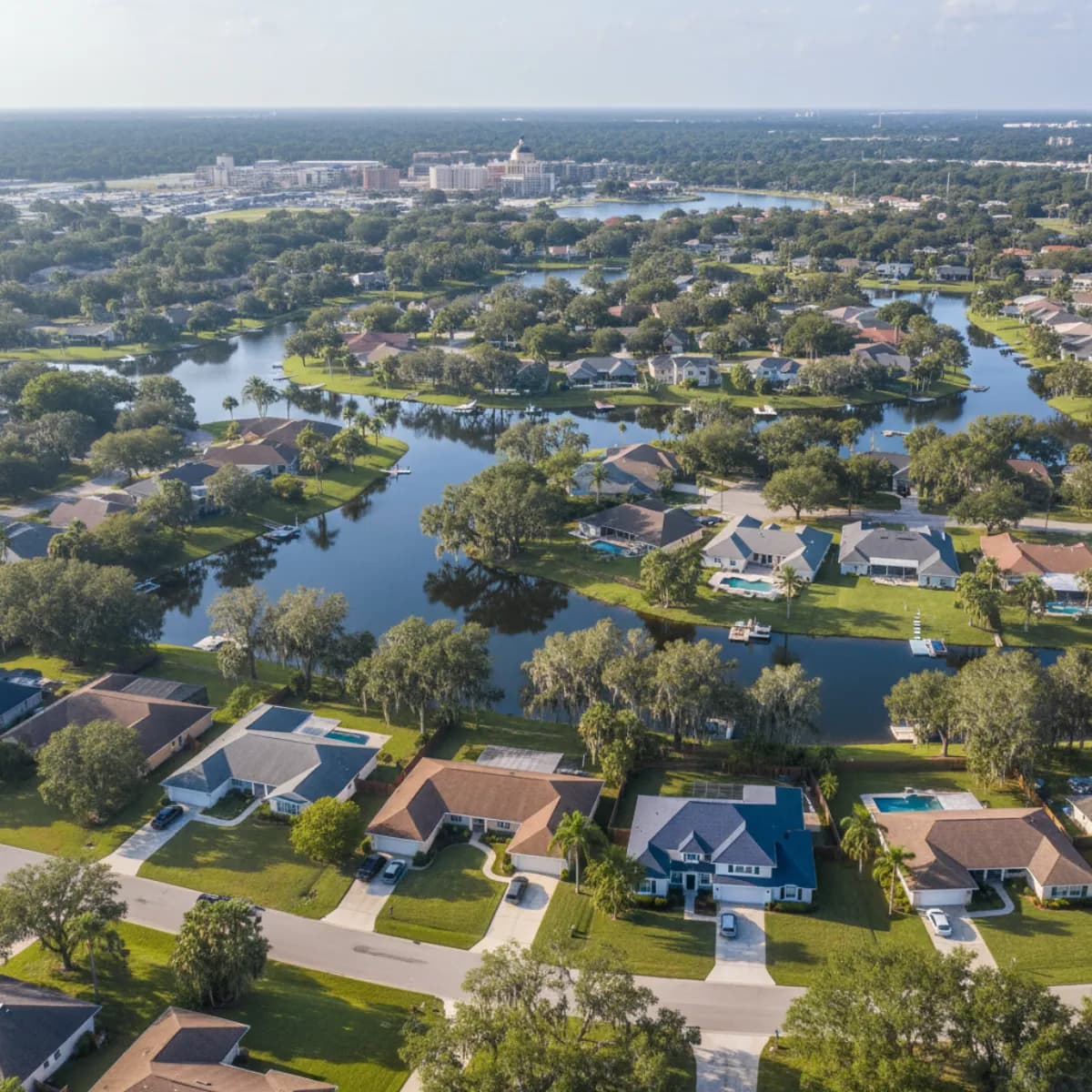
Central Florida's Chain of Lakes City
Instant Roof Replacement Quotes in Lakeland, FL
Lakeland sits at the heart of Central Florida's Lightning Alley — the region with the highest concentration of lightning strikes and hail-producing thunderstorms in the United States. With 80-100 storm days per year and proven hurricane vulnerability from Charley (2004) and Irma (2017), your roof is your home's first line of defense. Get instant quotes from pre-vetted Florida CCC-licensed contractors who specialize in hail-resistant, wind-rated roofing across Polk County.
Free Quotes
no obligations ever
Contractor Bids
standardized scope comparison
Until You Choose
no spam, no lead resale
FL Contractors
CCC-licensed, insured, reviewed
Lakeland at a Glance
Population
Polk County, Central Florida
Named Lakes
"Chain of Lakes" city
Storm Days/Year
Lightning Alley epicenter
Avg Roof Cost
Standard single-family home
MPH Wind Zone
FBC design wind speed
Hurricane Charley
Cat 4, devastating Polk County
Why Lakeland Roofing Demands Serious Attention
Lakeland occupies a unique position in Florida's roofing landscape. Situated roughly halfway between Tampa and Orlando along the I-4 corridor, this Polk County city of approximately 115,000 residents is often perceived as sheltered from coastal storm damage. That perception was shattered on August 13, 2004, when Hurricane Charley — a compact, ferocious Category 4 storm with 150 mph sustained winds — made a last-minute eastward turn and tore through Polk County instead of following the predicted path toward Tampa Bay. The damage was catastrophic: thousands of roofs were stripped, homes were left exposed to the elements, and the entire region learned that Central Florida is not immune to direct hurricane hits.
Hurricane Irma in 2017 reinforced the lesson. Although Irma weakened as it moved inland, Lakeland still experienced sustained tropical storm force winds and gusts exceeding 80 mph — enough to rip off aging shingles, displace tile, and tear away poorly attached flashing. Homes that had been re-roofed after Charley with modern, code-compliant materials and installation methods fared dramatically better than those still carrying their original 1970s or 1980s roofing.
But hurricanes are only part of the story. What truly sets Lakeland apart is its position in Lightning Alley. Central Florida experiences more lightning strikes per square mile than anywhere else in the continental United States. The warm, moist air from the Gulf of Mexico and Atlantic Ocean converges over the Florida peninsula, creating intense afternoon and evening thunderstorms that can produce not only lightning but also damaging hail, high straight-line winds, and torrential rain. For Lakeland homeowners, this means your roof endures more cumulative storm stress on a daily basis than most coastal roofs experience outside of hurricane season.
RoofVista's pre-vetted contractors in Polk County understand these unique challenges. They know which materials stand up to hail impact, which fastening methods resist the repeated stress of thunderstorm wind gusts, and how to maximize your wind mitigation credits to reduce insurance premiums. Our standardized quotes let you compare pricing from multiple contractors on an equal basis — same scope, same materials, same installation standards — so you can choose the best value with confidence.
Roofing Challenges Unique to Lakeland
Lakeland's Central Florida location creates a distinct set of roofing challenges that differ significantly from both coastal cities like Miami and Tampa, and northern Florida cities like Jacksonville and Tallahassee. The combination of extreme thunderstorm activity, subtropical heat, hurricane exposure, and abundant tree coverage makes material selection and installation quality critical for long-term roof performance.
! Lightning & Hail — Florida's Worst
Lakeland sits in the heart of Lightning Alley, where sea breeze convergence from both coasts generates intense thunderstorms 80-100 days per year. These storms produce not only spectacular lightning — which can directly damage roof structures, ignite fires, and destroy electrical systems — but also frequent hail events. While Florida hail is typically smaller than Midwest hailstones, even marble-sized hail at high velocity can crack architectural shingles, pit metal panels, chip tile glaze, and compromise the granular surface that protects shingles from UV degradation. Over time, repeated hail impacts accelerate roof aging well beyond normal wear.
- - 80-100 thunderstorm days per year
- - Highest lightning density in the continental U.S.
- - Class 4 impact-resistant shingles recommended
- - Standing seam metal resists hail damage best
! Hurricane Vulnerability
Hurricane Charley (2004, Category 4) proved that Lakeland is directly in the crosshairs of Gulf storms that curve inland. Hurricane Irma (2017) brought tropical storm force winds even as it weakened over the peninsula. Polk County's 120-130 mph FBC design wind speed reflects this real and proven risk. Unlike coastal areas that have had decades of strict enforcement, many older inland homes in Lakeland were built to lower standards, making upgrades to current code during a re-roof especially important for structural resilience and insurance qualification.
- - Charley 2004: Cat 4, 150 mph through Polk County
- - Irma 2017: Tropical storm force winds inland
- - FBC 120-130 mph design wind speed
- - Hurricane straps and sealed decking essential
~ Tree Debris & Organic Growth
Lakeland's lush Central Florida landscape is defined by mature live oaks, slash pines, and palm trees — particularly in the historic neighborhoods around Lake Morton, Lake Hollingsworth, and Dixieland. While beautiful, this dense tree canopy creates significant roofing challenges. Fallen branches during thunderstorms cause punctures, tears, and structural damage. Accumulated leaves and pine needles trap moisture, accelerating algae and moss growth on shingles and promoting wood rot on fascia boards. Overhanging limbs provide direct access for squirrels and raccoons that damage roof vents and edges.
- - Mature oak and pine canopy across historic districts
- - Thunderstorm winds break branches onto roofs
- - Algae-resistant (AR) shingles essential in shade
- - Regular gutter and debris maintenance required
= Subtropical Heat & UV Exposure
With average summer highs of 92 degrees F and roof surface temperatures regularly exceeding 150 degrees F, Lakeland's subtropical heat takes a relentless toll on roofing materials. UV radiation breaks down the asphalt binders in shingles, causes thermal cycling that stresses fasteners and flashing, and accelerates the deterioration of sealant strips. Unlike coastal cities with moderating sea breezes, Lakeland's inland position means less natural cooling and longer sustained heat exposure. Light-colored, reflective roofing materials can reduce attic temperatures by 20-30 degrees F and lower cooling costs by 10-15%.
- - Roof surfaces exceed 150 degrees F in summer
- - No sea breeze cooling effect inland
- - SBS-modified shingles resist UV degradation
- - Reflective roofing reduces cooling costs 10-15%
Lakeland Roof Replacement Cost by Material
Lakeland's roofing costs reflect the Central Florida market — lower than coastal HVHZ cities like Miami and Fort Lauderdale, but shaped by the region's unique storm exposure and the growing demand for impact-resistant materials. Labor rates in Polk County average $40-$65/hour, and the strong contractor market along the I-4 corridor between Tampa and Orlando creates competitive pricing. All costs below reflect a standard 2,000-2,500 sq ft single-family home with a standard roof configuration.
Architectural Shingles
#1: Architectural Shingles (Most Popular)
Architectural (dimensional) shingles are the overwhelming favorite for Lakeland homeowners, accounting for an estimated 70-80% of residential roof replacements in Polk County. These laminated shingles offer a significant upgrade over outdated 3-tab shingles in both aesthetics and performance. Modern architectural shingles achieve 130 mph wind ratings with proper 6-nail installation, provide 25-30 year warranties, and are available in Class 4 impact-resistant versions that earn insurance discounts for hail protection. Brands like GAF Timberline HDZ, CertainTeed Landmark, and Owens Corning Duration are the most commonly installed in Lakeland. The algae-resistant (AR) designation is essential in Lakeland's humid, shaded environment — it prevents the black streaks caused by Gloeocapsa magma algae that thrive in Florida's subtropical climate.
Best For:
Most Lakeland homes, best value
Lifespan:
25-30 years
Cost Range:
$9,000 - $16,000
Wind Rating:
130 mph (6-nail pattern)
Standing Seam Metal
#2: Standing Seam Metal
Standing seam metal roofing is the fastest-growing segment in Lakeland's residential market, driven by homeowners who want maximum protection against the area's relentless thunderstorms and proven hurricane risk. A properly installed standing seam system with concealed fasteners and continuous interlocking panels provides superior resistance to both hail impact and wind uplift — the two primary threats to Lakeland roofs. Metal panels shed tree debris and pine needles far more effectively than shingles, reducing maintenance in Lakeland's heavily treed neighborhoods. Unlike coastal Florida, Lakeland's inland position means standard Galvalume coatings (no marine-grade required) provide excellent corrosion protection at a lower cost than coastal specifications. The 40-70 year lifespan means a metal roof may be the last roof a Lakeland homeowner ever installs.
Best For:
Maximum storm protection, long-term value
Lifespan:
40-70 years
Cost Range:
$15,000 - $28,000
Hail Resistance:
Superior — panels flex and resist denting
Concrete & Clay Tile
#3: Concrete & Clay Tile
While not as ubiquitous in Lakeland as in coastal South Florida, concrete and clay tile roofing is a popular choice for upscale homes around Lake Hollingsworth, Lake Morton, and the newer developments in South Lakeland. Tile offers an unmatched combination of durability (50-75 years), fire resistance (Class A), and distinctive Mediterranean or Spanish Colonial aesthetics that complement many of Lakeland's historic and contemporary homes. The weight of tile (9-12 lbs per piece) provides inherent wind resistance but requires that the roof structure be engineered to support the additional load — a critical consideration for older Lakeland homes built in the 1920s-1960s that may not have been designed for tile. An engineer's assessment is typically required before a tile installation on an older structure.
Best For:
Upscale homes, Mediterranean-style architecture
Lifespan:
50-75 years
Cost Range:
$20,000 - $35,000
Weight Note:
Structural assessment required for older homes
Lakeland Average Roof Cost: Architectural shingles $9,000-$16,000. Standing seam metal $15,000-$28,000. Concrete/clay tile $20,000-$35,000. Lakeland's costs are competitive along the I-4 corridor with strong contractor availability. Impact-resistant upgrades add 10-15% but can earn insurance discounts that offset the investment. Get your exact price with a free instant estimate.
Lakeland & Polk County Building Requirements for Roofing
FBC Regulatory Requirements for Polk County
Florida Building Code (FBC) — Non-HVHZ
Lakeland falls outside the High Velocity Hurricane Zone (HVHZ), which means the stringent Miami-Dade NOA product certifications are not required. However, all roofing products must carry a valid Florida Product Approval (FL number), which certifies they have passed testing for the state's standard wind, rain, and impact requirements. The FBC design wind speed for Polk County ranges from 120 to 130 mph depending on specific location, exposure category, and building importance factor. This is well above the minimum standard for most states and reflects Florida's real hurricane exposure across the entire peninsula.
Permit Process (City of Lakeland)
All roof replacements require a permit from the City of Lakeland Building Department for properties within city limits, or from the Polk County Building Division for unincorporated areas. Applications must include the contractor's CCC or registered roofing license number, Florida Product Approval numbers for all materials to be installed, and a Notice of Commencement filed with the Polk County Clerk of Courts. Permit fees typically range from $200 to $500. Inspections are required at the dry-in stage (underlayment and deck preparation) and final completion. Inspectors verify proper nail patterns, underlayment lap spacing, flashing installation, and compliance with the approved product list.
Wind Zone & Fastening Requirements
At 120-130 mph design wind speed, Polk County requires enhanced fastening compared to lower wind zones. Shingle installations typically require a minimum 6-nail pattern in high-wind areas (versus 4 nails in some lower-wind zones). Roof decking must be fastened with 8d ring-shank nails at 6-inch spacing along panel edges. Roof-to-wall connections must use approved hurricane clips or straps at every truss-to-wall junction. These requirements align with the Florida Building Code's prescriptive path for the Polk County wind zone and are verified during the inspection process.
Florida CCC Licensing
Florida requires all roofing contractors to hold a Certified Roofing Contractor (CCC) license from the DBPR or a Registered Roofing Contractor license valid in Polk County. The CCC license allows statewide work and is the preferred credential. Verify any contractor's license at myfloridalicense.com. All RoofVista contractors in Lakeland carry active CCC licenses, workers' compensation insurance, and the required $10,000 surety bond.
Roofing Lakeland's Historic Homes
Lakeland is home to one of the most diverse collections of historic architecture in Central Florida. The city's growth during the Florida Land Boom of the 1920s and the citrus industry's heyday left a legacy of Craftsman bungalows, Mediterranean Revival homes, Art Deco commercial buildings, and mid-century ranch homes. Several of Frank Lloyd Wright's iconic "Child of the Sun" buildings are located at Florida Southern College, making Lakeland home to the largest single-site collection of Wright architecture in the world.
For homeowners in the Lake Morton, Lake Hollingsworth, Dixieland, and East Lake Morton historic neighborhoods, re-roofing presents both opportunities and challenges. Older homes often have non-standard roof configurations — steep pitches, multiple dormers, decorative ridgelines, and hip-and-valley combinations that increase complexity and cost. Many have original skip sheathing (spaced boards rather than solid plywood decking) that must be replaced with solid decking during a re-roof. Rafters in pre-1950s homes may be undersized by current code standards and could require sistering or reinforcement, particularly if upgrading from lightweight shingles to heavier tile.
Local historic preservation guidelines in designated districts may restrict visible changes to roofline profiles, ridge details, and in some cases, material types. Before committing to a roofing project on a home in a Lakeland historic district, confirm whether your property is subject to any preservation overlay requirements through the City of Lakeland's Historic Preservation Board. Our pre-vetted contractors familiar with Lakeland's historic housing stock can navigate these requirements while bringing your roof up to current FBC wind and water resistance standards.
Lakeland Neighborhoods We Serve
From the stately historic homes around Lake Morton to the newer developments in South Lakeland and the suburban communities along the US-98 corridor, our pre-vetted contractors serve every corner of Lakeland and greater Polk County. Each area presents distinct roofing considerations based on home age, architectural style, tree coverage, and proximity to lakes.
Lake Morton & Downtown
- - Historic homes from the 1920s-1940s
- - Craftsman and Mediterranean Revival styles
- - Historic preservation overlay possible
- - Mature oak canopy, debris concerns
- - Non-standard roof configurations common
Lake Hollingsworth
- - Upscale lakefront properties
- - Mix of historic and modern homes
- - Tile and metal roofing popular
- - Florida Southern College nearby
- - Higher property values, premium materials
Dixieland
- - Charming 1920s-1950s bungalows
- - Walkable neighborhood near downtown
- - Smaller roof footprints, lower costs
- - Original skip sheathing on older homes
- - Architectural shingles most common
South Lakeland
- - Newer construction (1990s-present)
- - Planned communities and subdivisions
- - Modern FBC-compliant construction
- - Architectural shingles and tile mix
- - HOA requirements for material/color
Lakeland Highlands
- - Higher elevation for Polk County
- - Mix of ranch and two-story homes
- - Former citrus grove land (1960s-80s homes)
- - Aging roofs needing replacement
- - Good candidate for metal upgrades
North Lakeland & Kathleen
- - Growing suburban corridor
- - Mix of older and new construction
- - US-98 commercial corridor access
- - Standard shingle installations
- - Competitive contractor pricing
Insurance Considerations for Lakeland Homeowners
Florida's Insurance Market & Your Lakeland Roof
Florida's homeowner insurance crisis affects every corner of the state, and Lakeland is no exception. Polk County's documented hurricane exposure — particularly after Charley's devastating 2004 path directly through the county — means insurers pay close attention to roof condition, age, and materials when underwriting policies. With multiple private carriers having left the Florida market entirely since 2020, many Lakeland homeowners have been pushed to Citizens Property Insurance or face significantly higher premiums with remaining carriers. Your roof's age and condition are the single most controllable factors in your insurance cost.
Roof Age & Insurance Eligibility
- - Many insurers refuse policies on roofs older than 15 years
- - Citizens requires inspection for roofs over 15 years
- - Coverage may be denied if roof has less than 5 years useful life
- - SB 4-D (2022) protects roofs under 15 years from age-based denial
- - A new roof typically reduces premiums 20-40% immediately
Wind Mitigation Discounts
- - Florida law mandates insurance discounts for wind mitigation
- - OIR-B1-1802 inspection form documents wind-resistant features
- - Hurricane straps: significant premium reduction
- - Secondary water resistance (peel-and-stick): major discount
- - Impact-resistant shingles: additional savings 10-20%
- - Hip roof geometry: lower premium than gable roofs
Our pre-vetted Lakeland contractors understand the direct connection between roofing and insurance. They can recommend installations specifically designed to maximize your wind mitigation credits and improve your insurability, potentially saving thousands annually on premiums in Polk County's volatile insurance market.
Nearby Florida Cities
Lakeland's central location along the I-4 corridor puts it within easy reach of Tampa, Orlando, and other major Central Florida markets. Our pre-vetted contractors serve the entire region.
Florida Roofing Resources
Florida State Overview
All Florida roofing resources and city pages
Florida Roof Replacement Cost Guide
Detailed pricing for all FL regions and materials
Hurricane-Resistant Roofing in Florida
Wind ratings, impact resistance, and storm prep
Florida Roofing Building Codes
FBC requirements and local code variations
Wind Mitigation Guide for Florida
Insurance discounts and inspection details
Florida Contractor Licensing
CCC license requirements and DBPR verification
Get Your Lakeland Roof Quote in Minutes
Enter your address to compare instant quotes from pre-vetted CCC-licensed Florida contractors who specialize in hail-resistant, wind-rated roofing for Lakeland and Polk County
Frequently Asked Questions About Lakeland Roofing
How much does a roof replacement cost in Lakeland, FL?
Architectural shingle roofs cost $9,000-$16,000 in Lakeland for a standard home. Standing seam metal ranges $15,000-$28,000. Concrete or clay tile runs $20,000-$35,000 for upscale installations. Lakeland's costs are lower than coastal Florida cities since Polk County is outside the HVHZ, but FBC wind zone requirements and frequent hail damage still shape pricing.
Why is Lakeland considered Florida's lightning and hail capital?
Central Florida sits in 'Lightning Alley' with 80-100 thunderstorm days per year — the highest density of lightning strikes in the U.S. These storms frequently produce damaging hail that cracks shingles and dents metal. Impact-resistant Class 4 shingles or standing seam metal are strongly recommended for Lakeland homes.
What roofing materials work best in Lakeland's climate?
Architectural shingles dominate Lakeland roofing — affordable, 130 mph wind rated, with Class 4 impact-resistant options for hail protection. Standing seam metal is gaining popularity for its 40-70 year lifespan and superior hail resistance. Concrete tile suits upscale neighborhoods around Lake Hollingsworth and Lake Morton.
What building codes apply to roofing in Lakeland and Polk County?
Lakeland follows the Florida Building Code with 120-130 mph design wind speeds. The city is outside the HVHZ, so Miami-Dade NOA certifications are not required. All products need a valid Florida Product Approval. Permits are required through the City of Lakeland Building Department or Polk County Building Division.
How did Hurricane Charley affect roofing in Lakeland?
Hurricane Charley hit Polk County in August 2004 as a Category 4 storm with 150 mph winds, causing over $16 billion in statewide damage. Thousands of Lakeland homes lost shingles and roof sections. Older homes from the 1920s-1960s suffered disproportionately due to outdated materials and attachment methods.
Do I need a permit for roof replacement in Lakeland?
Yes — all roof replacements require a permit from the City of Lakeland Building Department or Polk County Building Division. Applications need the contractor's CCC license number, Florida Product Approval numbers, and a Notice of Commencement. Permit fees range $200-$500. Inspections are required at dry-in and final completion.
How does wind mitigation save on insurance for Lakeland homeowners?
Florida law mandates insurance discounts for wind mitigation features. A new code-compliant roof with hurricane straps, ring-shank nails, and peel-and-stick underlayment can reduce the wind portion of your premium by 20-45%. A wind mitigation inspection using the OIR-B1-1802 form documents your qualifying features.
What should I know about roofing older homes in Lakeland?
Lakeland's historic districts around Lake Morton and Dixieland have homes from the 1920s-1950s with non-standard configurations. Common issues include undersized rafters, skip sheathing needing replacement, and corroded flashing. Historic homes may have preservation guidelines restricting visible roofline changes.