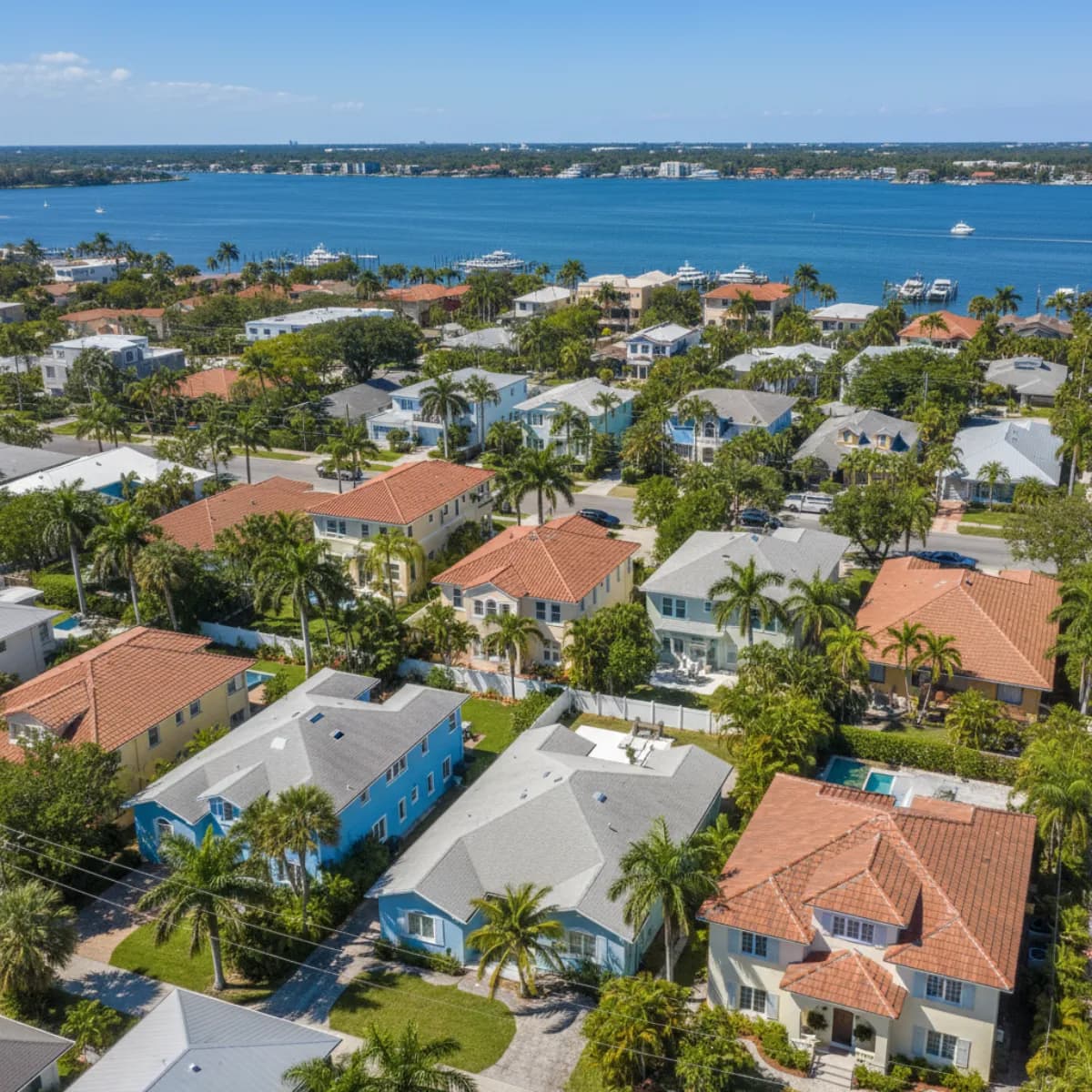
The Sunshine City on Tampa Bay
Instant Roof Replacement Quotes in St. Petersburg, FL
Over 260,000 residents across the Pinellas Peninsula need roofing that withstands hurricanes, relentless salt air, and the highest UV exposure of any major Florida city. Get instant quotes from pre-vetted Florida contractors for Old Northeast estates, Kenwood bungalows, Snell Isle waterfront homes, and barrier island properties across St. Pete Beach.
Free Quotes
no obligations ever
Contractor Bids
standardized scope comparison
Until You Choose
no spam, no lead resale
FL Contractors
licensed, insured, reviewed
St. Petersburg at a Glance
Population
5th largest city in Florida
Sunny Days / Year
The Sunshine City
Wind Rating Required
FBC hurricane zone standard
Permit Cost
Pinellas County permits
Avg. Waterfront Premium
Among highest in Florida
Barrier Islands
Extreme Gulf exposure
Roofing Challenges Unique to St. Petersburg
St. Petersburg occupies one of the most weather-exposed positions of any major American city. Perched on the Pinellas Peninsula between Tampa Bay to the east and the Gulf of Mexico to the west, the city is surrounded by water on three sides. This geography creates a convergence of roofing threats that is unmatched in the Tampa Bay metro: direct Gulf hurricane exposure with no inland buffer, salt air corrosion from both bay and Gulf waters, the most intense UV exposure in Florida with 361 sunny days per year, and an insurance market that has priced many waterfront homeowners into crisis. Every roofing decision in St. Petersburg must account for this extraordinary combination of challenges.
! Hurricane & Gulf Storm Exposure
St. Petersburg's position on the Pinellas Peninsula leaves it exposed to hurricanes approaching from the Gulf of Mexico with virtually no inland buffer. Unlike Tampa, which has some protection from the bay's geography, St. Pete's western coastline faces the open Gulf directly. Hurricane Ian (2022) demonstrated this vulnerability when it generated significant storm surge along St. Pete's Gulf-facing barrier islands, even though it made landfall to the south. NOAA storm surge models project 10-15 feet of surge in downtown St. Pete and 15-20 feet on barrier islands during a direct Category 4 hit. The city's low elevation - much of St. Pete sits below 15 feet above sea level - amplifies flood risk during any major storm event.
- - FBC requires 130+ mph wind resistance for all roofing
- - Barrier islands require 150+ mph rated materials
- - Sealed roof deck mandatory on all re-roofs
- - Enhanced nail patterns (6 nails per shingle)
# Salt Air Corrosion
Unlike inland cities, St. Petersburg is surrounded by salt water on three sides. Homes along the Tampa Bay waterfront, the Gulf beaches, and the barrier islands endure constant salt spray and salt-laden humidity that accelerates corrosion of metal roofing components, fasteners, flashing, and even the galvanized nails used in shingle installations. This salt exposure is significantly more aggressive than typical coastal cities because St. Pete's narrow peninsula ensures that virtually every property is within a few miles of salt water. Properties on the barrier islands and along the immediate waterfront experience the most severe conditions, where standard galvanized steel fasteners can show corrosion in as few as 5-7 years.
- - Stainless steel fasteners recommended within 3,000 ft of water
- - Aluminum standing seam preferred over galvanized steel
- - Kynar/PVDF coatings resist salt degradation
- - Concrete tile naturally resists salt corrosion
= Extreme UV & The Sunshine City
St. Petersburg holds a Guinness World Record for 768 consecutive days of sunshine and averages 361 sunny days per year, earning its enduring nickname as the Sunshine City. While this makes St. Pete one of the most desirable places to live in Florida, it also creates the most punishing UV environment for roofing materials in the Tampa Bay area. Roof surface temperatures routinely exceed 155-175 degrees F during summer months, and the cumulative UV exposure degrades asphalt-based roofing materials 30-40% faster than the national average. A 30-year architectural shingle in St. Pete may show significant granule loss and deterioration by year 18-22, well before warranty expiration.
- - Reflective materials reduce cooling costs 15-25%
- - Light-colored concrete tile reflects heat naturally
- - Metal with reflective coatings rated for extreme UV
- - Asphalt shingles degrade 30-40% faster in St. Pete
~ Insurance Crisis on the Waterfront
The homeowners insurance crisis hits St. Petersburg harder than almost anywhere else in Florida due to the city's extreme waterfront exposure. While the statewide insurance crisis affects all Florida homeowners, St. Pete's peninsula geography - water on three sides, low elevation, barrier island communities, and high storm surge vulnerability - creates a worst-case scenario for underwriters. Average premiums for waterfront properties in Pinellas County now exceed $5,000 per year, with barrier island properties often paying $7,000-$12,000 annually. Multiple private insurers have stopped writing new policies in St. Pete's flood-prone zones entirely, forcing homeowners to Citizens Property Insurance as a last resort.
- - Waterfront premiums exceed $5,000/year in Pinellas County
- - Barrier island properties may pay $7,000-$12,000/year
- - Impact-resistant materials qualify for 15-30% discounts
- - Roof age under 10-15 years often required for coverage
St. Petersburg Roof Replacement Cost by Material
St. Petersburg roofing costs reflect the dual demands of FBC hurricane compliance and the additional salt air protection required for peninsula and barrier island properties. Costs run comparable to Tampa for inland St. Pete neighborhoods but 10-20% higher for waterfront and barrier island properties where corrosion-resistant materials and fasteners are essential. The insurance savings from upgrading to impact-resistant materials often offset the higher upfront cost within 4-7 years in St. Pete's premium insurance market.
Concrete Tile
#1: Concrete Tile
The premier roofing material for St. Petersburg, dominating neighborhoods from Old Northeast and Snell Isle to Shore Acres and Venetian Isles. Concrete tile is the ideal match for St. Pete's unique challenges: it is naturally resistant to salt air corrosion (unlike metal), provides Class A fire protection, reflects solar heat to reduce cooling costs by 15-25%, and when properly installed with foam adhesive and mechanical fasteners, withstands hurricane-force winds exceeding 150 mph. The 50-75 year lifespan means a concrete tile roof installed in St. Pete today will likely outlast the homeowner. Mediterranean Revival and Spanish Colonial homes throughout Old Northeast and the waterfront districts have used tile roofing for nearly a century, and modern concrete profiles faithfully replicate these historic aesthetics while meeting all current FBC standards. The weight of concrete tile (900-1,100 lbs per 100 sq ft) requires adequate structural support, which must be verified during the replacement process.
Best For:
Waterfront homes, historic districts, Mediterranean styles
Lifespan:
50-75 years
Cost Range:
$18,000 - $38,000
Wind Rating:
150+ mph (properly installed)
Impact-Resistant Shingles
#2: Impact-Resistant Architectural Shingles
The most cost-effective storm-resistant option for St. Petersburg homeowners, offering the best balance of hurricane protection and insurance premium savings. Class 4 impact-resistant shingles (UL 2218 rated) use rubberized, polymer-modified asphalt that resists impact, wind, and UV degradation significantly better than standard architectural shingles. In St. Pete's insurance market, these shingles are often the difference between affordable coverage and Citizens Property Insurance as a last resort. Florida law mandates premium discounts of 15-30% for impact-resistant roofing, which translates to $750-$1,500 in annual savings for a St. Pete homeowner paying $5,000+/year in premiums. The payback period on the incremental cost over standard shingles is typically 3-5 years. Popular across Kenwood, Crescent Heights, Greater Woodlawn Park, and the Central Avenue corridor neighborhoods where bungalow and ranch-style homes predominate.
Best For:
Maximum insurance savings, budget-conscious homeowners
Lifespan:
22-28 years (St. Pete UV climate)
Cost Range:
$10,000 - $24,000
Insurance Savings:
15-30% premium reduction
Standing Seam Metal
#3: Standing Seam Metal
An increasingly popular choice across St. Petersburg, particularly for modern coastal-style homes and properties where maximum wind resistance is the priority. Standing seam panels interlock with concealed fasteners, eliminating the exposed screw penetrations that corrode and fail in St. Pete's salt air environment. Metal roofs can withstand 140-160 mph wind speeds, making them among the most hurricane-resistant options available. The critical consideration in St. Petersburg is material selection: aluminum standing seam is strongly recommended over galvanized steel for any property within 3,000 feet of salt water, as aluminum does not corrode in salt air. For homes further inland, galvanized steel with Kynar/PVDF coating is acceptable. Metal reflects solar heat, reducing cooling costs 15-25% - a meaningful savings in St. Pete's relentless sunshine. The 40-60 year lifespan and maintenance-free performance make metal an excellent long-term investment for St. Pete homeowners. Growing in popularity in the EDGE District, Grand Central District, and along the revitalized waterfront corridor.
Best For:
Coastal/modern homes, maximum wind resistance
Lifespan:
40-60 years
Cost Range:
$15,000 - $32,000
Wind Rating:
140-160 mph (concealed fasteners)
TPO / Flat Roof
#4: TPO & Modified Bitumen (Flat Roofs)
Essential for St. Petersburg's commercial buildings, mixed-use developments, and the flat-roofed structures common in the Grand Central District, Central Avenue corridor, the EDGE District, and the growing Innovation District near USF St. Petersburg. White TPO (thermoplastic polyolefin) membrane is the standard for flat and low-slope commercial roofing in St. Pete, reflecting up to 80% of solar energy in the Sunshine City's extreme UV environment. TPO is heat-welded at seams for monolithic waterproofing that handles the torrential afternoon thunderstorms common during summer months. Modified bitumen provides multi-layer protection for irregular roof shapes and rooftop dining areas that have become fixtures of St. Pete's restaurant and arts scene. Both systems must be mechanically attached or fully adhered to meet FBC wind resistance standards for low-slope applications in the Wind-Borne Debris Region.
Best For:
Commercial, mixed-use, flat-roofed structures
Lifespan:
20-30 years
Cost Range:
$8,000 - $22,000
Energy Savings:
Reflects 80%+ solar energy
St. Petersburg Average Roof Cost: Architectural shingles $8,500-$18,000. Impact-resistant shingles $10,000-$24,000. Concrete tile $18,000-$38,000. Metal $15,000-$32,000. TPO $8,000-$22,000. Waterfront and barrier island properties add 10-20% for salt-resistant materials. Get your exact price with a free instant estimate.
St. Petersburg's Historic Neighborhoods & Architectural Heritage
St. Petersburg's identity is shaped by its historic neighborhoods, many dating to the city's founding era in the early 1900s. The Old Northeast, established in the 1910s-1920s, is the crown jewel - a waterfront neighborhood of Mediterranean Revival mansions, Craftsman bungalows, and Colonial Revival homes lining tree-canopied streets along Tampa Bay. Snell Isle, developed in the 1920s by C. Perry Snell, features grand waterfront estates with barrel tile roofs that have defined St. Pete's architectural character for a century. The Kenwood neighborhood, one of the oldest in the city, has emerged as a nationally recognized arts and preservation community where maintaining historic roofing character is taken seriously by residents and the local historic preservation board.
Roofing in these historic neighborhoods requires balancing preservation of architectural character with modern FBC hurricane performance standards. Many of the original tile roofs in Old Northeast and Snell Isle were installed with mortar sets that do not meet current wind resistance codes. When these roofs reach end of life, replacement must use FBC-compliant fastening methods - foam adhesive and mechanical clips - while preserving the barrel tile or S-tile profile that defines the neighborhood's visual identity. Modern concrete tile manufacturers offer profiles that faithfully replicate historic clay tile aesthetics at a lower cost and weight, making it possible to preserve the look while upgrading to full hurricane protection.
Properties within designated local historic districts may require review by the Community Planning and Preservation Commission (CPPC) for material or color changes. Our pre-vetted contractors are experienced with the CPPC process and can guide homeowners through the review requirements while recommending materials that satisfy both preservation standards and FBC hurricane compliance.
Barrier Island Roofing: St. Pete Beach, Treasure Island & Pass-a-Grille
St. Petersburg's barrier islands represent the most demanding roofing environment in the Tampa Bay region. St. Pete Beach, Treasure Island, Madeira Beach, Redington Beach, Indian Shores, and the historic community of Pass-a-Grille sit directly on the Gulf of Mexico with no inland buffer from tropical systems. These narrow strips of land experience the most aggressive salt spray, the highest wind exposure classifications, and the greatest storm surge vulnerability in all of Pinellas County.
Roofing on barrier islands demands materials and installation methods that exceed mainland St. Pete standards. Wind exposure classifications are typically Exposure D (the highest category), requiring materials and fastening schedules rated for 150+ mph. All metal components - fasteners, flashing, drip edge, ridge cap - should be stainless steel or aluminum to resist the accelerated salt corrosion that can degrade standard galvanized hardware in as few as 3-5 years on the Gulf front. Standing seam metal on barrier islands should be aluminum rather than galvanized steel, with Kynar/PVDF finish for maximum corrosion resistance. Concrete tile remains an excellent barrier island choice due to its inherent salt resistance and wind performance.
Logistics on barrier islands also affect roofing projects. Material delivery depends on bridge access (primarily the Corey Causeway and the Treasure Island Causeway), and staging areas are often limited due to narrow lots and dense development. Many barrier island properties are condominiums or townhouses governed by HOAs with specific material, color, and contractor requirements. Our pre-vetted contractors have barrier island experience and handle the coordination, permitting, and HOA compliance required for these specialized properties.
St. Petersburg Building Requirements & Pinellas County Permits
Important Local Regulations
Pinellas County & City of St. Petersburg Permits
All roof replacements in St. Petersburg and unincorporated Pinellas County require building permits. City of St. Petersburg permits are obtained through the Development Review Services Department, which offers an electronic permitting portal for faster submission. Unincorporated Pinellas County permits are processed through the County Building Services Department. Fees range from $200 to $500 depending on project scope and valuation. Most residential re-roof permits are processed within 3-5 business days. Inspections are mandatory at multiple stages: initial deck condition assessment, sealed roof deck underlayment verification, and final roof covering inspection.
Florida Building Code (FBC) Wind Requirements
St. Petersburg is within the Wind-Borne Debris Region of the FBC, imposing the state's most stringent roofing standards outside of the Miami-Dade High Velocity Hurricane Zone. All roofing materials must be rated for minimum 130 mph wind resistance. Shingle installations require enhanced 6-nail patterns and must pass ASTM D3161 Class F or ASTM D7158 Class H wind resistance testing. A sealed roof deck system is mandatory on all re-roofs, using peel-and-stick self-adhering modified bitumen underlayment or mechanically attached underlayment with taped seams. Roof sheathing must be attached with 8d ring-shank nails at 6-inch on-center spacing along edges and 12-inch spacing in the field.
Historic District Requirements
St. Petersburg maintains several locally designated historic districts including Old Northeast, Kenwood, Roser Park, Round Lake, and portions of the Jungle Terrace neighborhood. Properties within these districts may be subject to review by the Community Planning and Preservation Commission (CPPC) when changing roof materials, profiles, or colors. The CPPC evaluates whether proposed changes are compatible with the neighborhood's historic character. Approval is typically required before a building permit can be issued for work that alters the exterior appearance. Replacement with like materials and colors generally receives expedited review.
Florida Contractor Licensing
Florida requires all roofing contractors to hold either a Certified Roofing Contractor (CCC) license (valid statewide) or a Registered Roofing Contractor (RC) license (valid in the issuing jurisdiction). Verify any contractor at myfloridalicense.com through the DBPR (Department of Business and Professional Regulation). Licensed contractors must carry workers' compensation insurance and a minimum $300,000 general liability policy. All of RoofVista's pre-vetted St. Petersburg contractors hold active CCC or RC licenses with verified insurance coverage.
Wind Mitigation Inspections
After a roof replacement, St. Petersburg homeowners should obtain a wind mitigation inspection (OIR-B1-1802 form) documenting the new roof's hurricane-resistant features. This inspection evaluates roof covering compliance, roof deck attachment, roof-to-wall connections, roof geometry (hip vs. gable), secondary water barrier, and opening protection. A favorable wind mitigation report can reduce insurance premiums by 15-45% - a critical savings in St. Pete's high-premium insurance market. The inspection costs $75-$150 and remains valid until the next re-roofing.
St. Petersburg Neighborhoods We Serve
From the waterfront mansions of Snell Isle to the historic bungalows of Kenwood and the barrier island condos of St. Pete Beach, our pre-vetted contractors serve every neighborhood across St. Petersburg and the Pinellas Peninsula. Each area has unique roofing considerations based on its architecture, proximity to water, historic district status, and flood zone designation.
Old Northeast
- - 1910s-1930s Mediterranean Revival & Craftsman
- - Locally designated historic district
- - Barrel tile and S-tile predominant
- - Tampa Bay waterfront exposure on east side
- - CPPC review may be required for changes
Snell Isle
- - Grand waterfront estates from the 1920s
- - Premium tile roofing throughout
- - Direct Tampa Bay water exposure
- - Salt air corrosion a primary concern
- - Highest property values in St. Pete
Kenwood
- - Nationally recognized arts & preservation district
- - 1920s-1940s bungalows and cottages
- - Mix of shingle and tile on historic homes
- - Strong community preservation ethic
- - Rapidly appreciating property values
St. Pete Beach & Pass-a-Grille
- - Gulf-front barrier island community
- - Extreme wind exposure (150+ mph rated)
- - Severe salt spray corrosion
- - Bridge access affects material delivery
- - Highest insurance premiums in the area
Downtown & Arts District
- - Rapid growth and development boom
- - Mix of historic and new construction
- - Flat roofs on commercial buildings
- - EDGE District and Grand Central corridor
- - TPO and metal for restaurants and retail
Shore Acres & Venetian Isles
- - Canal-front and bayfront homes
- - 1960s-1980s ranch and Florida-style homes
- - Concrete tile and shingle predominant
- - Flood zone exposure on many lots
- - First-generation roofs reaching end of life
Treasure Island & Madeira Beach
- - Gulf-front barrier island communities
- - Mix of single-family and condominiums
- - Stainless steel fasteners required
- - Aluminum metal preferred for salt resistance
- - HOA requirements common in condo complexes
Crescent Heights & Greater Woodlawn Park
- - Post-war bungalows and ranch homes
- - Predominantly shingle roofing
- - Affordable upgrade to impact-resistant
- - Central St. Pete location
- - Growing demand for roof upgrades
Jungle Terrace & Tyrone
- - 1950s-1970s suburban neighborhoods
- - Mix of shingle, tile, and metal
- - Moderate proximity to Gulf beaches
- - Many homes due for second re-roof
- - Family-oriented communities with steady demand
St. Pete's Arts District Growth & Rising Home Values
St. Petersburg has undergone a remarkable transformation over the past decade, evolving from a quiet retirement city into one of Florida's most dynamic arts, culture, and culinary destinations. The revitalization of the downtown waterfront, the growth of the EDGE District and Grand Central District as creative corridors, and the international recognition of the Dali Museum and Morean Arts Center have driven unprecedented real estate appreciation across the city. Median home prices in St. Pete have more than doubled since 2015 in many neighborhoods, with waterfront properties in Old Northeast, Snell Isle, and Shore Acres commanding premium valuations.
This appreciation has made roof condition an increasingly critical factor in real estate transactions. A new, FBC-compliant roof with documented wind mitigation features adds measurable value to a St. Pete home and is often the difference between a smooth closing and a failed insurance contingency. Buyers' lenders require proof of insurability, and in St. Pete's waterfront market, a roof that cannot pass a 4-point inspection will stop a sale in its tracks. Homes with roofs older than 15 years frequently face insurance contingency objections, while recently installed roofs with impact-resistant materials become compelling selling points.
The commercial roofing market in St. Pete is equally active. The restaurant, brewery, and gallery boom along Central Avenue, the Warehouse Arts District, and the Grand Central corridor has created steady demand for flat roof installations and replacements. Many of these commercial buildings are adapted historic structures that require careful TPO or modified bitumen installation to preserve their character while meeting modern waterproofing and energy efficiency standards.
Insurance Considerations for St. Petersburg Homeowners
Navigating the Waterfront Insurance Crisis
St. Petersburg sits at the epicenter of Florida's homeowners insurance crisis due to its unique geographic exposure. The Pinellas Peninsula's position between Tampa Bay and the Gulf of Mexico, its low elevation, and the presence of multiple barrier island communities create a risk profile that has driven premiums to among the highest in the state. Your roof is the single most important factor in determining whether you can obtain coverage and at what price - and in St. Pete's waterfront zones, the stakes are higher than anywhere else in the Tampa Bay metro.
Current Challenges
- - Waterfront premiums exceed $5,000/year in Pinellas County
- - Barrier island premiums can reach $7,000-$12,000/year
- - Multiple carriers have stopped writing in flood-prone zones
- - Citizens Property Insurance as last resort for many waterfront homes
- - 4-point inspections mandatory for homes with older roofs
- - Roofs older than 15 years may be uninsurable through private carriers
How Your Roof Can Help
- - New FBC-compliant roof restores private market insurability
- - Impact-resistant materials (Class 4) save 15-30% on premiums
- - Wind mitigation inspection documents all savings-qualifying features
- - Hip roof shape earns additional premium credits
- - Sealed roof deck (SWB) is a key discount trigger
- - Annual savings of $750-$2,700+ on waterfront properties
Our pre-vetted contractors understand St. Petersburg's waterfront insurance requirements and install roofing systems that maximize wind mitigation credits and restore or maintain your policy eligibility. Every St. Pete roof replacement includes documentation suitable for your wind mitigation inspector.
Frequently Asked Questions About St. Petersburg Roofing
How much does a roof replacement cost in St. Petersburg, FL?
Roof replacement in St. Petersburg typically costs between $8,500 and $18,000 for architectural shingles on a standard 1,500-2,000 sq ft home. Impact-resistant shingles run $10,000-$24,000 and qualify for insurance premium discounts of 15-30% that often recoup the added cost within 3-5 years. Concrete tile, the dominant premium material across St. Pete's historic waterfront neighborhoods, ranges from $18,000 to $38,000 depending on tile profile, home size, and roof complexity. Standing seam metal runs $15,000-$32,000 and delivers a 40-60 year lifespan with the highest wind resistance. TPO for flat commercial applications costs $8,000-$22,000. All prices include FBC-mandated sealed roof deck, enhanced nail patterns, and permit fees. Waterfront and barrier island properties (St. Pete Beach, Treasure Island, Pass-a-Grille) typically add 10-20% to these ranges due to salt-resistant materials, stainless steel fasteners, higher wind exposure classifications, and specialized logistics. Homes with multiple stories, steep pitch, complex geometry, or tile-to-shingle conversions will fall toward the higher end of each range.
What are the hurricane roofing requirements in St. Petersburg?
St. Petersburg falls within Florida's Wind-Borne Debris Region under the Florida Building Code (FBC), requiring all roofing materials to be rated for minimum 130 mph wind resistance. Barrier island properties and homes in the highest wind exposure zones may require 150+ mph rated materials and installation methods. Shingle installations require enhanced 6-nail patterns (versus the standard 4-nail) and must pass ASTM D3161 Class F or ASTM D7158 Class H wind resistance testing. The FBC mandates a sealed roof deck system on all re-roofs, achieved through peel-and-stick self-adhering modified bitumen underlayment or mechanically attached underlayment with taped seams. Roof sheathing must be attached with 8d ring-shank nails at 6-inch spacing along panel edges and 12-inch spacing in the field. St. Pete's position on the Pinellas Peninsula between Tampa Bay and the Gulf of Mexico creates higher wind exposure than many inland Florida cities, making these code requirements especially critical for long-term performance.
What roofing materials are best for St. Petersburg's waterfront climate?
St. Petersburg's unique position on a narrow peninsula between Tampa Bay and the Gulf demands roofing materials that handle four simultaneous threats: hurricane-force winds, salt air corrosion, extreme UV exposure (361 sunny days per year), and torrential rain. Concrete tile (50-75 years) is the top choice for waterfront properties, offering exceptional wind resistance when foam-adhered and mechanically fastened, natural salt corrosion resistance, Class A fire protection, and heat reflection that reduces cooling costs 15-25%. Impact-resistant architectural shingles (Class 4, UL 2218, 22-28 years in St. Pete's UV climate) provide the best value proposition, balancing storm protection with 15-30% insurance premium savings. Standing seam metal (40-60 years) delivers the highest wind ratings at 140-160 mph with concealed fasteners - use aluminum rather than galvanized steel for any property within 3,000 feet of salt water. For barrier island properties, aluminum standing seam with Kynar/PVDF coating and stainless steel fasteners is the most durable long-term solution. For flat commercial roofs in St. Pete's growing arts and restaurant districts, white TPO membrane provides heat reflection and waterproofing.
How does St. Petersburg's insurance crisis affect roofing?
The insurance crisis in St. Petersburg is more acute than almost anywhere else in Florida due to the city's extreme waterfront exposure on the Pinellas Peninsula. Average premiums for waterfront properties in Pinellas County now exceed $5,000 per year, with barrier island properties (St. Pete Beach, Treasure Island, Pass-a-Grille) frequently paying $7,000-$12,000 annually. Multiple private insurers have stopped writing new policies in St. Pete's flood-prone and wind-exposed zones, forcing many homeowners to Citizens Property Insurance as a last resort. Your roof's age, material, and code compliance directly determine whether affordable private market coverage is available. Many insurers refuse to write or renew policies on homes with roofs older than 15 years regardless of visible condition. Upgrading to impact-resistant Class 4 materials triggers mandatory premium discounts of 15-30% under Florida law, which at St. Pete's premium levels translates to $750-$1,500+ in annual savings. A favorable wind mitigation inspection documenting FBC compliance, secondary water barrier, and proper roof-to-wall connections can save $1,000-$2,700 annually on waterfront properties. For many St. Pete homeowners, the insurance payback on a roof upgrade is faster than anywhere else in Florida - typically 4-7 years.
What is the Pinellas County permit process for roof replacement?
All roof replacements within the City of St. Petersburg are permitted through the Development Review Services Department, which offers an electronic permitting portal for streamlined submission and tracking. Properties in unincorporated Pinellas County obtain permits through the County Building Services Department. Permit fees typically range from $200 to $500 based on project scope and valuation. Most residential re-roof permits are approved within 3-5 business days. The FBC mandates inspections at multiple stages: an initial deck condition assessment, a sealed roof deck underlayment verification (this critical inspection confirms the secondary water barrier is properly installed before the final roofing material is applied), and a final inspection of the completed roof covering. Properties within locally designated historic districts (Old Northeast, Kenwood, Roser Park, Round Lake) may require additional review by the Community Planning and Preservation Commission (CPPC) if changing roof material type, profile, or color. Like-for-like replacements in historic districts generally receive expedited approval. Failing to obtain a permit can result in fines, required tear-off and re-inspection, and complications during home sales. All of our pre-vetted contractors handle the full permitting process including application, scheduling inspections, and final sign-off.
Are there special roofing requirements for St. Pete's historic neighborhoods?
Yes, St. Petersburg maintains several locally designated historic districts with preservation oversight. Old Northeast, Kenwood, Roser Park, Round Lake, and portions of Jungle Terrace are among the neighborhoods where the Community Planning and Preservation Commission (CPPC) may review exterior changes, including changes to roof material, profile, or color. The intent is preserving the architectural character of these early 20th-century neighborhoods - many featuring Mediterranean Revival, Craftsman, and Colonial Revival architecture - while allowing modern hurricane-rated materials. In practice, this means that a tile-to-shingle conversion in Old Northeast may require CPPC approval, while a tile-to-tile replacement with a matching profile and color would typically receive expedited review. Modern concrete tile profiles are available that faithfully replicate historic barrel tile, S-tile, and flat tile aesthetics while meeting all current FBC hurricane standards, making it possible to preserve neighborhood character without sacrificing storm protection. Our pre-vetted contractors are experienced with St. Pete's historic district requirements and can guide homeowners through the CPPC process, recommending materials that satisfy both preservation standards and FBC compliance.
How long does a roof replacement take in St. Petersburg?
Most St. Petersburg roof replacements take 2-4 days for architectural or impact-resistant shingles, 4-7 days for concrete tile installations, and 3-5 days for standing seam metal on a standard residential home. St. Pete's subtropical climate allows year-round roofing, which is a meaningful advantage over northern markets. However, the rainy season from June through September brings predictable afternoon thunderstorms that can halt work for 1-3 hours daily, potentially adding 1-2 days to the timeline. The June through November hurricane season can cause scheduling disruptions if storms threaten the Gulf Coast, and post-storm repair demand creates 4-8 week backlogs. Barrier island properties (St. Pete Beach, Treasure Island, Pass-a-Grille) may require an additional 1-2 days due to bridge access limitations for material delivery, tighter staging areas on narrow lots, and HOA coordination for condominiums and townhouses. Many St. Pete homeowners prefer to schedule replacements during the drier months of November through May when weather interruptions are minimal and contractor availability is greatest.
Do barrier island properties in St. Pete have different roofing requirements?
Yes, and the differences are significant. Barrier island communities including St. Pete Beach, Treasure Island, Madeira Beach, Redington Beach, Indian Shores, and the historic community of Pass-a-Grille face the most demanding roofing requirements in the Tampa Bay region. Wind exposure classifications are typically Exposure D (the highest FBC category for open coastal terrain), requiring materials and fastening schedules rated for 150+ mph - above the standard 130 mph mainland requirement. Salt air corrosion is dramatically more aggressive on barrier islands, with salt spray depositing directly on roofing surfaces during onshore Gulf winds. All metal components - fasteners, flashing, drip edge, valley metal, ridge cap - should be stainless steel or marine-grade aluminum. Standing seam metal roofing should be aluminum rather than galvanized steel, finished with Kynar/PVDF coatings for maximum corrosion resistance. Standard galvanized fasteners can show corrosion in as few as 3-5 years on Gulf-front barrier island properties. Flood zone designations (AE and VE zones) affect insurance requirements and may influence decisions about roofing investment relative to the property's overall flood risk profile. Logistics also differ: material delivery depends on bridge access, staging areas are limited on narrow lots, and many barrier island properties are condominiums governed by HOAs with specific material, color, and contractor approval requirements. Our pre-vetted contractors have barrier island experience and coordinate all of these requirements.
Florida Roofing Resources
Get Your St. Petersburg Roof Quote in Minutes
Enter your address to compare instant quotes from pre-vetted Florida contractors who specialize in waterfront protection, barrier island roofing, historic neighborhood preservation, and Pinellas County hurricane codes