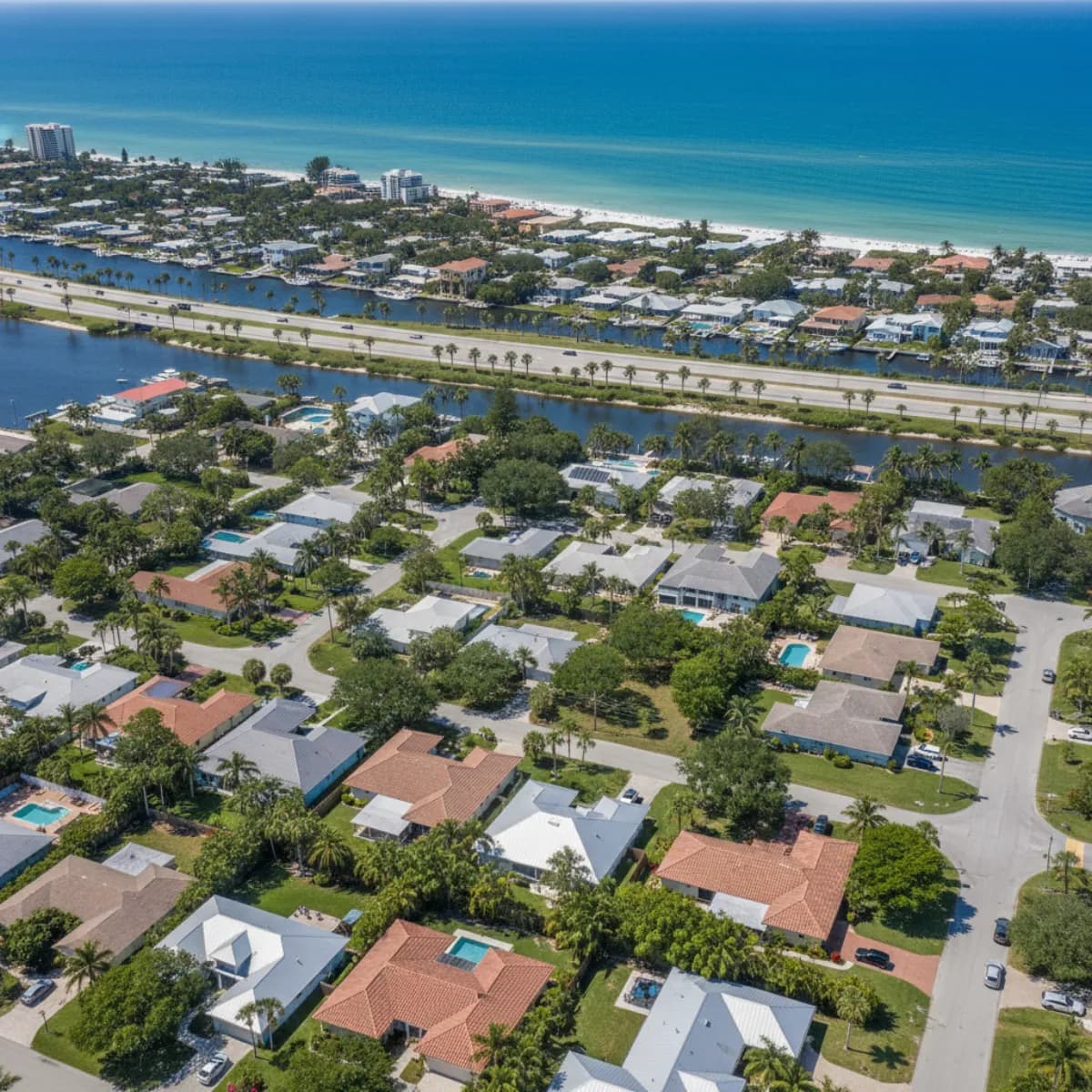
Gulf Coast Hurricane Protection
Instant Roof Replacement Quotes in Clearwater, FL
Clearwater sits on Florida's Gulf Coast in the heart of the Tampa Bay metro, where warm Gulf waters fuel rapidly intensifying hurricanes and year-round salt air corrodes unprepared roofing systems. From beachfront condos on Clearwater Beach to single-family homes in mainland neighborhoods, every property needs roofing rated for 130-140 mph winds. Get instant quotes from pre-vetted Florida CCC-licensed contractors who specialize in Gulf Coast hurricane protection across Pinellas County.
Free Quotes
no obligations ever
Contractor Bids
standardized scope comparison
Until You Choose
no spam, no lead resale
FL Contractors
CCC-licensed, insured, reviewed
Clearwater at a Glance
Population (City)
Tampa Bay metro area
MPH Wind Zone
FBC coastal design speed
Coast Exposure
Direct Gulf of Mexico frontage
Permit Cost
Clearwater / Pinellas County
County
Barrier island + mainland
Hurricane Helene
Tampa Bay flooding event
Why Clearwater Demands Gulf-Grade Roofing
Clearwater occupies a unique position on Florida's Gulf Coast, straddling the mainland of Pinellas County and the barrier islands that include world-famous Clearwater Beach. The city's approximately 117,000 residents live in one of the most hurricane-vulnerable metro areas in the United States. Unlike Atlantic-facing communities that often receive days of warning as storms track westward across the ocean, Gulf Coast cities like Clearwater can face rapidly intensifying storms that develop peak strength over the warm, shallow waters of the Gulf of Mexico with far less lead time.
This vulnerability was underscored in 2024 when Hurricane Helene brought historic storm surge and flooding to the Tampa Bay area, causing devastating damage to properties across Pinellas County. While Clearwater avoided a direct eyewall hit, the flooding demonstrated exactly what meteorologists and emergency management officials have warned about for decades: Tampa Bay's funnel-shaped geography amplifies storm surge, and the barrier islands — including Clearwater Beach — sit at extreme risk. For homeowners, the message is clear: your roof is the first and most critical line of defense, and it must be built to withstand the full range of Gulf Coast threats.
Clearwater's roofing requirements under the Florida Building Code mandate wind resistance ratings of 130-140 mph depending on exact location, exposure category, and proximity to the coast. Barrier island properties face the most stringent requirements due to their Exposure Category D classification — meaning there are no obstructions between the property and the open water to reduce wind speeds. RoofVista's pre-vetted contractors in Clearwater understand these nuances and deliver quotes that account for your property's specific wind zone, salt exposure level, and building code requirements.
Roofing Challenges Unique to Clearwater
Clearwater's subtropical Gulf Coast location creates a punishing combination of environmental factors that test even the best roofing systems. The convergence of hurricane-force winds, salt air corrosion, extreme UV exposure, heavy tropical rainfall, and intense humidity demands roofing materials and installation methods designed specifically for coastal Florida conditions.
! Gulf Storm Surge & Hurricane Winds
Clearwater's position on the Gulf Coast makes it vulnerable to hurricanes that intensify rapidly over warm Gulf waters. Tampa Bay's unique funnel-shaped geography amplifies storm surge — a direct Category 3+ hit could push 10-15 feet of water into coastal neighborhoods. The Florida Building Code requires 130-140 mph wind ratings for Clearwater, with barrier island properties at the highest tier. Hurricane Helene in 2024 demonstrated the region's vulnerability with record storm surge levels across Pinellas County.
- - 130-140 mph FBC wind design speed
- - Exposure Category D on barrier islands
- - Gulf storms can intensify rapidly before landfall
- - Tampa Bay amplifies storm surge significantly
~ Salt Air Corrosion
With the Gulf of Mexico immediately to the west and Tampa Bay to the east, Clearwater is essentially surrounded by salt water. Properties on Clearwater Beach and Sand Key experience the most severe corrosion, but prevailing Gulf breezes carry salt air deep into mainland neighborhoods across all of Pinellas County. Standard galvanized fasteners, flashing, and gutters begin corroding within 2-5 years in these conditions. Even homes several miles from the waterfront experience accelerated corrosion during storm events when salt spray is carried far inland.
- - Stainless steel or hot-dipped galvanized fasteners required
- - Marine-grade PVDF coatings for metal roofing
- - Aluminum or copper flashing (not standard steel)
- - Annual corrosion inspections for beachfront properties
= Intense UV & Subtropical Heat
Clearwater averages 240+ sunny days per year, with UV index levels regularly hitting 10-11 (very high to extreme) from April through October. Roof surface temperatures routinely exceed 155 degrees F in summer. This relentless UV bombardment degrades asphalt shingles faster than in northern climates, breaks down sealant strips, and causes polymer-based underlayment to deteriorate prematurely. Clearwater's combination of heat and humidity also promotes algae and mold growth on north-facing roof slopes, creating dark streaks that absorb even more heat and accelerate deterioration.
- - UV Index 10-11 (extreme) during summer months
- - SBS-modified shingles resist UV degradation
- - Reflective tile and metal reduce attic temperatures
- - Algae-resistant shingles recommended for north slopes
# Tropical Rainfall & Humidity
Clearwater receives approximately 50 inches of rainfall annually, concentrated in intense afternoon thunderstorms from June through September. These storms can drop 2-4 inches of rain in under an hour, testing gutter capacity, roof drainage, and waterproofing integrity. The high humidity — averaging 74% year-round — creates conditions favorable for mold, mildew, and algae growth on roofing materials. Flat-roofed condos and commercial buildings are particularly susceptible to ponding water issues after heavy downpours, which can lead to membrane degradation and leaks.
- - 50 inches annual rainfall (intense summer storms)
- - 74% average humidity promotes biological growth
- - Proper drainage critical for flat condo roofs
- - Peel-and-stick underlayment for wind mitigation credit
Clearwater Roof Replacement Cost by Material
Clearwater roofing costs reflect the requirements of Gulf Coast construction: all materials must carry a Florida Product Approval, installation must meet the FBC's 130-140 mph wind zone requirements, and coastal properties demand corrosion-resistant components that cost more than standard alternatives. Labor rates in the Tampa Bay metro average $45-$75/hour for qualified CCC-licensed roofers, and demand remains high following recent storm seasons. Below are typical costs for a standard 2,000-2,500 square foot Clearwater home.
Architectural Shingles
#1: Architectural Shingles (SBS-Modified)
Architectural shingles remain the most popular and affordable roofing option for single-family homes in mainland Clearwater. For Gulf Coast installation, SBS (Styrene-Butadiene-Styrene) modified shingles are strongly recommended over standard oxidized asphalt. The polymer modification provides superior flexibility in Clearwater's extreme heat, better UV resistance under the relentless Florida sun, and enhanced impact resistance for wind-blown debris during Gulf storms. When installed with the FBC-required high-wind nail pattern (6 nails per shingle) and compatible peel-and-stick underlayment, architectural shingles can achieve 130+ mph wind ratings while providing a cost-effective solution for neighborhoods like Countryside, Clearwater East, and the mainland residential areas between US-19 and McMullen Booth Road.
Best For:
Mainland single-family homes, budget-conscious
Lifespan:
20-30 years (Clearwater climate)
Cost Range:
$11,000 - $22,000
Wind Rating:
130+ mph (high-wind install)
Concrete Tile
#2: Concrete Tile (Barrel & Flat)
Concrete tile is a cornerstone of Florida Gulf Coast roofing and is widely used across Clearwater, particularly in established neighborhoods and communities with Mediterranean, Spanish, or Floridian architectural styles. Each tile weighs 9-12 pounds, providing inherent wind resistance through sheer mass — a significant advantage in Clearwater's hurricane zone. The barrel (S-tile) profile is the most popular, offering the classic Florida aesthetic along with excellent water shedding during tropical downpours. Concrete tile provides a Class A fire rating, resists salt air degradation far better than asphalt, and offers a 50-75 year expected lifespan. For Clearwater homeowners concerned about cooling costs, concrete tile's natural thermal mass absorbs heat during the day and releases it slowly, reducing peak attic temperatures and air conditioning loads during the intense summer months.
Best For:
Established homes, Mediterranean styles
Lifespan:
50-75 years
Cost Range:
$18,000 - $35,000
Wind Rating:
140+ mph (foam adhesive install)
Standing Seam Metal
#3: Standing Seam Metal
Standing seam metal roofing has become the premium choice for Clearwater homeowners who prioritize maximum hurricane protection and long-term durability. The continuous interlocking panel design with concealed fasteners creates an exceptionally wind-resistant surface — standing seam systems routinely achieve 140+ mph ratings that exceed Clearwater's building code requirements. For Gulf Coast applications, material selection is critical: Galvalume steel with PVDF (Kynar 500) fluoropolymer coating provides the best combination of salt corrosion resistance and color retention. Aluminum panels are an alternative that is naturally corrosion-resistant but less rigid. Standing seam metal reflects a significant portion of solar radiation, reducing cooling costs by 15-25% compared to dark asphalt shingles — a meaningful advantage in Clearwater's 8-month warm season. The material is particularly popular for waterfront homes on Clearwater Beach, Harbor Oaks, and the Clearwater Harbor area.
Best For:
Coastal homes, maximum hurricane protection
Lifespan:
40-70 years
Cost Range:
$20,000 - $40,000
Corrosion Protection:
Marine-grade PVDF coating essential
TPO / Flat Roof
#4: TPO & Modified Bitumen (Flat Roofs)
Clearwater's condo and commercial building landscape creates enormous demand for flat roof systems. Clearwater Beach alone has dozens of mid-rise and high-rise condominiums, many built in the 1970s-1990s with flat or low-slope roofs that are now reaching the end of their service life. White TPO (Thermoplastic Polyolefin) membrane is the standard replacement choice, providing excellent heat reflection in Clearwater's intense sun while withstanding the ponding water that accumulates during heavy tropical downpours. For condo associations, TPO offers the best combination of performance, cost-effectiveness, and energy savings. Modified bitumen provides superior puncture resistance for flat roofs with rooftop HVAC equipment, satellite dishes, or regular maintenance foot traffic. Both systems must be mechanically attached or fully adhered to meet FBC wind uplift requirements for Clearwater's coastal wind zone.
Best For:
Condos, commercial buildings, low-slope roofs
Lifespan:
20-30 years
Cost Range:
$8,000 - $20,000
Energy Savings:
White TPO reflects 80%+ solar energy
Clearwater Average Roof Cost: Architectural shingles $11,000-$22,000. Concrete tile $18,000-$35,000. Standing seam metal $20,000-$40,000. Flat/TPO $8,000-$20,000. Gulf Coast salt air requirements and 130-140 mph wind zone compliance add 10-20% compared to inland Florida markets. Get your exact price with a free instant estimate.
Clearwater & Pinellas County Building Requirements
Florida Building Code — Clearwater Wind Zone
Wind Speed Design Requirements
Clearwater falls within the FBC's 130-140 mph ultimate design wind speed zone, with exact requirements varying by location, building height, exposure category, and roof geometry. Properties on Clearwater Beach and other barrier islands are classified as Exposure Category D (open water exposure with no upwind obstructions), which requires the highest wind resistance ratings. Mainland properties may qualify for Exposure Category C, with slightly lower requirements. All roofing products must carry a valid Florida Product Approval (FL number) demonstrated to meet or exceed the required wind speed for the specific installation location.
Permit Process — City of Clearwater / Pinellas County
Roof replacement permits are issued by the City of Clearwater Building Department for properties within city limits, or by Pinellas County for unincorporated areas. Applications require the contractor's active CCC license number, Florida Product Approval numbers for all materials, a signed Notice of Commencement, and proof of insurance. For tile and metal installations, a structural engineer's sealed drawing may be required. Inspections cover initial deck preparation and fastening, underlayment installation (dry-in), and final roof covering. Permit fees typically range from $200-$500 depending on project scope.
Hurricane Strap & Roof-to-Wall Connections
The FBC requires approved hurricane straps or clips at every roof truss-to-wall connection. During a re-roof, contractors must verify existing connections and upgrade them if they do not meet current code. Single wraps or clips are the minimum; double wraps provide superior uplift resistance. Ring-shank nails at 6-inch spacing are required for roof deck attachment in Clearwater's wind zone, compared to 12-inch spacing in lower-wind areas of Florida.
Wind Mitigation & Insurance Credits
Florida Statute 627.0629 requires insurers to offer premium discounts for verified wind mitigation features. A licensed inspector completes the OIR-B1-1802 form evaluating roof covering, deck attachment, roof-to-wall connections, roof geometry, secondary water resistance, and opening protection. Clearwater homeowners with new, code-compliant roofs including hurricane straps, sealed deck underlayment, and impact-resistant covering can save 20-50% on the wind portion of their insurance premium — particularly significant given that wind coverage often accounts for 50-65% of total premium cost in coastal Pinellas County.
CCC Licensing Requirements
All roofing contractors in Clearwater must hold a Certified Roofing Contractor (CCC) license from the Florida DBPR, carry workers' compensation insurance, and maintain a minimum $10,000 surety bond. Verify any contractor's license at myfloridalicense.com. RoofVista pre-vets every contractor for active licensing, insurance coverage, work history, and customer satisfaction before they can submit quotes through our marketplace.
Clearwater Neighborhoods We Serve
From the beachfront condos of Clearwater Beach to the established single-family neighborhoods of the mainland, our pre-vetted contractors serve every area of Clearwater and greater Pinellas County. Each neighborhood presents distinct roofing considerations based on its proximity to the Gulf, building age, architectural style, and specific exposure conditions.
Clearwater Beach & Sand Key
- - Maximum Gulf salt air exposure
- - Exposure Category D (open water)
- - Condos with flat roof systems
- - Storm surge zone — waterproofing critical
- - Marine-grade fasteners mandatory
Harbor Oaks & Old Clearwater
- - Historic Clearwater Harbor district
- - Mix of historic and renovated homes
- - Waterfront salt exposure from bay
- - Mature tree canopy (debris concerns)
- - Tile and metal predominant
Countryside & Northwood
- - Suburban single-family homes
- - 1970s-1990s construction era
- - Architectural shingles common
- - Many roofs reaching end of life
- - HOA communities with material rules
Clearwater East & Gulf-to-Bay
- - Mixed residential and commercial
- - Flat roof commercial buildings
- - Affordable housing stock
- - Budget-conscious material options
- - Quick access from US-19 corridor
Belleair & Belleair Beach
- - Upscale waterfront properties
- - Premium roofing materials expected
- - Gulf and bay exposure (dual salt)
- - Concrete tile and metal preferred
- - Higher property values justify investment
Safety Harbor & Dunedin (Nearby)
- - Northern Pinellas communities
- - Downtown historic districts
- - Mix of old and new construction
- - Bay-side salt air exposure
- - Served by Clearwater-area contractors
Condo Roof Replacement in Clearwater
Aging Condo Roofs: A Clearwater Priority
Clearwater's condominium landscape is extensive — particularly along Clearwater Beach, Sand Key, and the Island Estates area. Many of these mid-rise and high-rise buildings were constructed in the 1970s through 1990s, meaning their original flat roof systems have reached or exceeded their expected 20-30 year service life. Following the Surfside condo collapse tragedy in 2021, Florida enacted new building safety legislation (SB 4-D, 2022) requiring mandatory structural inspections for condos 30 years and older (25 years for coastal buildings). While these inspections focus on structural integrity, they have also highlighted the critical importance of roof maintenance and replacement for aging condo buildings.
Condo Roof Challenges
- - Many buildings have original 1970s-1990s roof systems
- - Flat roof systems require specialized TPO or mod-bit expertise
- - HOA/condo association board approval required
- - Special assessments for roof replacement common
- - Rooftop HVAC equipment complicates installation
Insurance Implications
- - Aging condo roofs face insurance non-renewal risk
- - Citizens Property Insurance roof age limits apply
- - New roof reduces master policy premiums significantly
- - Wind mitigation credits available for condo buildings
- - Post-2022 Florida law adds inspection mandates
RoofVista's pre-vetted contractors include specialists in commercial and condo flat roof systems. Compare standardized quotes from contractors experienced with Clearwater Beach condo projects, HOA board presentations, and Pinellas County commercial permitting.
Insurance & Wind Mitigation for Clearwater Homeowners
Maximize Your Insurance Savings with a New Roof
Clearwater homeowners face some of the highest insurance premiums in Florida due to the city's Gulf Coast hurricane exposure. Many private insurers have restricted or exited the Florida market since 2020, leaving homeowners increasingly dependent on Citizens Property Insurance. Roof age and condition are the primary factors insurers evaluate when underwriting policies in Pinellas County. A new, code-compliant roof is often the single most impactful improvement a Clearwater homeowner can make to improve their insurance situation.
Roof Age & Insurance
- - Many insurers refuse policies on roofs over 15 years old
- - Citizens requires inspection for roofs older than 15 years
- - Coverage denied if roof has under 5 years useful life left
- - SB 4-D (2022) protects roofs under 15 years from denial
- - New roof typically reduces premiums 20-40%
Wind Mitigation Credits
- - Florida law mandates discounts for wind mitigation features
- - OIR-B1-1802 inspection documents wind-resistant construction
- - Hurricane straps/clips: major premium reduction
- - Secondary water resistance (peel-and-stick): significant credit
- - Impact-resistant covering: 10-20% additional savings
- - Hip roof geometry: lower premium than gable roofs
Our pre-vetted Clearwater contractors understand the direct connection between roofing and insurance. They recommend installations designed to maximize your wind mitigation credits, potentially saving thousands annually on premiums in Pinellas County.
Nearby Cities & Florida Roofing Resources
Tampa Roofing Quotes
Compare quotes in Tampa — 25 miles east across Tampa Bay
St. Petersburg Roofing Quotes
Compare quotes in St. Pete — neighboring Pinellas County city
Florida State Overview
All Florida roofing resources and city pages
Florida Roof Replacement Cost Guide
Detailed pricing for all FL regions and materials
Hurricane-Resistant Roofing in Florida
Wind ratings, impact resistance, and storm preparation
Wind Mitigation Guide for Florida
Insurance discounts and inspection details
Florida Roofing Building Codes
FBC requirements and local code variations
Florida Contractor Licensing
CCC license requirements and DBPR verification
Frequently Asked Questions About Clearwater Roofing
How much does a roof replacement cost in Clearwater, FL?
Architectural shingles cost $11,000-$22,000 in Clearwater. Concrete tile ranges $18,000-$35,000. Standing seam metal runs $20,000-$40,000. Flat/TPO for condos costs $8,000-$20,000. Clearwater's 130-140 mph wind zone, Gulf Coast salt air requirements, and strong Tampa Bay contractor demand shape pricing.
What wind speed rating is required for roofing in Clearwater?
Clearwater falls within the FBC's 130-140 mph wind design zone. Barrier island properties on Clearwater Beach face the highest requirements. All products need a Florida Product Approval, enhanced nail patterns, hurricane clips, and approved underlayment systems.
How does salt air affect roofs in Clearwater?
Gulf Coast salt air corrodes standard metal components within 2-5 years, especially on Clearwater Beach. Use stainless steel fasteners, marine-grade metal coatings, and aluminum or copper flashing. Even mainland homes experience salt exposure during storms.
What roofing materials are best for Clearwater's climate?
Concrete tile (50-75 years) is excellent for wind resistance. Standing seam metal with marine-grade PVDF coatings provides maximum hurricane and corrosion protection. Architectural shingles with SBS modification are the most affordable wind-rated option. White TPO is standard for flat condo roofs.
Do I need a permit for roof replacement in Clearwater?
Yes. All roof replacements require a permit from the City of Clearwater or Pinellas County. Applications need CCC license numbers, Florida Product Approval numbers, and a Notice of Commencement. Fees range $200-$500.
How do hurricanes affect roofing decisions in Clearwater?
Clearwater's Gulf Coast position exposes it to rapidly intensifying Gulf storms. Hurricane Helene (2024) brought flooding to Tampa Bay. Roofing systems must be rated to 130-140 mph with impact-resistant materials and secondary water resistance. Wind mitigation inspections can save 20-50% on insurance.
What are the unique roofing challenges for Clearwater Beach properties?
Barrier island properties face maximum salt corrosion, highest wind requirements, and storm surge risk. Many are condos with flat roofs needing specialized TPO installations. Marine-grade fasteners and coatings are essential. HOA requirements may dictate material choices.
What contractor license is required for roofing in Clearwater, FL?
Florida requires a Certified Roofing Contractor (CCC) license from the DBPR. Contractors must carry workers' comp and a $10,000 surety bond. Verify licenses at myfloridalicense.com. All RoofVista contractors hold active CCC licenses.
Get Your Clearwater Roof Quote in Minutes
Enter your address to compare instant quotes from pre-vetted CCC-licensed Florida contractors who specialize in Gulf Coast hurricane protection, salt air corrosion resistance, and Pinellas County building code compliance