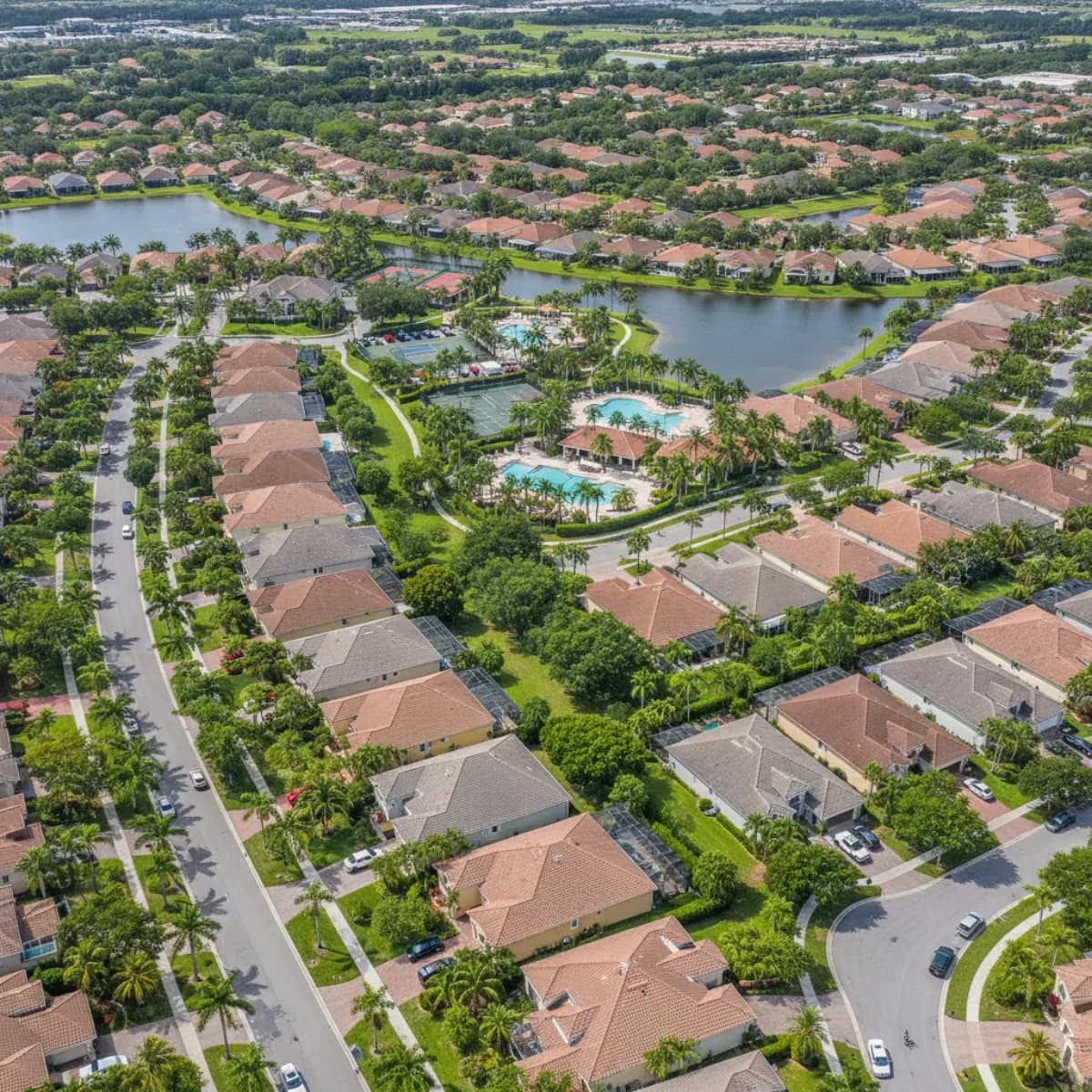
Broward County's Best-Planned City
Instant Roof Replacement Quotes in Coral Springs, FL
Coral Springs is one of Florida's most meticulously planned cities, where consistent architecture, lush tree canopies, and strict HOA standards define every neighborhood. With thousands of 1980s-90s concrete tile roofs reaching end of life and Broward County's HVHZ building code demanding NOA-certified products, getting the right roof at the right price has never been more important. Get instant quotes from pre-vetted CCC-licensed contractors who understand Coral Springs HOA requirements and Broward County building codes.
Free Quotes
no obligations ever
Contractor Bids
standardized scope comparison
Until You Choose
no spam, no lead resale
FL Contractors
CCC-licensed, insured, reviewed
Coral Springs at a Glance
Population
Broward County's planned city
MPH Wind Zone
HVHZ design wind speed
Building Code Zone
Broward County jurisdiction
Average Roof Cost
Shingle to tile range
Peak Construction Era
Many original tile roofs aging out
Governed Communities
Strict architectural standards
Why Coral Springs Homeowners Need Specialized Roofing Knowledge
Coral Springs was incorporated in 1963 and developed primarily during the 1970s through 1990s as one of South Florida's first master-planned communities. The city earned recognition as one of America's best-run cities and was the first municipality to receive the Malcolm Baldrige National Quality Award in 2007. That commitment to quality extends to how the city and its homeowner associations manage residential standards, including roofing. Today, with a population of approximately 135,000 spread across Broward County's inland corridor, Coral Springs faces a generational roofing challenge: tens of thousands of original concrete tile roofs installed during the city's 1980s-90s construction boom are reaching the end of their 30-40 year service life.
Unlike the coastal Broward cities of Fort Lauderdale and Hollywood, Coral Springs sits several miles inland, which reduces direct salt air exposure. However, the city still falls squarely within the High Velocity Hurricane Zone (HVHZ) that covers all of Broward County. Every roofing product installed in Coral Springs must carry a valid Miami-Dade Notice of Acceptance (NOA), and every installation must meet HVHZ-enhanced fastening, underlayment, and inspection standards. This is the same stringent code that applies to beachfront properties in Fort Lauderdale. Hurricane Wilma in 2005 proved why these codes matter: Coral Springs sustained catastrophic roof damage when the Category 3 storm's 120+ mph winds tore tiles from thousands of homes, many of which had been installed before the enhanced Florida Building Code took effect in 2002.
What sets Coral Springs apart from other Broward County cities is the extraordinary prevalence of HOA governance. The vast majority of residential neighborhoods operate under homeowner associations with strict architectural control committees. For roofing, this means homeowners must navigate both the city's building code requirements and their HOA's aesthetic standards. Roof color, material type, tile profile, and even the specific manufacturer may be dictated by HOA covenants. RoofVista's pre-vetted contractors in Coral Springs understand this dual-approval process and can help you select materials that satisfy both HVHZ code requirements and your HOA's architectural guidelines. Our standardized quotes make it easy to compare pricing from contractors who all meet the same professional standards.
Coral Springs Hurricane History and Roofing Lessons
The two storms that shaped modern roofing in Coral Springs were Hurricane Wilma (2005) and Hurricane Irma (2017). Wilma was the more devastating of the two for the city. Making landfall on Florida's southwest coast as a Category 3 hurricane, Wilma tracked across the state and slammed into Broward County with sustained winds exceeding 120 mph. Coral Springs, positioned in the western inland portion of the county, took a direct hit. The damage was staggering: roofing tiles were ripped from homes by the thousands, leaving neighborhoods with widespread blue tarps visible from satellite imagery for months afterward. Insurance claims from Wilma across Broward County exceeded $10 billion.
The critical lesson from Wilma was the failure of pre-code roof installations. Homes built in the 1980s and early 1990s — before the enhanced Florida Building Code took effect in 2002 — had tile roofs installed with older fastening methods that proved inadequate for sustained hurricane winds. Tiles were often set with mortar alone, without the mechanical fasteners or foam adhesive systems that modern HVHZ code requires. Post-Wilma analyses showed that homes with roofs installed or replaced under the 2002 FBC standards performed dramatically better, with significantly lower rates of tile loss and structural damage.
Hurricane Irma in 2017, while a massive Category 4 storm at peak intensity, had weakened somewhat by the time it reached Broward County. Nevertheless, Coral Springs experienced tropical storm to Category 1-force winds that caused additional roof damage. The difference was telling: homes that had been re-roofed after Wilma using modern HVHZ-compliant methods showed dramatically improved performance compared to homes still carrying pre-2002 installations. For Coral Springs homeowners today, the message is clear — a modern, code-compliant roof is not just a home improvement, it is a proven investment in hurricane protection that has been tested by real storms.
Roofing Challenges Specific to Coral Springs
Coral Springs' inland Broward County location creates a specific set of environmental challenges for roofing. While the city avoids the direct salt spray that accelerates corrosion on coastal roofs, it faces its own demanding combination of tropical heat, intense rainfall, hurricane winds, and the unique pressure of maintaining HOA aesthetics across aging housing stock.
! Hurricane Wind Exposure
Despite being inland, Coral Springs sits in the HVHZ with 140+ mph design wind speeds. Hurricane Wilma proved that inland position provides no meaningful shelter from major hurricanes crossing the Florida peninsula. All roofing must be engineered for sustained hurricane-force winds with enhanced fastening patterns, hurricane clips at every truss-to-wall connection, and NOA-certified products rated for HVHZ pressures.
- - 140+ mph HVHZ design wind speed
- - Hurricane clips required at all truss connections
- - Enhanced nail patterns for shingle installations
- - Mechanical or foam fastening for tile roofs
~ Aging 1980s-90s Tile Roofs
The majority of Coral Springs homes were built during the 1980s and 1990s construction boom, making their original concrete tile roofs 30-45 years old. Many have exceeded their expected service life. Aging concrete tile becomes brittle, develops hairline cracks, and loses its waterproof surface coating. The underlayment beneath these tiles, typically a 30-lb felt paper, has likely deteriorated completely after decades of Florida heat, leaving only the tiles themselves between your home and the weather.
- - Original underlayment likely failed after 20+ years
- - Brittle tiles crack under foot traffic and debris
- - Pre-2002 fastening methods below current code
- - Insurance carriers flagging 25+ year old roofs
= Tropical Heat and UV
Coral Springs experiences year-round tropical heat with summer temperatures regularly exceeding 90 degrees F and a UV index that reaches 11+ (extreme) during peak months. Roof surface temperatures can exceed 160 degrees F in direct summer sun. This relentless heat and UV exposure accelerates degradation of asphalt-based materials, dries out sealant strips on shingles, and causes thermal expansion cycling that stresses tile fastening systems. Light-colored roofing materials and proper attic ventilation are essential for managing heat load and extending roof life.
- - UV Index 11+ during summer months
- - Roof surface temps exceed 160 degrees F
- - SBS-modified shingles resist UV breakdown
- - Light tile colors reduce cooling costs 10-15%
# Heavy Rainfall and Tree Canopy
Coral Springs receives approximately 62 inches of rain per year, concentrated in intense tropical downpours from May through October. The city is also known for its mature tree canopy, which creates debris management challenges for roofing. Falling branches, accumulated leaf litter in tile valleys, and organic growth on shaded roof surfaces can trap moisture, block drainage, and accelerate deterioration. Homes surrounded by large trees may require more frequent maintenance and benefit from materials that resist organic growth.
- - 62 inches annual rainfall (May-Oct peak)
- - Mature tree canopy creates debris accumulation
- - Leaf litter blocks tile drainage valleys
- - Shaded areas promote algae and mildew growth
Coral Springs Roof Replacement Cost by Material
Roofing costs in Coral Springs reflect both the HVHZ premium for materials and installation, and the HOA requirements that may limit your material choices. All products must carry a valid Miami-Dade NOA for Broward County installation. Labor rates in Broward County average $50-$75/hour for roofing, and the enhanced HVHZ fastening, underlayment, and inspection requirements add 15-25% to total project costs compared to non-HVHZ Florida markets.
Concrete Tile
#1: Concrete Tile (Flat & Low-Profile)
Concrete tile is the dominant roofing material in Coral Springs, covering an estimated 65-75% of homes across the city's planned communities. Unlike the barrel (S-tile) profile common in Miami's Mediterranean Revival architecture, Coral Springs favors flat and low-profile tile styles that complement the city's more contemporary, planned community aesthetic. Concrete tile provides inherent wind resistance through its weight (9-12 lbs per tile), Class A fire rating, and a 50-75 year lifespan when properly maintained. Most HOAs in Coral Springs require concrete tile replacement with matching or approved profiles and colors. When installed with NOA-compliant foam adhesive or mechanical fastening systems, concrete tile routinely passes HVHZ wind uplift testing at 140+ mph design pressures.
Best For:
Most Coral Springs homes, HOA compliance
Lifespan:
50-75 years
Cost Range:
$18,000 - $35,000
Wind Rating:
140+ mph (NOA-certified)
Architectural Shingles
#2: Impact-Resistant Architectural Shingles
Impact-resistant architectural shingles with SBS (Styrene-Butadiene-Styrene) polymer modification are the second most common choice in Coral Springs, particularly popular in neighborhoods built during the late 1990s and 2000s where HOAs permit shingle roofing. The SBS modification makes these shingles more flexible and impact-resistant than standard asphalt, allowing them to pass the stringent TAS 201 large missile impact test required for HVHZ installation. These shingles carry a Class 4 hail impact rating under UL 2218 testing and provide superior UV resistance critical in Coral Springs' intense sun environment. When installed with the HVHZ-required 6-nail pattern and NOA-certified underlayment, architectural shingles achieve 130+ mph wind ratings at a more accessible price point than tile.
Best For:
Budget-conscious homeowners, shingle-approved HOAs
Lifespan:
20-30 years (Florida climate)
Cost Range:
$13,000 - $25,000
Impact Rating:
Class 4 (UL 2218) + TAS 201
Standing Seam Metal
#3: Standing Seam Metal
Standing seam metal roofing is the premium upgrade choice in Coral Springs, offering the longest lifespan and highest hurricane performance of any residential roofing material. A properly installed standing seam system with concealed fasteners and continuous interlocking panels creates a virtually impenetrable wind barrier that exceeds HVHZ requirements. Because Coral Springs is inland, the reduced salt air exposure compared to coastal cities like Fort Lauderdale means that standard Galvalume steel with PVDF coatings performs well without requiring the full marine-grade specifications needed on the coast. However, some HOAs in Coral Springs still restrict metal roofing to specific profiles and colors, so HOA approval must be confirmed before selecting this option.
Best For:
Premium upgrades, maximum hurricane protection
Lifespan:
40-70 years
Cost Range:
$20,000 - $40,000
HOA Note:
Check HOA approval for metal profiles
Coral Springs Average Roof Cost: Architectural shingles $13,000-$25,000. Concrete tile $18,000-$35,000. Standing seam metal $20,000-$40,000. All prices include HVHZ-compliant installation with NOA-certified products, enhanced fastening, and Broward County inspections. Get your exact price with a free instant estimate.
Navigating Coral Springs HOA Requirements for Roof Replacement
The Dual-Approval Challenge
Coral Springs homeowners face a unique dual-approval process that most Florida cities do not require. Before any roof work begins, you need approval from both the City of Coral Springs Building Division (for the building permit and code compliance) and your HOA's Architectural Review Board (for material, color, and aesthetic compliance). Failing to obtain either approval can result in stop-work orders, fines, or forced removal of non-compliant materials. Here is how to navigate both processes efficiently.
HOA Architectural Review Process
- - Submit ARB application with material specifications
- - Include manufacturer product data sheets and NOA numbers
- - Provide color samples or swatches for approval
- - List contractor name, license number, and insurance
- - Allow 2-4 weeks for review and approval
- - Some HOAs require neighbor notification
City Building Permit Process
- - Apply through Coral Springs Building Division
- - Include NOA numbers for all products
- - Engineer's drawing required for tile and metal
- - CCC license and insurance verification
- - File Notice of Commencement with Broward County
- - Multi-stage inspections: tie-off, dry-in, final
Our pre-vetted Coral Springs contractors are experienced with the dual-approval process and can help prepare your HOA application materials while simultaneously handling the building permit. This parallel approach minimizes delays and gets your project started as quickly as possible.
Coordinated Roof Replacement: A Coral Springs Advantage
One of the unique advantages of living in a planned community like Coral Springs is the opportunity for coordinated neighborhood roof replacement. As the city's original 1980s-90s tile roofs reach end of life simultaneously, many HOA communities are organizing group replacement programs that benefit all participating homeowners.
Benefits of Coordinated Replacement
Cost Savings
Contractors offer 5-15% volume discounts when multiple homes in the same community replace roofs together. Savings come from reduced mobilization costs (equipment is already on-site), bulk material purchasing from suppliers, and streamlined logistics. For a $25,000 tile roof, a 10% discount saves $2,500 per home.
HOA Consistency
Coordinated replacement ensures consistent materials, colors, and quality across the community. This maintains the uniform aesthetic that defines Coral Springs neighborhoods and eliminates the patchwork appearance that occurs when individual homes replace roofs years apart with different materials or color batches.
Simplified Approval
HOA boards can pre-approve materials and contractors for the entire community project, eliminating the need for individual ARB applications. The city building department may also streamline permitting for multi-home projects with a single contractor and consistent specifications.
Insurance Benefits
When an entire community has new, code-compliant roofs, insurers view the area as lower risk. Some carriers offer community-wide discounts or improved coverage terms for neighborhoods with uniformly new, HVHZ-compliant roofing. Wind mitigation credits apply to every participating home.
Broward County Building Requirements for Coral Springs Roofing
HVHZ Regulatory Requirements
Miami-Dade Notice of Acceptance (NOA)
Although Coral Springs is in Broward County, not Miami-Dade, the HVHZ designation means the same Miami-Dade NOA product certifications are required. Every roofing component — tiles, shingles, underlayment, fasteners, flashing, adhesives, and ridge caps — must carry a valid NOA issued by the Miami-Dade County Product Control Division. Standard Florida Product Approvals are not sufficient for HVHZ installation. NOAs can be verified at the Miami-Dade Product Control website.
Wind Speed Requirements
Coral Springs falls within the HVHZ wind speed zone requiring roofing systems designed for 140+ mph sustained winds. All products must pass TAS (Testing Application Standards) protocols including TAS 201 (large missile impact), TAS 202 (wind uplift), and TAS 203 (wind-driven rain). Enhanced nail patterns, hurricane clips at every truss-to-wall connection, and sealed roof deck attachment are required.
Permit Process
Permits are filed through the City of Coral Springs Building Division. Applications require NOA documentation for all products, a signed and sealed engineer's drawing for tile and metal installations, the contractor's active CCC license, proof of insurance, and a Notice of Commencement filed with Broward County. Inspections occur at three stages: tie-off (deck and fastening), dry-in (underlayment), and final (completed installation with NOA verification).
Wind Mitigation Credits
Florida law mandates insurance discounts for verified wind mitigation features. A new Coral Springs roof with hurricane straps, ring-shank nails at 6-inch spacing, peel-and-stick secondary water resistance underlayment, and impact-resistant covering qualifies for the maximum wind mitigation credits. These credits can save Coral Springs homeowners $1,500-$4,000 annually on homeowner insurance premiums through the OIR-B1-1802 wind mitigation inspection form.
CCC Licensing
All roofing contractors in Florida must hold a Certified Roofing Contractor (CCC) license issued by the Department of Business and Professional Regulation (DBPR). The CCC is a statewide license valid in the HVHZ. Contractors must also register with the City of Coral Springs and carry active workers' compensation insurance and a minimum $10,000 surety bond. Verify licenses at myfloridalicense.com.
Insurance Considerations for Coral Springs Homeowners
Roof Age, Insurance, and the Coral Springs Reality
For Coral Springs homeowners with original 1980s-90s tile roofs, insurance has become one of the most pressing reasons to replace a roof — sometimes even more urgent than the roof's physical condition. Florida's homeowner insurance market has contracted dramatically since 2020, with many carriers refusing to write or renew policies on homes with roofs older than 15-20 years, regardless of condition. Coral Springs, with its concentration of 30-45 year old tile roofs, is particularly affected by these underwriting restrictions.
Roof Age Impact
- - Many insurers refuse policies on roofs older than 15 years
- - Citizens requires inspection for roofs over 15 years
- - Coverage denied if less than 5 years useful life remains
- - SB 4-D (2022) protects roofs under 15 years from denial
- - New roof typically reduces premiums 20-40%
Wind Mitigation Savings
- - Florida mandates discounts for wind mitigation features
- - OIR-B1-1802 form documents wind-resistant construction
- - Hurricane clips/straps: significant premium reduction
- - Secondary water resistance: major discount category
- - Impact-resistant covering: additional 10-20% savings
- - Hip roof geometry: lower premium than gable roofs
Our pre-vetted Coral Springs contractors understand the direct connection between roofing choices and insurance outcomes. They can recommend installations specifically designed to maximize wind mitigation credits, helping offset the cost of replacement through annual premium savings.
Coral Springs Neighborhoods We Serve
From the established communities along University Drive to the newer developments near the Sawgrass Expressway, our pre-vetted contractors serve every Coral Springs neighborhood. Each area has its own HOA requirements, architectural character, and roofing considerations shaped by when the homes were built.
Eagle Trace & Heron Bay
- - Upscale golf course communities
- - Concrete tile required by HOA
- - Strict color and profile standards
- - Larger lot sizes, higher roof areas
- - Premium material selections
Ramblewood & Forest Hills
- - Original 1970s-80s construction
- - Mix of tile and shingle roofs
- - Mature tree canopy (debris concerns)
- - Some homes already on second roof
- - Active HOAs with modernized standards
The Walk & Cypress Glen
- - 1990s-2000s planned developments
- - Consistent architectural standards
- - Concrete flat tile predominant
- - First-generation roofs reaching 25+ years
- - Coordinated replacement opportunities
Coral Springs Country Club
- - Established upscale community
- - Barrel and flat tile required
- - Specific manufacturer preferences
- - Architectural Review Board active
- - Higher-end material budgets
Wyndham & Riverbridge
- - Mid-1980s construction
- - Original tile roofs aging out
- - Some neighborhoods converting to shingle
- - Active community replacement programs
- - Moderate HOA architectural standards
Nearby: Parkland & Margate
- - Adjacent Broward County cities
- - Same HVHZ building codes apply
- - Similar HOA-driven communities
- - Our contractors serve these areas too
- - Comparable pricing and materials
Nearby Broward County Cities & Florida Resources
Fort Lauderdale Roofing Quotes
Coastal Broward County roofing with marine-grade requirements
Pembroke Pines Roofing Quotes
Southern Broward County planned community roofing
Hialeah Roofing Quotes
Miami-Dade County HVHZ roofing services
Miami Roofing Quotes
HVHZ headquarters with the strictest building codes
Florida State Overview
All Florida roofing resources and city pages
Florida Roof Replacement Cost Guide
Detailed pricing for all FL regions and materials
Hurricane-Resistant Roofing in Florida
HVHZ requirements, NOA products, and wind ratings
Wind Mitigation Guide for Florida
Insurance discounts and inspection details
Get Your Coral Springs Roof Quote in Minutes
Enter your address to compare instant quotes from pre-vetted CCC-licensed contractors who specialize in Coral Springs HOA requirements, HVHZ-compliant installation, and Broward County building codes
Frequently Asked Questions About Coral Springs Roofing
How much does a roof replacement cost in Coral Springs, FL?
Roof replacement in Coral Springs typically costs $13,000-$30,000 for a standard single-family home. Concrete tile, the dominant material in the city's planned communities, ranges from $18,000-$35,000. Architectural shingles cost $13,000-$25,000. Standing seam metal runs $20,000-$40,000. Broward County HVHZ requirements mandate NOA-certified products and enhanced installation, adding 15-25% compared to non-HVHZ markets.
Does my Coral Springs HOA control what roofing material I can use?
Yes. Coral Springs is one of Florida's most HOA-governed cities. Most HOAs have strict architectural guidelines dictating roof color, material, and profile. You must submit an Architectural Review Board application with material specs and color samples before starting work. Approval typically takes 2-4 weeks. Starting without HOA approval can result in fines and forced removal.
What roofing materials are most common in Coral Springs?
Concrete tile dominates, covering an estimated 65-75% of homes. Flat and low-profile tile styles match the city's consistent architectural aesthetic. Architectural shingles are second most common, especially in late 1990s-2000s neighborhoods. Metal roofing is growing in popularity for its 40-70 year lifespan. All materials must carry a valid Miami-Dade NOA for HVHZ installation.
How did Hurricane Wilma affect roofs in Coral Springs?
Hurricane Wilma struck Coral Springs on October 24, 2005, as a Category 3 storm with 120+ mph winds. Thousands of homes lost partial or complete roof coverings. Tile roofs suffered heavy losses as tiles were torn away by wind uplift. Wilma exposed vulnerabilities in 1980s-90s installations predating the 2002 Florida Building Code. Post-Wilma re-roofs using modern HVHZ methods performed far better during Irma in 2017.
What building code applies to roofing in Coral Springs?
Coral Springs falls within the HVHZ (High Velocity Hurricane Zone) under Broward County jurisdiction. All roofing products must carry a valid Miami-Dade NOA. The design wind speed is 140+ mph. Installations require enhanced fastening, hurricane straps at every truss connection, and multi-stage inspections. Permits go through the City of Coral Springs Building Division.
How can a new roof lower my insurance premiums in Coral Springs?
A new HVHZ-compliant roof can reduce premiums 20-40%. Florida law mandates discounts for verified wind mitigation features on the OIR-B1-1802 form. A modern roof with hurricane clips, ring-shank nails, peel-and-stick SWR underlayment, and impact-resistant covering qualifies for maximum discounts. Many Coral Springs homeowners save $1,500-$4,000 annually after replacement.
Should I coordinate my roof replacement with neighbors in Coral Springs?
Coordinated replacements are common and advantageous in Coral Springs. Contractors offer 5-15% volume discounts for multiple homes due to reduced mobilization costs and bulk material purchasing. HOAs sometimes organize community-wide programs as original 1980s-90s tile roofs reach end of life. RoofVista can coordinate quotes for multiple homes in your community.
What contractor license is required for roofing in Coral Springs?
Florida requires a Certified Roofing Contractor (CCC) license from the DBPR. Contractors must also register with the City of Coral Springs and carry workers' compensation insurance and a $10,000 surety bond. Verify licenses at myfloridalicense.com. All RoofVista contractors carry active CCC licenses and are vetted for HVHZ competency.