Miami-Dade HVHZ Zone • Florida's 6th Largest City
Instant Roof Replacement Quotes in Hialeah, FL
Hialeah sits in the High Velocity Hurricane Zone with 240,000+ residents across dense residential neighborhoods built primarily in the 1950s through 1980s. Every roofing product must carry a Miami-Dade Notice of Acceptance, and every installation must withstand Category 5 winds. Get instant quotes from pre-vetted Florida CCC-licensed contractors who specialize in HVHZ-compliant concrete tile, impact shingles, and tight-lot installations across Palm Springs, Hialeah Gardens, Country Club, and every Hialeah neighborhood.
Free Quotes
no obligations ever
Contractor Bids
standardized scope comparison
Until You Choose
no spam, no lead resale
FL Contractors
CCC-licensed, insured, reviewed
Hialeah at a Glance
Population
Florida's 6th largest city
Hispanic Population
Bilingual contractors essential
Building Code Zone
Strictest in the United States
Primary Build Era
Pre-Andrew code housing
Product Certification
Required for all roofing products
Permit Cost
Hialeah Building Dept.
Why Hialeah Roofing Demands HVHZ Expertise
Hialeah is the sixth-largest city in Florida, with a population exceeding 240,000 residents packed into 21.6 square miles of dense urban residential neighborhoods in northwestern Miami-Dade County. Founded in 1925, the city experienced its most significant growth during the post-war construction boom of the 1950s through 1980s, which means the majority of Hialeah's housing stock was built decades before Hurricane Andrew devastated South Florida in 1992 and triggered the creation of the HVHZ building code.
This combination of older construction and modern code requirements creates a unique roofing landscape. When a Hialeah homeowner replaces their roof today, they are not simply swapping shingles or tiles — they are bringing a pre-Andrew home up to the most demanding building code standards in the United States. Every product must carry a valid Miami-Dade Notice of Acceptance (NOA). Every fastener must meet HVHZ specifications. Every inspection checks that the installation matches the exact protocols documented in each product's NOA paperwork.
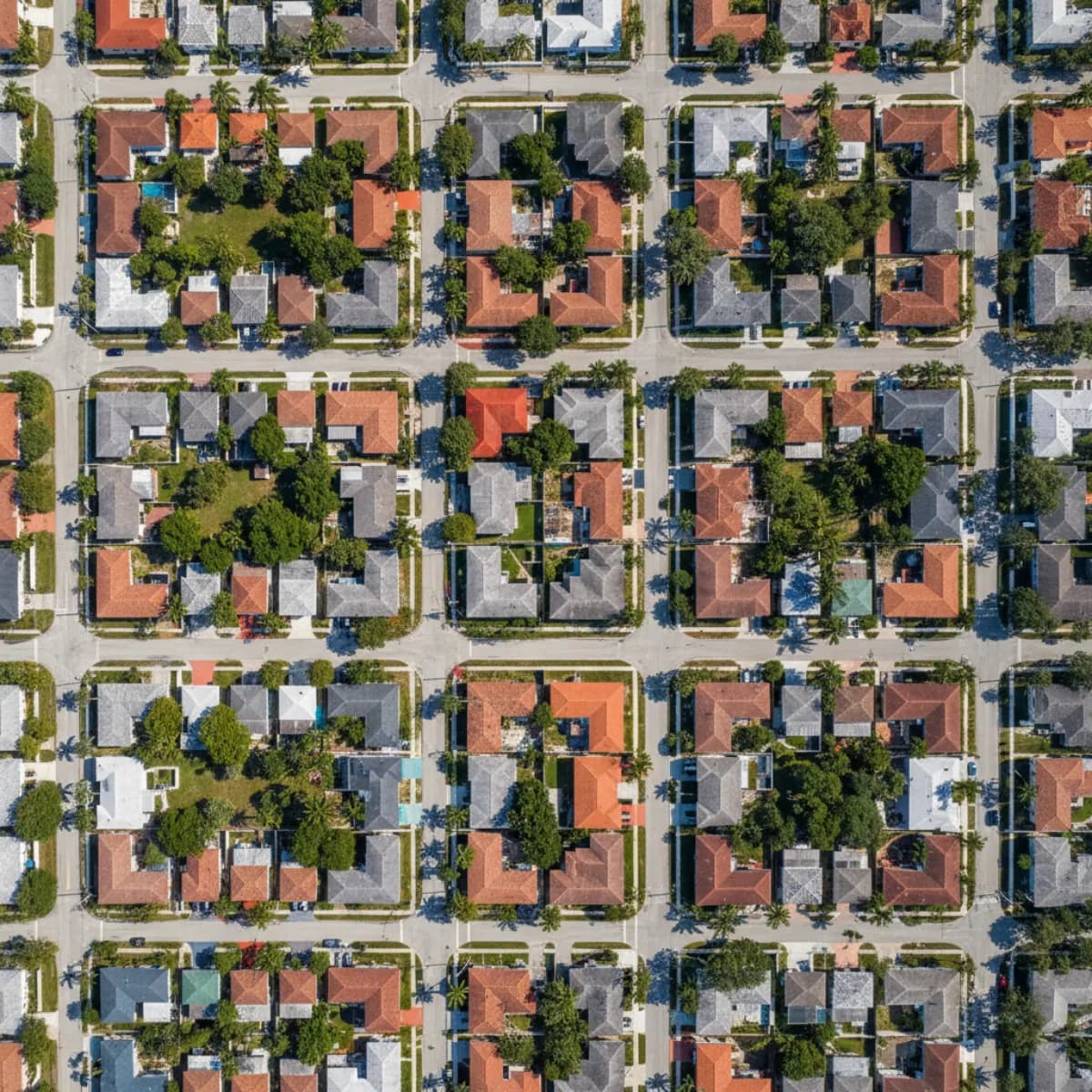
Hialeah also presents practical challenges that suburban and rural roofing projects do not encounter. Homes sit on narrow lots with minimal clearance between structures, creating significant logistical constraints for material delivery, debris removal, and crew access. The predominantly Hispanic community — with over 96% of residents identifying as Hispanic — makes bilingual contractor communication not just a convenience but a practical necessity for clear project scoping, contract understanding, and issue resolution. RoofVista's pre-vetted contractors serving Hialeah understand these on-the-ground realities and deliver quotes that account for tight-lot access, deck upgrades, and bilingual project management.
Roofing Challenges Unique to Hialeah
Hialeah shares Miami-Dade County's demanding tropical climate while adding its own set of challenges rooted in the city's dense urban footprint, aging housing stock, and community character. Here are the primary factors that shape every roofing project in Hialeah.
! Pre-Andrew Housing Stock
The majority of Hialeah's homes were built between the 1950s and 1980s, well before Hurricane Andrew exposed catastrophic weaknesses in South Florida's building practices and triggered the creation of the HVHZ code. These homes were typically constructed with smooth-shank nails at 12-inch spacing for deck attachment, no hurricane straps or clips connecting the roof trusses to the walls, standard 15-lb felt underlayment without secondary water resistance, and roofing products that would not meet modern NOA testing standards. When these roofs are replaced today, contractors must bring the entire system up to current HVHZ standards, which often means re-nailing or replacing the roof deck, adding hurricane straps at every truss-to-wall connection, and installing self-adhering peel-and-stick underlayment for secondary water resistance.
- - Deck upgrades add $2,000-$5,000 to project costs
- - Hurricane strap retrofit at every truss connection
- - Deteriorated plywood sheathing common on 40-70 year homes
- - Board-style sheathing may require full replacement
~ Tight Lot Access & Dense Layout
Hialeah's urban residential grid features single-family homes built on narrow lots, many with only 3-5 feet of clearance between neighboring structures. Side yards are often enclosed with fences, carports, or additions that further restrict access. This dense layout directly impacts roofing logistics: dumpsters and material pallets must be staged in driveways or front yards, debris cannot be tossed directly from the roof to the dumpster on all sides, boom lifts and other equipment may not fit between structures, and crews must take extra precautions to protect adjacent properties from falling debris and material damage.
- - Manual debris carry-out from restricted sides
- - Front-yard and driveway material staging
- - Neighbor property protection protocols
- - 10-20% labor premium for tight-access properties
= Category 5 Hurricane Exposure
As part of Miami-Dade County's HVHZ, Hialeah's building code requires all roofing systems to withstand design wind speeds of 185+ mph — equivalent to a Category 5 hurricane. Hialeah's inland position provides marginally less direct coastal wind exposure than Miami Beach or Key Biscayne, but its flat, low-lying terrain offers no topographic wind breaks. During Hurricane Andrew in 1992, Hialeah sustained significant damage despite being north of the storm's direct track. More recently, Hurricane Irma (2017) caused widespread roof damage across the city, revealing the vulnerability of older, non-compliant roofing systems that had not yet been upgraded.
- - 185+ mph design wind speed (HVHZ requirement)
- - TAS 202 wind uplift testing for all products
- - Enhanced 6-nail pattern for shingles
- - Hurricane clips at every truss-to-wall connection
# Tropical Heat, UV & Rainfall
Hialeah experiences the same subtropical climate as the rest of Miami-Dade County: approximately 248 sunny days per year with UV index regularly reaching 11+ (extreme) in summer, average annual rainfall of 62 inches concentrated in intense tropical downpours from May through October, and roof surface temperatures exceeding 160 degrees F during summer months. Hialeah's inland position and urban heat island effect can push temperatures 3-5 degrees above coastal Miami, accelerating material degradation. Standard asphalt shingles degrade 20-30% faster in this climate than the national average, making UV-resistant SBS-modified products essential for longevity.
- - UV Index 11+ (extreme) during summer months
- - 62 inches annual rainfall (concentrated May-Oct)
- - Urban heat island adds 3-5 degrees F
- - SBS-modified materials essential for longevity
Hialeah Roof Replacement Cost by Material
Hialeah roofing costs reflect the HVHZ premium on materials and labor while remaining generally more affordable than Miami proper, Coral Gables, or coastal communities. All products must carry a valid Miami-Dade NOA, and installation must follow HVHZ-enhanced protocols. Labor rates in Hialeah average $50-$75/hour, and the combination of older housing stock (requiring deck upgrades) and tight lot access (requiring additional labor time) adds to total project costs. The pricing below reflects typical ranges for a 1,500-2,200 square foot single-family home.
Concrete Tile
#1: Concrete Tile (Barrel & Flat)
Concrete tile is the dominant roofing material in Hialeah, covering an estimated 60% of the city's residential roofs. The barrel (S-tile) profile is deeply embedded in Hialeah's architectural character, complementing the Spanish-influenced and Mediterranean styling prevalent throughout the city's older neighborhoods. Each tile weighs 9-12 pounds, providing inherent wind resistance that helps meet the HVHZ's 185+ mph design standard. When installed with NOA-certified foam adhesive or mechanical fasteners, concrete tile assemblies consistently pass HVHZ wind uplift testing. The material offers a 50-75 year lifespan, Class A fire rating, and natural thermal mass that reduces cooling costs — a significant benefit during Hialeah's hot, humid summers. For older Hialeah homes being re-roofed with concrete tile for the first time, the roof structure must be verified to support the heavier load (approximately 900-1,100 lbs per 100 sq ft installed).
Best For:
Most Hialeah homes, Mediterranean styles
Lifespan:
50-75 years
Cost Range:
$22,000 - $50,000
Wind Rating:
185+ mph (NOA-certified)
Impact Shingles
#2: Impact-Resistant SBS-Modified Shingles
For Hialeah homeowners seeking HVHZ compliance at the most accessible price point, impact-resistant SBS-modified asphalt shingles are the clear choice. SBS (Styrene-Butadiene-Styrene) polymer modification creates a more flexible, impact-resistant product that passes the stringent TAS 201 large missile impact test required for HVHZ installation. These shingles also carry a Class 4 hail impact rating under UL 2218 testing. The SBS modification provides significantly better UV resistance than standard oxidized asphalt — critical in Hialeah's extreme sun environment where standard shingles degrade 20-30% faster. Impact shingles are lighter than concrete tile, making them suitable for older Hialeah homes where the existing roof structure may not support tile weight without reinforcement. Installation on tight lots is also faster since individual shingle bundles are easier to maneuver in confined spaces than tile pallets.
Best For:
Budget-conscious, older homes, tight lots
Lifespan:
20-30 years (Hialeah climate)
Cost Range:
$10,000 - $25,000
Impact Rating:
Class 4 (UL 2218) + TAS 201
Standing Seam Metal
#3: Standing Seam Metal
Standing seam metal roofing is gaining popularity in Hialeah for its exceptional hurricane performance, 40-70 year lifespan, and minimal maintenance requirements. The concealed fastener design with continuous interlocking panels creates a virtually impenetrable wind barrier that consistently exceeds HVHZ design requirements. While Hialeah is slightly inland from the coast, salt air still reaches the city from Biscayne Bay, making corrosion-resistant coatings important. Galvalume steel with PVDF (Kynar 500) fluoropolymer coating or aluminum panels provide the best longevity in Hialeah's humid, salt-influenced environment. Standing seam is particularly attractive for homeowners doing complete renovations or modernizing older properties, and its lighter weight compared to concrete tile means it works well on Hialeah's older roof structures without reinforcement.
Best For:
Renovations, modern upgrades, long-term value
Lifespan:
40-70 years
Cost Range:
$20,000 - $45,000
Wind Rating:
185+ mph (concealed fastener)
TPO / Flat Roof
#4: TPO & Modified Bitumen (Flat Roofs)
While less common on Hialeah's residential homes than concrete tile or shingles, flat roof systems using white TPO membrane or modified bitumen are prevalent on Hialeah's commercial buildings, warehouses, and multi-family structures along major corridors like West 49th Street and Palm Avenue. TPO provides excellent heat reflection — critical in a city where the urban heat island effect pushes temperatures above coastal averages — and HVHZ-compliant wind ratings when mechanically attached or fully adhered with NOA-certified adhesives. Modified bitumen offers superior puncture resistance and waterproofing for roofs with rooftop equipment. Some older Hialeah homes with flat or low-slope roof sections also use these systems, particularly on additions or enclosed patios common in the city's residential neighborhoods.
Best For:
Commercial, multi-family, flat-roof sections
Lifespan:
20-30 years
Cost Range:
$8,000 - $22,000
Energy Savings:
White TPO reflects 80%+ solar energy
Hialeah Average Roof Cost: Impact-resistant shingles $10,000-$25,000. Concrete tile $22,000-$50,000. Standing seam metal $20,000-$45,000. Flat/TPO $8,000-$22,000. Hialeah costs include the HVHZ premium — NOA-certified products, enhanced installation methods, and rigorous inspections. Older 1950s-1980s homes may require additional deck and structural upgrades. Get your exact price with a free instant estimate.
Upgrading Hialeah's Pre-Andrew Homes to Modern Code
Hialeah's housing history is written in its rooflines. The city's residential core was largely built during three distinct periods: the early development of the 1920s-1940s (concentrated around the racetrack area and original city grid), the massive post-war expansion of the 1950s-1960s that filled the city with CBS (concrete block and stucco) ranch-style homes, and the continued growth of the 1970s-1980s that pushed development westward toward what is now Hialeah Gardens and Miami Lakes.
None of these homes were built to withstand a Category 5 hurricane under the standards established after Andrew. When you replace the roof on one of these properties, the project goes beyond a material swap. Your contractor must evaluate and upgrade the entire roofing system to meet today's HVHZ requirements. Here is what that typically involves for Hialeah's pre-Andrew housing stock.
Common Upgrades Required on Pre-Andrew Hialeah Homes
Roof Deck Re-Nailing or Replacement
Older homes typically used smooth-shank nails at 12-inch spacing to attach the plywood deck to the trusses. HVHZ standards require ring-shank nails at 6-inch spacing. During tear-off, contractors evaluate whether the existing deck can be re-nailed to the current standard or whether deteriorated plywood sheets need full replacement. On 40-70 year old Hialeah homes, expect at least 10-20% of decking to require replacement, with some older homes needing 50% or more. Budget $40-$60 per 4x8 sheet for replacement plywood, installed.
Hurricane Strap Installation
Pre-Andrew homes in Hialeah were typically built with toenailed truss-to-wall connections — the weakest link in hurricane wind resistance. Modern HVHZ code and wind mitigation standards require hurricane straps or clips at every truss-to-wall connection. Adding straps during a roof replacement provides one of the highest-value wind mitigation credits on the OIR-B1-1802 insurance inspection form. Cost: approximately $5-$15 per strap, with a typical Hialeah home requiring 30-50 straps.
Secondary Water Resistance (SWR)
Self-adhering peel-and-stick underlayment creates a sealed roof deck that provides backup waterproofing if the primary roof covering is lost during a hurricane. While not always mandatory, SWR qualifies for one of the most significant wind mitigation insurance discounts available. On Hialeah's older homes with mortgages, many insurance companies effectively require SWR for new or renewed policies. Cost: $0.50-$1.50 per square foot more than standard synthetic underlayment.
Structural Evaluation for Tile
If an older Hialeah home originally had shingles and the homeowner wants to upgrade to concrete tile, a structural engineer must verify that the existing roof trusses and walls can support the additional weight. Concrete tile weighs approximately 900-1,100 lbs per 100 sq ft installed, compared to 200-300 lbs for asphalt shingles. Some older Hialeah homes may require truss reinforcement or sistering before tile installation is feasible. Engineering evaluation: $300-$600.
HVHZ Building Requirements for Hialeah Roofing
Regulatory Requirements
Miami-Dade Notice of Acceptance (NOA)
Every roofing component installed in Hialeah must have a valid Miami-Dade NOA — issued by the Miami-Dade County Product Control Division after independent testing to TAS protocols. This includes shingles, tiles, underlayment, fasteners, flashing, adhesives, ridge caps, and vents. NOAs are publicly searchable at the Miami-Dade Product Control website. Using products without a valid NOA is a code violation that will fail inspection and may void insurance coverage.
TAS Testing Protocols
Products seeking NOA certification must pass TAS 201 (large missile impact — a 2x4 timber fired at 50 fps), TAS 202 (uniform static air pressure for wind uplift resistance), TAS 203 (wind-driven rain resistance), and TAS 100 (overall assembly performance). These tests simulate Category 5 hurricane conditions and are significantly more demanding than the Florida Product Approval tests used in the rest of the state.
City of Hialeah Permit Process
Permits are obtained through the City of Hialeah Building Department, which enforces the same HVHZ standards as the rest of Miami-Dade County. Applications require NOA numbers for all products, engineer's drawings for tile and metal installations, CCC license proof, and a Notice of Commencement filed with the county clerk. Inspections occur at three stages: initial tie-off, dry-in (underlayment), and final. Permit fees range from $250-$600.
Florida CCC Licensing
Florida requires roofing contractors to hold a Certified Roofing Contractor (CCC) license from the DBPR. In Miami-Dade County, contractors must also register with the county and demonstrate HVHZ competency. Verify any contractor's license at myfloridalicense.com. All RoofVista contractors in Hialeah carry active CCC licenses, workers' compensation insurance, and the required $10,000 surety bond.
Insurance Considerations for Hialeah Homeowners
Florida's Insurance Crisis & Why Your Roof Matters
Florida's homeowner insurance market is the most volatile in the nation, and Hialeah homeowners — many living in homes with roofs that are 20, 30, or even 40+ years old — face some of the toughest underwriting scrutiny. Multiple private insurers have left the Florida market since 2020, and those remaining use roof age and condition as the primary gatekeeping factor for coverage. For Hialeah's predominantly older housing stock, this means that a roof replacement is not just a home improvement project — it is often a prerequisite for obtaining or maintaining affordable insurance.
Roof Age & Insurance Eligibility
- - Many insurers refuse policies on roofs older than 15 years
- - Citizens requires inspection for roofs over 15 years
- - Coverage denied if roof has less than 5 years useful life
- - SB 4-D (2022) protects roofs under 15 years from age-based denial
- - New roof reduces premiums 20-40% immediately
Wind Mitigation Discounts
- - Florida law mandates discounts for wind mitigation features
- - OIR-B1-1802 inspection documents wind-resistant construction
- - Hurricane clips/straps: significant premium reduction
- - Secondary water resistance (peel-and-stick): major discount
- - Impact-resistant covering: additional 10-20% savings
- - Total wind portion savings: 30-60% with full upgrades
For Hialeah's 1950s-1980s homes, upgrading from a non-compliant roof to a modern HVHZ-rated system with all wind mitigation features can save $1,500-$4,000+ annually on insurance premiums. Over the 20-30 year life of a new roof, these savings can offset a substantial portion of the replacement cost itself.
Hialeah Neighborhoods We Serve
From the original city grid near Hialeah Park Racing to the western developments bordering Miami Lakes and Hialeah Gardens, our pre-vetted contractors serve every neighborhood in Hialeah and the surrounding communities. Each area has its own roofing characteristics shaped by its build era, lot sizes, and architectural style.
Palm Springs
- - 1950s-1960s CBS ranch homes
- - Concrete tile and shingle mix
- - Narrow lots with limited side access
- - Many roofs approaching 30-40 years
- - Deck upgrades commonly needed
Miami Lakes (Adjacent)
- - Planned community (1960s-1980s)
- - Larger lots with better access
- - HOA-enforced material standards
- - Barrel tile predominant
- - Town of Miami Lakes permitting
Hialeah Gardens
- - 1970s-1990s construction
- - Mix of single-family and townhomes
- - Slightly wider lot spacing
- - Concrete tile dominant
- - Separate municipal permitting
Country Club
- - Mixed-era housing stock
- - Unincorporated Miami-Dade area
- - County permitting (not city)
- - Shingle and tile mix
- - More affordable replacement market
Central Hialeah
- - Oldest housing stock (1940s-1960s)
- - Densest lot layout in the city
- - Significant deck replacement needs
- - Commercial/residential mixed zones
- - Highest tight-access premium
West Hialeah
- - 1970s-1980s development
- - Larger single-family homes
- - Better access than central core
- - Concrete tile predominant
- - Near Hialeah Gardens border
Why Bilingual Contractors Matter in Hialeah
Hialeah is one of the most culturally distinctive cities in the United States. With over 96% of its population identifying as Hispanic — predominantly of Cuban, Nicaraguan, and Colombian heritage — Spanish is the primary language of daily life for a majority of residents. While building codes and permits are administered in English, the practical reality of communicating project scope, material options, unexpected issues, and contract terms requires fluency in the homeowner's preferred language.
This is not just a convenience factor. Misunderstandings about material specifications, warranty terms, payment schedules, or change orders can lead to disputes, dissatisfaction, and financial loss. A bilingual contractor can walk a Hialeah homeowner through the differences between concrete tile and impact shingles, explain why the deck needs re-nailing, clarify what the NOA requirement means for their specific products, and ensure the written contract matches the verbal agreement — all in the homeowner's primary language.
RoofVista's pre-vetted contractor network serving Hialeah includes teams with bilingual project managers who provide quotes, contracts, and ongoing project communication in both English and Spanish. Our standardized quote format ensures that pricing, scope, material specifications, and warranty terms are clearly documented regardless of language preference, so every Hialeah homeowner can make an informed decision with full understanding of what they are paying for.
Frequently Asked Questions About Hialeah Roofing
How much does a roof replacement cost in Hialeah, FL?
Impact-resistant shingle roofs cost $10,000-$25,000 in Hialeah. Concrete tile ranges $22,000-$50,000. Standing seam metal runs $20,000-$45,000. HVHZ compliance, Miami-Dade NOA product requirements, tight lot access, and older housing stock drive costs.
Does Hialeah fall within the HVHZ building code zone?
Yes. Hialeah is entirely within Miami-Dade County and falls under the HVHZ — the strictest building code zone in the U.S. All roofing products must carry a Miami-Dade NOA. Standard Florida Product Approvals are not sufficient.
What roofing challenges are unique to Hialeah's older housing stock?
Homes built in the 1950s-1980s often have inadequate deck attachment, no hurricane straps, deteriorated sheathing, and outdated underlayment. Upgrading these during re-roofing adds $2,000-$5,000 but dramatically improves hurricane resilience.
Why does tight lot access matter for roofing in Hialeah?
Dense residential lots with only 3-5 feet between structures require manual debris removal, creative material staging, and extra care to protect adjacent properties. Tight access can add 10-20% to labor costs.
What are the best roofing materials for Hialeah homes?
Concrete tile (50-75 years, 60% of Hialeah roofs) and impact-resistant SBS-modified shingles (20-30 years, most affordable HVHZ-compliant option) dominate. Standing seam metal is growing in popularity for superior hurricane performance.
What is the permit process for roof replacement in Hialeah?
Permits go through the City of Hialeah Building Department under HVHZ standards. Applications need NOA numbers, engineer's drawings for tile/metal, CCC license proof, and Notice of Commencement. Fees range $250-$600.
How can a new roof lower my insurance premiums in Hialeah?
A new HVHZ-compliant roof with hurricane clips, sealed deck, and impact-resistant covering can save 30-60% on wind insurance premiums. For 1950s-1980s homes, upgrading often means $1,500-$4,000+ in annual savings.
Do I need a bilingual roofing contractor in Hialeah?
While not a code requirement, bilingual (Spanish-English) contractors are a practical advantage in Hialeah where 96%+ of residents are Hispanic. RoofVista's pre-vetted Hialeah contractors include bilingual teams for clear communication.
Florida Roofing Resources
Florida State Overview
All Florida roofing resources and city pages
Miami Roofing Quotes
HVHZ roofing for nearby Miami neighborhoods
Florida Roof Replacement Cost Guide
Detailed pricing for all FL regions and materials
Hurricane-Resistant Roofing in Florida
HVHZ requirements, NOA products, and wind ratings
Wind Mitigation Guide for Florida
Insurance discounts and inspection details
Florida Contractor Licensing
CCC license requirements and DBPR verification
Get Your Hialeah Roof Quote in Minutes
Enter your address to compare instant quotes from pre-vetted CCC-licensed Florida contractors who specialize in HVHZ-compliant roofing, concrete tile, impact shingles, and tight-lot installations across Hialeah