Broward County • HVHZ Building Code Zone
Instant Roof Replacement Quotes in Pembroke Pines, FL
Pembroke Pines sits in the High Velocity Hurricane Zone with Broward County's enhanced Florida Building Code requirements. Every roofing product must carry a Miami-Dade NOA, and every installation must meet 150+ mph wind design standards. Get instant quotes from pre-vetted Florida CCC-licensed contractors who specialize in hurricane-rated roofing for Pembroke Pines' suburban communities, from Pembroke Falls to Chapel Trail to Silver Lakes.
Free Quotes
no obligations ever
Contractor Bids
standardized scope comparison
Until You Choose
no spam, no lead resale
FL Contractors
CCC-licensed, insured, reviewed
Pembroke Pines at a Glance
Population
Broward County's 2nd largest city
MPH Wind Rating
Broward HVHZ design standard
Building Code Zone
Strictest in the United States
Typical Roof Cost
Standard single-family home
Peak Construction Era
Many homes due for first replacement
Product Certification
Required for all roofing products
Why Roof Replacement in Pembroke Pines Demands Specialized Expertise
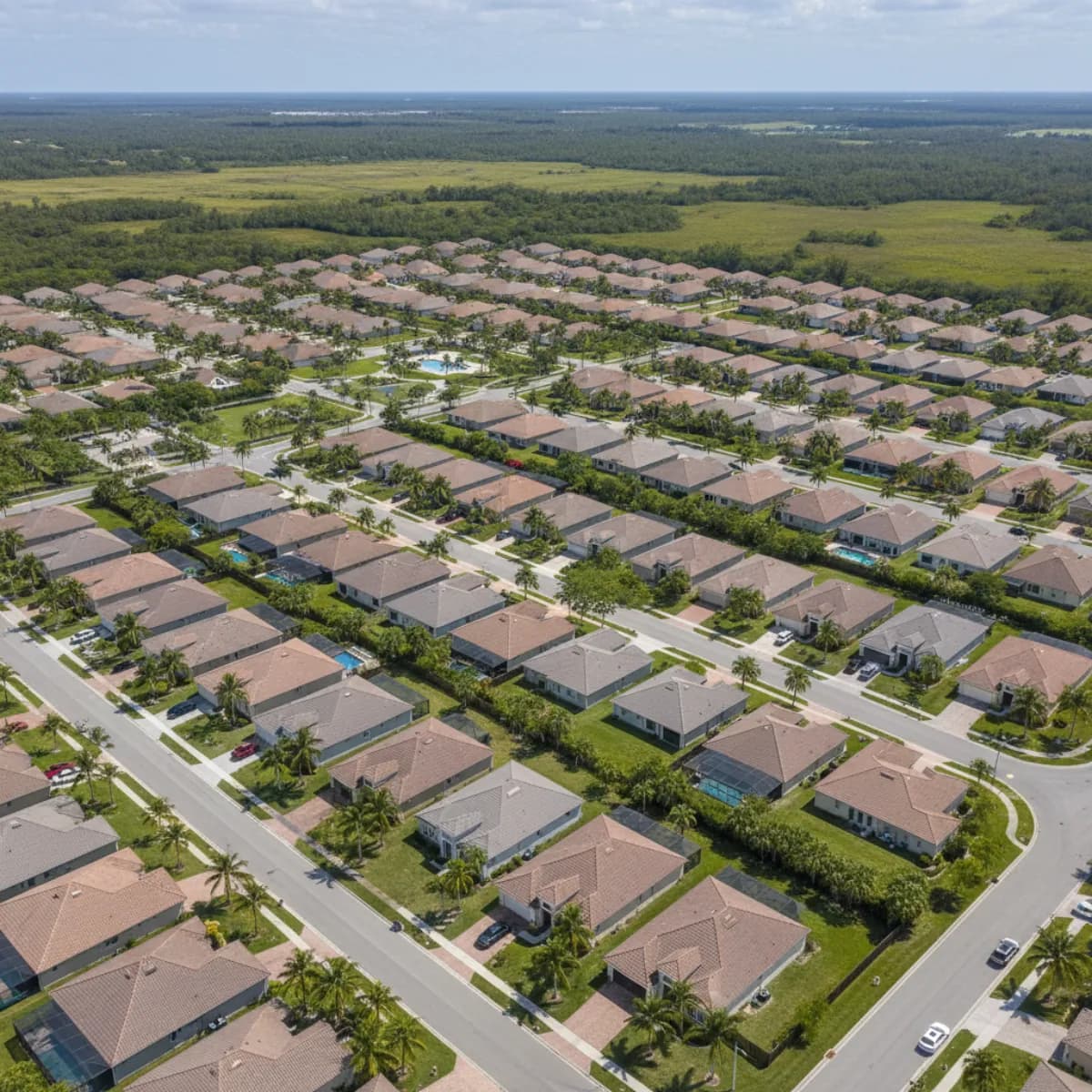
Pembroke Pines is one of the largest cities in Broward County, with a population exceeding 175,000 residents spread across dozens of planned communities that were largely built during the construction boom of the 1990s and early 2000s. This development timeline creates a critical roofing reality: tens of thousands of homes are now reaching the 25-30 year mark, the typical lifespan for concrete tile and architectural shingle roofs in South Florida's demanding climate. For many Pembroke Pines homeowners, the question is not whether they will need a roof replacement, but when — and how to navigate the complex intersection of HVHZ building codes, HOA requirements, and Florida's insurance crisis.
Located in western Broward County, Pembroke Pines sits entirely within the High Velocity Hurricane Zone (HVHZ), the same stringent building code zone that covers all of Miami-Dade and Broward counties. The HVHZ was established in the wake of Hurricane Andrew's catastrophic destruction in 1992, when the Category 5 storm decimated nearby Homestead and revealed widespread failures in roofing construction and code enforcement. While Pembroke Pines was spared the worst of Andrew's direct path, the lessons from that disaster shaped the building codes that govern every roof installation in the city today. Subsequent hurricanes — Wilma in 2005 and Irma in 2017 — further tested South Florida's roofing infrastructure and reinforced the critical importance of HVHZ-compliant installations.
Every roofing product installed in Pembroke Pines must carry a valid Miami-Dade Notice of Acceptance (NOA), certifying it has passed rigorous testing for wind uplift, large missile impact, and wind-driven rain penetration. Standard Florida Product Approvals are not sufficient in the HVHZ. This requirement limits the available product pool, increases material costs, and demands contractors who understand NOA verification, enhanced fastening protocols, and the multi-stage HVHZ inspection process. RoofVista's pre-vetted contractors in Broward County meet these requirements and specialize in the specific challenges of Pembroke Pines roofing, from HOA compliance to tile-to-shingle conversions to insurance-optimized wind mitigation installations.
Climate Challenges That Shape Pembroke Pines Roofing
Pembroke Pines' tropical climate subjects roofing materials to relentless environmental stress year-round. Homeowners must select materials and installation methods that simultaneously withstand hurricane-force winds, extreme heat, intense UV radiation, salt-laden air, and torrential tropical rainfall. Understanding these challenges is essential to making informed roofing decisions.
! Hurricane Wind Exposure
Pembroke Pines faces direct hurricane risk from Atlantic storms tracking across South Florida. The city's HVHZ designation requires roofing systems designed for 150+ mph wind speeds. Hurricane Andrew (1992) devastated communities just miles to the south. Hurricane Wilma (2005) brought sustained 100+ mph winds directly through Broward County, stripping roofs across Pembroke Pines. Hurricane Irma (2017) caused widespread tile and shingle damage throughout the city. Every roof installed here must be engineered to survive the next Category 4 or 5 event.
! Extreme Heat & UV Degradation
South Florida's UV index regularly exceeds 11 during summer months, among the highest in the continental United States. Roof surface temperatures in Pembroke Pines routinely exceed 160 degrees Fahrenheit on dark-colored materials. This intense solar exposure degrades asphalt shingle granules, breaks down polymer sealants, causes thermal expansion stress on tile installations, and fades roof coatings. Energy-efficient cool roofing options — white metal, reflective tile coatings, or light-colored TPO — can reduce attic temperatures by 30-40 degrees and lower cooling costs significantly.
! Tropical Rainfall & Humidity
Pembroke Pines receives approximately 62 inches of rainfall annually, with the majority concentrated during the May-through-October wet season. Daily afternoon thunderstorms can dump 2-3 inches of rain in under an hour, testing flashing details, valley installations, and drainage capacity. Year-round humidity averaging 75-80% promotes algae and mold growth on roofing surfaces, particularly on north-facing slopes that receive less direct sunlight. Algae-resistant shingles and tile treatments are strongly recommended for Pembroke Pines installations.
! Salt Air Corrosion
While Pembroke Pines is located inland from the coast, prevailing easterly winds carry salt-laden air from the Atlantic Ocean across all of Broward County. This salt aerosol accelerates corrosion on metal roofing components including fasteners, flashing, drip edge, and standing seam panels. Non-marine-grade metal products can show significant corrosion within 5-10 years. All metal components in Pembroke Pines should be stainless steel, hot-dipped galvanized, or coated with PVDF (Kynar 500) marine-grade finishes to ensure longevity.
Best Roofing Materials for Pembroke Pines Homes
Pembroke Pines' combination of HVHZ requirements, HOA restrictions, tropical climate, and suburban home styles narrows the ideal material choices. Here is how each major roofing material performs in Pembroke Pines conditions, along with current pricing from our pre-vetted Broward County contractors.
Concrete & Clay Tile — The Pembroke Pines Standard
Concrete and clay tile is by far the most prevalent roofing material in Pembroke Pines, installed on the majority of homes built during the 1990s and 2000s development boom. Tile's weight (9-12 pounds per tile) provides inherent wind resistance, and its 50-75 year lifespan makes it a long-term investment. The barrel (S-tile) profile defines the aesthetic of Pembroke Pines neighborhoods, and most HOAs require tile-to-tile replacement to maintain community uniformity. Concrete tile costs range from $22,000 to $45,000 for a standard Pembroke Pines home. Clay tile, while more expensive at $28,000-$55,000, offers superior color retention and a longer lifespan.
Pembroke Pines advantage: Many HOAs mandate tile, making it the default choice. Tile's thermal mass reduces cooling costs in Pembroke Pines' year-round heat. All tile products must have current NOA certification.
Standing Seam Metal — Rising in Popularity
Standing seam metal roofing is gaining significant traction in Pembroke Pines, particularly among homeowners seeking maximum hurricane protection with modern aesthetics. Marine-grade PVDF (Kynar 500) coated panels resist salt air corrosion and handle 185+ mph wind ratings when properly installed with concealed fastener systems. Metal reflects solar radiation, reducing cooling costs by up to 25%. Costs range from $20,000 to $42,000. Some HOAs are updating their architectural guidelines to permit metal roofing, though approval varies by community.
Pembroke Pines advantage: Maximum wind resistance, energy efficiency, and 40-60 year lifespan. Verify HOA approval before selecting metal.
Impact-Resistant Architectural Shingles — The Affordable HVHZ Option
SBS-modified impact-resistant architectural shingles offer the most affordable path to HVHZ compliance in Pembroke Pines. Class 4 impact-rated shingles with Miami-Dade NOA certification withstand hail, wind-blown debris, and sustained winds of 130+ mph when installed with the enhanced 6-nail pattern required in the HVHZ. Costs range from $13,000 to $25,000. While shingle lifespans (20-30 years) are shorter than tile or metal, the lower upfront cost makes them attractive for budget-conscious homeowners or those planning to sell in the near term.
Pembroke Pines advantage: Lowest cost HVHZ-compliant option. Some HOAs restrict shingles in tile-dominant communities — verify before choosing.
Flat Roof Systems (TPO/Modified Bitumen) — Commercial & Multi-Family
Pembroke Pines has a significant inventory of commercial properties, strip malls, and multi-family structures that utilize flat roofing systems. White TPO membrane is the current standard for flat roofs, reflecting 80%+ of solar energy and providing excellent resistance to ponding water from tropical downpours. Modified bitumen offers superior puncture resistance for roofs with heavy HVAC equipment. Costs range from $8,000 to $22,000 depending on roof size and access complexity. All flat roof products in Pembroke Pines must carry NOA certification.
Pembroke Pines advantage: Energy savings from reflective membrane can be substantial given year-round air conditioning demands.
Navigating HOA Roofing Requirements in Pembroke Pines
Pembroke Pines is one of the most HOA-dense cities in South Florida. The vast majority of single-family homes, townhomes, and condominiums are governed by homeowner associations that regulate exterior modifications, including roof replacements. Understanding your HOA's requirements before starting a roofing project is essential to avoiding costly delays, fines, or forced material changes.
HOA Roof Replacement Checklist for Pembroke Pines
Before You Start
- - Request your HOA's Architectural Review Committee (ARC) guidelines
- - Confirm approved roofing materials, colors, and profiles
- - Check if your HOA requires specific manufacturers or product lines
- - Submit ARC application with material samples and contractor info
- - Allow 2-6 weeks for ARC approval processing
Common HOA Requirements
- - Tile-to-tile replacement (no material changes in tile communities)
- - Color matching to existing community palette
- - Specific tile profile (barrel, flat, or blended)
- - Licensed and insured contractor with Broward County experience
- - Project completion timeline requirements
- - Debris removal and property restoration standards
Major Pembroke Pines HOA communities include Pembroke Falls, Chapel Trail, Silver Lakes, Pembroke Isles, Century Village, Towngate, and The Preserve. Each has its own architectural standards. Our pre-vetted contractors have experience working with Pembroke Pines HOAs and can help navigate the approval process.
Florida's Insurance Crisis & What It Means for Pembroke Pines Homeowners
Broward County's Insurance Landscape
Broward County is at the epicenter of Florida's homeowner insurance crisis. Since 2020, multiple private insurers have exited the Florida market entirely, and those remaining have dramatically increased premiums and tightened underwriting criteria. Pembroke Pines homeowners with older roofs face a particularly difficult situation: limited carrier options, rising premiums, and potential coverage denials. Understanding the direct connection between your roof's condition, age, and your insurance costs is essential for making smart investment decisions.
Roof Age & Insurance Eligibility
- - Many insurers refuse policies on roofs older than 15 years
- - Citizens Property Insurance requires roof inspection after 15 years
- - Coverage may be denied if roof has less than 5 years useful life
- - SB 4-D (2022) protects roofs under 15 years from age-based denial
- - New roof typically reduces premiums 20-40% immediately
Wind Mitigation Discounts
- - Florida law mandates insurance discounts for wind mitigation
- - OIR-B1-1802 inspection documents wind-resistant features
- - Hurricane clips/straps: significant premium reduction
- - Secondary water resistance (peel-and-stick): major discount
- - Impact-resistant covering: additional savings of 10-20%
- - Hip roof geometry: lower premium than gable roofs
For Pembroke Pines homes built in the 1990s, many original roofs are now approaching or exceeding the 30-year mark. If your roof was installed before 2002 (when the Florida Building Code was modernized), it likely does not meet current HVHZ standards and will not qualify for maximum wind mitigation credits. Replacing an aging roof with a modern, code-compliant installation can simultaneously solve your insurance eligibility issues, reduce your annual premiums, and protect your home against the next hurricane.
Understanding Wind Mitigation in Pembroke Pines
Wind mitigation is both a safety strategy and a financial tool for Pembroke Pines homeowners. Florida Statute 627.0629 requires all insurance companies to provide premium discounts for verified wind-resistant construction features. A licensed wind mitigation inspector evaluates your home using the OIR-B1-1802 form and documents specific construction details that determine your discount eligibility. For many homeowners in Pembroke Pines, the annual insurance savings from a new, code-compliant roof effectively pay for a significant portion of the replacement cost over time.
Key Wind Mitigation Features Evaluated
Roof Covering
The type and age of your roof covering. FBC-compliant or Miami-Dade NOA products installed after 2002 qualify for the highest credits. Impact-resistant materials (Class 4 shingles, concrete tile) provide additional discounts for Pembroke Pines homes.
Roof Deck Attachment
How the plywood decking is fastened to the trusses. Ring-shank nails at 6-inch spacing (Dimension A) qualify for the highest credit. Many original 1990s Pembroke Pines roofs used standard smooth-shank nails that receive minimal discount.
Roof-to-Wall Connection
How the roof trusses attach to the walls. Single wraps, double wraps, and hurricane clips each provide increasing levels of discount. Older Pembroke Pines homes may have toe-nailing, which receives no credit and is a safety concern.
Secondary Water Resistance
A sealed roof deck using self-adhering peel-and-stick underlayment provides backup waterproofing if the primary roof covering is lost during a hurricane. This is one of the highest-value wind mitigation credits available to Pembroke Pines homeowners.
Building Codes & Permit Requirements in Pembroke Pines
Pembroke Pines operates under Broward County's enhanced version of the Florida Building Code, which incorporates all HVHZ requirements. The city's Building Department handles residential roofing permits and inspections for properties within city limits, while some areas may fall under Broward County jurisdiction directly. Understanding the permit process helps ensure your project proceeds smoothly and passes all required inspections.
Pembroke Pines Roofing Permit Process
1. Application Requirements
Valid NOA numbers for all roofing products, contractor's CCC license, proof of workers' compensation and liability insurance, signed contract, and a Notice of Commencement filed with the Broward County Clerk. Engineer-sealed structural drawings are required for tile and metal installations. Permit fees typically range from $250 to $600.
2. Inspection Stages
HVHZ inspections are multi-stage: initial tie-off (deck condition, fastener type and spacing, hurricane strap verification), dry-in (underlayment type, secondary water resistance installation), and final inspection (completed roof covering, ridge caps, flashing, and full NOA compliance verification for every product). Inspectors physically confirm products match their NOA documentation.
3. Common Failure Points
Failed inspections in Pembroke Pines most commonly result from expired or incorrect NOA numbers, improper fastener spacing (exceeding 6-inch maximum), underlayment installation that does not match the product's NOA specifications, and missing or improperly installed hurricane clips. Our pre-vetted contractors have consistent passing records with Broward County inspectors.
Pembroke Pines' 1990s-2000s Roof Replacement Wave
Pembroke Pines experienced explosive growth during the 1990s and early 2000s, with major planned communities like Pembroke Falls, Chapel Trail, Silver Lakes, Pembroke Isles, and The Preserve all developing during this period. These communities were built with concrete tile roofs that, while durable, have finite lifespans. After 25-30 years of South Florida sun, rain, and hurricane exposure, these original roofs are reaching end of life.
This creates a wave of replacement demand across Pembroke Pines. Entire neighborhoods are simultaneously aging into the replacement window, which has several implications for homeowners. First, contractor availability can be limited during peak replacement seasons. Second, material prices can fluctuate based on regional demand. Third, HOAs may coordinate community-wide replacement projects that offer volume pricing advantages. And fourth, homes with new roofs in neighborhoods where most roofs are aging gain a significant competitive advantage for resale value and insurance costs.
If your Pembroke Pines home was built between 1990 and 2005, getting an instant estimate through RoofVista now allows you to plan proactively rather than waiting for a leak, a failed insurance inspection, or a hurricane to force an emergency replacement at premium pricing. Our satellite-powered estimates give you an accurate cost range in minutes, and our standardized scope comparison ensures you are comparing identical specifications from multiple pre-vetted contractors.
Nearby South Florida Locations
We serve homeowners across the greater South Florida metro area. Compare instant quotes from pre-vetted contractors in these nearby cities.
Florida Roofing Resources
Florida State Overview
All Florida roofing resources and city pages
Florida Roof Replacement Cost Guide
Detailed pricing for all FL regions and materials
Hurricane-Resistant Roofing in Florida
HVHZ requirements, NOA products, and wind ratings
Florida Roofing Building Codes
FBC, HVHZ, and local requirements
Wind Mitigation Guide for Florida
Insurance discounts and inspection details
Florida Contractor Licensing
CCC license requirements and DBPR verification
Frequently Asked Questions About Pembroke Pines Roofing
How much does a roof replacement cost in Pembroke Pines, FL?
Roof replacement in Pembroke Pines typically costs $13,000-$32,000 for a standard home. Impact-resistant architectural shingles run $13,000-$25,000. Concrete or clay tile, the most common material in Pembroke Pines subdivisions, ranges $22,000-$45,000. Standing seam metal costs $20,000-$42,000. Broward County's HVHZ requirements, NOA product mandates, and the prevalence of larger suburban homes drive costs.
Is Pembroke Pines in the High Velocity Hurricane Zone (HVHZ)?
Yes. All of Broward County, including Pembroke Pines, falls within the HVHZ. Every roofing product must carry a Miami-Dade Notice of Acceptance (NOA), which is more stringent than standard Florida Product Approvals. This was established after Hurricane Andrew devastated nearby areas in 1992.
What roofing materials are most popular in Pembroke Pines?
Concrete and clay tile dominate Pembroke Pines neighborhoods, especially in planned communities like Pembroke Falls, Chapel Trail, and Silver Lakes. Standing seam metal is rising in popularity. Impact-resistant SBS-modified shingles offer the most affordable HVHZ-compliant option. White TPO membrane is standard for flat commercial structures.
How does Florida's insurance crisis affect Pembroke Pines homeowners?
Broward County has been heavily impacted. Multiple carriers left the market since 2020, pushing homeowners to Citizens Property Insurance. Many insurers refuse policies on roofs older than 15 years. A new roof reduces premiums 20-40% and restores access to private carriers. Wind mitigation credits save an additional $2,000-$5,000 annually.
Do I need HOA approval before replacing my roof in Pembroke Pines?
Most likely yes. Pembroke Pines is predominantly HOA-governed. Communities like Pembroke Falls, Chapel Trail, Silver Lakes, and Century Village regulate roof material, color, and style. Submit plans to your Architectural Review Committee before signing a contract. Processing takes 2-6 weeks.
What wind mitigation features should I include in a Pembroke Pines roof replacement?
Include hurricane clips or straps, ring-shank nails at 6-inch spacing, self-adhering peel-and-stick underlayment for secondary water resistance, and impact-resistant roof covering with a valid NOA. Florida law requires insurers to offer premium discounts for these features, often saving 30-50% on the wind portion of insurance.
What permits are required for roof replacement in Pembroke Pines?
All roof replacements require permits from Broward County or the City of Pembroke Pines Building Department. Applications need NOA numbers, CCC license verification, insurance proof, and a Notice of Commencement. Engineer-sealed drawings are required for tile and metal. Permit fees range $250-$600.
When is the best time to replace a roof in Pembroke Pines?
October through May is optimal, outside hurricane season (June 1 - November 30). Winter and early spring offer lower humidity, fewer rain delays, and shorter wait times. Avoid peak hurricane season when contractors are busy with storm repairs and materials are scarce.
Get Your Pembroke Pines Roof Quote in Minutes
Enter your address to compare instant quotes from pre-vetted CCC-licensed Florida contractors who specialize in HVHZ-compliant roofing, wind mitigation, and hurricane protection across Broward County