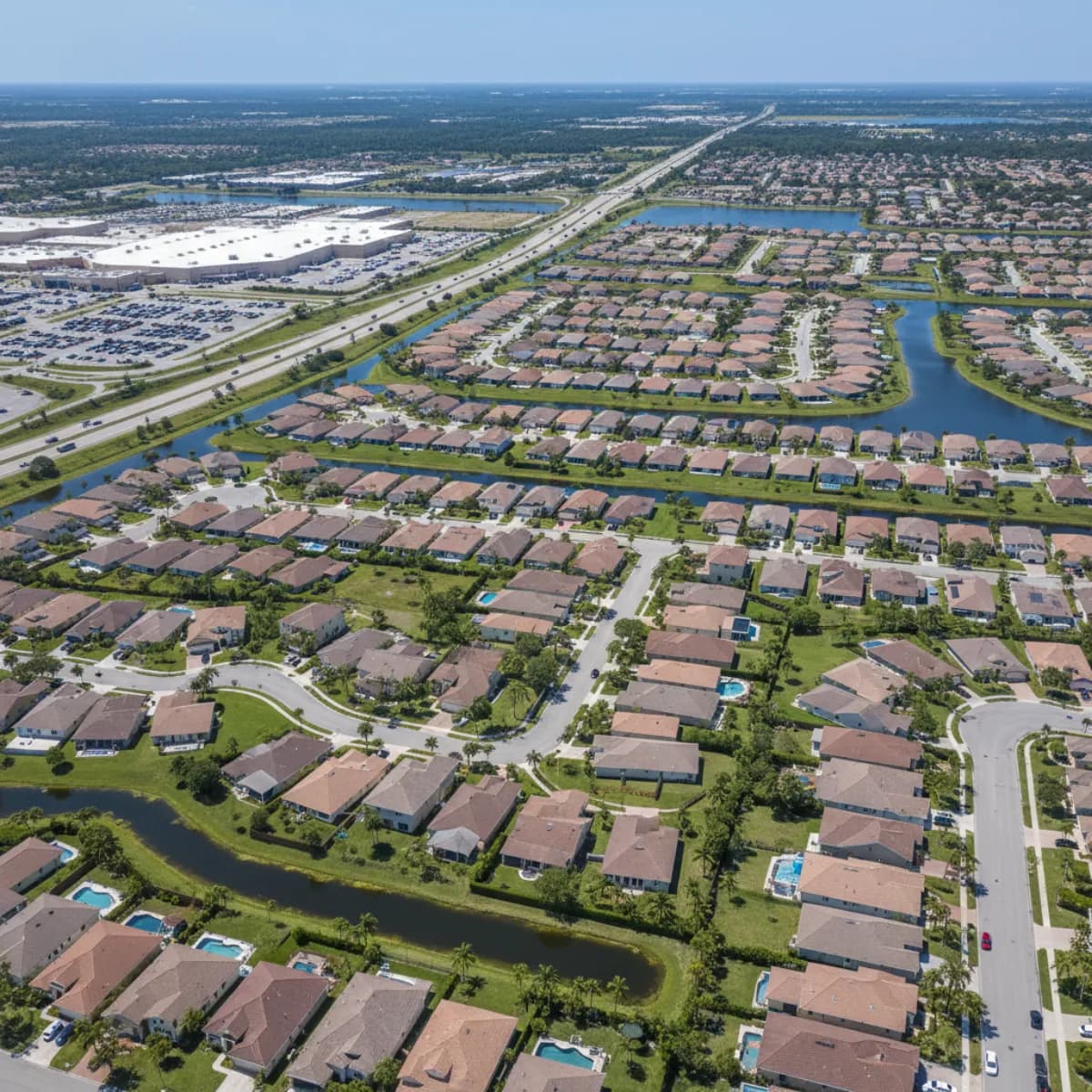
Western Broward County • HVHZ Wind Zone
Instant Roof Replacement Quotes in Sunrise, FL
Sunrise sits in western Broward County within the High Velocity Hurricane Zone, home to roughly 100,000 residents across dozens of planned communities built from the 1970s through the 2000s. Thousands of original concrete tile roofs are now 35-50 years old and due for replacement. Get instant quotes from pre-vetted Florida CCC-licensed contractors who specialize in HVHZ-compliant roofing, aging tile replacement, HOA-approved installations, and wind mitigation upgrades that can slash your insurance premiums.
Free Quotes
no obligations ever
Contractor Bids
standardized scope comparison
Until You Choose
no spam, no lead resale
FL Contractors
CCC-licensed, insured, reviewed
Sunrise at a Glance
Population
Western Broward County
MPH Wind Rating
HVHZ design wind speed
Building Code Zone
Broward County enhanced FBC
Average Roof Cost
Standard single-family home
Housing Stock
Planned communities era
Hurricane Wilma
Devastated western Broward
Why Sunrise Roofs Face Unique Challenges
Sunrise, Florida occupies a distinctive position in the South Florida roofing landscape. Situated in western Broward County between the Everglades to the west and the coastal cities of Fort Lauderdale and Hollywood to the east, Sunrise is a city built on planned communities. Neighborhoods like Sunrise Lakes, Sawgrass Pointe, Sunrise Golf Village, The Bridges, and developments surrounding the Sawgrass Mills shopping complex represent decades of suburban growth that created one of Broward County's most populated inland cities. Today, with a population of approximately 100,000, Sunrise is home to the Amerant Bank Arena (home of the Florida Panthers NHL team), the Sawgrass Mills mega-mall, and thousands of single-family homes, townhomes, and condominiums.
The roofing challenge in Sunrise is primarily one of aging infrastructure. The city's major residential development occurred between the early 1970s and the late 1990s, meaning a significant portion of homes carry original roofs that are now 25 to 50 years old. These roofs were installed before the current High Velocity Hurricane Zone (HVHZ) building code was established in the wake of Hurricane Andrew in 1992, and many predate even the more modest wind resistance standards of earlier Florida codes. The concrete tile roofs that dominate Sunrise's streetscapes — while durable on the surface — often conceal deteriorated underlayment, outdated fastening systems, and flashing that no longer provides reliable waterproofing.
Hurricane Wilma in October 2005 proved this vulnerability with devastating clarity. Although Wilma made its Florida landfall on the Gulf Coast near Naples, it tracked directly across the state and slammed into western Broward County — including Sunrise — with sustained winds of 105-120 mph. The damage was catastrophic: roofing materials were stripped from thousands of homes, screen enclosures were destroyed, and the aging tile roofs that had appeared solid for decades were exposed as systems that could not withstand modern hurricane forces. Many Sunrise homes had their roofs replaced after Wilma, but even those 2005-2006 replacements are now approaching 20 years of age.
Hurricane Irma in September 2017 brought another round of wind damage across Broward County, further stressing roofs that had already endured decades of subtropical weather. For Sunrise homeowners whose roofs survived both storms, the combination of age, UV degradation, and cumulative storm stress makes a comprehensive inspection — and likely a full replacement — an urgent priority. RoofVista's pre-vetted contractors in Broward County understand the specific challenges of Sunrise's housing stock and can provide instant quotes tailored to your home's exact roof dimensions using satellite measurement technology.
Roofing Challenges Specific to Sunrise
While Sunrise shares many roofing challenges with the broader South Florida region — hurricanes, heat, and intense rainfall — its inland western Broward location creates a distinct profile of stresses. Unlike the coastal barrier island communities of Fort Lauderdale Beach or Hollywood Beach, Sunrise experiences less direct salt air corrosion. However, it faces its own set of demanding conditions that affect roofing material selection and longevity.
! Hurricane Wind Exposure
Sunrise sits in the 140+ mph design wind speed zone under the HVHZ building code. Hurricane Wilma (2005) demonstrated that western Broward is not sheltered from major storm damage — Sunrise took some of the worst damage in the county as the storm tracked west to east across the peninsula. Irma (2017) reinforced the threat. Every roofing system in Sunrise must meet HVHZ wind uplift requirements, with products tested and certified to withstand sustained Category 4 hurricane forces. Enhanced nail patterns, hurricane clips at every truss connection, and NOA-certified fastening systems are mandatory.
- - 140+ mph design wind speed (HVHZ)
- - Direct hit from Hurricane Wilma (2005)
- - Enhanced 6-nail pattern for shingles
- - Hurricane clips at every truss-to-wall connection
~ Aging 1970s-1990s Roofing Systems
Sunrise's planned communities were largely built between 1970 and 2000, creating a concentrated pocket of aging roofing infrastructure. Original concrete tile roofs from this era used organic felt underlayment that degrades after 20-25 years, mortar-set barrel tiles that crack and shift over time, and galvanized fasteners that corrode in Florida's humid environment. Even if the surface tiles appear intact, the waterproofing system beneath them has likely failed. These pre-HVHZ roofs also lack modern wind resistance features like secondary water resistance and hurricane-rated fastening, leaving them vulnerable to the next major storm.
- - Pre-HVHZ construction lacks modern wind ratings
- - Organic felt underlayment deterioration
- - Mortar-set tiles prone to shifting
- - Corroded galvanized fasteners common
= Extreme UV & Subtropical Heat
Sunrise receives approximately 250 sunny days per year with UV index values regularly reaching 11+ (extreme) during summer. Roof surface temperatures exceed 160 degrees F in peak summer months. As an inland city without consistent coastal breezes, Sunrise can experience slightly higher ambient temperatures than beachside communities. This relentless UV exposure degrades asphalt shingle granules, dries out sealant strips, and breaks down polymer-based underlayment. Standard 3-tab shingles — already uncommon due to HVHZ requirements — may last only 12-15 years in this environment compared to their rated 20-year lifespan.
- - UV Index 11+ (extreme) in summer
- - 160+ degree F roof surface temperatures
- - SBS-modified shingles resist UV degradation
- - Light-colored roofing lowers cooling costs 10-20%
# Intense Tropical Rainfall & Drainage
Sunrise averages roughly 63 inches of rainfall per year, concentrated in intense afternoon thunderstorms and tropical downpours from May through October. Western Broward's relatively flat topography means drainage is critical — water that ponds on flat or low-slope roofs can accelerate deterioration and create leak pathways. During hurricane events, wind-driven rain becomes horizontal and exploits any gap in the roofing system. HVHZ code requires all roofing assemblies to meet strict water penetration standards. Secondary water resistance (SWR) using self-adhering peel-and-stick underlayment is strongly recommended and provides significant insurance premium discounts.
- - ~63 inches annual rainfall (May-Oct peak)
- - Flat topography creates drainage challenges
- - Secondary water resistance recommended
- - Peel-and-stick underlayment for wind mitigation credit
Sunrise Roof Replacement Cost by Material
Sunrise roofing costs reflect the Broward County HVHZ premium for compliant materials and installation methods. All products must carry a valid Miami-Dade NOA. While Sunrise's inland location reduces the need for marine-grade corrosion protection required in coastal Broward cities, the wind resistance, impact testing, and enhanced installation requirements remain identical. Labor rates in Broward County average $50-$75/hour, and HVHZ compliance adds 10-20% to total project costs compared to non-HVHZ Florida markets.
Concrete Tile
#1: Concrete Tile (Barrel & Flat)
Concrete tile is the signature roofing material in Sunrise, covering the vast majority of homes throughout the city's planned communities. The barrel (S-tile) profile is the most common, reflecting the Mediterranean and Spanish Colonial architectural styles that dominated Broward County residential development during the 1970s through 1990s. Concrete tiles provide natural wind resistance through their weight (9-12 lbs each), a Class A fire rating, and a 50-75 year lifespan when properly installed with NOA-certified foam adhesive or mechanical fastening. For the thousands of Sunrise homes with aging original tile roofs, a full tear-off and re-tile with modern NOA-compliant products, synthetic underlayment, and hurricane-rated fastening represents the most comprehensive upgrade available — both for storm protection and insurance premium reduction.
Best For:
Most Sunrise homes, HOA-compliant
Lifespan:
50-75 years
Cost Range:
$18,000 - $45,000
Wind Rating:
140+ mph (NOA-certified)
Architectural Shingles
#2: Impact-Resistant Architectural Shingles
For Sunrise homeowners seeking HVHZ compliance at the most accessible price point, impact-resistant SBS-modified architectural shingles are the most cost-effective option. The SBS (Styrene-Butadiene-Styrene) polymer modification provides flexibility and impact resistance that allows these shingles to pass the TAS 201 large missile impact test required for HVHZ installation. They also carry a Class 4 hail impact rating under UL 2218. In Sunrise's extreme UV environment, the SBS modification provides superior longevity compared to standard oxidized asphalt. When installed with the HVHZ-required 6-nail pattern and NOA-certified synthetic underlayment, these shingles achieve 140+ mph wind ratings. This material is particularly popular with homeowners in communities where HOAs permit shingle roofs and budget is a primary consideration.
Best For:
Budget-friendly, HOA-permitting communities
Lifespan:
20-30 years (Sunrise climate)
Cost Range:
$11,000 - $22,000
Impact Rating:
Class 4 (UL 2218) + TAS 201
Standing Seam Metal
#3: Standing Seam Metal
Standing seam metal roofing is gaining popularity in Sunrise for its exceptional hurricane performance, longevity, and energy efficiency. A properly installed standing seam system with concealed fasteners and continuous interlocking panels creates a virtually impenetrable wind barrier that exceeds HVHZ requirements. Sunrise's inland location means standard Galvalume steel with PVDF (Kynar 500) fluoropolymer coating provides excellent durability without the marine-grade premium required in coastal communities — a cost advantage for Sunrise homeowners compared to beachside Fort Lauderdale or Hollywood. Standing seam metal is especially attractive for homeowners planning to stay long-term: its 40-70 year lifespan means it may be the last roof they ever install. Some Sunrise HOAs are now approving metal roofs as communities update their architectural guidelines.
Best For:
Long-term homeowners, maximum protection
Lifespan:
40-70 years
Cost Range:
$20,000 - $42,000
Wind Rating:
150+ mph (concealed fastener system)
TPO / Flat Roof
#4: TPO & Modified Bitumen (Flat Roofs)
While less common than in coastal South Florida cities, flat roof systems are found on some Sunrise townhomes, commercial-style residences, and multi-family buildings. White TPO (Thermoplastic Polyolefin) membrane is the standard choice for flat and low-slope applications, providing excellent heat reflection in Sunrise's intense subtropical sun — critical for keeping cooling costs manageable without coastal breezes. In the HVHZ, TPO systems must be mechanically attached or fully adhered with NOA-certified adhesives, and the system must pass wind uplift testing at HVHZ design pressures. Modified bitumen provides superior waterproofing and puncture resistance, making it ideal for flat roofs with rooftop HVAC equipment.
Best For:
Townhomes, flat-roofed residences
Lifespan:
20-30 years
Cost Range:
$9,000 - $22,000
Energy Savings:
White TPO reflects 80%+ solar energy
Sunrise Average Roof Cost: Impact-resistant shingles $11,000-$22,000. Concrete tile $18,000-$45,000. Standing seam metal $20,000-$42,000. Flat/TPO $9,000-$22,000. Sunrise costs include the HVHZ premium — NOA-certified products, enhanced installation methods, and rigorous inspections add 10-20% compared to non-HVHZ Florida markets. Get your exact price with a free instant estimate.
Broward County Building Requirements for Sunrise Roofing
HVHZ Regulatory Requirements
Miami-Dade Notice of Acceptance (NOA)
Every roofing component installed in Sunrise must have a valid Miami-Dade NOA — the same stringent product certification required throughout the HVHZ in both Broward and Miami-Dade counties. This includes shingles, tiles, underlayment, fasteners, flashing, adhesives, ridge caps, and vents. NOAs are issued by the Miami-Dade County Product Control Division after independent testing to TAS (Testing Application Standards) protocols. Products with only a standard Florida Product Approval are NOT acceptable. NOAs are publicly searchable at the Miami-Dade Product Control website.
City of Sunrise Permitting
Roof replacements in Sunrise require permits through the City of Sunrise Building Division, which enforces the Broward County enhanced Florida Building Code. Permit applications must include NOA numbers for all products, a signed and sealed engineer's drawing for tile and metal installations, the contractor's active CCC license number, proof of insurance, and a Notice of Commencement. HVHZ inspections occur at multiple stages: initial tie-off (deck preparation and fastening verification), dry-in (underlayment and secondary water barrier), and final (completed installation with NOA compliance for every product). Permit fees typically range from $250-$600.
Wind Mitigation Requirements
Florida Building Code Section 1609 establishes minimum wind design criteria for the HVHZ. All roof-to-wall connections in Sunrise must use approved hurricane straps or clips. Roof decking must be fastened with ring-shank nails at 6-inch spacing. Secondary water resistance (SWR) using peel-and-stick underlayment is strongly recommended and qualifies homeowners for significant insurance discounts through the OIR-B1-1802 wind mitigation inspection form. Given the direct hit Sunrise took from Hurricane Wilma, wind mitigation features are especially valuable for protecting both your home and your insurance eligibility.
Florida CCC Licensing
Florida requires all roofing contractors to hold a Certified Roofing Contractor (CCC) license issued by the DBPR. In Broward County, contractors must additionally register with the county and demonstrate competency with HVHZ requirements. Verify any contractor's license status at myfloridalicense.com. All RoofVista contractors in Sunrise carry active CCC licenses, workers' compensation insurance, and a minimum $10,000 surety bond.
Navigating HOA Roof Replacements in Sunrise
Sunrise is fundamentally a city of planned communities, and most homeowners must navigate HOA requirements as part of any roof replacement project. Understanding these requirements upfront prevents costly delays, rejected applications, and conflicts with your homeowners association. Here's what Sunrise homeowners need to know about the HOA-roofing intersection.
Common HOA Roof Requirements
- - Material restrictions: Many communities mandate concrete tile to maintain aesthetic uniformity. Some newer developments allow architectural shingles.
- - Color palettes: Approved colors are typically earth tones — terracotta, sand, gray, brown. Bright or non-standard colors require special approval.
- - Tile profiles: Some HOAs specify barrel (S-tile) or flat tile profiles to match the existing community look.
- - Pre-approval process: Most require written architectural review committee approval before any work begins.
Tips for a Smooth HOA Process
- - Request guidelines early: Get the HOA's architectural guidelines document before soliciting quotes, so contractors bid on compliant materials.
- - Submit samples: Provide tile or shingle samples with your application for faster approval.
- - Document everything: Keep copies of your application, approval letter, and any correspondence with the HOA board.
- - Timeline awareness: HOA review can take 2-6 weeks. Factor this into your project timeline, especially before hurricane season.
RoofVista's pre-vetted contractors in Sunrise are experienced with local HOA processes across the city's communities. They can help you select compliant materials, prepare your HOA application, and coordinate the approval timeline with your project schedule.
Sunrise Neighborhoods We Serve
From the established communities near Sawgrass Mills to the residential corridors along Sunrise Boulevard and Oakland Park Boulevard, our pre-vetted contractors serve every neighborhood in Sunrise. Each area presents specific roofing considerations based on its construction era, HOA requirements, and housing types.
Sawgrass Area
- - Near Sawgrass Mills mall
- - Mix of 1990s-2000s construction
- - Concrete tile dominant
- - Active HOA communities
- - Well-maintained planned developments
Sunrise Lakes
- - Large 55+ community sections
- - Original 1970s-1980s construction
- - Aging tile roofs need replacement
- - Condo and townhome associations
- - Budget-sensitive homeowners
Sunrise Golf Village
- - 1970s-era planned community
- - Single-family and villa homes
- - Original tile roofs reaching end of life
- - HOA architectural review required
- - Pre-HVHZ construction
Amerant Arena District
- - Near Panthers hockey arena
- - Mix of residential and commercial
- - Newer development pockets
- - Contemporary architectural styles
- - Metal and shingle roofs gaining ground
The Bridges
- - Newer planned community
- - Modern construction codes
- - Concrete tile and shingle mix
- - HOA-governed aesthetics
- - Post-2002 FBC-compliant builds
North Sunrise / NW 44th St
- - Established 1980s neighborhoods
- - Single-family homes predominant
- - Shingle and tile mix
- - Near Coral Springs border
- - Many post-Wilma replacements aging
Insurance Considerations for Sunrise Homeowners
Florida's Roofing Insurance Crisis & What It Means for Sunrise
Florida's homeowner insurance market is the most volatile in the nation, and Sunrise homeowners with aging roofs face some of the most acute pressure. Multiple private insurers have left the state entirely since 2020, and those remaining have implemented strict roof age thresholds for underwriting. For the thousands of Sunrise homes with pre-2005 or pre-2010 roofs, obtaining or maintaining affordable coverage has become a significant challenge. A new, HVHZ-compliant roof is often the single most impactful step a Sunrise homeowner can take to improve insurability and reduce premiums.
Roof Age & Insurance Eligibility
- - Many insurers refuse policies on roofs older than 15 years
- - Citizens requires inspection for roofs over 15 years
- - Coverage may be denied if roof has less than 5 years useful life
- - SB 4-D (2022) protects roofs under 15 years from age-based denial
- - New roof typically reduces premiums 20-40% immediately
Wind Mitigation Discounts
- - Florida law mandates insurance discounts for wind mitigation
- - OIR-B1-1802 inspection form documents wind-resistant features
- - Hurricane clips/straps: significant premium reduction
- - Secondary water resistance (peel-and-stick): major discount
- - Impact-resistant covering: additional savings of 10-20%
- - Hip roof geometry: lower premium than gable roofs
Our pre-vetted Sunrise contractors understand the direct connection between roofing and insurance. They can recommend installations specifically designed to maximize your wind mitigation credits and improve your insurability, potentially saving thousands annually on premiums.
Understanding Wind Mitigation in Sunrise
For Sunrise homeowners, wind mitigation is both a safety imperative and a financial strategy. Hurricane Wilma's direct hit in 2005 demonstrated the real-world value of modern wind-resistant construction. Florida Statute 627.0629 requires all insurance companies to provide premium discounts for verified wind-resistant features. A licensed wind mitigation inspector evaluates your home using the OIR-B1-1802 form and documents specific construction details that determine your discount eligibility. For Sunrise homeowners replacing an aging pre-HVHZ roof, the insurance savings from a new code-compliant installation can offset a meaningful portion of the replacement cost over time.
Key Wind Mitigation Features Evaluated
Roof Covering
The type and age of your roof covering. FBC-compliant or Miami-Dade NOA products installed after 2002 qualify for the highest credits. Impact-resistant materials (Class 4 shingles, concrete tile) provide additional discounts beyond the base covering credit.
Roof Deck Attachment
How the plywood decking is fastened to the trusses. Ring-shank nails at 6-inch spacing (Dimension A) qualify for the highest credit. Many pre-2005 Sunrise homes have standard smooth-shank nails at 12-inch spacing, which receive minimal or no discount.
Roof-to-Wall Connection
How the roof trusses attach to the walls. Single wraps, double wraps, and hurricane clips each provide increasing levels of discount. Older Sunrise homes with toe-nail connections receive no credit and are most vulnerable in high winds.
Secondary Water Resistance
A sealed roof deck using self-adhering peel-and-stick underlayment provides backup waterproofing if primary roofing is lost in a storm. This is one of the highest-value wind mitigation credits and is especially important given Sunrise's hurricane exposure.
Frequently Asked Questions About Sunrise Roofing
How much does a roof replacement cost in Sunrise, FL?
Architectural shingles with impact resistance cost $11,000-$22,000 in Sunrise. Concrete tile ranges $18,000-$45,000. Standing seam metal runs $20,000-$42,000. Sunrise sits within the Broward County HVHZ, so all materials must carry a Miami-Dade NOA and meet 140+ mph wind ratings, which adds 10-20% to costs compared to non-HVHZ markets.
Does Sunrise fall within the High Velocity Hurricane Zone (HVHZ)?
Yes. All of Broward County, including Sunrise, is in the HVHZ — the strictest building code zone in the U.S. Every roofing product must carry a Miami-Dade NOA. Standard Florida Product Approvals used elsewhere are not sufficient.
What roofing materials are most common in Sunrise, FL?
Concrete tile dominates Sunrise roofing, covering 60-65% of homes in planned communities built in the 1970s-1990s. Architectural shingles with SBS modification are the second most popular choice. Standing seam metal is gaining popularity for hurricane performance.
My Sunrise home has an original 1970s or 1980s tile roof. Should I replace it?
If your tile roof is 35-50 years old, replacement is strongly recommended. Pre-HVHZ installations lack modern fastening, underlayment deteriorates after 20-25 years, and the system won't meet current wind codes. A new roof improves storm protection and can reduce insurance premiums 20-40%.
How do HOA requirements affect roof replacement in Sunrise?
Many Sunrise planned communities require HOA architectural review before roof work. Common rules include approved color palettes, material type restrictions (some mandate concrete tile), and pre-approval before contracts are signed. Get HOA approval in writing first.
How does wind mitigation save Sunrise homeowners on insurance?
Florida law mandates insurance discounts for verified wind mitigation features. A new, code-compliant roof with hurricane clips, sealed deck, and impact-resistant covering can save 30-50% on wind premiums — often $1,500-$4,000+ in annual savings for Sunrise homeowners.
What permits are required for roof replacement in Sunrise, FL?
Permits through the City of Sunrise Building Division are required. Applications need NOA numbers for all products, engineer's drawings for tile/metal, CCC license proof, and a Notice of Commencement. HVHZ inspections verify compliance at multiple stages. Fees range $250-$600.
What contractor license is required for roofing in Sunrise, FL?
Florida requires a Certified Roofing Contractor (CCC) license from the DBPR. In Broward County, contractors must also register locally and demonstrate HVHZ competency. Verify licenses at myfloridalicense.com.
Nearby Cities & Florida Roofing Resources
Fort Lauderdale Roofing Quotes
Coastal Broward County seat — 15 minutes east
Coral Springs Roofing Quotes
Northern Broward neighbor — 10 minutes north
Davie Roofing Quotes
Southern Broward neighbor — 10 minutes south
Plantation Roofing Quotes
Adjacent western Broward city — 5 minutes east
Florida State Overview
All Florida roofing resources and city pages
Florida Roof Replacement Cost Guide
Detailed pricing for all FL regions and materials
Hurricane-Resistant Roofing in Florida
HVHZ requirements, NOA products, and wind ratings
Wind Mitigation Guide for Florida
Insurance discounts and inspection details
Get Your Sunrise Roof Quote in Minutes
Enter your address to compare instant quotes from pre-vetted CCC-licensed Florida contractors who specialize in HVHZ-compliant roofing, aging tile replacement, and wind mitigation upgrades across western Broward County