Pinellas County Gulf Coast Protection
Instant Roof Replacement Quotes in Largo, FL
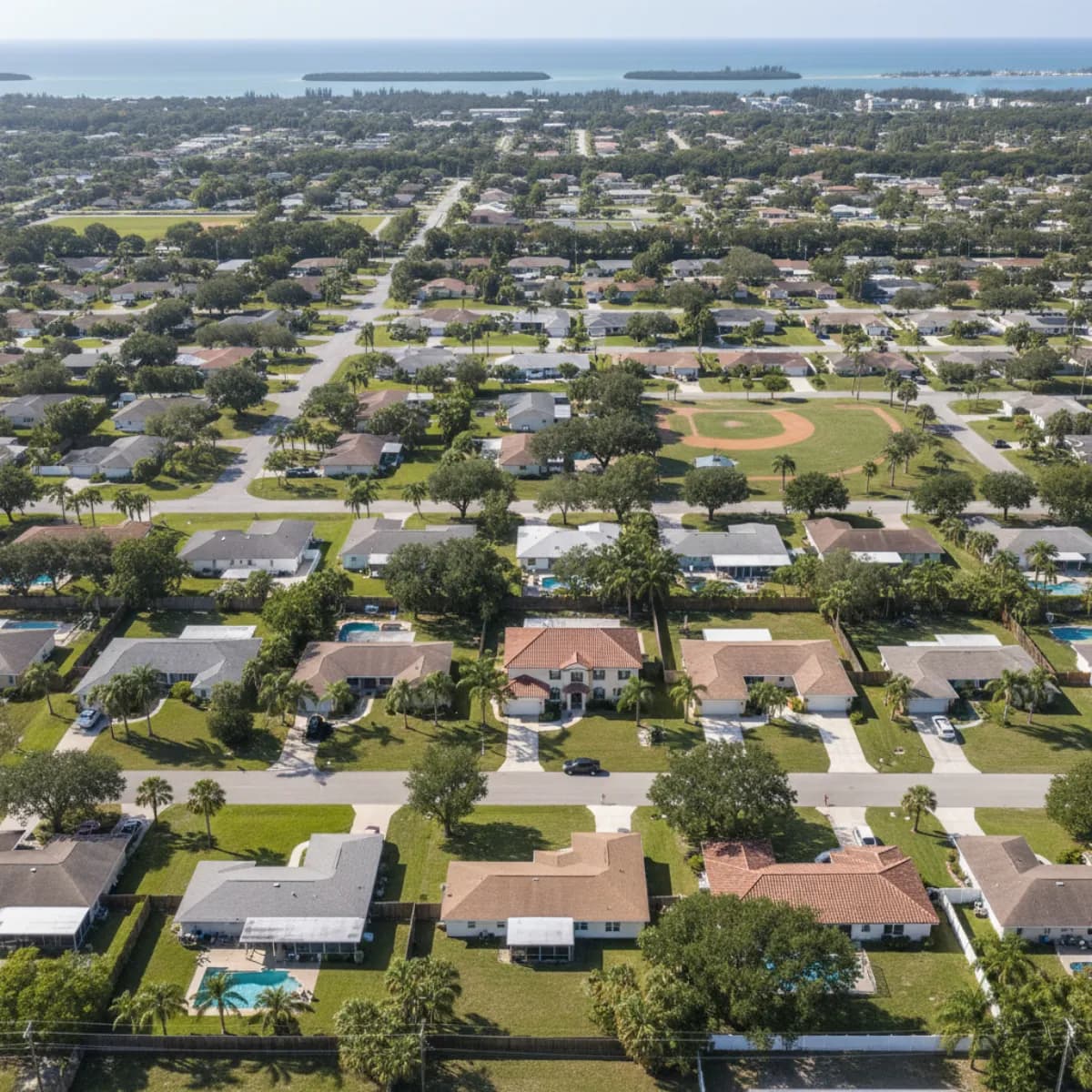
Largo is the third largest city in Pinellas County, home to approximately 85,000 residents in the heart of the Tampa Bay metro area. With a housing stock dominated by 1960s-1980s construction, thousands of Largo homes are approaching or have already passed the point where roof replacement is no longer optional — it's a necessity. Gulf Coast hurricanes, relentless subtropical sun, and moderate salt air exposure accelerate roof deterioration well beyond what manufacturers' warranties project. Get instant quotes from pre-vetted Florida CCC-licensed contractors who specialize in affordable, storm-ready roofing across Pinellas County.
Free Quotes
no obligations ever
Contractor Bids
standardized scope comparison
Until You Choose
no spam, no lead resale
FL Contractors
CCC-licensed, insured, reviewed
Largo at a Glance
Population
3rd largest city in Pinellas County
MPH Wind Zone
Florida Building Code requirement
Peak Construction Era
Majority of housing stock
Typical Roof Cost
Standard single-family home
Shingle Lifespan
In Florida's subtropical climate
Permit Cost
Pinellas County re-roof permits
Largo's Aging Roofs: A City-Wide Challenge
Largo grew rapidly during the great Florida migration of the 1960s, 1970s, and 1980s, when retirees, young families, and working-class households poured into Pinellas County seeking affordable Gulf Coast living. Subdivisions of modest ranch-style and split-level homes spread across the city, creating the residential landscape that defines Largo today. The vast majority of these homes were built with standard 3-tab asphalt shingle roofs — the dominant and most affordable roofing material of the era. Those original roofs were replaced during the 1990s and 2000s, typically with architectural shingles that carry manufacturer warranties of 25-30 years.
However, manufacturer warranties assume temperate climate conditions that bear no resemblance to Largo's reality. In Pinellas County's subtropical environment, where daily UV index routinely hits extreme levels for six or more months per year, where afternoon thunderstorms dump inches of rain in minutes, and where salt-tinged Gulf breezes accelerate granule loss, architectural shingles realistically last 15-20 years. That means thousands of Largo homes that received new roofs in the early-to-mid 2000s are entering or have already entered the replacement window. Homes that were last re-roofed in the 1990s are well overdue.
This aging cycle creates a unique challenge — and opportunity — for Largo homeowners. Insurance carriers are increasingly refusing to write or renew policies on homes with roofs older than 15 years, regardless of apparent condition. Many Largo residents are discovering that their biggest threat isn't a hurricane, but an insurance cancellation notice driven by roof age. RoofVista's marketplace makes it easy to compare standardized quotes from pre-vetted contractors and take action before the insurance deadline hits, getting competitive pricing from multiple CCC-licensed roofers without the spam and pressure tactics common in the industry.
Gulf Coast Climate: What Largo Roofs Face
Largo's position on the Gulf Coast of central Florida subjects roofing systems to a combination of environmental stresses that dramatically shorten material lifespan. Understanding these challenges is essential for making informed decisions about materials, timing, and budget.
! Hurricane and Tropical Storm Winds
Largo's Gulf Coast position exposes it to hurricanes that intensify rapidly over warm Gulf waters before making landfall. The Tampa Bay area has faced threats from storms including Irma (2017), Ian (2022), and Helene (2024), which brought significant flooding to parts of Pinellas County. The Florida Building Code requires roofing systems rated to 130-140 mph in the Largo area, with enhanced nail patterns, hurricane clips, and sealed roof-to-wall connections. Homes built before 2002, when the FBC was adopted, may lack these critical upgrades.
- - 130-140 mph design wind speed (FBC requirement)
- - Gulf storms can intensify rapidly before landfall
- - Pre-2002 homes may lack current code compliance
- - Hurricane clips and sealed decking are essential upgrades
! Extreme UV and Heat Degradation
Largo averages over 240 sunny days per year, with UV index levels hitting "extreme" (11+) routinely from April through October. This relentless solar exposure is the primary reason shingle roofs in Florida fail 5-10 years earlier than identical products in northern states. UV radiation breaks down the petroleum-based asphalt binder in shingles, causing granule loss, curling, cracking, and ultimately water penetration. Dark-colored roofing materials can reach surface temperatures of 160-180 degrees Fahrenheit on summer afternoons, accelerating thermal cycling damage at fastener points and seams.
- - 240+ sunny days per year with extreme UV
- - Shingles lose 5-10 years of life vs. northern states
- - Surface temps reach 160-180 degrees F in summer
- - Granule loss and curling are early warning signs
! Tropical Rainfall and Moisture
Largo receives approximately 50-55 inches of rain annually, with the bulk falling during intense afternoon thunderstorms from June through September. These storms can dump 2-4 inches of rain in under an hour, overwhelming any roof system with compromised flashing, degraded sealant, or cracked shingles. The combination of heat and moisture creates ideal conditions for algae and mold growth on roof surfaces, which can further degrade shingle granules and create dark streaking. Flat or low-slope roof sections common on 1970s ranch homes are particularly vulnerable to ponding water issues.
- - 50-55 inches of rain annually, concentrated in summer
- - Intense thunderstorms can dump 2-4 inches per hour
- - Heat + moisture promotes algae and mold growth
- - Low-slope sections on older homes prone to ponding
! Moderate Salt Air Corrosion
While Largo sits slightly inland from the Gulf barrier islands, its proximity to the coast (approximately 3-6 miles from open Gulf water) means roofing systems are still exposed to moderate salt air corrosion. Standard galvanized fasteners, flashing, and gutter systems will corrode faster than in fully inland locations, though not as aggressively as directly coastal properties in Clearwater Beach or Indian Shores. Homes on the western side of Largo, closer to the Intracoastal Waterway, experience higher salt exposure than those on the eastern side near Seminole. Using corrosion-resistant fasteners and coated metal components extends roof system lifespan.
- - 3-6 miles from open Gulf water
- - Moderate salt air — not as severe as barrier islands
- - Western Largo homes face higher salt exposure
- - Corrosion-resistant fasteners recommended
Best Roofing Materials for Largo Homes
Choosing the right roofing material in Largo requires balancing hurricane performance, longevity in Florida's harsh climate, and budget reality. Largo's housing stock — predominantly single-family ranch and split-level homes from the 1960s-1980s — has different needs than the luxury coastal properties in nearby beach communities. Here is how the major material options perform for Largo homeowners.
Architectural Shingles (Most Common in Largo)
Architectural (dimensional) shingles are by far the most installed roofing material in Largo, and for good reason. They offer the best balance of affordability, aesthetic appeal, and hurricane performance for the city's predominantly modest housing stock. Modern architectural shingles with SBS (Styrene-Butadiene-Styrene) modified asphalt are significantly more flexible and impact-resistant than standard products, maintaining their integrity through Florida's thermal cycling and withstanding higher wind speeds. For Largo's budget-conscious homeowners, architectural shingles deliver code-compliant hurricane protection at the lowest cost per square foot of any mainstream material.
Standing Seam Metal (Fastest Growing in Largo)
Metal roofing has seen a dramatic increase in adoption among Largo homeowners over the past decade, driven by its dramatically longer lifespan (40-60 years), superior wind resistance (rated to 140+ mph), and the growing recognition that a single metal roof can outlast two or three shingle roof cycles. The higher upfront cost is offset by decades of reduced maintenance, lower cooling costs from reflective coatings, and significantly better insurance treatment. Standing seam profiles with concealed fasteners are preferred over exposed-fastener panels because the lack of penetrations through the roof surface eliminates a major source of wind-driven rain intrusion.
Concrete Tile
Concrete tile is found on a subset of Largo homes, particularly those built in Mediterranean, Spanish Colonial, or Florida vernacular styles. Tile offers exceptional longevity (50-75 years for the tiles themselves), inherent fire resistance, and good wind performance when properly installed with mechanical fasteners. However, concrete tile is the heaviest roofing material and not all older Largo home structures can support its weight without reinforcement. The roof deck, trusses, and framing must be evaluated by a structural engineer before tile installation on homes not originally designed for tile. Individual tiles can crack from foot traffic or impact debris during storms, requiring periodic maintenance.
TPO/Flat Roof Membrane
Many Largo homes from the 1970s feature flat or very low-slope roof sections that cannot accommodate traditional shingles or tile. White TPO (Thermoplastic Polyolefin) membrane is the standard material for these applications, offering heat-reflective properties that reduce cooling costs, excellent waterproofing for low-slope surfaces prone to ponding water, and strong wind resistance when mechanically fastened and sealed. TPO is also the primary roofing material for Largo's commercial buildings and some multi-family properties. Proper drainage design is essential for any flat roof system in Florida's heavy rainfall environment.
The Insurance Crisis Hitting Largo Homeowners
Florida's homeowner's insurance market has been in turmoil, and Largo's older housing stock puts its residents squarely in the crosshairs. Several major insurers have pulled out of the Florida market entirely, while those remaining have dramatically tightened underwriting requirements — especially regarding roof age and condition. For many Largo homeowners, the roof replacement conversation is no longer about aesthetics or even storm protection. It's about maintaining the ability to insure their home at all.
The practical impact is stark. Homeowners with roofs older than 15 years often face limited carrier options, higher premiums, or outright coverage denials. Citizens Property Insurance, the state-backed insurer of last resort, requires roof inspections for older roofs and may deny coverage if the roof has less than 5 years of remaining useful life. Given that most Largo homes have shingle roofs that realistically last 15-20 years in the Florida climate, the window between "roof is fine" and "insurance won't cover you" can be frustratingly narrow.
The financial case for proactive roof replacement is compelling. A new, code-compliant roof immediately reopens the full range of insurance carriers, typically reducing annual premiums by 20-40%. A wind mitigation inspection (OIR-B1-1802 form) after installation documents the new roof's hurricane-resistant features — including roof covering type, deck attachment method, roof-to-wall connections, and secondary water resistance — which can qualify for an additional 20-50% discount on the wind portion of the premium. For a Largo homeowner paying $3,000-$6,000 per year in insurance (common in Pinellas County), these combined savings can offset a significant portion of the roof replacement cost over the new roof's lifespan.
RoofVista helps Largo homeowners navigate this process efficiently. Enter your address, get instant satellite-based estimates, and compare standardized quotes from pre-vetted CCC-licensed contractors — all without giving your personal information to multiple companies or dealing with high-pressure sales tactics.
Wind Mitigation Savings for Largo Homeowners
Features That Save Money
- - FBC-compliant roof covering (shingles, metal, tile)
- - Sealed roof deck (peel-and-stick underlayment)
- - Hurricane clips or straps at every truss
- - Hip roof geometry (better than gable for wind)
- - Secondary water resistance barrier
- - Impact-resistant covering (Class 3 or 4)
Potential Savings
- - New roof alone: 20-40% premium reduction
- - Wind mitigation credits: additional 20-50%
- - Combined annual savings: $800-$3,000+
- - Payback period: often 5-8 years from savings alone
- - Improved insurability: access to more carriers
- - Higher resale value: new roof is a major selling point
Building Codes and Permits in Largo
Largo operates under the Florida Building Code (FBC), which is administered locally through Pinellas County's building department. The FBC was adopted statewide in 2002 in response to the devastation caused by Hurricane Andrew in 1992, replacing the patchwork of local building codes that previously governed construction across the state. For roofing, the FBC establishes minimum standards for wind resistance, product certification, installation methods, and inspection requirements that are among the most stringent in the nation.
All roof replacements in Largo require a building permit. The permit process exists to ensure that every new roof meets current FBC standards, regardless of what was acceptable when the home was originally built. This means that a home built in 1972 under the old South Florida Building Code will be brought up to modern hurricane standards when its roof is replaced — a significant upgrade in storm protection. The permit application requires the contractor's active CCC license number, Florida Product Approval (FL) numbers for every material being used, and a signed Notice of Commencement.
Inspections are conducted at critical stages of the installation: the dry-in inspection verifies proper underlayment installation and deck preparation, and the final inspection confirms that the roof covering is installed according to manufacturer specifications and FBC requirements. Permit fees in Pinellas County typically range from $200-$500 depending on the scope of work. Your contractor handles the entire permit and inspection process, but homeowners should always verify that a permit has been pulled before allowing work to begin. Unpermitted roof work is a code violation that can void insurance coverage, create title issues when selling, and leave you liable for substandard work.
Important: Pre-2002 Homes Get a Major Upgrade
If your Largo home was built before 2002 (the vast majority), a roof replacement is not just a material swap — it's a structural upgrade. Current FBC requirements mandate hurricane clips or straps at roof-to-wall connections, enhanced nail patterns, approved self-adhering underlayment, and other features that dramatically improve your home's hurricane resistance compared to what was installed when it was built. This upgrade is one of the most impactful improvements you can make for both safety and insurance savings.
Roofing Considerations by Largo Neighborhood
Largo's neighborhoods vary in age, housing style, and proximity to the coast, which creates different roofing priorities across the city. Understanding your neighborhood's specific characteristics helps in choosing the right material, timing replacement, and budgeting appropriately.
West Largo (Near Indian Rocks Beach/Belleair)
Homes on Largo's western edge, closest to the Intracoastal Waterway and Gulf beaches, face the highest salt air exposure in the city. Properties in this area should prioritize corrosion-resistant fasteners, stainless steel flashing, and marine-grade coated metal roofing. Wind exposure is also greater here due to the flat coastal terrain. Standing seam metal or high-wind rated architectural shingles are the best choices for this zone.
Central Largo (Largo Central Park Area)
The heart of Largo features the city's most established neighborhoods, with dense concentrations of 1960s-1980s ranch homes. Many of these homes are on their second or third roof cycle. The housing stock is predominantly modest in size (1,200-1,800 square feet), which keeps replacement costs manageable. Architectural shingles remain the most cost-effective and popular choice here. This area represents the best value opportunity for homeowners looking to replace an aging roof before insurance deadlines force the issue.
East Largo (Near Seminole/Pinellas Park)
The eastern portion of Largo transitions toward Seminole and Pinellas Park, with a mix of older and slightly newer construction from the 1980s-1990s. Salt air exposure is reduced compared to western neighborhoods, giving more flexibility in material choices and extending the useful life of standard metal components. This area has seen growth in metal roofing adoption as homeowners in slightly newer homes make long-term upgrade decisions.
Largo 55+ Communities and Condos
Largo has a significant retirement population living in 55+ communities and condominium complexes. These properties often have HOA-mandated roofing requirements that dictate material type, color, and even contractor selection. Condo associations typically handle roof replacement as a common-area expense, requiring board approval and often engaging multiple bids. RoofVista's standardized quote comparison is particularly valuable for HOA boards that need to demonstrate due diligence in contractor selection and pricing to their residents.
Why Largo Homeowners Choose RoofVista
Largo is a working-class community where homeowners care about getting good value without overpaying. The traditional process of getting roof quotes — calling multiple contractors, scheduling separate inspections, comparing apples-to-oranges proposals with different scopes and materials — is time-consuming, confusing, and often leads to decision paralysis or overpaying. RoofVista eliminates these pain points with a fundamentally different approach.
Instant Satellite-Based Estimates
Enter your Largo address and get an AI-powered roof measurement and cost estimate within minutes. Our satellite analysis calculates your roof's area, pitch, and complexity — giving you a realistic budget range before you ever speak with a contractor. No waiting for in-person inspections just to learn what your roof replacement will cost.
Standardized Scope Comparison
When you request quotes through RoofVista, every contractor bids on the same standardized scope of work — same materials, same specifications, same installation methods. This eliminates the confusion of comparing quotes where one contractor includes underlayment replacement and another does not, or where material grades vary. You compare true apples-to-apples pricing.
Privacy Until You Choose
Your personal information is never shared with contractors until you decide to move forward with a specific bid. No spam calls, no lead resale to five different companies who all call within 30 seconds of your submission. You control the process, review quotes at your own pace, and choose when — and if — you want to engage with a contractor directly.
Pre-Vetted CCC-Licensed Contractors
Every contractor on the RoofVista marketplace holds an active Florida CCC license, carries required insurance and bonding, and has been vetted for experience and customer satisfaction. We verify licenses through the DBPR, confirm insurance coverage is current, and review each contractor's track record before they can bid on projects in Largo.
Get Your Instant Largo Roof Estimate
Whether your roof is aging out of insurability, showing signs of storm damage, or you simply want to know what a replacement would cost, RoofVista gives you instant answers. Enter your address below for a free satellite-based estimate — no phone calls, no obligations, no spam.
Serving the Greater Tampa Bay Area
RoofVista serves homeowners across the Tampa Bay metro area and all of Pinellas County. Our pre-vetted contractors are licensed statewide in Florida and regularly serve the following communities near Largo.
Florida Roofing Guides
Learn more about roofing in the Sunshine State with our comprehensive guides for Florida homeowners. These resources cover everything from material selection and building code requirements to insurance strategies and storm preparation.
Florida Roofing Overview
State-wide roofing guide covering FBC requirements, material options, insurance strategies, and contractor licensing across all Florida counties.
Understanding Your Roofing Scope of Work
Learn how to read and compare roofing proposals so you can make informed decisions when reviewing quotes from Largo contractors.
Contractor Licensing Guide
Everything you need to know about verifying Florida CCC roofing licenses, insurance requirements, and contractor qualifications.
Florida Roof Cost Guide
Detailed pricing data for every major roofing material across Florida, with regional breakdowns and cost factors specific to Gulf Coast counties.
Frequently Asked Questions About Roofing in Largo, FL
How much does a roof replacement cost in Largo, FL?
Architectural shingles cost $9,000-$18,000 in Largo. Standing seam metal runs $18,000-$35,000. Concrete tile ranges $16,000-$30,000. Flat/TPO for low-slope sections costs $7,000-$16,000. Largo's costs reflect the 130-140 mph wind zone, Gulf Coast salt air requirements, and Tampa Bay metro contractor demand. Pricing runs slightly below nearby Clearwater and St. Petersburg.
Why are so many roofs in Largo reaching end of life?
Largo's biggest building boom was the 1960s through 1980s, and many homes still have aging or second-generation roofs. In Florida's subtropical climate, shingle roofs last 15-20 years — far less than manufacturer warranties suggest. Many roofs installed in the early 2000s are now due for replacement, making aging roofs the single biggest insurance and storm vulnerability issue.
What wind speed rating is required for roofing in Largo?
Largo falls within the FBC's 130-140 mph wind design zone per Pinellas County standards. All products need a Florida Product Approval, enhanced 6-nail patterns for shingles, hurricane clips or straps at roof-to-wall connections, and approved self-adhering underlayment systems.
How did Hurricane Helene affect roofing in the Largo area?
Hurricane Helene (September 2024) brought storm surge flooding to parts of Pinellas County near Largo. Many older homes experienced wind damage and water intrusion through aging roofs. The storm reinforced the importance of maintaining code-compliant roofing and highlighted vulnerabilities in homes not updated to current FBC standards.
What roofing materials are best for Largo's climate?
Architectural shingles with SBS modification are the most popular choice in Largo, balancing affordability and hurricane performance. Standing seam metal is growing rapidly for its 40-60 year lifespan and superior wind resistance. Concrete tile remains common on Mediterranean-style homes. White TPO membrane is used for flat or low-slope sections on 1970s-era ranch homes.
How does roof age affect homeowner's insurance in Largo?
Many Florida insurers won't write policies on homes with roofs older than 15 years. Citizens Property Insurance requires a roof inspection for roofs over 15 years old. A new, code-compliant roof improves insurability, reduces premiums by 20-40%, and qualifies for wind mitigation discounts of 20-50%. For many Largo homeowners, insurance savings alone justify a new roof.
Do I need a permit for roof replacement in Largo?
Yes. All roof replacements require a permit from Pinellas County. Applications need a CCC license number, Florida Product Approval numbers, and a Notice of Commencement. Fees range $200-$500. Your contractor handles the process, but verify permits are pulled before work begins — unpermitted work can void insurance.
What contractor license is required for roofing in Largo, FL?
Florida requires a Certified Roofing Contractor (CCC) license from the DBPR. Contractors must carry workers' comp and a $10,000 surety bond. Verify licenses at myfloridalicense.com. All RoofVista contractors hold active CCC licenses and are vetted for insurance and experience.