Broward County's Coastal Roofing Experts
Instant Roof Replacement Quotes in Hollywood, FL
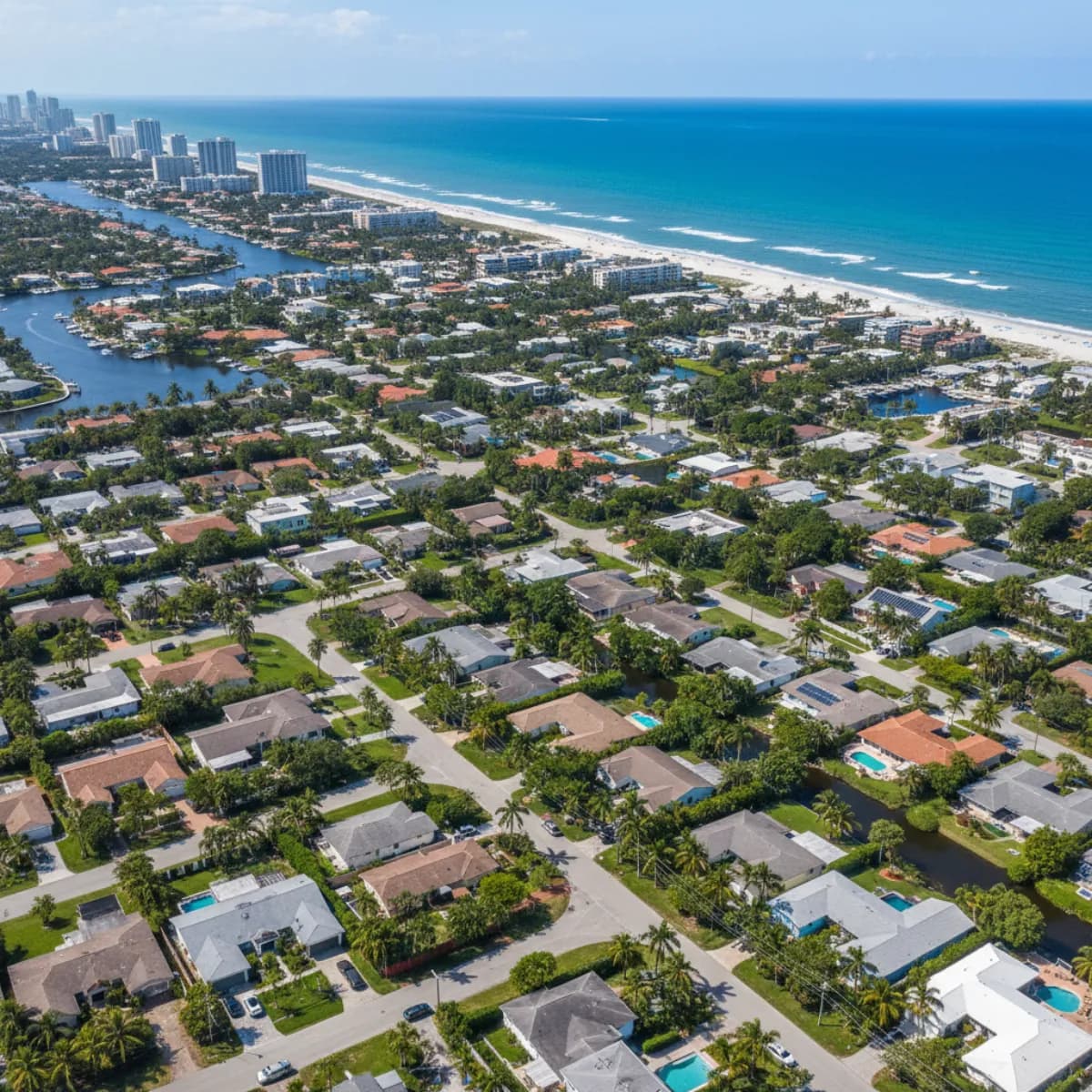
Hollywood sits on the South Florida coast between Fort Lauderdale and Miami, with the Atlantic Ocean to the east and the Intracoastal Waterway running through the heart of the city. Every roofing project here must meet Broward County's HVHZ standards — the strictest building code in the nation. Get instant quotes from pre-vetted Florida CCC-licensed contractors who specialize in coastal wind protection, salt air corrosion resistance, and hurricane-rated installations across Hollywood Beach, the Lakes section, Emerald Hills, and every Hollywood neighborhood.
Free Quotes
no obligations ever
Contractor Bids
standardized scope comparison
Until You Choose
no spam, no lead resale
FL Contractors
CCC-licensed, insured, reviewed
Hollywood, FL at a Glance
Population
Broward County's 3rd largest city
MPH Wind Zone
HVHZ coastal design speed
Building Code Zone
Strictest in the United States
Coastline
Atlantic Ocean beachfront
Founded
Aging housing stock from 1950s-70s
Permit Cost
Broward County re-roof permits
Why Hollywood Roofs Face Unique Coastal Challenges
Hollywood, Florida occupies a distinctive geographic position on the South Florida coast. Situated in Broward County between Fort Lauderdale to the north and Miami to the south, the city stretches from the Atlantic Ocean westward past Interstate 95 toward the Everglades. The Intracoastal Waterway bisects the eastern portion of the city, creating a network of canals, waterfront properties, and barrier islands that are directly exposed to salt-laden ocean air from multiple directions. This dual coastal exposure — ocean to the east, Intracoastal channels throughout — means that virtually every home in Hollywood experiences some degree of salt air corrosion, with waterfront and beachfront properties facing the most extreme conditions.
Hollywood's housing stock tells the story of South Florida's development. The city was founded in 1925 by Joseph W. Young, and much of its residential core was built during the post-World War II boom of the 1950s through 1970s. These older homes — many with original or once-replaced roofs — present significant challenges. Pre-1992 construction predates the HVHZ building codes enacted after Hurricane Andrew, meaning that older roofs may lack hurricane clips, sealed roof decks, and modern wind-resistant attachment methods. When these homes need roof replacement, the new installation must bring the entire roof system up to current HVHZ standards, which can increase project scope and cost compared to newer construction.
Hollywood has direct experience with major hurricanes. Hurricane Wilma in 2005 made landfall on Florida's southwest coast and crossed the state, striking Hollywood with sustained winds of 100+ mph and causing widespread roof damage across the city. Hurricane Irma in 2017 brought sustained tropical storm force winds and significant rain. Hurricane Andrew in 1992, while centered further south in Homestead, was the catalyst for the HVHZ building codes that now govern all construction in Broward County. Each of these storms reinforced the critical importance of code-compliant roofing for Hollywood homeowners. RoofVista's pre-vetted contractors in Hollywood understand these requirements, and our standardized quotes make it straightforward to compare pricing from contractors who all meet the same rigorous standards.
Roofing Challenges Unique to Hollywood, FL
Hollywood's tropical coastal climate creates a relentless combination of environmental stresses that roofing systems must withstand year-round. The city's position between the Atlantic Ocean and the Intracoastal Waterway amplifies salt air exposure, while its location in the HVHZ demands materials and installation methods that can survive a direct hurricane strike.
! Hurricane-Force Winds
Hollywood's HVHZ classification requires all roofing systems to withstand design wind speeds of 140 to 150 mph. Homes east of US-1, along Hollywood Beach, and on the barrier islands face the highest wind exposure. Hurricane Wilma (2005) demonstrated the real-world consequences when 100+ mph winds stripped shingles and tiles from homes across the city. Every roofing product must pass NOA-certified wind uplift testing, and installations require enhanced nail patterns, hurricane clips, and sealed roof-to-wall connections.
- - 140-150 mph design wind speed (HVHZ requirement)
- - TAS 202 wind uplift testing for all products
- - Enhanced 6-nail pattern for shingles
- - Hurricane clips at every truss-to-wall connection
~ Dual Salt Air Exposure
Unlike many coastal cities with ocean exposure on one side, Hollywood is sandwiched between the Atlantic Ocean and the Intracoastal Waterway. This creates salt air corrosion pressure from multiple directions. Homes along the Hollywood Beach Broadwalk, the barrier islands, North and South Lake, and the Intracoastal canal communities face the most severe exposure. Standard galvanized steel fasteners, flashing, and drip edge can begin corroding within 2 to 3 years in these zones, compromising the roof system's structural integrity and wind resistance.
- - Stainless steel or hot-dipped galvanized fasteners required
- - Marine-grade coatings for metal roofing
- - Aluminum or copper flashing (no standard steel)
- - Annual inspections for Intracoastal and beachfront homes
= Extreme UV & Year-Round Heat
Hollywood receives approximately 246 sunny days per year, with a UV index that regularly reaches 11+ (extreme) from April through September. Roof surface temperatures routinely exceed 150 degrees F during summer months. This constant UV bombardment accelerates the degradation of asphalt shingles, dries out sealant strips, and breaks down polymer-based underlayment far faster than in northern climates. SBS-modified asphalt technology and UV-resistant materials are essential for achieving expected lifespans in Hollywood's climate.
- - UV Index 11+ (extreme) April through September
- - SBS-modified shingles resist UV degradation
- - Reflective tile and metal reduce attic temperatures
- - Light-colored roofing lowers cooling costs 10-20%
# Flooding & Wind-Driven Rain
Hollywood averages 60 inches of annual rainfall concentrated in intense tropical downpours from May through October. The city's low elevation and extensive canal system make it particularly vulnerable to flooding — many Hollywood neighborhoods fall within FEMA flood zones. During hurricanes, wind-driven rain becomes a horizontal force that exploits any gap in the roofing system. HVHZ code requires all roofing assemblies to pass TAS 100 wind-driven rain testing, and secondary water resistance through peel-and-stick underlayment is strongly recommended for both code compliance and insurance benefits.
- - 60 inches annual rainfall (concentrated May-Oct)
- - Multiple FEMA flood zones throughout the city
- - TAS 100 wind-driven rain testing required
- - Peel-and-stick underlayment for wind mitigation credit
Hollywood Roof Replacement Cost by Material
Hollywood roofing costs reflect the premium required for HVHZ-compliant materials and coastal installation methods. All products must carry a valid Miami-Dade NOA. The city's mix of older homes (1950s-1970s), mid-rise beach condominiums, and newer planned communities means that material selection must account for both the home's architectural style and its proximity to the coast. Homes along the Intracoastal and east of US-1 face additional material costs for corrosion-resistant components.
Concrete Tile
#1: Concrete Tile (Barrel & Flat)
Concrete tile is the dominant roofing material across Hollywood and South Florida, prized for its inherent wind resistance, longevity, and aesthetic versatility. The barrel (S-tile) profile is particularly popular in Hollywood's residential neighborhoods, complementing the city's Mediterranean and contemporary architecture throughout Emerald Hills, Hillcrest, and the Lakes section. Individual tiles weigh 9 to 12 pounds each, providing natural resistance to wind uplift. With NOA-compliant foam adhesive or mechanical fastening using stainless steel clips, concrete tile systems routinely pass the HVHZ 150 mph wind tests. The thermal mass of concrete reduces cooling costs by absorbing heat during the day and releasing it slowly, which is particularly valuable in Hollywood's year-round warm climate.
Best For:
Most Hollywood homes, Spanish/Mediterranean styles
Lifespan:
50-75 years
Cost Range:
$22,000 - $48,000
Wind Rating:
150+ mph (NOA-certified)
Standing Seam Metal
#2: Standing Seam Metal
Standing seam metal roofing has gained significant popularity in Hollywood, particularly for homes along the Intracoastal Waterway and in newer developments. The concealed fastener system eliminates the corrosion vulnerability that plagues exposed-fastener metal panels in Hollywood's salt air environment. Marine-grade coatings are non-negotiable in Hollywood: Galvalume steel with PVDF (Kynar 500) fluoropolymer coating or aluminum panels provide the corrosion resistance needed within the salt zone. Standing seam is an excellent choice for Hollywood's modern and contemporary homes, offering clean lines, exceptional wind performance, and a 40 to 70 year lifespan with proper marine-grade specification.
Best For:
Intracoastal homes, modern architecture
Lifespan:
40-70 years
Cost Range:
$20,000 - $45,000
Corrosion Protection:
Marine-grade PVDF coating required
Impact-Resistant Shingles
#3: Impact-Resistant SBS-Modified Shingles
For Hollywood homeowners seeking HVHZ compliance at the most accessible price point, impact-resistant SBS-modified architectural shingles deliver strong performance at a lower cost than tile or metal. SBS (Styrene-Butadiene-Styrene) polymer modification makes these shingles more flexible and impact-resistant than standard asphalt, allowing them to pass the TAS 201 large missile impact test required in the HVHZ. These shingles also carry Class 4 hail impact ratings. The SBS modification provides superior UV resistance compared to standard oxidized asphalt — critical in Hollywood's extreme sun environment. They are particularly popular in Hollywood's inland neighborhoods like Boulevard Heights, Liberia, and Dania Isles where ranch-style homes from the 1960s and 1970s are common.
Best For:
Budget-conscious homeowners, ranch-style homes
Lifespan:
20-30 years (Hollywood climate)
Cost Range:
$12,500 - $30,000
Impact Rating:
Class 4 (UL 2218) + TAS 201
TPO / Flat Roof
#4: TPO & Modified Bitumen (Flat Roofs)
Hollywood has a significant inventory of flat-roofed buildings, from mid-rise beach condominiums along Hollywood Beach and the Broadwalk to commercial properties along Young Circle and Hollywood Boulevard. Many of the city's 1960s and 1970s-era apartment buildings and townhomes also feature flat or low-slope roof designs. White TPO (Thermoplastic Polyolefin) membrane is the standard choice for flat roofs, providing excellent heat reflection in Hollywood's year-round warm climate and withstanding the ponding water that occurs during intense tropical rainstorms. Modified bitumen provides superior waterproofing and puncture resistance for roofs with rooftop HVAC equipment or regular maintenance access. HOA-governed condominiums along the beach frequently specify TPO for its energy efficiency and uniform appearance.
Best For:
Beach condos, mid-rises, flat-roofed homes
Lifespan:
20-30 years
Cost Range:
$9,000 - $22,000
Energy Savings:
White TPO reflects 80%+ solar energy
Hollywood Average Roof Cost: Impact-resistant shingles $12,500-$30,000. Concrete tile $22,000-$48,000. Standing seam metal $20,000-$45,000. Flat/TPO $9,000-$22,000. Hollywood costs include the HVHZ premium — NOA-certified products, enhanced installation methods, salt air corrosion-resistant components, and rigorous Broward County inspections. Get your exact price with a free instant estimate.
Broward County Building Requirements for Hollywood Roofing
HVHZ Regulatory Requirements
Miami-Dade Notice of Acceptance (NOA)
Every roofing component installed in Hollywood must have a valid Miami-Dade NOA — the same certification required throughout the HVHZ in both Broward and Miami-Dade counties. This applies to shingles, tiles, underlayment, fasteners, flashing, adhesives, ridge caps, and vents. NOAs are issued by the Miami-Dade County Product Control Division after independent testing to TAS protocols. Using products without a valid NOA is a code violation that will fail Broward County inspection and may void insurance coverage.
Broward County Enhanced FBC
Broward County enforces the Florida Building Code with HVHZ enhancements that exceed standard FBC requirements. Design wind speeds for Hollywood range from 140 to 150 mph depending on exposure category and distance from the coast. All roof deck attachment must use ring-shank nails at 6-inch spacing, and every truss-to-wall connection must have approved hurricane straps or clips. These enhanced requirements significantly improve the roof system's ability to survive major hurricane events.
Permit Process (City of Hollywood)
Permit applications through the City of Hollywood Building Division must include NOA numbers for all products, the contractor's CCC license number, proof of insurance, and a Notice of Commencement. Tile and metal installations require a signed and sealed engineer's drawing. Inspections occur at three stages: initial tie-off (deck preparation and fastening), dry-in (underlayment and secondary water barrier), and final (completed installation with NOA verification). Permit fees typically range from $250 to $600 depending on project scope.
Wind Mitigation Requirements
All roof-to-wall connections in Hollywood must use approved hurricane straps or clips. Roof decking must be fastened with ring-shank nails at 6-inch spacing. Secondary water resistance (SWR) through self-adhering peel-and-stick underlayment is strongly recommended and qualifies homeowners for significant insurance discounts through the OIR-B1-1802 wind mitigation inspection form. Given Hollywood's coastal exposure, maximizing wind mitigation credits provides substantial annual insurance savings.
Florida CCC Licensing
All roofing contractors working in Hollywood must hold a Certified Roofing Contractor (CCC) license from the DBPR. In Broward County, contractors must additionally register with the county and demonstrate competency with HVHZ-specific requirements. Verify any contractor's license at myfloridalicense.com. Every RoofVista contractor serving Hollywood carries an active CCC license, workers' compensation insurance, and a minimum $10,000 surety bond.
Hollywood Neighborhoods We Serve
From the beachfront condominiums along the Broadwalk to the established inland neighborhoods west of I-95, our pre-vetted contractors serve every corner of Hollywood. Each area presents unique roofing considerations based on its coastal proximity, housing age, architectural style, and HOA requirements.
Hollywood Beach & Broadwalk
- - Maximum salt air corrosion exposure
- - Mid-rise and high-rise condominiums
- - Flat roof TPO and modified bitumen
- - HOA board approval processes
- - Marine-grade fasteners mandatory
Lakes Section & North Lake
- - Intracoastal waterfront homes
- - Elevated salt air exposure from canals
- - Mix of tile and metal roofing
- - Larger homes with complex rooflines
- - Stainless steel fasteners recommended
Emerald Hills
- - Established 1970s-80s homes
- - Concrete tile predominant
- - HOA architectural guidelines
- - Larger lot sizes
- - Pre-Andrew construction common
Hollywood Hills & Hillcrest
- - Post-war ranch homes (1950s-60s)
- - Aging shingle roofs needing replacement
- - Opportunity for wind mitigation upgrades
- - Moderate salt exposure
- - Budget-friendly shingle options viable
Boulevard Heights & Liberia
- - Older housing stock (1950s-70s)
- - Mix of flat and sloped roofs
- - Many homes lack hurricane clips
- - Full code compliance on re-roof
- - Cost-effective upgrade opportunities
Downtown & Young Circle
- - Mixed-use buildings and condos
- - Art Deco and mid-century architecture
- - Flat roofs with commercial specs
- - City historic area considerations
- - TPO and built-up roofing systems
Hollywood's Aging Housing Stock: What Homeowners Need to Know
A significant portion of Hollywood's residential inventory was built between the 1950s and 1970s — decades before Hurricane Andrew prompted the HVHZ building code overhaul. These homes represent both a challenge and an opportunity for today's homeowners. The challenge: original or once-replaced roofs on pre-1992 homes typically lack the hurricane-resistant features now required by code, including hurricane clips or straps at truss-to-wall connections, ring-shank nail deck attachment at 6-inch spacing, sealed peel-and-stick underlayment for secondary water resistance, and impact-rated roof covering with NOA certification.
The opportunity: when these roofs are replaced, the new installation must meet current HVHZ standards. This means that a roof replacement on a 1960s ranch home in Hollywood Hills doesn't just give the home a new roof — it brings the entire roof system up to modern hurricane protection standards. The addition of hurricane clips, sealed deck, and impact-resistant covering transforms the home's wind resistance profile and typically qualifies for maximum wind mitigation insurance discounts, which can save $2,000 to $4,000 or more annually in Hollywood's coastal insurance market.
For homes in flood zones — and many Hollywood neighborhoods fall within FEMA AE or VE flood zones due to the city's low elevation and proximity to the Intracoastal — the roofing system is the first line of defense against both wind-driven rain from above and potential water intrusion from flooding below. A properly sealed and wind-mitigated roof system is essential for protecting the structure and its contents during the dual-threat hurricane events that are common in South Florida.
Insurance Considerations for Hollywood Homeowners
Florida's Roofing Insurance Crisis & Wind Mitigation
Hollywood homeowners face some of the highest property insurance rates in Florida due to the city's direct coastal exposure, HVHZ classification, and flood zone overlap. Multiple private insurers have left the Florida market since 2020, and those remaining have significantly increased premiums and tightened underwriting criteria for coastal Broward County properties. Roof condition and age have become the most critical factors in securing and maintaining affordable coverage.
Roof Age & Insurance Eligibility
- - Many insurers refuse policies on roofs older than 15 years
- - Citizens requires inspection for roofs over 15 years
- - Coverage may be denied if roof has less than 5 years useful life
- - SB 4-D (2022) protects roofs under 15 years from age-based denial
- - Roof replacement often reduces premiums 20-40% immediately
Wind Mitigation Discounts
- - Florida law mandates insurance discounts for wind mitigation
- - OIR-B1-1802 inspection documents wind-resistant features
- - Hurricane clips/straps: significant premium reduction
- - Secondary water resistance (peel-and-stick): major discount
- - Impact-resistant covering: additional savings of 10-20%
- - Hip roof geometry: lower premium than gable roofs
Our pre-vetted Hollywood contractors understand the direct connection between roofing and insurance. They can recommend installations specifically designed to maximize your wind mitigation credits and improve your insurability, potentially saving thousands annually on premiums in Hollywood's high-cost coastal insurance market.
Roofing Challenges for Intracoastal Waterway Homes
Hollywood's Intracoastal Waterway creates a distinctive roofing environment that goes beyond typical coastal exposure. Homes along the Intracoastal — including the Lakes section, North Lake, South Lake, and the network of canals throughout eastern Hollywood — face salt air corrosion from both the ocean to the east and the saltwater Intracoastal channel at their doorstep. This dual exposure accelerates the degradation of metal components and demands the highest-grade corrosion-resistant materials available.
Intracoastal homes often have larger, more complex roof geometries with multiple hip sections, valleys, dormers, and varying pitch angles. These architectural features create more potential points of water intrusion during hurricane conditions and require more precise installation workmanship. The proximity to water also means higher wind exposure, as there are no structures or vegetation to break the wind coming off the open waterway.
Intracoastal Home Roofing Recommendations
Materials
- - 316 stainless steel fasteners (not standard galvanized)
- - Copper or aluminum flashing and drip edge
- - Marine-grade PVDF coatings on any metal
- - SBS-modified underlayment for UV and heat resistance
Maintenance
- - Annual professional inspection (post-hurricane season)
- - Bi-annual corrosion check on all metal components
- - Gutter and valley cleaning for salt and debris buildup
- - Sealant and caulk replacement every 3-5 years
Nearby Florida Cities We Serve
Fort Lauderdale
Broward County seat, 12 miles north of Hollywood. HVHZ coastal roofing with Intracoastal and barrier island specialization.
Miami
15 miles south of Hollywood. America's strictest building code zone with NOA and HVHZ requirements for every product.
Hialeah
Miami-Dade's second-largest city, 20 miles southwest. HVHZ-compliant roofing for residential and commercial properties.
Florida Roofing Resources
Florida State Overview
All Florida roofing resources and city pages
Florida Roof Replacement Cost Guide
Detailed pricing for all FL regions and materials
Hurricane-Resistant Roofing in Florida
HVHZ requirements, NOA products, and wind ratings
Florida Roofing Building Codes
FBC, HVHZ, and local requirements
Wind Mitigation Guide for Florida
Insurance discounts and inspection details
Florida Contractor Licensing
CCC license requirements and DBPR verification
Frequently Asked Questions About Hollywood, FL Roofing
How much does a roof replacement cost in Hollywood, FL?
Roof replacement in Hollywood typically costs $12,500-$30,000 for architectural or impact-resistant asphalt shingles. Concrete tile ranges $22,000-$48,000. Standing seam metal with marine-grade coatings runs $20,000-$45,000. Flat roof TPO or modified bitumen ranges $9,000-$22,000. Costs reflect HVHZ compliance, coastal wind zone premiums, and salt-resistant material requirements.
Is Hollywood, FL in the High Velocity Hurricane Zone (HVHZ)?
Yes. All of Broward County, including Hollywood, is within the HVHZ. Every roofing product must carry a Miami-Dade Notice of Acceptance (NOA). Standard products approved elsewhere in Florida are not sufficient. This was established after Hurricane Andrew devastated South Florida in 1992.
What roofing materials work best near Hollywood Beach and the Intracoastal?
Concrete tile with stainless steel fasteners (50-75 year lifespan) is the most popular for wind resistance and durability. Standing seam metal with marine-grade PVDF coatings resists salt corrosion and handles 150+ mph winds. All fasteners and flashing within one mile of the coast should be stainless steel or hot-dipped galvanized.
What wind speed rating do Hollywood, FL roofs need?
Hollywood requires roofing systems rated for 140-150 mph design wind speeds under the Broward County HVHZ code. Coastal properties east of US-1 face higher requirements due to direct ocean exposure. All products must pass NOA testing including TAS 202 wind uplift protocols.
How does salt air affect roofs in Hollywood, FL?
Hollywood sits between the Atlantic Ocean and the Intracoastal Waterway, so virtually the entire city faces salt air corrosion. Standard galvanized fasteners can corrode within 2-3 years in coastal zones. Annual inspections are recommended for properties near Hollywood Beach, the barrier islands, and the Intracoastal.
Do I need a permit for roof replacement in Hollywood, FL?
Yes. All roof replacements require permits through the City of Hollywood Building Division or Broward County. Applications must include NOA numbers, CCC license proof, and a Notice of Commencement. Multi-stage inspections verify compliance at tie-off, dry-in, and final stages. Permit fees range $250-$600.
Can a new roof lower my insurance premiums in Hollywood, FL?
Yes. Florida law mandates insurance discounts for verified wind mitigation features. A new HVHZ-compliant roof with hurricane clips, sealed deck, and impact-resistant covering can save 30-50% on the wind portion of your premium. Many insurers refuse policies on roofs older than 15 years. A new roof typically reduces premiums 20-40%.
What contractor license is required for roofing in Hollywood, FL?
Florida requires a Certified Roofing Contractor (CCC) license from the DBPR. In Broward County, contractors must also register with the county and demonstrate HVHZ expertise. Verify any contractor's license at myfloridalicense.com.
Get Your Hollywood Roof Quote in Minutes
Enter your address to compare instant quotes from pre-vetted CCC-licensed Florida contractors who specialize in HVHZ-compliant roofing, salt air corrosion protection, and coastal wind resistance across Hollywood and Broward County