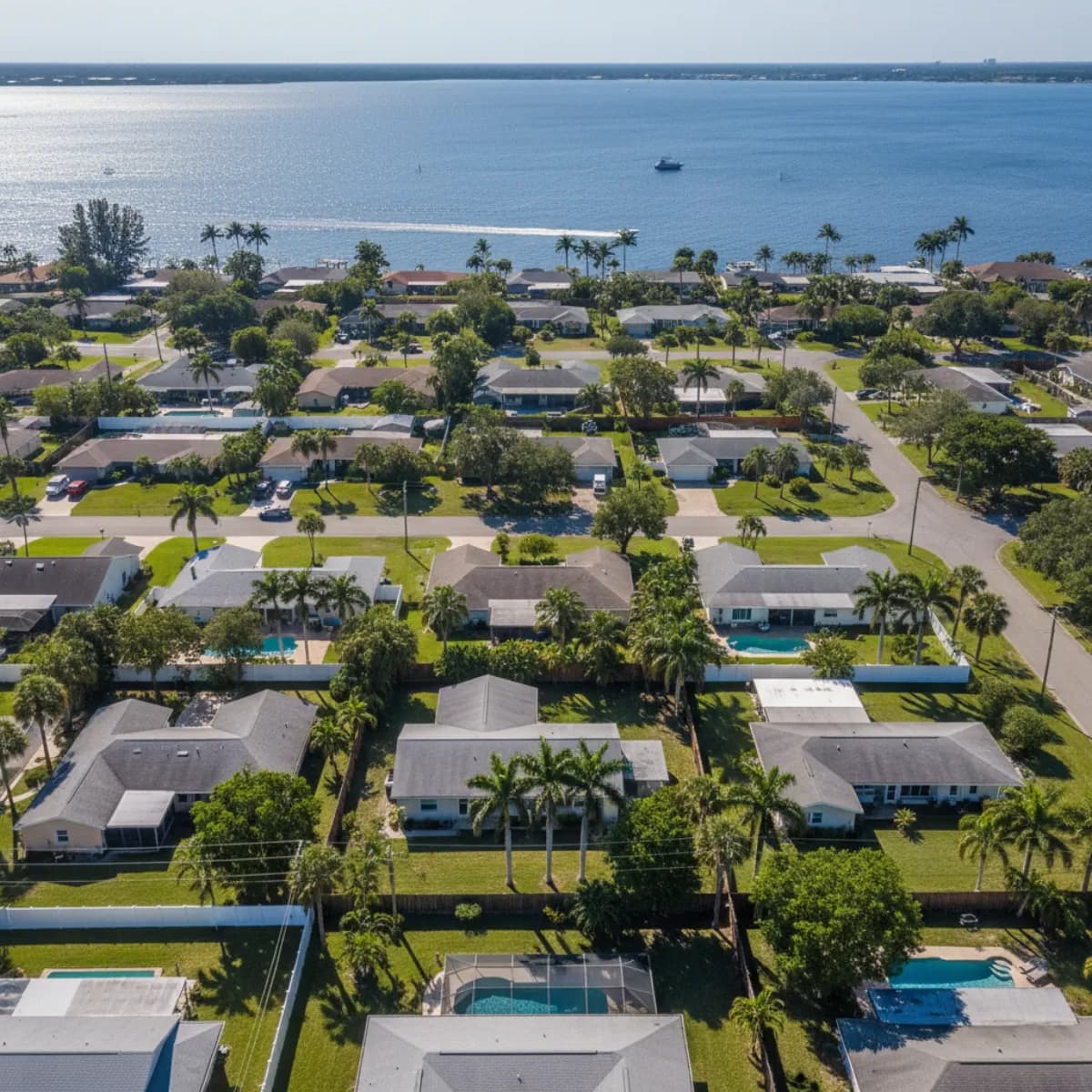
Brevard County's Space Coast
Instant Roof Replacement Quotes in Melbourne, FL
Melbourne sits on Florida's Space Coast in the heart of Brevard County, where Atlantic hurricanes, salt air corrosion, and intense UV exposure test every roof. From the historic Eau Gallie Arts District to the waterfront homes along the Indian River Lagoon, Melbourne homeowners need roofing that withstands 130+ mph wind zone requirements. Get instant quotes from pre-vetted Florida CCC-licensed contractors who understand Space Coast building codes and coastal roofing challenges.
Free Quotes
no obligations ever
Contractor Bids
standardized scope comparison
Until You Choose
no spam, no lead resale
FL Contractors
CCC-licensed, insured, reviewed
Melbourne at a Glance
Population (City)
600K+ in Brevard County
MPH Wind Rating
FBC design wind speed
Building Code
Florida Building Code standard
Permit Cost
Brevard County re-roof permits
Recent Hurricanes
Matthew, Irma, Nicole
Hurricane Matthew
Direct hit on Brevard County
Why Melbourne Roofs Face Unique Challenges on the Space Coast
Melbourne, Florida occupies a stretch of the Atlantic coast in Brevard County that has earned the nickname "Space Coast" thanks to its proximity to Kennedy Space Center and Patrick Space Force Base. But the same coastal geography that makes Melbourne a hub for the aerospace industry also places it squarely in the path of Atlantic hurricanes. With approximately 85,000 residents and a metro area of over 600,000 across Brevard County, Melbourne represents one of the largest population centers on Florida's central Atlantic coast — and one of the most hurricane-exposed.
The last decade has driven this point home with painful clarity. In October 2016, Hurricane Matthew tracked directly along the Brevard County coastline with sustained winds exceeding 100 mph, tearing roofs from homes across Melbourne, Melbourne Beach, Indialantic, and Satellite Beach. Just one year later, Hurricane Irma swept across the state as a Category 4 storm, bringing tropical storm force winds and torrential rain to the already-battered Space Coast. Then in November 2022, Hurricane Nicole made landfall near Vero Beach as a Category 1 hurricane, damaging roofs throughout Brevard County that were still recovering from the previous two storms.
The cumulative effect of these three hurricanes in just six years has left Melbourne with a significant inventory of aging, storm-damaged roofs. Many homeowners repaired rather than replaced after Matthew, only to face additional damage from Irma and Nicole. Today, these roofs are approaching — or have exceeded — the end of their useful life, and Florida's increasingly strict insurance market is making roof age and condition the deciding factor in obtaining affordable coverage.
For Melbourne homeowners facing a roof replacement, the decision involves navigating Florida Building Code wind zone requirements, Brevard County permitting, coastal material selection, and the complex relationship between roof condition and insurance pricing. RoofVista simplifies this process by providing instant satellite-based quotes and connecting homeowners with pre-vetted CCC-licensed contractors who specialize in Space Coast roofing. Our standardized scope format makes it easy to compare bids on an apples-to-apples basis — no high-pressure sales, no lead resale, and no information shared until you choose a contractor.
Melbourne's Roofing Climate Challenges
Melbourne's position on the Atlantic coast creates a demanding environment for roofing systems. The combination of direct hurricane exposure, constant salt air, intense year-round UV, and heavy tropical rainfall means that roofing materials and installation methods must perform under conditions that would quickly degrade systems designed for inland or northern climates.
! Direct Atlantic Hurricane Exposure
Unlike inland Florida cities that receive weakened storms, Melbourne sits directly on the Atlantic coast where hurricanes make initial landfall at full strength. The FBC requires 130+ mph wind design speed for Melbourne, but the actual storms that have struck Brevard County — Matthew in particular — have brought wind speeds near or exceeding that threshold. Melbourne's barrier island communities (Melbourne Beach, Indialantic, Satellite Beach) face the most extreme wind exposure, while mainland Melbourne and West Melbourne experience somewhat reduced but still destructive conditions.
- - 130+ mph FBC design wind speed
- - Direct Atlantic coastline landfall risk
- - Hurricane Matthew: 100+ mph direct impact (2016)
- - Enhanced nail patterns and hurricane straps required
~ Salt Air & Coastal Corrosion
Melbourne's geography intensifies salt air exposure: the Atlantic Ocean lies to the east and the Indian River Lagoon — a 156-mile brackish waterway — runs through the heart of the metro area. Homes between the ocean and the lagoon are surrounded by salt-laden air from both sides. Standard galvanized fasteners, flashing, and metal components can begin corroding within 2-4 years in this environment. Even homes in West Melbourne, several miles from the coast, experience moderate salt air effects that accelerate wear on roof hardware.
- - Atlantic Ocean east, Indian River Lagoon west
- - Double salt air exposure for barrier island homes
- - Stainless steel or hot-dipped galvanized fasteners recommended
- - Annual corrosion inspections for waterfront properties
= Intense UV & Year-Round Heat
Melbourne receives approximately 233 sunny days per year with a UV index that reaches 10-11 (very high to extreme) during summer months. Roof surface temperatures regularly exceed 150 degrees F from May through September. This relentless UV exposure breaks down the asphalt binder in conventional shingles, causes sealant strips to fail prematurely, and degrades polymer-based underlayment. SBS-modified shingles, which use a rubber-like polymer for flexibility and UV resistance, significantly outperform standard oxidized asphalt shingles in Melbourne's climate.
- - 233 sunny days per year, UV Index 10-11 in summer
- - Roof surface temps exceed 150 degrees F
- - SBS-modified shingles resist UV degradation
- - Light-colored materials reduce cooling costs 10-15%
# Heavy Tropical Rainfall
Melbourne averages 52 inches of rainfall annually, concentrated in intense afternoon thunderstorms from June through October. During hurricane season, tropical systems can dump 6-12 inches of rain in a single event. Wind-driven rain during hurricanes and tropical storms exploits any gap in the roofing system, making proper underlayment and flashing installation critical. Melbourne's relatively flat terrain can also lead to ponding issues on low-slope roofs, accelerating membrane deterioration and increasing leak risk.
- - 52 inches annual rainfall (concentrated Jun-Oct)
- - Tropical storms can dump 6-12 inches in one event
- - Wind-driven rain penetration during hurricanes
- - Secondary water resistance (SWR) strongly recommended
Melbourne Roof Replacement Cost by Material
Melbourne's roofing market is more affordable than South Florida's HVHZ markets (Miami, Fort Lauderdale) but still reflects the premium required for Florida Building Code wind zone compliance. All products must carry valid Florida Product Approvals, installation must meet FBC enhanced fastening requirements, and Brevard County's inspection process verifies code compliance. Melbourne's aerospace-driven economy supports a strong contractor market, keeping labor rates competitive compared to South Florida while still attracting qualified, experienced roofers.
Architectural Shingles
#1: Architectural (Dimensional) Shingles
Architectural shingles are the dominant roofing material across Melbourne and Brevard County, installed on an estimated 70-80% of single-family homes. Their multi-layered construction provides superior wind resistance compared to 3-tab shingles, and when installed with the FBC-required enhanced nail pattern (6 nails per shingle in high-wind zones), quality architectural shingles achieve 130+ mph wind ratings. For Melbourne's climate, SBS-modified architectural shingles are the recommended upgrade — the polymer modification provides better flexibility in extreme heat, improved UV resistance, and enhanced impact performance. Premium lines from manufacturers like Owens Corning Duration, GAF Timberline HDZ, and CertainTeed Landmark offer algae-resistant granules and 130-150 mph wind warranties, making them well-suited to the Space Coast's demanding conditions.
Best For:
Most Melbourne homes, ranch and two-story styles
Lifespan:
25-30 years (Melbourne climate)
Cost Range:
$9,500 - $18,000
Wind Rating:
130-150 mph (with enhanced nailing)
Standing Seam Metal
#2: Standing Seam Metal
Standing seam metal roofing is growing in popularity across Melbourne, driven by its exceptional hurricane performance and long-term value. A properly installed standing seam system with concealed fasteners and continuous interlocking panels creates a wind-tight barrier that consistently exceeds FBC requirements. For Melbourne's coastal environment, material selection is critical: Galvalume steel (aluminum-zinc alloy coated) with PVDF (Kynar 500) fluoropolymer finish coating provides the best combination of corrosion resistance and color retention. Aluminum panels are another option for homes on the barrier islands or directly on the Indian River Lagoon, where salt exposure is most severe. Standing seam metal also reflects solar radiation, reducing cooling costs in Melbourne's hot climate, and can last 40-70 years with proper maintenance — potentially the last roof a homeowner ever installs.
Best For:
Coastal homes, maximum hurricane protection
Lifespan:
40-70 years
Cost Range:
$16,000 - $23,000
Corrosion Protection:
Galvalume or aluminum with PVDF coating
Impact-Resistant Shingles
#3: Impact-Resistant SBS-Modified Shingles
Impact-resistant shingles with SBS (Styrene-Butadiene-Styrene) polymer modification represent the premium tier of asphalt shingles for Melbourne homeowners. These shingles carry a Class 4 impact rating under UL 2218 testing — meaning they can withstand a 2-inch steel ball dropped from 20 feet without cracking. The SBS modification makes the asphalt more flexible and resilient, which improves performance in Melbourne's extreme heat (where standard shingles can become brittle) and provides better resistance to wind-driven debris during hurricanes. The key financial advantage: Florida insurers are required to offer premium discounts for Class 4 impact-resistant roof coverings, and many Melbourne homeowners find that the annual insurance savings offset the modest cost premium over standard architectural shingles within 3-5 years.
Best For:
Insurance savings, storm-prone neighborhoods
Lifespan:
25-35 years
Cost Range:
$12,000 - $20,000
Impact Rating:
Class 4 (UL 2218)
Melbourne Average Roof Cost: Architectural shingles $9,500-$18,000. Impact-resistant shingles $12,000-$20,000. Standing seam metal $16,000-$23,000. Melbourne's costs are lower than South Florida's HVHZ markets but include the FBC wind zone premium — enhanced fastening, hurricane straps, approved underlayment, and Brevard County inspections. Get your exact price with a free instant estimate.
Melbourne's Aging Housing Stock and Roofing Affordability
A significant portion of Melbourne's housing stock was built during the Space Coast's aerospace boom from the 1960s through the 1980s, when NASA's Apollo and Space Shuttle programs drove rapid population growth across Brevard County. Many of these homes — ranch-style single-family houses built for aerospace engineers, technicians, and support workers — are now 40-60 years old. While the structures themselves are generally sound, their roofs have been through multiple replacement cycles, and many current roofs date from the early 2000s or even the 1990s.
The three hurricanes that struck Brevard County between 2016 and 2022 accelerated the degradation of these aging roofs. Hurricane Matthew in 2016 was particularly damaging to Melbourne, with sustained winds above 100 mph along the coast. Many homeowners made insurance-covered repairs rather than full replacements, patching damaged sections while leaving underlying weaknesses in place. When Irma hit the following year and Nicole struck in 2022, these already-compromised roofs suffered further damage. The result is a large inventory of roofs across Melbourne that are at or past the point where repairs are no longer cost-effective.
Affordability is a real concern for Melbourne homeowners. Unlike South Florida's luxury markets, Melbourne's median home value sits well below the state average, and many homeowners — particularly retirees and military-adjacent families near Patrick Space Force Base — are working with modest budgets. The good news is that Melbourne's roofing market offers genuine competition: the $9,500-$23,000 range for a full replacement is significantly lower than Miami or Fort Lauderdale, and the absence of HVHZ requirements (Melbourne follows standard FBC wind zone codes) reduces material and compliance costs. RoofVista's competitive comparison process helps Melbourne homeowners maximize value by seeing multiple standardized bids from vetted contractors, ensuring they get fair pricing without the pressure of traditional sales tactics.
Brevard County Building Requirements for Roofing
FBC & Brevard County Requirements
Florida Building Code Wind Zone
Melbourne falls within the FBC's 130+ mph wind speed design zone. All roofing products must carry valid Florida Product Approvals (not to be confused with the more stringent Miami-Dade NOA required in the HVHZ). Installation methods must follow FBC high-wind zone requirements including enhanced nail patterns (6 nails per shingle), approved synthetic or self-adhering underlayment, and hurricane straps or clips at every roof-to-wall connection. Homes in Exposure Category D (directly on the coastline) may face higher design wind speed requirements.
Brevard County Permits
All roof replacements require a permit through the Brevard County Building Department or the City of Melbourne Building Division (for properties within city limits). Permit applications must include Florida Product Approval numbers for all materials, the contractor's CCC license number, proof of workers' compensation and general liability insurance, and a Notice of Commencement. Permits typically cost $200-$500 depending on project scope. Inspections verify proper deck preparation, underlayment installation, fastening patterns, and final completion.
Wind Mitigation & Insurance
Florida Statute 627.0629 requires all insurance companies to offer premium discounts for verified wind mitigation features. A licensed inspector evaluates your roof using the OIR-B1-1802 form, documenting roof covering type, deck attachment method, roof-to-wall connections, roof geometry, and secondary water resistance. Melbourne homeowners who replace their roof with FBC-compliant materials and installation methods typically qualify for 20-45% savings on the wind portion of their insurance premium — savings that can amount to $1,000-$3,000 or more annually.
Florida CCC Licensing
All roofing contractors in Melbourne must hold a Certified Roofing Contractor (CCC) license or Registered Roofing Contractor (RC) license from the Florida DBPR. The CCC is the preferred statewide credential. Contractors must carry workers' compensation insurance and a minimum $10,000 surety bond. Verify any contractor's license status at myfloridalicense.com. All RoofVista contractors in Melbourne carry active CCC licenses and meet our vetting standards for insurance, experience, and customer satisfaction.
Melbourne Area Neighborhoods We Serve
From the barrier island communities of Melbourne Beach and Indialantic to the inland neighborhoods of West Melbourne and the historic Eau Gallie Arts District, our pre-vetted contractors serve every community across the Melbourne metro area. Each neighborhood presents distinct roofing considerations based on its proximity to the coast, housing age, and architectural character.
Eau Gallie Arts District
- - Historic homes (1920s-1960s era)
- - Mixed architectural styles
- - Indian River Lagoon waterfront
- - Salt air exposure from lagoon
- - Older roof structures may need deck work
Melbourne Beach & Indialantic
- - Maximum coastal wind exposure
- - Severe salt air corrosion (ocean + lagoon)
- - Marine-grade fasteners mandatory
- - Higher wind design speeds (Exposure D)
- - Metal and impact-resistant shingles preferred
West Melbourne
- - Newer construction (1990s-2020s)
- - Suburban ranch and two-story homes
- - Reduced but present salt air effects
- - Architectural shingles dominant
- - HOA communities common
Downtown Melbourne
- - Historic downtown district
- - Mix of residential and commercial
- - Older housing stock (1950s-1970s)
- - Crane Creek waterfront proximity
- - Potential historic considerations
Satellite Beach & Indian Harbour
- - Barrier island communities
- - Extreme hurricane wind exposure
- - Direct ocean salt spray
- - Aerospace worker communities
- - Storm surge risk affects foundation/structure
Viera & Suntree
- - Master-planned communities
- - Newer homes (2000s-2020s)
- - HOA architectural standards
- - Architectural shingles standard
- - Some tile roofs in premium sections
Insurance Considerations for Melbourne Homeowners
Florida's Insurance Crisis Hits the Space Coast
Brevard County homeowners have been hit hard by Florida's insurance crisis. After three hurricanes in six years (Matthew 2016, Irma 2017, Nicole 2022), many private insurers have either raised rates dramatically or exited the Brevard County market entirely. Melbourne homeowners increasingly depend on Citizens Property Insurance, the state-backed insurer of last resort. For many Space Coast homeowners, the condition and age of their roof is now the single most important factor in obtaining and maintaining affordable coverage.
Roof Age & Insurance in Melbourne
- - Many insurers refuse policies on roofs older than 15 years
- - Citizens requires roof inspection for homes with roofs over 15 years
- - Post-Matthew/Irma patched roofs face scrutiny from underwriters
- - SB 4-D (2022) protects roofs under 15 years from age-based denial
- - New roof typically reduces premiums 20-40% immediately
Wind Mitigation Savings
- - Florida law mandates insurance discounts for wind mitigation
- - OIR-B1-1802 inspection documents wind-resistant features
- - Hurricane clips/straps: significant premium reduction
- - Secondary water resistance (peel-and-stick): major discount
- - Impact-resistant covering: additional savings of 10-15%
- - Hip roof geometry: lower premium than gable roofs
Our pre-vetted Melbourne contractors understand the direct connection between roofing and insurance. They can recommend installations specifically designed to maximize your wind mitigation credits and improve your insurability, potentially saving thousands annually on premiums.
Melbourne's Aerospace Community and Roofing Needs
Melbourne's identity is deeply tied to the aerospace industry. Patrick Space Force Base, just south of the city, has been a cornerstone of the community since the 1940s. Today, major aerospace employers including L3Harris Technologies (headquartered in Melbourne), Northrop Grumman, Lockheed Martin, and Collins Aerospace employ thousands of engineers and technicians who live throughout the metro area. The result is a community of technically minded homeowners who value data-driven decisions — which is exactly what RoofVista provides.
Rather than relying on a single contractor's estimate, Melbourne homeowners can enter their address and receive instant satellite-based quotes that use actual roof measurements, local material pricing, and Brevard County labor rates. Our standardized scope format allows side-by-side comparison of multiple bids, so you can evaluate each contractor's value proposition with the same analytical rigor you'd apply to any other significant investment. No high-pressure sales visits, no lead sharing with multiple companies, and no personal information released until you choose to engage with a specific contractor.
Melbourne's other defining features — the Eau Gallie Arts District with its galleries and historic architecture, the Indian River Lagoon with its world-class fishing and wildlife, Melbourne International Airport, and the proximity to Kennedy Space Center and the growing commercial space industry — make it a community where homeowners plan to stay. A quality roof replacement is an investment in long-term comfort, insurance savings, and property value for residents who consider Melbourne home for the long haul.
Frequently Asked Questions About Melbourne Roofing
How much does a roof replacement cost in Melbourne, FL?
Architectural shingles cost $9,500-$18,000 in Melbourne. Standing seam metal ranges $16,000-$23,000. Melbourne's costs reflect FBC 130+ mph wind zone requirements, hurricane-rated installation methods, and Brevard County permitting. Costs vary by roof size, pitch, material, and deck condition.
What wind speed rating is required for roofs in Melbourne, FL?
Melbourne falls in the FBC 130+ mph wind speed design zone. All materials and installation methods must withstand these sustained winds. This requires enhanced nail patterns, approved underlayment, and hurricane straps at every roof-to-wall connection.
Which hurricanes have damaged roofs in Melbourne, FL?
Hurricane Matthew (2016) made a direct pass along Brevard County's coast with 100+ mph winds. Hurricane Irma (2017) brought tropical storm force winds. Hurricane Nicole (2022) made landfall nearby as a Category 1 storm. Many Melbourne homes still have aging, storm-weakened roofs.
What roofing materials work best in Melbourne's coastal climate?
Architectural shingles with SBS modification are most popular, offering hurricane performance and affordability. Standing seam metal with Galvalume or aluminum resists salt corrosion. Impact-resistant Class 4 shingles qualify for insurance discounts. Marine-grade fasteners are essential for waterfront homes.
How does a new roof affect home insurance rates in Melbourne, FL?
A new FBC-compliant roof with hurricane straps, sealed underlayment, and impact-resistant covering can save 20-45% on the wind portion of your premium. Many Florida insurers refuse policies on roofs older than 15 years. Roof condition is a primary factor for Brevard County insurance pricing.
Do I need a permit for roof replacement in Melbourne, FL?
Yes, all roof replacements in Melbourne and Brevard County require a building permit. Applications need Florida Product Approval numbers, CCC license proof, and insurance documentation. Permit fees range $200-$500. Your contractor handles the entire permit and inspection process.
What is the best time of year to replace a roof in Melbourne, FL?
October through May is optimal, outside peak hurricane season and the heaviest summer rain months. The dry season (November-April) offers the best working conditions. Schedule 4-6 weeks ahead during busy season. Avoid starting major projects during August-October unless urgent.
What contractor license is required for roofing in Melbourne, FL?
Florida requires a Certified Roofing Contractor (CCC) or Registered Roofing Contractor (RC) license from the DBPR. The CCC license is statewide and preferred. Verify any contractor's license at myfloridalicense.com before signing a contract.
Florida Roofing Resources
Florida State Overview
All Florida roofing resources and city pages
Palm Bay Roofing Quotes
Instant estimates for nearby Palm Bay homeowners
Orlando Roofing Quotes
Instant estimates for Central Florida homeowners
Florida Roof Replacement Cost Guide
Detailed pricing for all FL regions and materials
Hurricane-Resistant Roofing in Florida
Wind zone requirements, products, and wind ratings
Wind Mitigation Guide for Florida
Insurance discounts and inspection details
Get Your Melbourne Roof Quote in Minutes
Enter your address to compare instant quotes from pre-vetted CCC-licensed Florida contractors who specialize in hurricane-rated roofing, FBC wind zone compliance, and coastal protection across Brevard County's Space Coast