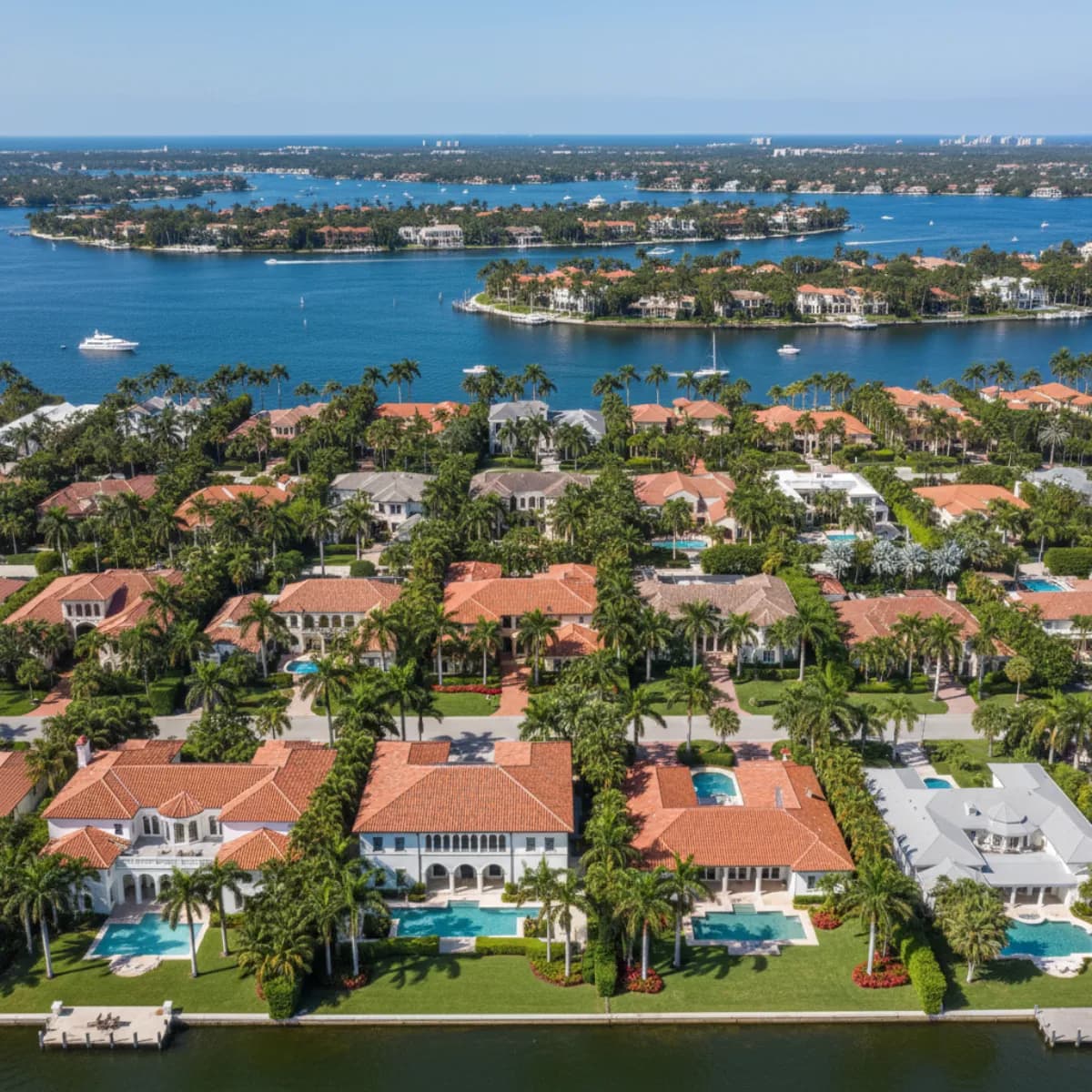
Palm Beach County Seat — Atlantic Hurricane Corridor
Instant Roof Replacement Quotes in West Palm Beach, FL
West Palm Beach sits on Florida's southeast Atlantic coast in the heart of hurricane country. From the historic bungalows of Flamingo Park to the Mediterranean estates of El Cid to modern developments west of I-95, every roof here must withstand 140+ mph winds, salt air corrosion, and relentless tropical UV. Get instant quotes from pre-vetted CCC-licensed contractors who specialize in Palm Beach County building codes, historic district compliance, and hurricane-rated roofing systems.
Free Quotes
no obligations ever
Contractor Bids
standardized scope comparison
Until You Choose
no spam, no lead resale
FL Contractors
CCC-licensed, insured, reviewed
West Palm Beach at a Glance
Population (City)
1.5M+ in Palm Beach County
MPH Wind Design Speed
Enhanced FBC wind zone
Frances + Jeanne
Back-to-back hurricanes
Permit Cost
City re-roof permits
Historic Districts
Preservation Board review required
Annual Rainfall
Concentrated May through October
Why West Palm Beach Demands Hurricane-Rated Roofing
West Palm Beach occupies one of the most hurricane-exposed positions on the U.S. Atlantic coast. The city sits directly on the coastline of southeastern Florida, where the warm waters of the Gulf Stream pass just miles offshore — providing fuel for tropical systems that track through the region with alarming regularity. Palm Beach County has been struck by major hurricanes in nearly every active decade, and the 2004 season delivered a devastating one-two punch that reshaped how the entire region approaches residential roofing.
On September 5, 2004, Hurricane Frances made landfall near Stuart as a Category 2 storm with sustained winds of 105 mph. The slow-moving storm battered West Palm Beach for over 12 hours, ripping off shingles, loosening tile, damaging flashing, and saturating roof decks with wind-driven rain. Before homeowners could even begin repairs, Hurricane Jeanne struck the same area on September 26 as a Category 3 storm with 120 mph sustained winds. Thousands of roofs that had been weakened by Frances — but not yet repaired — failed catastrophically under Jeanne's more powerful assault. The compounding damage was unprecedented: roofs that might have survived either storm individually were destroyed by the sequential one-two impact.
In 2017, Hurricane Irma swept through Palm Beach County as a Category 1 with tropical storm force gusts, providing yet another test. Homes re-roofed under the modern Florida Building Code after 2004 performed dramatically better than older installations, validating the stricter standards. The pattern is clear: West Palm Beach sits in an active hurricane corridor, and every roof replacement is an opportunity to upgrade to modern, code-compliant protection that has been proven in real-world storms.
For homeowners, this history means that a West Palm Beach roof replacement is more than a home improvement project — it is a critical investment in storm protection, insurance eligibility, and long-term property value. RoofVista's pre-vetted contractors in Palm Beach County understand the region's unique hurricane exposure and specialize in installations that meet or exceed the enhanced Florida Building Code requirements for the 140+ mph wind zone.
Roofing Challenges Unique to West Palm Beach
West Palm Beach's tropical Atlantic coastal location creates a punishing combination of environmental stresses that roofing materials must withstand simultaneously. From hurricane-force winds to salt-laden ocean air, the challenges here are among the most demanding anywhere in the southeastern United States.
! Hurricane-Force Winds
Palm Beach County's enhanced Florida Building Code requires all roofing systems to withstand design wind speeds of 140+ mph — well into Category 4 hurricane territory. This is not theoretical: the 2004 back-to-back hurricanes and 2017's Irma proved that West Palm Beach faces real, recurring hurricane threats. Every roofing product must carry a valid Florida Product Approval (FPA) demonstrating wind uplift performance, and installations require enhanced nail patterns, hurricane clips at every truss-to-wall connection, and sealed roof deck attachment.
- - 140+ mph design wind speed (Palm Beach County)
- - Florida Product Approval required for all materials
- - Enhanced nail patterns for shingle installations
- - Hurricane clips at every truss connection
~ Atlantic Salt Air Corrosion
With the Atlantic Ocean to the east and the Intracoastal Waterway running through the city, West Palm Beach is saturated with salt-laden air. This corrosive environment attacks metal fasteners, flashing, gutters, and roofing hardware relentlessly. Homes east of the Intracoastal on Palm Beach Island face the most extreme exposure, but even properties in western developments experience significant salt effects carried by prevailing easterly ocean breezes. Standard galvanized fasteners can begin corroding within 3-5 years.
- - Stainless steel or hot-dipped galvanized fasteners recommended
- - Marine-grade coatings for metal roofing components
- - Aluminum or copper flashing for coastal properties
- - Annual inspections for salt corrosion on waterfront homes
= Extreme UV & Tropical Heat
West Palm Beach receives approximately 250 sunny days per year with a UV index that regularly reaches 11+ (extreme) during summer months. Roof surface temperatures routinely exceed 155 degrees F from May through September. This relentless UV exposure accelerates degradation of asphalt shingles, dries out sealant strips, breaks down polymer underlayment, and fades tile coloring. Standard 3-tab shingles may last only 12-15 years in this environment versus their 20-year rated lifespan. SBS-modified asphalt technology and UV-resistant tile glazes are essential for maximizing roof longevity.
- - UV Index 11+ (extreme) during summer months
- - SBS-modified shingles resist UV degradation
- - Reflective tile and metal reduce cooling costs 10-20%
- - Light-colored materials recommended for energy efficiency
# Tropical Rainfall & Wind-Driven Rain
West Palm Beach averages 63 inches of rainfall per year — concentrated in intense tropical downpours from May through October. Afternoon thunderstorms can dump 2-3 inches in under an hour, testing drainage capacity and waterproofing integrity. During hurricanes and tropical storms, rain becomes a horizontal projectile that exploits any gap in the roofing system. Secondary water resistance (SWR) using self-adhering peel-and-stick underlayment provides critical backup waterproofing if the primary covering is compromised — and also qualifies homeowners for significant wind mitigation insurance discounts.
- - 63 inches annual rainfall (concentrated May-Oct)
- - Intense afternoon thunderstorms year-round
- - Secondary water resistance strongly recommended
- - Peel-and-stick underlayment for wind mitigation credit
West Palm Beach's Diverse Roofing Market
Few Florida cities span the range of housing that West Palm Beach does. Adjacent to ultra-wealthy Palm Beach Island — where estate roofs can exceed $200,000 — the city itself encompasses everything from modest post-war bungalows to historic Mediterranean Revival mansions to brand-new master-planned developments. This diversity creates a roofing market where understanding the specific needs of each neighborhood and price segment is essential.
Historic districts like Flamingo Park (one of the largest collections of 1920s-1940s architecture in South Florida), El Cid (Mediterranean Revival estates along the Intracoastal), and Northwood (a growing arts district with restored Craftsman and Mission-style homes) each have their own preservation requirements that affect material selection, color, and profile. Meanwhile, newer developments in western West Palm Beach and adjacent communities like Royal Palm Beach feature modern construction with HOA-governed roofing standards focused on uniformity and cost efficiency.
This market diversity is precisely why comparing standardized quotes matters. A concrete tile replacement in El Cid with custom color matching and preservation compliance is a fundamentally different project than a shingle replacement on a 2005 ranch home in a western development — but both homeowners deserve transparent, competitive pricing. RoofVista's standardized scope comparison lets you evaluate bids from pre-vetted contractors on equal terms regardless of your home's style or location within the market.
West Palm Beach Roof Replacement Cost by Material
West Palm Beach roofing costs reflect the 140+ mph wind zone requirements, tropical climate demands, and the city's diverse housing stock. All materials must carry a valid Florida Product Approval (FPA) for the applicable wind zone. Installation labor rates in Palm Beach County average $50-$75/hour, and enhanced fastening, underlayment, and inspection requirements add 10-20% compared to inland Florida markets.
Concrete & Clay Tile
#1: Concrete & Clay Tile (Barrel & Flat)
Tile roofing dominates the West Palm Beach landscape, from the barrel-tile Mediterranean estates of El Cid and the vintage profiles of Flamingo Park to the flat-tile developments across western Palm Beach County. Concrete tile provides inherent wind resistance through sheer weight (9-12 lbs per tile), a Class A fire rating, and a 50-75 year lifespan that justifies the higher upfront cost. Clay tile offers a premium aesthetic with even greater longevity — some clay tile roofs in Palm Beach County's historic districts have lasted 80+ years. With proper foam adhesive or mechanical fastening approved under the Florida Product Approval system, tile roofs consistently meet or exceed the 140+ mph wind design requirement. The natural thermal mass of tile also reduces cooling costs by absorbing heat rather than transferring it directly into the attic space — a significant advantage in West Palm Beach's year-round heat.
Best For:
Historic districts, Mediterranean/Spanish styles
Lifespan:
50-75 years (clay 80+)
Cost Range:
$18,000 - $35,000
Wind Rating:
140+ mph (FPA-certified)
Architectural Shingles
#2: Architectural Shingles (SBS-Modified)
Architectural shingles are the most accessible hurricane-rated option for West Palm Beach homeowners. In Palm Beach County's 140+ mph wind zone, SBS (Styrene-Butadiene-Styrene) polymer-modified shingles are the standard — their enhanced flexibility and impact resistance allow them to meet wind uplift requirements that standard shingles cannot. SBS modification also provides superior UV resistance compared to oxidized asphalt, which is critical in West Palm Beach's extreme sun environment. These shingles carry Class 4 hail impact ratings under UL 2218 testing and, when installed with the required enhanced nail pattern and compatible FPA-certified underlayment, achieve 130-150 mph wind ratings. Architectural shingles are particularly popular in post-2000 developments west of I-95 and in neighborhoods where tile is not architecturally required.
Best For:
Modern developments, ranch-style homes
Lifespan:
20-30 years (WPB climate)
Cost Range:
$12,000 - $25,000
Impact Rating:
Class 4 (UL 2218)
Standing Seam Metal
#3: Standing Seam Metal
Standing seam metal roofing has grown substantially in popularity across West Palm Beach, driven by its exceptional hurricane performance, 40-70 year lifespan, and clean modern aesthetics. A properly installed standing seam system with concealed fasteners and continuous interlocking panels creates a virtually impenetrable wind barrier that consistently exceeds Palm Beach County's 140+ mph wind requirements. The critical consideration in West Palm Beach's coastal environment is specifying marine-grade coatings: Galvalume steel with PVDF (Kynar 500) fluoropolymer coating or aluminum panels for maximum salt corrosion resistance. Standing seam is increasingly popular in contemporary renovations throughout the Northwood arts district, SoSo (South of Southern), and in waterfront properties along the Intracoastal where longevity and storm performance are paramount.
Best For:
Modern homes, waterfront, maximum durability
Lifespan:
40-70 years
Cost Range:
$20,000 - $40,000
Corrosion Protection:
Marine-grade PVDF coating recommended
TPO / Flat Roof
#4: TPO & Modified Bitumen (Flat Roofs)
Flat and low-slope roofs are common across West Palm Beach's commercial districts, multi-family properties, and in contemporary residential architecture. White TPO (Thermoplastic Polyolefin) membrane is the standard choice for flat roofs in the Palm Beach market, providing excellent heat reflection in a region where reducing cooling loads is a year-round priority. TPO systems must be mechanically attached or fully adhered with FPA-certified methods, and the system must meet wind uplift testing at 140+ mph design pressures. Modified bitumen provides superior waterproofing and puncture resistance, making it the preferred option for flat roofs with rooftop HVAC equipment or foot traffic. Many commercial buildings along Clematis Street, Rosemary Square, and the downtown waterfront use these systems.
Best For:
Commercial, multi-family, contemporary homes
Lifespan:
20-30 years
Cost Range:
$10,000 - $22,000
Energy Savings:
White TPO reflects 80%+ solar energy
West Palm Beach Average Roof Cost: Architectural shingles $12,000-$25,000. Concrete/clay tile $18,000-$35,000. Standing seam metal $20,000-$40,000. Flat/TPO $10,000-$22,000. Costs reflect the 140+ mph wind zone premium, salt-air-resistant materials, and the diverse market from affordable homes to historic estates. Get your exact price with a free instant estimate.
Palm Beach County Building Requirements for Roofing
Regulatory Requirements
Florida Product Approval (FPA)
All roofing products installed in West Palm Beach must carry a valid Florida Product Approval demonstrating compliance with the Florida Building Code for the applicable wind zone. Unlike Miami-Dade and Broward counties, Palm Beach County is outside the High Velocity Hurricane Zone (HVHZ), so Miami-Dade NOAs are not required. However, many experienced contractors choose NOA-rated products voluntarily because they exceed FPA standards and provide an additional margin of hurricane safety. Product approvals are searchable through the Florida Building Commission's online database.
Wind Design Speed Requirements
Palm Beach County's enhanced building code designates West Palm Beach in a 140+ mph ultimate design wind speed zone. This requires all roof-to-wall connections to use approved hurricane straps or clips at every truss. Roof decking must be fastened with ring-shank nails at specified spacing. Shingle installations require enhanced nail patterns (typically 6 nails per shingle in the wind zone). All underlayment must be mechanically fastened and meet FPA standards for wind uplift resistance.
Permit Process (City of West Palm Beach)
Permit applications through the City of West Palm Beach Development Services Department must include Florida Product Approval numbers for all materials, the contractor's active CCC license number, proof of workers' compensation and general liability insurance, and a Notice of Commencement. Properties in designated historic districts require additional Historic Preservation Board approval before a building permit can be issued. Permit fees typically range from $250-$600 depending on project scope. Inspections are required at dry-in (underlayment installation) and final completion stages.
Historic Preservation Board Requirements
Roofing projects in West Palm Beach's designated historic districts — including Flamingo Park, El Cid, Northwood, Grandview Heights, and Northwest — require Historic Preservation Board review and approval. Applications must include photographs of the existing roof, proposed material specifications and color samples, and documentation of architectural compatibility. Replacement materials must be consistent with the home's original architectural period and character. Approval timelines vary but typically take 4-6 weeks. Working without historic approval can result in stop-work orders, fines, and required removal of non-compliant materials.
Florida CCC Licensing
Florida requires all roofing contractors to hold a Certified Roofing Contractor (CCC) license issued by the Department of Business and Professional Regulation (DBPR). The CCC license is valid statewide, including Palm Beach County. Contractors must additionally register with the City of West Palm Beach, carry workers' compensation insurance, and maintain a minimum $10,000 surety bond. Verify any contractor's license at myfloridalicense.com. All RoofVista contractors in West Palm Beach carry active CCC licenses and the required insurance coverage.
West Palm Beach Neighborhoods We Serve
From the 1920s bungalows of Flamingo Park to the waterfront estates along the Intracoastal to modern developments in the city's western reaches, our pre-vetted contractors serve every corner of West Palm Beach and surrounding Palm Beach County communities. Each neighborhood presents unique roofing considerations based on its architectural character, proximity to the coast, and regulatory requirements.
Flamingo Park
- - Largest 1920s-40s historic district in South FL
- - Mediterranean Revival, Art Deco, Craftsman styles
- - Historic Preservation Board review required
- - Barrel tile and flat tile dominant
- - Period-appropriate color matching essential
El Cid
- - Mediterranean Revival estates on the Intracoastal
- - High-value waterfront properties
- - Historic district material restrictions
- - Clay and concrete barrel tile predominant
- - Maximum salt air exposure from waterway
Northwood
- - Growing arts district with restored homes
- - Craftsman and Mission-style architecture
- - Historic preservation oversight
- - Mix of tile and standing seam metal
- - Rising property values driving upgrades
SoSo (South of Southern)
- - Eclectic mix of vintage and new construction
- - Contemporary renovations popular
- - Standing seam metal increasingly common
- - Near downtown and Intracoastal
- - Moderate salt air exposure
Downtown & Rosemary Square
- - Commercial and mixed-use properties
- - Flat roof TPO and modified bitumen systems
- - Mid-rise condominiums with HOA oversight
- - Waterfront wind exposure considerations
- - Commercial-grade specifications required
Western Developments
- - Post-2000 planned communities
- - HOA-governed material and color standards
- - Mix of tile and architectural shingles
- - Less salt exposure than coastal areas
- - Code-compliant modern construction
Insurance Considerations for West Palm Beach Homeowners
Florida's Roofing Insurance Crisis & Wind Mitigation
Florida's homeowner insurance market is the most volatile in the nation, and Palm Beach County — with its direct Atlantic coast exposure and hurricane history — faces some of the highest premiums in the state. Multiple private insurers have left the Florida market since 2020, leaving many homeowners dependent on Citizens Property Insurance. For West Palm Beach homeowners, roof condition and age are among the single most important factors in obtaining and maintaining affordable coverage.
Roof Age & Insurance Eligibility
- - Many insurers refuse policies on roofs older than 15 years
- - Citizens requires inspection for roofs over 15 years
- - Coverage may be denied if less than 5 years useful life remains
- - SB 4-D (2022) protects roofs under 15 years from age-based denial
- - Roof replacement often reduces premiums 20-40% immediately
Wind Mitigation Discounts
- - Florida law mandates discounts for wind mitigation features
- - OIR-B1-1802 inspection form documents wind-resistant construction
- - Hurricane clips/straps: significant premium reduction
- - Secondary water resistance (peel-and-stick): major discount
- - Impact-resistant covering: additional savings of 10-20%
- - Hip roof geometry: lower premium than gable roofs
Our pre-vetted West Palm Beach contractors understand the direct connection between roofing and insurance. They can recommend installations specifically designed to maximize your wind mitigation credits and improve your insurability, potentially saving thousands annually on premiums.
Understanding Wind Mitigation in West Palm Beach
Wind mitigation is both a building code concept and a financial strategy for West Palm Beach homeowners. Florida Statute 627.0629 requires all insurance companies to provide premium discounts for verified wind-resistant construction features. A licensed inspector evaluates your home using the OIR-B1-1802 form and documents specific construction details that determine your discount eligibility. For many Palm Beach County homeowners, the annual insurance savings from a new, code-compliant roof effectively pay for a substantial portion of the replacement over its lifetime.
Key Wind Mitigation Features Evaluated
Roof Covering
The type and age of your roof covering. FBC-compliant products installed after 2002 qualify for the highest credits. Impact-resistant materials (Class 4 shingles, concrete tile) provide additional discounts that can significantly offset the cost of premium materials.
Roof Deck Attachment
How the plywood decking is fastened to the trusses. Ring-shank nails at 6-inch spacing (Dimension A) qualify for the highest credit. Standard smooth-shank nails at 12-inch spacing receive minimal or no discount. Upgrading deck attachment during replacement is one of the most cost-effective wind mitigation improvements.
Roof-to-Wall Connection
How the roof trusses attach to the walls. Single wraps, double wraps, and hurricane clips each provide increasing levels of discount. Toe-nailing (the lowest standard, common in pre-1990 homes) receives no credit. Many older West Palm Beach homes can be upgraded to clips during a roof replacement.
Secondary Water Resistance
A sealed roof deck using self-adhering peel-and-stick underlayment provides backup waterproofing if the primary covering is lost in a storm. This is one of the highest-value credits available, and the additional material cost during a replacement is minimal compared to the long-term insurance savings it generates.
Florida Roofing Resources
Florida State Overview
All Florida roofing resources and city pages
Florida Roof Replacement Cost Guide
Detailed pricing for all FL regions and materials
Hurricane-Resistant Roofing in Florida
FBC requirements, wind ratings, and product approvals
Wind Mitigation Guide for Florida
Insurance discounts and inspection details
Fort Lauderdale Roofing Quotes
Broward County HVHZ roofing services
Florida Contractor Licensing
CCC license requirements and DBPR verification
Get Your West Palm Beach Roof Quote in Minutes
Enter your address to compare instant quotes from pre-vetted CCC-licensed Florida contractors who specialize in hurricane-rated roofing, historic district compliance, and Palm Beach County building codes
Frequently Asked Questions About West Palm Beach Roofing
How much does a roof replacement cost in West Palm Beach, FL?
Roof replacement in West Palm Beach typically costs $12,000-$35,000 depending on material, home size, and roof complexity. Architectural shingles range $12,000-$25,000. Concrete and clay tile costs $18,000-$35,000. Standing seam metal runs $20,000-$40,000. The wide range reflects West Palm Beach's market diversity — from affordable homes west of I-95 to luxury waterfront properties and historic district homes with preservation requirements that add to project costs.
What building code applies to roofing in West Palm Beach?
West Palm Beach falls under the Florida Building Code with Palm Beach County enhanced amendments. The city is in a 140+ mph wind design speed zone. All roofing products must carry a valid Florida Product Approval. Unlike Miami-Dade and Broward counties, Palm Beach County is not in the HVHZ, so Miami-Dade NOAs are not required — though many contractors use NOA-rated products for superior hurricane performance.
How did the 2004 hurricanes affect roofing in West Palm Beach?
Hurricanes Frances and Jeanne struck just three weeks apart in September 2004 — Frances as a Category 2 and Jeanne as a Category 3. The back-to-back storms were devastating because Frances weakened thousands of roofs that then failed completely under Jeanne. Hurricane Irma in 2017 further tested the region. These storms proved that modern code-compliant installations dramatically outperform older roofing systems.
What roofing materials work best in West Palm Beach's climate?
Concrete and clay tile (50-75 year lifespan) are the most popular choice for hurricane and UV resistance. Architectural shingles with SBS modification provide impact resistance at a more accessible price. Standing seam metal with marine-grade coatings resists salt corrosion and 140+ mph winds. White TPO membrane is standard for flat commercial roofs. All materials must carry a Florida Product Approval for the 140+ mph wind zone.
Do historic districts in West Palm Beach have special roofing requirements?
Yes. Flamingo Park, Northwood, El Cid, Grandview Heights, and Northwest historic districts require Historic Preservation Board review for roofing projects. Replacement materials must match the original architectural period. Barrel tile often must match original profile and color. Modern materials may be restricted on street-facing planes. Allow 4-6 weeks for review.
How can a new roof lower my insurance premiums in West Palm Beach?
Florida law mandates insurance discounts for wind mitigation features verified on the OIR-B1-1802 form. A new roof with hurricane clips, ring-shank nails, peel-and-stick SWR underlayment, and impact-resistant covering can save 25-50% on the wind portion of your premium. Many West Palm Beach homeowners save $1,500-$4,000 annually after replacement.
What is the permit process for roof replacement in West Palm Beach?
Permits are required through the City of West Palm Beach Development Services Department. Applications need Florida Product Approval numbers, the contractor's CCC license, proof of insurance, and a Notice of Commencement. Historic district properties need additional Preservation Board approval. Fees range $250-$600. Inspections occur at dry-in and final stages.
What contractor license is required for roofing in West Palm Beach, FL?
Florida requires a Certified Roofing Contractor (CCC) license from the DBPR. Contractors must register with the City of West Palm Beach, carry workers' compensation insurance, and maintain a $10,000 surety bond. Verify licenses at myfloridalicense.com. All RoofVista contractors carry active CCC licenses and are vetted for quality.