Central Valley's Best Value
Instant Roof Replacement Quotes in Stockton, CA
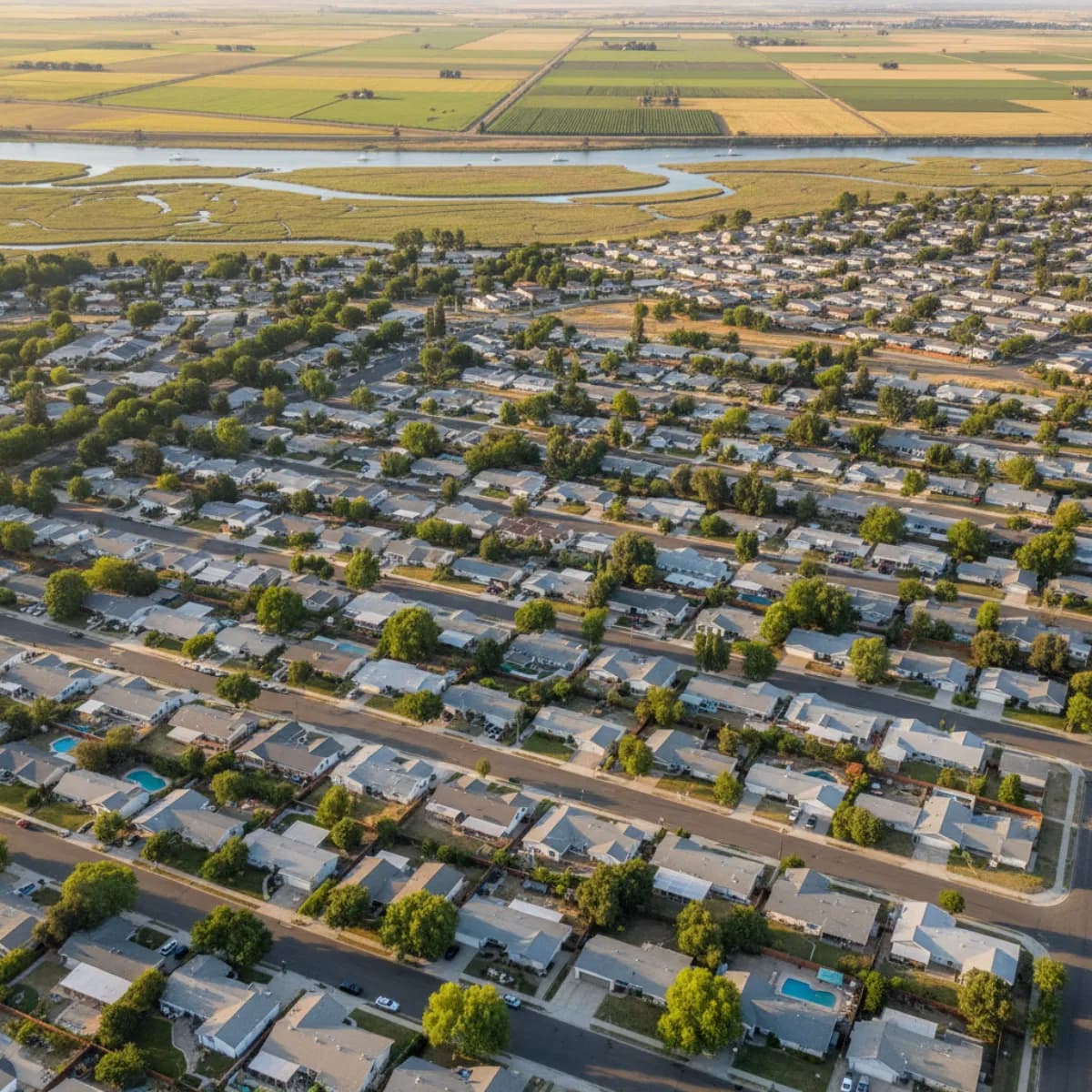
Stockton homeowners face Central Valley extremes: triple-digit summer heat, dense tule fog winters, and strict Title 24 cool roof requirements. Get instant quotes from pre-vetted California contractors at prices 30-40% below the Bay Area for Lincoln Village ranches, Spanos Park estates, Brookside bungalows, and homes across San Joaquin County.
Free Quotes
no obligations ever
Contractor Bids
standardized scope comparison
Until You Choose
no spam, no lead resale
CA Contractors
licensed, insured, reviewed
Stockton at a Glance
Population
San Joaquin County seat
Summer Highs
30-50 days per year
Title 24 Climate Zone
Cool roof mandatory
Permit Cost
San Joaquin County
Below Bay Area
Most affordable major CA city
Winter Challenge
Nov-Mar moisture exposure
Why Roofing in Stockton Is Different from Coastal California
Stockton sits in the heart of California's San Joaquin Valley, where the climate is dramatically different from the coastal cities most people associate with the state. While San Francisco battles marine fog and salt air, and Los Angeles contends with wildfire zones and Santa Ana winds, Stockton faces its own distinct set of challenges: extreme inland heat, tule fog, and the unique Delta breeze microclimate.
What makes Stockton stand out for homeowners is value. As one of the most affordable major cities in California, Stockton offers roofing costs 30-40% below the Bay Area and 20-30% below Sacramento, without sacrificing material quality or installation standards. The same Title 24-compliant cool roof that costs $25,000 in San Francisco can often be installed for $14,000-$18,000 in Stockton. For the thousands of Bay Area commuters who have moved to Stockton for affordable housing, this cost advantage extends to home maintenance and improvement as well.
Roofing Challenges Unique to Stockton's Central Valley Climate
Stockton's climate presents a fascinating duality: scorching dry summers that push roof surface temperatures to 160-180 degrees F, followed by cool, fog-shrouded winters where roofs can stay damp for weeks. This extreme seasonal swing demands materials and installation methods specifically suited to the Central Valley.
! Extreme Central Valley Heat
Stockton experiences 30-50 days per year above 100 degrees F, with peak summer temperatures reaching 110-115 degrees F. Unlike coastal cities tempered by ocean breezes, the Central Valley traps heat in an inland basin. Roof surface temperatures can exceed 180 degrees F on dark-colored materials, accelerating shingle degradation and dramatically increasing cooling costs. The temperature differential between day and night (often 30-40 degrees) creates thermal cycling that stresses roofing materials through repeated expansion and contraction.
- - Title 24 Climate Zone 12 cool roof mandatory
- - High SRI materials reduce cooling costs 10-25%
- - Thermal cycling accelerates fastener fatigue
- - Attic temperatures can exceed 150 degrees F
# Delta Breeze Influence
The Sacramento-San Joaquin Delta breeze is a cooling wind pattern that flows from the San Francisco Bay through the Delta corridor into western Stockton during summer evenings. This natural air conditioning drops temperatures 10-15 degrees in neighborhoods like Lincoln Village, Brookside, and areas west of I-5. While the breeze provides welcome relief from daytime heat, it also carries moisture from the Delta waterways that can condense on roof surfaces and in attic spaces, particularly during the transition from hot days to cool evenings.
- - Western Stockton benefits most from cooling
- - Moisture condensation risk on cool evenings
- - Ridge vents and soffit vents essential
- - Vapor barriers recommended in Delta breeze corridor
~ Tule Fog Winters
Tule fog is a dense radiation fog unique to California's Central Valley that settles over Stockton from November through March. During heavy fog events, visibility drops below 200 feet and roofs can remain damp for days or even weeks with virtually no sun exposure. This persistent moisture creates ideal conditions for biological growth on roofing materials. North-facing roof slopes are particularly susceptible to moss and algae accumulation, which can trap moisture beneath shingles and accelerate deterioration.
- - Algae-resistant (AR-rated) shingles recommended
- - Zinc or copper ridge strips inhibit moss growth
- - North-facing slopes need extra attention
- - Proper ventilation prevents moisture buildup
= UV Degradation & Thermal Cycling
Stockton's clear Central Valley skies mean intense UV exposure for 7-8 months of the year. Combined with daily temperature swings of 30-40 degrees in summer (55 degrees F at dawn to 105 degrees F by afternoon), roofing materials undergo significant thermal cycling stress. Asphalt shingles lose granules faster in this environment, and the UV breaks down the asphalt binder. Standard 30-year shingles may only achieve 20-25 years in Stockton's climate without cool-roof reflective technology.
- - Cool-rated shingles resist UV degradation longer
- - Metal roofing unaffected by UV breakdown
- - Tile provides natural thermal mass stability
- - Underlayment quality critical in heat
Stockton Roof Replacement Cost by Material
Stockton offers some of the most competitive roofing prices among major California cities. Lower labor rates ($55-$75/hour compared to $85-$120 in the Bay Area), efficient material delivery via I-5 and Highway 99, and faster permitting through San Joaquin County all contribute to significant savings. First-time homeowners and Bay Area transplants are often pleasantly surprised by the value available in the Stockton market.
Cool-Rated Shingles
#1: Cool-Rated Architectural Shingles
The most popular and budget-friendly option for Stockton homeowners. Title 24 Climate Zone 12 requires cool-rated shingles with reflective granules that exceed standard SRI requirements. These shingles reduce roof surface temperatures by up to 50 degrees F compared to traditional dark shingles, translating to meaningful cooling cost savings during Stockton's brutal summers. Manufacturers like GAF, Owens Corning, and CertainTeed all offer cool-rated lines in a wide range of colors and profiles. For first-time homeowners on a budget, cool-rated architectural shingles deliver the best value per dollar in the Stockton market.
Best For:
Budget-conscious homeowners, first-time buyers
Lifespan:
20-30 years (Stockton climate)
Cost Range:
$8,000 - $18,000
Energy Savings:
10-25% cooling cost reduction
Concrete Tile
#2: Concrete Tile
Concrete tile is increasingly popular in Stockton's newer developments like Spanos Park, Weston Ranch, and Bear Creek. The thermal mass of concrete naturally moderates temperature swings, absorbing heat slowly during the day and releasing it gradually at night. This is particularly beneficial in Stockton's climate where daily temperature differentials of 30-40 degrees are common. Concrete tile also handles tule fog moisture far better than asphalt, resisting algae growth and not degrading from prolonged dampness. Light-colored concrete tiles easily meet Title 24 requirements and provide a 40-60 year lifespan, making them the most cost-effective long-term option despite higher upfront cost.
Best For:
Newer developments, long-term value
Lifespan:
40-60 years
Cost Range:
$18,000 - $35,000
Maintenance:
Minimal - resistant to fog moisture
Standing Seam Metal
#3: Standing Seam Metal
Standing seam metal roofing is gaining traction in Stockton, particularly among homeowners who want maximum heat reflection and durability. With cool-roof coatings, metal roofs can reflect up to 70% of solar energy, making them the most energy-efficient option for Stockton's extreme heat. Metal is completely unaffected by tule fog moisture, will not grow algae or moss, and handles thermal cycling without the expansion and contraction issues that affect asphalt. The agricultural heritage of the San Joaquin Valley means local contractors are well-versed in metal roofing techniques. Metal is also the ideal choice for homeowners planning future solar panel installation, as panels can be mounted with clamps rather than roof penetrations.
Best For:
Maximum energy efficiency, solar-ready
Lifespan:
40-70 years
Cost Range:
$15,000 - $30,000
Energy Savings:
15-30% cooling cost reduction
TPO / Flat Roof
#4: TPO & Modified Bitumen (Flat Roofs)
Stockton has a significant inventory of flat and low-slope roofed commercial buildings and some residential properties, particularly in downtown and older neighborhoods. White TPO membrane is the gold standard for flat roofs in the Central Valley, reflecting sunlight effectively and exceeding Title 24 requirements with ease. Modified bitumen provides excellent waterproofing for the occasional heavy winter rains. Both materials handle Stockton's temperature extremes well, though regular inspection for ponding water after winter storms is important given the flat terrain and heavy soil settlement common in the Delta region.
Best For:
Flat and low-slope roofs
Lifespan:
20-30 years
Cost Range:
$6,000 - $16,000
Compliance:
Exceeds Title 24 SRI easily
Stockton Average Roof Cost: Cool-rated shingles $8,000-$18,000. Concrete tile $18,000-$35,000. Metal $15,000-$30,000. Flat/TPO $6,000-$16,000. Stockton costs run 30-40% below Bay Area averages due to lower labor rates, efficient logistics, and streamlined permitting. Get your exact price with a free instant estimate.
Stockton Building Requirements & Permits
Important Local Regulations
San Joaquin County Permits
All roof replacements in Stockton require permits through either the City of Stockton Permit Center (for properties within city limits) or the San Joaquin County Community Development Department (for unincorporated areas). Permit fees range from $200-$500, significantly less than coastal California cities. Standard re-roof permits are typically approved within 1-2 weeks. Inspections are required at the tear-off stage (to verify decking condition) and upon completion. Our pre-vetted contractors handle the entire permitting process.
Title 24 Climate Zone 12 Requirements
Stockton falls within California Title 24 Climate Zone 12, which mandates cool roofing materials due to the Central Valley's extreme heat. Steep-slope roofing must meet minimum aged Solar Reflectance (SR) of 0.20 and Thermal Emittance (TE) of 0.75, or a minimum Solar Reflectance Index (SRI) of 16. Low-slope (flat) roofs have stricter requirements with aged SR of 0.63 and TE of 0.75, or SRI of 75. All roofing materials must be listed on the Cool Roof Rating Council (CRRC) product directory. Non-compliant materials will fail building department inspection.
Ventilation Requirements
Given Stockton's extreme heat, California Building Code requires minimum 1:150 net free ventilation area ratio (or 1:300 with balanced intake and exhaust). Ridge vents paired with continuous soffit vents are the most effective configuration for Central Valley homes. Proper ventilation can reduce attic temperatures by 20-40 degrees F in summer, extending shingle life and reducing cooling costs. Power attic ventilators may be beneficial for homes in eastern Stockton that do not benefit from the Delta breeze.
California C-39 Contractor Licensing
California requires all roofing contractors to hold a valid C-39 Roofing Contractor License from the Contractors State License Board (CSLB). Verify any contractor at cslb.ca.gov. Licensed contractors must carry workers' compensation insurance and a minimum $25,000 contractor bond. All RoofVista contractors are CSLB-verified with active C-39 licenses.
Soil Settlement Considerations
Parts of Stockton, particularly areas near the Delta and in western neighborhoods, are built on peat and alluvial soils that can settle over time. This settling can affect roof structure alignment and drainage patterns. During re-roofing, contractors should verify that roof decking is level and structurally sound, and that drainage paths have not been compromised by settling. Properties in known settlement areas may benefit from structural assessment before major roofing work.
Budget-Friendly Roofing for Stockton First-Time Homeowners
Stockton has become a magnet for first-time homeowners, particularly Bay Area commuters attracted by housing prices that are a fraction of what they would pay in San Francisco, Oakland, or San Jose. For many of these new homeowners, a roof replacement is one of their first major home improvement projects. Understanding how to maximize value without cutting corners is essential.
Smart Budget Strategies
- - Cool-rated architectural shingles deliver the best cost-per-year value
- - Get multiple bids: Stockton's competitive market means real savings
- - Schedule in shoulder seasons (spring/fall) for potential discounts
- - Overlay may be possible if existing roof has only one layer
- - Combine roof work with attic insulation for bundled pricing
What Not to Cut Corners On
- - Title 24 compliance is non-negotiable and will be inspected
- - Quality underlayment protects against Stockton's heat extremes
- - Proper ventilation is critical in Central Valley climate
- - Always use a CSLB-licensed C-39 contractor
- - Pull permits even if a contractor says they are not needed
RoofVista's standardized quote comparison makes it easy to see exactly what each contractor includes, so you can compare value accurately without worrying about hidden costs or scope differences.
Stockton Neighborhoods & Nearby Cities We Serve
From established neighborhoods like Lincoln Village and Brookside to the master-planned communities of Spanos Park and Weston Ranch, our pre-vetted contractors serve every corner of the Stockton metro and surrounding San Joaquin County. Each area has unique characteristics that affect roofing needs, from Delta breeze exposure in the west to full inland heat in the east.
Lincoln Village & Brookside
- - Western Stockton Delta breeze benefits
- - Established 1960s-1980s neighborhoods
- - Many homes due for second re-roof
- - Mature tree canopy shades some roofs
- - Moisture management important
Spanos Park & Spanos Park West
- - Master-planned community, 1990s-2000s
- - Predominantly concrete tile roofs
- - HOA may regulate roof color/material
- - Well-maintained homes with higher values
- - Northern Stockton with less Delta breeze
Weston Ranch & Bear Creek
- - Newer developments, 2000s-2010s
- - Southern Stockton, full inland heat
- - Mix of shingle and tile roofs
- - Growing Bay Area commuter community
- - First-time homeowner concentration
Quail Lakes
- - Upscale lakefront community
- - Larger homes, higher roof square footage
- - Proximity to water affects humidity
- - Concrete and clay tile predominant
- - HOA restrictions on materials and colors
Lodi (Nearby)
- - 15 minutes north of Stockton
- - Wine country charm, historic downtown
- - Older housing stock needing updates
- - Similar climate to northern Stockton
- - Separate city permitting process
Tracy (Nearby)
- - 25 minutes southwest of Stockton
- - Major Bay Area commuter city
- - Rapid growth, newer housing stock
- - Altamont Pass wind exposure
- - Slightly hotter than Stockton in summer
Stockton's Housing Boom & What It Means for Roofing
Stockton has experienced a significant housing boom driven by Bay Area workers seeking affordable homeownership. With median home prices a fraction of San Francisco or Oakland, tens of thousands of commuters have relocated to Stockton and surrounding San Joaquin County. This influx has increased demand for home improvement services, including roofing, while also raising property values and homeowner expectations for quality.
For new Stockton homeowners accustomed to Bay Area contractor pricing, the cost savings are substantial. However, it is important to ensure that lower prices do not mean lower quality. California's CSLB licensing requirements apply statewide, and Title 24 compliance is mandatory regardless of price. RoofVista's pre-vetted contractor network ensures that every quote comes from a licensed, insured, and quality-verified C-39 roofing contractor, giving Bay Area transplants the same confidence they would expect from a premium coastal contractor at Central Valley prices.
The Altamont Corridor Express (ACE) train and expanded commuter bus services have made Stockton an increasingly connected community. As property values continue rising, protecting your investment with a quality roof that meets current California building standards is one of the smartest home improvement decisions a Stockton homeowner can make.
Frequently Asked Questions About Stockton Roofing
How much does a roof replacement cost in Stockton, CA?
Roof replacement in Stockton typically costs between $8,000 and $18,000 for cool-rated asphalt shingles on a standard home, making Stockton one of the most affordable major cities in California for roofing work. Concrete tile ranges from $18,000 to $35,000 depending on tile profile, home size, and roof complexity. Standing seam metal costs $15,000 to $30,000. Stockton's cost advantage comes from lower labor rates ($55-$75/hour compared to $85-$120 in the Bay Area), efficient material transport via the I-5 and Highway 99 corridors, and streamlined permitting through San Joaquin County ($200-$500 in fees compared to $350-$800 in Los Angeles or $500-$1,000 in San Francisco). A roof replacement that costs $25,000 in the Bay Area might cost $14,000-$18,000 in Stockton for identical materials and installation quality. All materials must meet Title 24 Climate Zone 12 cool roof requirements regardless of price point.
What roofing materials work best in Stockton's extreme heat?
Stockton's Central Valley location means summer temperatures regularly exceed 100 degrees F, with 30-50 days above that threshold each year. Roof surface temperatures on dark materials can reach 160-180 degrees F. Cool-rated architectural shingles with reflective granules are the most popular and affordable option, reducing surface temps by up to 50 degrees F while meeting Title 24 requirements. Concrete tile provides natural thermal mass that moderates temperature swings, making it excellent for Stockton's 30-40 degree daily temperature differential. Standing seam metal with cool-roof coatings offers the maximum heat reflection at up to 70% of solar energy, and is completely resistant to tule fog moisture damage. All steep-slope materials must meet California Title 24 Climate Zone 12 requirements: minimum aged Solar Reflectance of 0.20, Thermal Emittance of 0.75, or SRI of 16. Consider that standard 30-year shingles may only last 20-25 years in Stockton's heat without cool-roof technology.
What are the Title 24 cool roof requirements for Stockton?
Stockton falls within California Title 24 Climate Zone 12, one of the hottest inland climate zones, which mandates cool roofing materials for all new installations and replacements. For steep-slope roofing (most residential homes), materials must achieve minimum aged Solar Reflectance (SR) of 0.20 and Thermal Emittance (TE) of 0.75, or alternatively a minimum Solar Reflectance Index (SRI) of 16. Low-slope and flat roofs have significantly stricter requirements: aged SR of 0.63 and TE of 0.75, or SRI of 75. All roofing products must be listed on the Cool Roof Rating Council (CRRC) product directory to be verified as compliant. These requirements exist because cool roofs can reduce peak cooling demand by 10-25% in the Central Valley's extreme heat. Non-compliant materials will fail building department inspection, requiring removal and replacement at the homeowner's expense. Your contractor should verify CRRC listing before purchasing materials.
Do I need a permit for roof replacement in Stockton?
Yes, all roof replacements in Stockton require building permits. Properties within Stockton city limits apply through the City of Stockton Permit Center, while those in unincorporated San Joaquin County apply through the County Community Development Department. Permit fees are reasonable at $200-$500, well below coastal California cities. The approval process typically takes 1-2 weeks for standard re-roofs, significantly faster than the 2-4 week timelines in major metro areas. Two inspections are generally required: one at the tear-off stage to verify decking condition and structural integrity, and a final inspection upon completion to verify Title 24 compliance, proper flashing, and ventilation. Failing to pull permits can result in fines, complications when selling your home, and potential insurance claim denials. All of our pre-vetted contractors handle the entire permitting process as part of their service.
How does the Delta breeze affect roofing in Stockton?
The Sacramento-San Joaquin Delta breeze is a significant microclimate factor for western Stockton neighborhoods. This cooling wind pattern flows from the San Francisco Bay through the Delta corridor, arriving in western Stockton during late afternoons and evenings in summer. Neighborhoods like Lincoln Village, Brookside, and areas west of I-5 can experience temperature drops of 10-15 degrees when the breeze arrives, providing natural relief from daytime highs that may exceed 105 degrees F. From a roofing perspective, the Delta breeze has two effects: it reduces thermal cycling stress on western-facing roofing materials (positive), but it also carries moisture from the Delta waterways that can condense on roof surfaces as temperatures drop rapidly in the evening (potential concern). Homes in the Delta breeze corridor benefit from robust ridge vent and soffit vent systems to manage the moisture differential, and may benefit from vapor barriers in the attic. Eastern Stockton neighborhoods like Bear Creek and areas toward the foothills do not receive the Delta breeze and experience the full brunt of Central Valley heat.
How does tule fog affect Stockton roofs?
Tule fog is a dense radiation fog unique to California's Central Valley that blankets Stockton from November through March. During prolonged fog events, roofs can remain continuously damp for days or even weeks, with virtually no sun exposure to dry surfaces. This persistent moisture creates ideal conditions for biological growth: algae appears as dark streaking on shingles (particularly on north-facing slopes), moss can accumulate in shaded areas and between tile edges, and lichen may develop on older roofing surfaces. Beyond aesthetics, biological growth traps moisture against roofing materials, accelerating granule loss on asphalt shingles and potentially compromising underlayment integrity. To combat tule fog effects, Stockton homeowners should choose algae-resistant (AR-rated) shingles that contain copper granules to inhibit growth, consider zinc or copper ridge strips that leach growth-inhibiting minerals when wet, ensure gutters and valleys remain clear of debris that can trap moisture, and maintain proper attic ventilation to minimize condensation from below. Concrete tile and metal roofing are naturally more resistant to fog-related moisture issues.
Is Stockton a good value for roof replacement compared to other California cities?
Stockton offers arguably the best roofing value among major California cities. The cost advantages are driven by several factors: labor rates of $55-$75/hour (compared to $85-$120 in the Bay Area and LA), efficient material delivery via the I-5 and Highway 99 distribution corridors that connect to major roofing supply warehouses in Sacramento and the Bay Area, lower permit fees ($200-$500 vs. $350-$1,000 in coastal cities), and a competitive contractor market that keeps pricing honest. A concrete tile roof replacement that costs $40,000 in San Jose or $45,000 in Los Angeles might cost $22,000-$28,000 in Stockton using the same Eagle or Boral tile products installed to the same California building standards. For Bay Area commuters who have relocated to Stockton, this cost advantage extends across all home maintenance categories. Importantly, lower costs do not mean lower quality: California's statewide CSLB licensing requirements, Title 24 energy standards, and building code inspections apply equally in Stockton as in San Francisco.
How long does a roof replacement take in Stockton?
Most Stockton roof replacements take 2-4 days for cool-rated asphalt shingles, 4-7 days for concrete tile, and 3-5 days for standing seam metal. Stockton's dry climate allows roofing work for most of the year, which is a significant scheduling advantage. However, two seasonal factors can affect timelines: in summer, extreme heat above 105 degrees F may trigger safety protocols that limit work to early morning and evening hours, extending projects by 1-2 days; in winter, tule fog can reduce visibility and create slippery roof surfaces, potentially causing brief delays. The flat terrain and wide, accessible streets in most Stockton neighborhoods make material delivery and equipment staging straightforward, contributing to efficient project timelines. Unlike hillside cities where crane work and limited access add days, most Stockton homes allow direct driveway delivery and easy roof access. Scheduling wait times in Stockton are typically 2-4 weeks, shorter than the 4-8 week waits common in the Bay Area.
California Roofing Resources
California State Overview
All California roofing resources and city pages
California Roof Replacement Cost Guide
Detailed pricing for all CA regions and materials
Best Roofing Materials for California
Climate-specific material recommendations
California Roofing Building Codes
Title 24, fire codes, and local requirements
California Contractor Licensing
C-39 license requirements and CSLB verification
Sacramento Roofing Quotes
Nearby Central Valley capital city
Get Your Stockton Roof Quote in Minutes
Enter your address to compare instant quotes from pre-vetted California contractors who specialize in Central Valley heat protection, Title 24 compliance, and budget-friendly roofing solutions