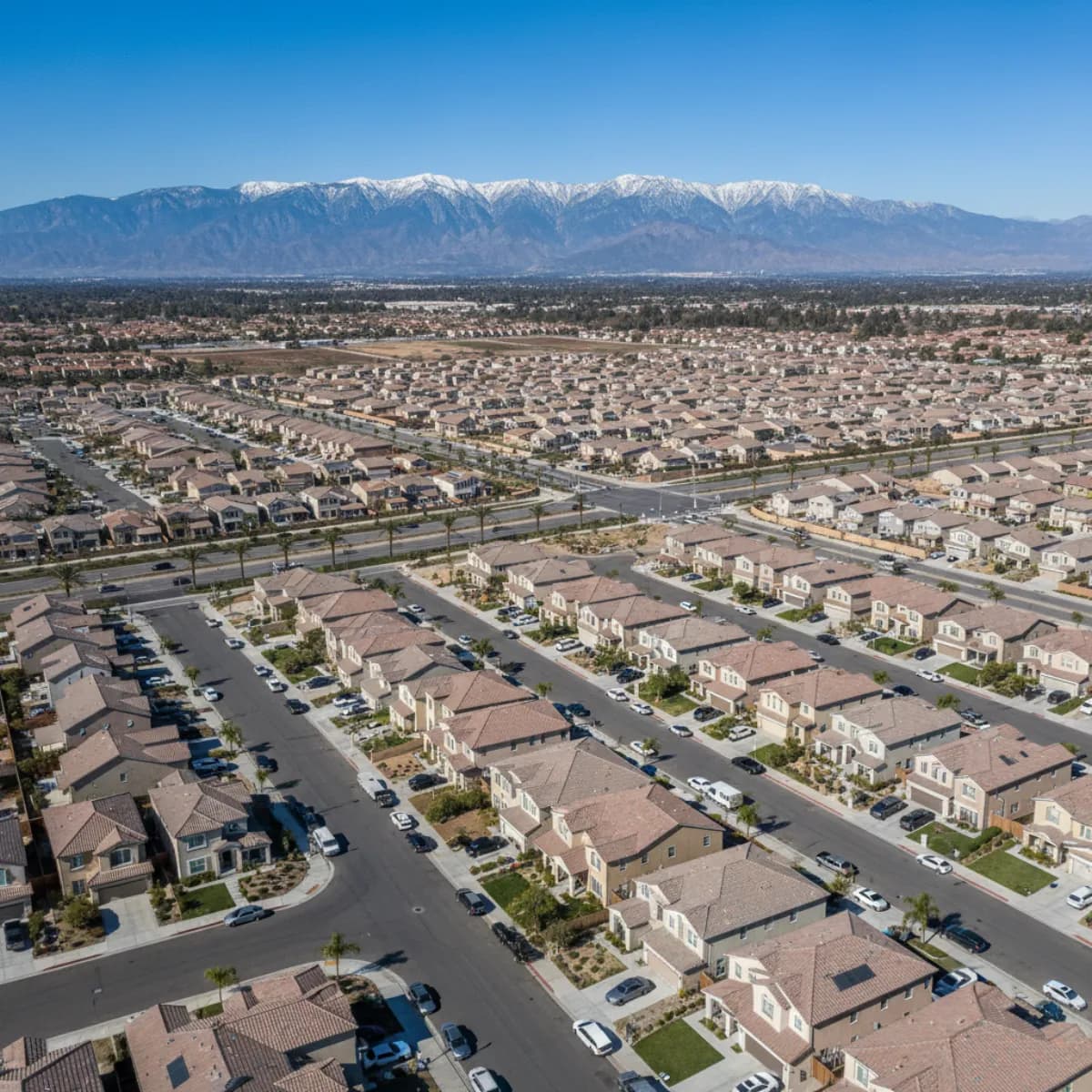
Inland Empire's Booming Former Steel Town
Instant Roof Replacement Quotes in Fontana, CA
Over 220,000 residents in the western Inland Empire need roofing engineered for 105-degree summers, Cajon Pass Santa Ana winds, and mandatory cool roof compliance. Get instant quotes from pre-vetted California contractors for Sierra Lakes estates, Southridge family homes, Heritage neighborhoods, and properties across every Fontana community.
Free Quotes
no obligations ever
Contractor Bids
standardized scope comparison
Until You Choose
no spam, no lead resale
CA Contractors
licensed, insured, reviewed
Fontana at a Glance
Population
IE's fastest-growing cities
Summer Highs
Extreme inland desert heat
Sunny Days / Year
Relentless UV exposure
Permit Cost
San Bernardino County
Title 24 Climate Zone
Cool roofs mandatory
Below Coastal CA Costs
Affordable IE pricing
From Steel Town to Suburban Boom: Fontana's Roofing Landscape
Fontana's identity was forged in the Kaiser Steel mill that dominated the city from the 1940s through the 1980s. When the mill closed in 1983, Fontana reinvented itself as one of the Inland Empire's fastest-growing suburban communities, fueled by the convergence of Interstate 15 and Interstate 10 that made the city a logistics hub and affordable alternative to coastal California living. That explosive growth, from roughly 87,000 residents in 1990 to over 220,000 today, means Fontana's housing stock tells a specific story: a small core of mid-century homes near the old mill site surrounded by vast tracts of 1990s through 2020s suburban development.
This growth pattern creates a distinct roofing timeline for the city. The earliest wave of suburban development from the 1990s and early 2000s, concentrated in neighborhoods like Sierra Lakes and Heritage, is now hitting the 25-to-30-year mark where original concrete tile roofs need assessment and original shingle roofs need replacement. Meanwhile, newer communities in Southridge, Summit Heights, and North Fontana developments along the I-15 corridor are reaching their first maintenance cycles. Understanding where your home falls in this timeline is critical for budgeting and material selection.
Fontana's position at the western mouth of Cajon Pass, where the San Bernardino Mountains meet the valley floor, creates a microclimate defined by three relentless forces: extreme summer heat that pushes past 105 degrees F, Santa Ana winds that howl through the pass at 50-80 mph, and intense year-round UV radiation across 287 sunny days. Every roofing decision in Fontana must account for this punishing combination.
Roofing Challenges Unique to Fontana
Fontana shares the Inland Empire's extreme climate but adds its own wrinkle: the Cajon Pass wind corridor that funnels Santa Ana winds directly into the city's northern neighborhoods. Combined with mandatory cool roof standards and proximity to national forest fire zones, Fontana homeowners face a specific set of roofing challenges that coastal California residents never encounter.
! Extreme Heat & Thermal Cycling
Fontana endures sustained summer heat that regularly exceeds 105 degrees F, with multi-day heat waves pushing into the 110-115 degree range. Roof surface temperatures on dark-colored materials reach 165-185 degrees F during peak afternoon hours. This extreme thermal loading accelerates granule loss on asphalt shingles, causes expansion cracks in improperly installed tile, degrades sealant strips and flashing adhesives, and warps underlayment that lacks heat-rated certification. The daily temperature swing of 40-50 degrees between overnight lows and afternoon highs creates constant expansion and contraction that fatigues roofing materials far faster than in moderate climates.
- - Roof surfaces reach 165-185 degrees F in summer
- - Title 24 climate zone 10 cool roof mandatory
- - UV degrades standard shingles 25-35% faster
- - Premium heat-rated underlayment essential
~ Cajon Pass Santa Ana Winds
Fontana's geography at the western base of Cajon Pass makes it one of the most wind-exposed cities in the Inland Empire. Santa Ana winds funnel through the narrow gap between the San Gabriel and San Bernardino Mountains, accelerating as they descend into the valley. North Fontana and Summit Heights neighborhoods bear the full brunt of these events, which regularly produce sustained winds of 50-80 mph with gusts over 100 mph from October through March. These winds rip tiles from improperly secured rooftops, peel back shingle tabs, and drive wildfire embers from the San Bernardino National Forest deep into residential neighborhoods.
- - Wind-rated installation (110+ mph) essential
- - Tile clips and foam adhesive for concrete tile
- - Enhanced 6-nail pattern for shingle roofs
- - Sealed roof edges and ridge caps critical
! Wildfire Exposure & WUI Zones
Fontana's northern boundary runs directly along the San Bernardino National Forest, placing foothill neighborhoods in designated Wildland-Urban Interface (WUI) zones. The Cajon Pass corridor acts as a natural chimney during Santa Ana wind-driven fires, channeling flames and embers directly toward North Fontana and Summit Heights. The 2003 Grand Prix Fire burned over 59,000 acres and destroyed 136 structures in the Inland Empire, while the 2016 Blue Cut Fire in Cajon Pass forced 82,000 evacuations. These events underscore the critical importance of fire-hardened roofing for Fontana homes, particularly those in the northern foothills.
- - Class A fire-rated assemblies required in WUI zones
- - Ember-resistant vents mandatory near forest boundary
- - Fire-resistant underlayment per CBC Chapter 7A
- - Non-combustible eave and fascia materials
= Cool Roof Mandate & Energy Costs
With sustained summer temperatures exceeding 105 degrees F for weeks, Fontana homeowners face some of the highest air conditioning costs in California. A non-reflective, dark-colored roof can drive monthly cooling bills to $350-$550 during peak summer. California's Title 24 energy code mandates cool roof materials in Fontana's climate zone 10, requiring all re-roofing materials to meet minimum Solar Reflectance Index (SRI) thresholds. This is not optional. Standard dark asphalt shingles will fail building inspection. Cool-rated materials reduce roof surface temperatures by 50-60 degrees F and cut air conditioning costs by 15-25%, making compliance both a legal requirement and a financial advantage.
- - Cool roofs reduce surface temps by 50-60 degrees F
- - Title 24 zone 10: strictest SRI requirements
- - 15-25% reduction in summer cooling costs
- - Non-compliant materials fail inspection
The I-15/I-10 Corridor: Fontana's Growth Engine and Roofing Reality
The intersection of Interstate 15 and Interstate 10 in Fontana is more than a freeway interchange. It is the economic engine that transformed a declining steel town into one of California's fastest-growing cities. The logistics corridor that stretches along I-15 from the Cajon Pass to Ontario brought massive warehouse and distribution center development, which in turn drove residential construction across every quadrant of the city. This development pattern has direct implications for residential roofing.
Tract developments built during Fontana's boom years (1995-2010) used similar materials and installation methods across large neighborhoods. When one home in a Sierra Lakes or Heritage tract needs a new roof, neighbors will likely need theirs within a few years. This creates opportunities for neighborhood-level pricing from contractors willing to mobilize crews for multiple adjacent projects, potentially saving 5-10% per home on labor and material delivery costs.
The ongoing I-15 corridor development in North Fontana continues to add new housing inventory, particularly in Summit Heights and the master-planned communities near the Auto Club Speedway site. These newer homes typically feature concrete tile roofs with 50-year manufacturer warranties, but the Inland Empire climate often demands attention well before the warranty period expires due to Santa Ana wind damage, heat-induced underlayment degradation, or fire-zone insurance requirements.
Fontana Roof Replacement Cost by Material
Fontana offers some of the most affordable roofing prices in metropolitan Southern California. Lower Inland Empire labor rates, accessible job sites, and competitive contractor markets drive savings of 20-30% compared to Los Angeles. However, all materials must meet Title 24 cool roof requirements for climate zone 10, and premium underlayment rated for extreme heat is a non-negotiable investment in Fontana's climate.
Concrete Tile
#1: Concrete Tile
The dominant roofing material across Fontana and the broader Inland Empire. Concrete tile provides the thermal mass that Fontana's extreme heat demands, naturally moderating attic temperatures through the worst summer days. Light-colored profiles (Mission, S-tile, flat tile) easily exceed Title 24 SRI requirements for climate zone 10, eliminating cool-roof compliance headaches. Concrete tile is inherently Class A fire-rated, critical for homes near the San Bernardino National Forest. Properly installed with hurricane clips and foam adhesive, concrete tile withstands Cajon Pass Santa Ana winds far better than shingle alternatives. The 50-75 year lifespan makes this Fontana's best long-term value despite the higher upfront cost.
Best For:
Most Fontana homes, HOA-compliant developments
Lifespan:
50-75 years
Cost Range:
$20,000 - $50,000
Fire Rating:
Class A (non-combustible)
Cool-Rated Shingles
#2: Cool-Rated Architectural Shingles
The most budget-friendly option for Fontana homeowners, but material selection is absolutely critical in climate zone 10. Standard asphalt shingles will fail prematurely in Fontana's heat and will not pass building inspection under Title 24. Only cool-rated shingles with reflective granules meeting the required SRI values are permitted. Even with cool-rated products, expect a realistic 18-25 year lifespan in Fontana rather than the manufacturer's 30-year warranty, due to accelerated UV degradation and thermal cycling. This option is best suited for budget-conscious homeowners, rental property investors, or homes where the roof structure cannot support concrete tile weight. Enhanced 6-nail installation patterns are essential for Santa Ana wind resistance.
Best For:
Budget-conscious homeowners, rentals
Lifespan:
18-25 years (Fontana climate)
Cost Range:
$9,000 - $22,000
Requirement:
Must be Title 24 cool-rated
Standing Seam Metal
#3: Standing Seam Metal
Growing in popularity across Fontana for its unmatched combination of heat reflection, fire resistance, wind performance, and solar compatibility. Standing seam metal with cool-roof coatings reflects up to 70% of solar energy, delivering the highest cooling cost reduction of any material in Fontana's extreme heat. With no individual tiles or shingles to lift, metal roofing provides superior Santa Ana wind resistance. The continuous panel design eliminates the leak-prone points where tile-to-tile connections fail during wind-driven rain events. Metal is also the most solar-friendly roofing option, allowing clamp-on panel mounting without roof penetrations, a significant advantage in one of California's sunniest cities.
Best For:
Maximum energy efficiency, solar-ready homes
Lifespan:
40-70 years
Cost Range:
$18,000 - $42,000
Energy Savings:
20-30% cooling reduction
Clay Tile
#4: Clay Tile
The premium roofing option chosen for Fontana's upscale developments and custom-built homes. Natural clay tile offers the highest thermal mass of any roofing material, providing superior temperature regulation through Fontana's extreme heat cycles. Clay tile is completely non-combustible, entirely UV-resistant (it never fades or degrades from sunlight), and lasts 75-100+ years with minimal maintenance. While more expensive than concrete tile upfront, clay tile requires virtually zero maintenance over its century-long lifespan, making it the lowest total cost of ownership for homeowners who plan to stay long-term. Found on premium properties in Sierra Lakes, select Southridge custom homes, and upscale North Fontana developments.
Best For:
Custom homes, long-term ownership
Lifespan:
75-100+ years
Cost Range:
$28,000 - $65,000
Maintenance:
Virtually zero over lifespan
Fontana Average Roof Cost: Cool-rated shingles $9,000-$22,000. Concrete tile $20,000-$50,000. Metal $18,000-$42,000. Clay tile $28,000-$65,000. Fontana costs run 20-30% below coastal California due to lower Inland Empire labor rates. Get your exact price with a free instant estimate.
Fontana & San Bernardino County Building Requirements
Important Local Regulations
City of Fontana Building & Safety Division Permits
All roof replacements within the City of Fontana require permits through the Building & Safety Division. Permit fees typically range from $175 to $450 depending on project scope and roof area. Plan review for standard re-roofs takes 1-2 weeks. Inspections are required at tear-off (to assess decking condition), underlayment installation, and final completion. The city has moved much of its permitting process online, allowing faster submissions. Properties in the sphere of influence or unincorporated pockets may fall under San Bernardino County permitting instead.
Title 24 Energy Standards (Climate Zone 10)
Fontana falls in California's Title 24 climate zone 10, one of the strictest cool roof zones in the state. All steep-slope re-roofing projects must use materials meeting minimum Solar Reflectance Index (SRI) values. Low-slope (flat and low-pitch) commercial roofs have even higher SRI thresholds. Standard dark-colored asphalt shingles are non-compliant and will not pass inspection. Approved materials include cool-rated architectural shingles with reflective granules, light-colored concrete or clay tile, and standing seam metal with cool-roof coatings. Documentation proving Title 24 compliance must be submitted with the permit application.
Wildland-Urban Interface (WUI) Fire Zones
Properties along Fontana's northern boundary near the San Bernardino National Forest, including portions of North Fontana and Summit Heights, are designated WUI zones. These properties must comply with California Building Code Chapter 7A requirements: Class A fire-rated roof assemblies, ember-resistant vents, fire-resistant underlayment, and non-combustible eave and fascia materials. The San Bernardino County Fire Department conducts WUI compliance inspections. Even homes outside formal WUI designations benefit from fire-rated materials given Fontana's location in a historically fire-prone corridor.
California C-39 Contractor Licensing
California requires all roofing contractors to hold a valid C-39 Roofing Contractor License from the Contractors State License Board (CSLB). Verify any contractor at cslb.ca.gov before signing a contract. Licensed contractors must carry workers' compensation insurance and maintain a minimum $25,000 contractor bond. Unlicensed roofing work is a misdemeanor in California, and homeowners who hire unlicensed contractors lose their right to file complaints through the CSLB. All RoofVista contractors serving Fontana are CSLB-verified with active C-39 licenses.
HOA Requirements in Planned Communities
Many of Fontana's suburban developments, particularly in Sierra Lakes, Southridge, Heritage, and Summit Heights, are governed by HOA restrictions that dictate approved roofing materials, color palettes, and tile profiles. Replacing a roof with a non-approved material or color can result in fines and forced re-work. Always obtain HOA architectural approval before selecting materials. Our pre-vetted contractors are familiar with the most common Fontana HOA requirements and can help navigate the approval process.
Fontana Neighborhoods We Serve
From the master-planned communities of Sierra Lakes to the foothill developments of Summit Heights, our pre-vetted contractors serve every Fontana neighborhood. Each area has unique roofing considerations based on its construction era, proximity to fire zones, HOA requirements, and exposure to Cajon Pass winds.
Sierra Lakes
- - Master-planned community with lake amenities
- - 1990s-2000s construction reaching re-roof age
- - Concrete tile dominant with strict HOA
- - Specific tile profile and color requirements
- - Well-maintained streetscapes increase curb appeal value
Southridge
- - Southern Fontana residential area
- - Mix of 2000s-2010s family homes
- - California Mediterranean architecture
- - Concrete tile with S-tile and flat profiles
- - First maintenance cycle approaching
Heritage
- - Established 1990s-era development
- - Original roofs at 25-30 year mark
- - Mix of concrete tile and shingle roofs
- - Shingle roofs likely need full replacement
- - Neighborhood-level pricing opportunities
North Fontana
- - Closest to Cajon Pass wind corridor
- - WUI fire zone proximity
- - Fire-rated materials strongly recommended
- - Maximum wind exposure (enhanced installation)
- - Newer developments with modern codes
Summit Heights
- - Northern foothill community
- - Elevated terrain with mountain views
- - Higher wind and fire exposure
- - Premium homes with concrete and clay tile
- - CBC Chapter 7A fire-hardening requirements
Central Fontana & Downtown
- - Historic core near former Kaiser Steel site
- - Older housing stock (1950s-1970s)
- - Mix of flat and low-slope roofs
- - Some original decking may need replacement
- - Most affordable re-roofing in the city
Why Fontana Roofing Costs Less Than Coastal California
Fontana homeowners benefit from some of the most competitive roofing prices in metropolitan Southern California. The combination of lower Inland Empire labor rates, accessible I-15/I-10 corridor logistics, and a competitive contractor market creates substantial savings compared to coastal cities. Here is where the savings come from and where costs remain comparable.
Where You Save
- - Labor rates: $50-$75/hr vs. $85-$120/hr in LA
- - Permit fees: $175-$450 vs. $350-$800 in LA
- - Easy job site access (wide streets, no hillside)
- - Faster permit processing than LA County
- - Lower contractor overhead in the IE
- - Potential neighborhood-level pricing in tracts
Where Costs Are Comparable
- - Material costs (statewide pricing)
- - Title 24 cool roof compliance materials
- - Premium underlayment (critical for extreme heat)
- - WUI fire-hardening upgrades (where required)
- - CSLB licensing and insurance requirements
- - Wind-rated installation hardware
Bottom line: A concrete tile roof that costs $45,000-$85,000 in Los Angeles typically runs $20,000-$50,000 in Fontana for a comparable home. Enter your address above to get your exact Fontana price.
Solar-Ready Roofing in Fontana
With 287+ sunny days per year and some of the highest electricity costs in the nation, Fontana is one of the most productive cities in California for solar energy generation. Replacing your roof is the ideal time to prepare for solar panel installation, combining both projects to save thousands in future labor costs. Rather than paying for a second crew mobilization and risking warranty issues from panel mounting on an aging roof, a coordinated roof-and-solar project maximizes both the 25-year solar warranty and the new roof's full lifespan.
Standing seam metal is Fontana's most solar-friendly roofing material, allowing clamp-on panel mounting without any roof penetrations. This preserves the roof warranty and simplifies future panel maintenance or replacement. Concrete tile roofs accommodate solar with specialized tile-replacement mounting brackets, though this requires careful waterproofing at each penetration point. Cool-rated shingle roofs can support standard rail-and-bracket solar systems, but the shorter shingle lifespan in Fontana's heat (18-25 years) means homeowners should plan for panel removal during future re-roofing.
Solar-ready upgrades to build into your Fontana roof replacement include reinforced decking to support panel weight (typically 3-5 lbs/sqft), electrical conduit pathways from the roofline to the main electrical panel, and southern-exposure optimization for maximum generation. Our pre-vetted contractors can coordinate with local solar installers for a seamless combined project that maximizes your return on both investments.
Fontana Roofing & Insurance Considerations
The California homeowners insurance market has tightened significantly in recent years, and Fontana's location in a fire-prone and wind-exposed corridor makes roofing decisions increasingly relevant to insurance coverage and premiums. Several major insurers have reduced or eliminated coverage in WUI-adjacent areas across San Bernardino County, pushing homeowners toward the California FAIR Plan (insurer of last resort) with higher premiums and more restrictive coverage terms.
A new, code-compliant roof is one of the most effective steps Fontana homeowners can take to maintain or improve their insurance position. Class A fire-rated roofing assemblies, ember-resistant vents, and documented fire-hardening upgrades can qualify homes for continued standard-market coverage or reduced FAIR Plan premiums. Some insurers offer specific discounts (5-15%) for cool-roof materials that meet or exceed Title 24 requirements, recognizing the reduced fire propagation risk.
When comparing roofing quotes through RoofVista, ask contractors about insurance documentation. Our pre-vetted contractors provide detailed material certifications, fire-rating documentation, and installation photographs that support insurance applications and claims. This documentation is particularly valuable for Fontana homes in or near WUI zones where insurer scrutiny is highest.
Frequently Asked Questions About Fontana Roofing
How much does a roof replacement cost in Fontana, CA?
Roof replacement in Fontana typically costs between $9,000 and $22,000 for cool-rated architectural shingles on a standard home. Concrete tile, the most popular material across the Inland Empire, ranges from $20,000 to $50,000. Standing seam metal runs $18,000-$42,000. Fontana costs are 20-30% below coastal California cities like Los Angeles due to lower Inland Empire labor rates ($50-$75/hour), more accessible job sites along the I-15/I-10 corridor, and streamlined San Bernardino County permitting. All materials must meet Title 24 cool roof requirements for Fontana's climate zone 10.
What roofing materials handle Fontana's extreme heat best?
With summer temperatures regularly exceeding 105 degrees F and roof surface temps reaching 165-185 degrees F, Fontana demands heat-resistant roofing materials. Concrete tile is the dominant choice, offering natural thermal mass and a 50-75 year lifespan. Cool-rated architectural shingles with high SRI values meet Title 24 and are the most affordable option. Standing seam metal with reflective coatings deflects up to 70% of solar energy. California's Title 24 standards for climate zone 10 mandate cool roof materials, making dark-colored standard shingles non-compliant in Fontana.
Does Fontana require roofing permits?
Yes, the City of Fontana Building and Safety Division requires permits for all roof replacements. Permit fees typically range from $175 to $450 depending on project scope. Plan review takes 1-2 weeks for standard re-roofs. Inspections are required at tear-off, underlayment, and final completion stages. Properties in unincorporated San Bernardino County areas surrounding Fontana follow county permitting. Our pre-vetted contractors handle the entire permit process.
How do Santa Ana winds affect Fontana roofs?
Fontana sits at the base of Cajon Pass, one of the primary Santa Ana wind corridors in Southern California. These hot, dry offshore winds funnel through the pass at 50-80 mph with gusts exceeding 100 mph, most intensely from October through March. Santa Ana events rip unsecured tiles and shingles from rooftops and drive wildfire embers into residential areas. Wind-rated installation (110+ mph) with enhanced nail patterns, tile clips, and sealed roof edges is essential for every Fontana home.
Are cool roofs mandatory in Fontana?
Yes. Fontana falls in California's Title 24 climate zone 10, which has among the strictest cool roof requirements in the state. All steep-slope re-roofing projects must use materials meeting minimum Solar Reflectance Index (SRI) values. Standard dark-colored asphalt shingles will not pass inspection. Approved options include cool-rated shingles with reflective granules, light-colored concrete or clay tile, and standing seam metal with cool-roof coatings. Cool roofs reduce surface temperatures by 50-60 degrees F, cutting cooling costs by 15-25%.
How long does a roof replacement take in Fontana?
Most Fontana roof replacements take 2-4 days for architectural shingles, 4-7 days for concrete tile, and 3-5 days for standing seam metal. Fontana's dry climate allows year-round roofing, though extreme summer heat (105+ degrees F) requires early-morning crew starts (5-6 AM) to protect worker safety and material integrity. Factor in 1-2 weeks for San Bernardino County permit processing before work begins.
Is Fontana roofing more affordable than Los Angeles?
Yes, Fontana roofing costs are typically 20-30% lower than Los Angeles. Inland Empire labor rates average $50-$75/hour compared to LA's $85-$120/hour. Permit fees are lower ($175-$450 vs. $350-$800 in LA), and job sites along the I-15/I-10 corridor are easier to access. A concrete tile roof that costs $45,000-$85,000 in LA typically runs $20,000-$50,000 in Fontana for a comparable home.
What should Fontana homeowners know about fire-rated roofing?
Fontana borders the San Bernardino National Forest along its northern edge, placing foothill neighborhoods in Wildland-Urban Interface (WUI) zones. Properties in North Fontana and Summit Heights near Cajon Pass are particularly exposed during Santa Ana wind events. WUI zone homes must use Class A fire-rated roofing assemblies, ember-resistant vents, and fire-resistant underlayment per California Building Code Chapter 7A. The 2003 Grand Prix Fire and 2016 Blue Cut Fire demonstrated the vulnerability of Inland Empire communities.
California Roofing Resources
California State Overview
All California roofing resources and city pages
Riverside Roofing Quotes
Compare with nearby Riverside IE pricing
Los Angeles Roofing Quotes
Compare with coastal LA roofing costs
California Roof Replacement Cost Guide
Detailed pricing for all CA regions and materials
Wildfire-Resistant Roofing in California
Fire zone requirements and material recommendations
California Contractor Licensing
C-39 license requirements and CSLB verification
Get Your Fontana Roof Quote in Minutes
Enter your address to compare instant quotes from pre-vetted California contractors who specialize in Inland Empire extreme heat, cool roof compliance, and Cajon Pass wind protection