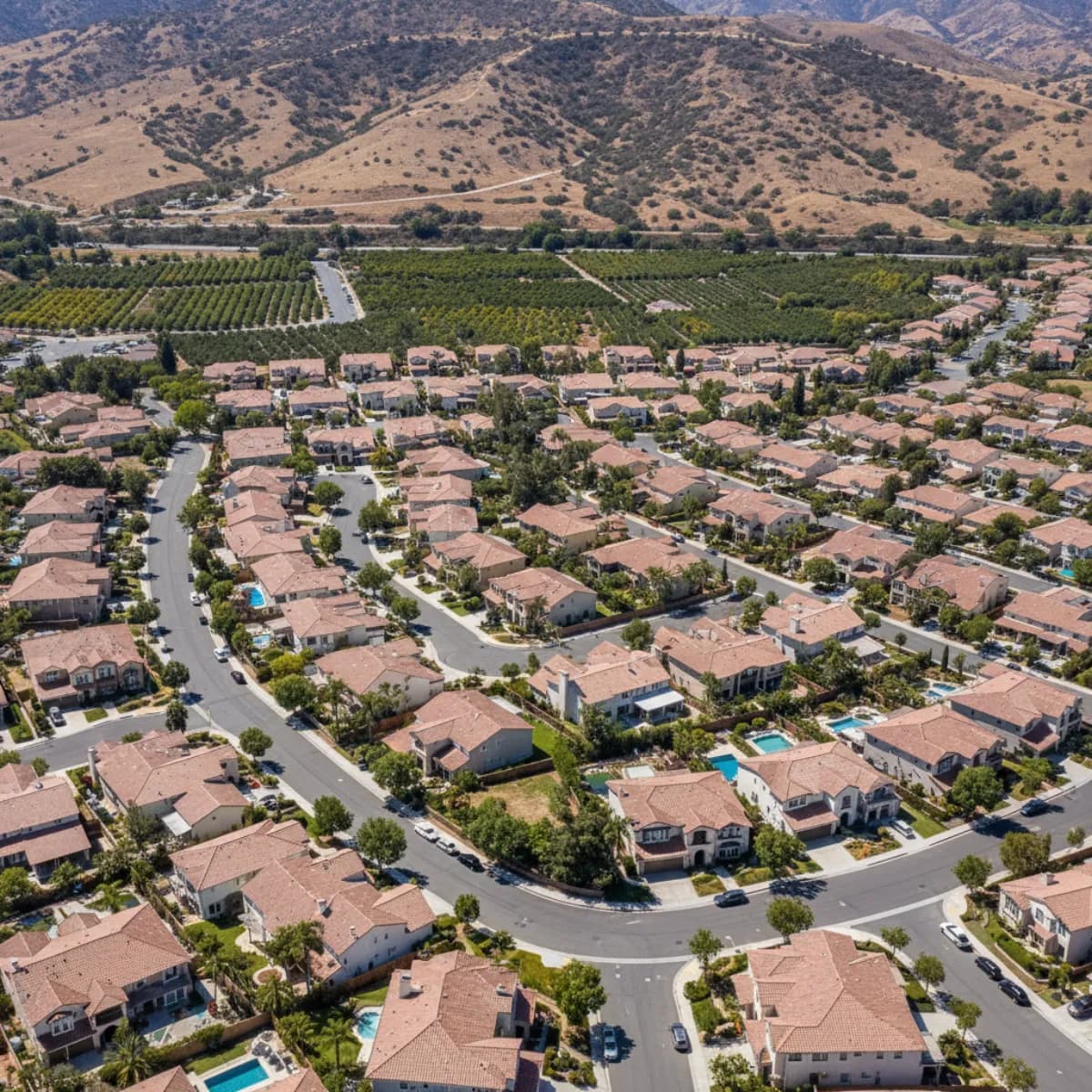
Inland Empire's Largest City
Instant Roof Replacement Quotes in Riverside, CA
Over 320,000 residents in the heart of the Inland Empire need roofing built to withstand 110-degree summers, punishing UV exposure, and Santa Ana wind events. Get instant quotes from pre-vetted California contractors for Canyon Crest estates, historic Mission Inn district homes, La Sierra ranches, and properties across every Riverside neighborhood.
Free Quotes
no obligations ever
Contractor Bids
standardized scope comparison
Until You Choose
no spam, no lead resale
CA Contractors
licensed, insured, reviewed
Riverside at a Glance
Population
Inland Empire's largest city
Summer Highs
Extreme inland heat
Sunny Days / Year
Intense UV exposure
Permit Cost
Riverside Building & Safety
Title 24 Climate Zone
Strictest cool roof standards
Below Coastal CA Costs
More affordable labor rates
Roofing Challenges Unique to Riverside
Riverside sits at the geographic heart of the Inland Empire, roughly 60 miles east of the Pacific Ocean and shielded from coastal cooling by the Santa Ana Mountains. This positioning creates a microclimate defined by extreme summer heat, relentless UV radiation, bone-dry Santa Ana winds, and Wildland-Urban Interface fire risk along the city's eastern and southern edges. Every roofing decision in Riverside must account for these conditions.
! Extreme Heat & UV Degradation
Riverside endures some of the most brutal summer heat in metropolitan California. Temperatures regularly exceed 110 degrees F from June through September, with multi-day heat waves pushing into the 115-degree range. Roof surface temperatures reach 170-185 degrees F on dark-colored materials. This relentless thermal cycling accelerates granule loss on asphalt shingles, causes expansion cracks in improperly installed materials, and degrades sealant strips and flashing adhesives 25-35% faster than in coastal cities.
- - Roof surfaces reach 170-185 degrees F in summer
- - Title 24 climate zone 10 cool roof requirements
- - UV degrades standard shingles 25-35% faster
- - Premium underlayment critical for heat protection
~ Santa Ana Winds
Riverside sits in the direct path of Santa Ana winds that funnel through San Gorgonio Pass and Cajon Pass from the high desert. These dry, hot offshore winds regularly reach 50-80 mph with gusts exceeding 100 mph, most intensely from October through March. Santa Ana events rip unsecured tiles from rooftops, drive wildfire embers deep into residential neighborhoods, and desiccate roofing materials already stressed by summer heat.
- - Wind-rated installation (110+ mph) essential
- - Tile clips and foam adhesive for concrete tile
- - Enhanced 6-nail pattern for shingle roofs
- - Sealed roof edges prevent wind uplift
! WUI Fire Zones & Fire Hardening
Riverside has substantial Wildland-Urban Interface (WUI) zones along Box Springs Mountain, the Jurupa Hills, and the city's eastern boundary approaching the Cleveland National Forest. These areas face direct wildfire exposure during Santa Ana wind events when fire conditions are most extreme. The 2020 46 Fire and other Inland Empire wildfires have demonstrated the vulnerability of homes along these corridors. Fire hardening is increasingly required by both building codes and insurance carriers.
- - Class A fire-rated assemblies required in WUI zones
- - Ember-resistant vents mandatory
- - Fire-resistant underlayment per CBC Chapter 7A
- - Non-combustible eave and fascia materials
= Energy Costs & Cooling Efficiency
With summer highs exceeding 110 degrees F for weeks at a time, Riverside homeowners face some of the highest air conditioning costs in California. A poorly insulated roof with dark-colored, non-reflective materials can cost $400-$600 per month in summer cooling bills. Cool-rated roofing materials combined with proper attic ventilation and radiant barriers can reduce cooling costs by 15-25%, making roof selection one of the most impactful energy decisions for Inland Empire homeowners.
- - Cool roofs reduce surface temps by 50-60 degrees F
- - Title 24 mandates high SRI values in zone 10
- - Proper attic ventilation amplifies savings
- - Radiant barriers complement cool roofing
Riverside's Architecture & Citrus Heritage
Riverside's identity is rooted in the California citrus industry, and this heritage shapes the city's distinctive architecture. The historic Mission Inn, a national historic landmark, anchors downtown with its Spanish Colonial Revival style. Neighborhoods like Canyon Crest and the Wood Streets feature ranch-style homes from the 1950s-70s citrus boom era, while newer developments in Orangecrest and Mission Grove showcase modern California Mediterranean designs with prominent concrete tile rooflines.
The city's architectural diversity means roofing contractors must navigate multiple styles: Spanish and Mediterranean designs requiring concrete or clay tile profiles, mid-century ranch homes suited to both tile and cool-rated shingles, and modern developments where standing seam metal is increasingly popular. The historic Mission Inn district and other heritage areas may have additional design review requirements for roof modifications.
UC Riverside's presence also drives demand for multi-family and rental property roofing, with student housing concentrated along University Avenue and in the Eastside neighborhoods. Property managers handling these roofs prioritize durability and low maintenance in the extreme Inland Empire climate.
Riverside Roof Replacement Cost by Material
Riverside roofing costs are significantly more affordable than coastal California cities. Labor rates in the Inland Empire average $55-$80/hour compared to $85-$120/hour in LA, and permit fees are lower. However, material costs remain comparable statewide, and Riverside's extreme heat demands premium underlayment and cool-rated materials that add to the base price.
Concrete Tile
#1: Concrete Tile
The dominant roofing material across Riverside and the Inland Empire. Concrete tile provides exceptional thermal mass that naturally moderates roof temperatures, Class A fire resistance without additional treatments, and a 50-75 year lifespan that justifies the upfront investment in a climate that destroys lesser materials prematurely. Light-colored concrete tile profiles (Mission, S-tile, flat tile) easily exceed Title 24 SRI requirements for climate zone 10. The weight of concrete tile also provides superior wind resistance during Santa Ana events when properly installed with clips and foam adhesive.
Best For:
Most Riverside homes, Spanish/Mediterranean styles
Lifespan:
50-75 years
Cost Range:
$22,000 - $55,000
Fire Rating:
Class A (non-combustible)
Cool-Rated Shingles
#2: Cool-Rated Architectural Shingles
The most affordable option for Riverside homeowners, but material selection is critical in climate zone 10. Standard asphalt shingles will fail prematurely in Riverside's extreme heat. Only cool-rated shingles with reflective granules meeting Title 24 SRI requirements should be installed. Even with cool-rated products, expect a 20-25 year lifespan in Riverside compared to the manufacturer's 30-year warranty, due to accelerated UV degradation. Best suited for budget-conscious homeowners, rental properties, or homes where the roof structure cannot support concrete tile weight.
Best For:
Budget-conscious homeowners, rentals
Lifespan:
20-25 years (Riverside climate)
Cost Range:
$10,000 - $25,000
Requirement:
Must be Title 24 cool-rated
Standing Seam Metal
#3: Standing Seam Metal
Gaining popularity in Riverside for its exceptional heat reflection, fire resistance, and solar compatibility. Standing seam metal with cool-roof coatings can reflect up to 70% of solar energy, making it the highest-performing material for reducing cooling costs in the Inland Empire's extreme heat. Metal roofing also provides excellent wind resistance during Santa Ana events with no individual components to lift or tear. Increasingly chosen for modern ranch-style homes and agricultural-heritage properties throughout Riverside and the surrounding communities.
Best For:
Maximum energy efficiency, solar-ready
Lifespan:
40-70 years
Cost Range:
$20,000 - $45,000
Energy Savings:
20-30% cooling reduction
Clay Tile
#4: Clay Tile
The premium option that pays homage to Riverside's Spanish Colonial heritage and the Mission Inn's iconic roofline. Natural clay tile provides the highest thermal mass of any roofing material, naturally regulating attic temperatures through extreme heat cycles. Clay tile is non-combustible (Class A), completely UV-resistant, and lasts 75-100+ years. While more expensive than concrete tile, clay tile offers superior aesthetics for historic properties and upscale neighborhoods in Canyon Crest, the Wood Streets, and the Victoria Avenue corridor.
Best For:
Historic homes, premium properties
Lifespan:
75-100+ years
Cost Range:
$30,000 - $70,000
Heritage:
Matches Riverside's Mission style
Riverside Average Roof Cost: Cool-rated shingles $10,000-$25,000. Concrete tile $22,000-$55,000. Metal $20,000-$45,000. Clay tile $30,000-$70,000. Riverside costs run 15-25% below coastal California due to lower labor rates. Get your exact price with a free instant estimate.
Riverside Building Requirements
Important Local Regulations
Riverside Building & Safety Department Permits
All roof replacements within the City of Riverside require permits through the Building & Safety Department. Permit fees typically range from $200-$500. Plan review takes 1-3 weeks for standard re-roofs. Inspections are required at tear-off, underlayment, and final completion stages. Applications can be submitted through the city's online portal. Properties in special overlay zones may require additional design review.
Title 24 Energy Standards (Climate Zone 10)
Riverside falls in California's Title 24 climate zone 10, which has some of the strictest cool roof requirements in the state due to extreme inland heat. Steep-slope roofing must meet minimum Solar Reflectance Index (SRI) values. Low-slope (flat) roofs have even higher SRI thresholds. Standard dark-colored asphalt shingles will not pass inspection. Only cool-rated, ENERGY STAR-certified, or naturally reflective materials (concrete tile, clay tile, light-colored metal) meet zone 10 requirements.
Wildland-Urban Interface (WUI) Fire Zones
Properties along Box Springs Mountain, the Jurupa Hills, the Santa Ana River corridor, and areas approaching the Cleveland National Forest are designated WUI zones. These properties must comply with California Building Code Chapter 7A requirements including Class A fire-rated roof assemblies, ember-resistant vents, fire-resistant underlayment, and non-combustible eave materials. The Riverside Fire Department conducts WUI compliance inspections and may require defensible space clearance as part of the permit process.
California C-39 Contractor Licensing
California requires all roofing contractors to hold a valid C-39 Roofing Contractor License from the Contractors State License Board (CSLB). Verify any contractor at cslb.ca.gov. Licensed contractors must carry workers' compensation insurance and a minimum $25,000 contractor bond. All RoofVista contractors serving Riverside are CSLB-verified with active C-39 licenses.
Riverside County Requirements
Properties in unincorporated Riverside County (outside city limits but within the greater Riverside metro) follow Riverside County Building & Safety permitting, which may have different fee structures and timelines. Areas like Woodcrest, March Air Reserve Base vicinity, and parts of the Orangecrest/Mission Grove fringe may fall under county jurisdiction rather than city permits. Confirm jurisdiction before starting work.
Riverside Neighborhoods We Serve
From the tree-lined streets of Canyon Crest to the growing communities of Orangecrest and Mission Grove, our pre-vetted contractors serve every Riverside neighborhood. Each area has unique roofing considerations based on its architecture, proximity to fire zones, and the age of its housing stock.
Canyon Crest
- - Upscale hillside homes with views
- - Spanish and Mediterranean architecture
- - UC Riverside adjacent properties
- - Box Springs Mountain WUI proximity
- - Concrete and clay tile dominant
Arlington
- - Historic neighborhood with mature trees
- - 1940s-1960s ranch homes
- - Victoria Avenue heritage corridor
- - Mix of tile and shingle roofs
- - Original decking may need replacement
Magnolia Center
- - Central Riverside location
- - Mix of residential and commercial
- - Post-war tract homes
- - Flat and low-slope roofs common
- - Affordable re-roofing opportunities
La Sierra
- - Western Riverside community
- - La Sierra University area
- - Ranch-style and suburban homes
- - Newer developments with concrete tile
- - Good access for roofing crews
Orangecrest & Mission Grove
- - Newer planned communities (1990s-2010s)
- - California Mediterranean architecture
- - Concrete tile roofs reaching first replacement age
- - HOA restrictions on materials and colors
- - Some WUI zone adjacency
Woodcrest & March ARB Area
- - Unincorporated Riverside County
- - Rural and semi-rural properties
- - Larger lots and roof areas
- - County permitting (not city)
- - WUI fire zone considerations
Downtown & Mission Inn District
- - Historic downtown core
- - Mission Inn National Historic Landmark
- - Citrus heritage architecture
- - Design review may be required
- - Mixed residential and commercial roofing
Eastside & University
- - UC Riverside campus adjacent
- - Student housing and rentals
- - Multi-family roofing projects
- - Budget-friendly material options
- - High-volume contractor demand
Why Riverside Roofing Costs Less Than Coastal California
Riverside homeowners benefit from significantly lower roofing costs compared to Los Angeles, San Diego, and other coastal California cities. Understanding where these savings come from helps set realistic budget expectations.
Where You Save
- - Labor rates: $55-$80/hr vs. $85-$120/hr in LA
- - Permit fees: $200-$500 vs. $350-$800 in LA
- - Easier job site access (less congestion)
- - Shorter permit processing times
- - Lower overhead for Inland Empire contractors
Where Costs Are Comparable
- - Material costs (statewide pricing)
- - Title 24 compliance requirements
- - Premium underlayment (needed for extreme heat)
- - WUI fire-hardening upgrades (where applicable)
- - CSLB licensing and insurance requirements
Bottom line: A concrete tile roof that costs $45,000-$85,000 in Los Angeles typically runs $22,000-$55,000 in Riverside for a comparable home. Enter your address above to get your exact Riverside price.
Solar-Ready Roofing in Riverside
With 280+ sunny days per year and some of the highest electricity costs in the nation, Riverside is one of the best cities in California for solar energy. A roof replacement is the ideal time to prepare for solar panel installation, saving thousands in future labor costs by avoiding a second mobilization. Riverside homeowners can combine roof replacement with solar to maximize both the 25-year solar warranty and the new roof's lifespan.
Standing seam metal is the most solar-friendly roofing material, allowing clamp-on mounting without any roof penetrations. Concrete tile roofs accommodate solar with specialized tile-replacement mounting brackets. Even cool-rated shingle roofs can support solar panels with standard rail-and-bracket systems, though the shorter shingle lifespan (20-25 years in Riverside) means homeowners should plan for panel removal and reinstallation during the next re-roof.
Solar-ready upgrades to consider during your Riverside roof replacement include reinforced decking to support panel weight, electrical conduit pathways from roof to electrical panel, and southern-exposure optimization. Our pre-vetted contractors can coordinate with solar installers for a seamless combined project.
Frequently Asked Questions About Riverside Roofing
How much does a roof replacement cost in Riverside, CA?
Roof replacement in Riverside typically costs between $10,000 and $25,000 for architectural shingles on a standard home. Concrete tile, the dominant material across the Inland Empire, ranges from $22,000 to $55,000. Standing seam metal runs $20,000-$45,000. Riverside costs run 10-20% below coastal California cities like Los Angeles due to lower labor rates ($55-$80/hour), but material costs remain comparable. All materials must meet Title 24 cool roof requirements for Riverside's climate zone 10.
What roofing materials work best in Riverside's extreme heat?
With summer temperatures regularly exceeding 110 degrees F and roof surface temps reaching 170-185 degrees F, material selection is critical in Riverside. Concrete tile is the dominant choice, providing natural thermal mass and a 50-75 year lifespan. Cool-rated architectural shingles with high Solar Reflectance Index (SRI) values meet Title 24 and reduce cooling costs. Standing seam metal with reflective coatings deflects up to 70% of solar energy. All roofing in Riverside must meet California Title 24 standards for climate zone 10, which has some of the strictest cool roof requirements in the state.
Does Riverside require roofing permits?
Yes, the Riverside Building & Safety Department requires permits for all roof replacements. Permit fees typically range from $200 to $500 depending on project scope. Plan review takes 1-3 weeks. Inspections are required at multiple stages including tear-off, underlayment, and final completion. Properties in Wildland-Urban Interface (WUI) zones near Box Springs Mountain or the Santa Ana River corridor may need additional fire-hardening review. Our pre-vetted contractors handle the entire permit process.
What are the fire zone requirements for Riverside roofing?
Riverside has significant Wildland-Urban Interface (WUI) zones along the foothills of Box Springs Mountain, the Jurupa Hills, and areas bordering the Cleveland National Forest. Properties in WUI zones must use Class A fire-rated roofing assemblies, ember-resistant vents, and fire-resistant underlayment per California Building Code Chapter 7A. Santa Ana wind corridors through San Gorgonio and Cajon Pass channel extreme fire conditions into the Inland Empire. During red flag warnings, wind-driven embers can travel miles. Even outside designated WUI zones, Class A fire-rated materials are strongly recommended.
How do Santa Ana winds affect Riverside roofs?
Riverside sits directly in the path of Santa Ana winds that funnel through San Gorgonio Pass and Cajon Pass at 50-80 mph, with gusts exceeding 100 mph in exposed areas. These hot, dry offshore winds are most intense from October through March. Santa Ana events cause mechanical damage through wind uplift on improperly secured tiles and shingles, drive wildfire embers into residential areas, and accelerate material drying and cracking. Proper installation with enhanced nail patterns, tile clips, foam adhesive for concrete tile, and sealed roof edges is essential. Wind-rated materials (110+ mph) are recommended throughout Riverside.
How long does a roof replacement take in Riverside?
Most Riverside roof replacements take 2-4 days for architectural shingles, 4-8 days for concrete tile, and 3-5 days for standing seam metal. Riverside's consistently dry climate allows year-round roofing with minimal weather delays, though extreme summer heat (110+ degrees F) may require early-morning starts to protect worker safety and material integrity. Hot asphalt shingles can be damaged during installation in extreme heat, so experienced Inland Empire contractors often begin work at 5-6 AM during July and August. The Riverside Building & Safety Department permit process (1-3 weeks) should be factored into project timelines.
Is energy efficiency important for Riverside roofs?
Energy efficiency is critical in Riverside where summer cooling costs can exceed $400-$600 per month for homes with poorly insulated or dark-colored roofs. A cool-rated roof can reduce surface temperatures by 50-60 degrees F compared to standard dark shingles, translating to 15-25% savings on air conditioning costs. Title 24 mandates cool roof materials in Riverside's climate zone 10. High-performance options include light-colored concrete tile (SRI 50+), standing seam metal with cool coatings (SRI 60+), and ENERGY STAR-rated architectural shingles. Proper attic ventilation and radiant barrier installation complement cool roofing for maximum efficiency.
Are Riverside roofing costs lower than Los Angeles?
Yes, Riverside roofing costs are typically 15-25% lower than Los Angeles. Labor rates in the Inland Empire average $55-$80/hour compared to LA's $85-$120/hour. Permit fees are lower ($200-$500 vs. $350-$800 in LA), and material delivery is generally easier with less traffic and more accessible job sites. However, material costs remain similar statewide, and Riverside's extreme heat requires premium underlayment and proper ventilation, which partially offset labor savings. A concrete tile roof that costs $45,000-$85,000 in LA typically runs $22,000-$55,000 in Riverside for a comparable home.
California Roofing Resources
California State Overview
All California roofing resources and city pages
Los Angeles Roofing Quotes
Compare with coastal LA roofing costs
California Roof Replacement Cost Guide
Detailed pricing for all CA regions and materials
Best Roofing Materials for California
Climate-specific material recommendations
Wildfire-Resistant Roofing in California
Fire zone requirements and material recommendations
California Contractor Licensing
C-39 license requirements and CSLB verification
Get Your Riverside Roof Quote in Minutes
Enter your address to compare instant quotes from pre-vetted California contractors who specialize in Inland Empire extreme heat, Title 24 compliance, and Santa Ana wind protection