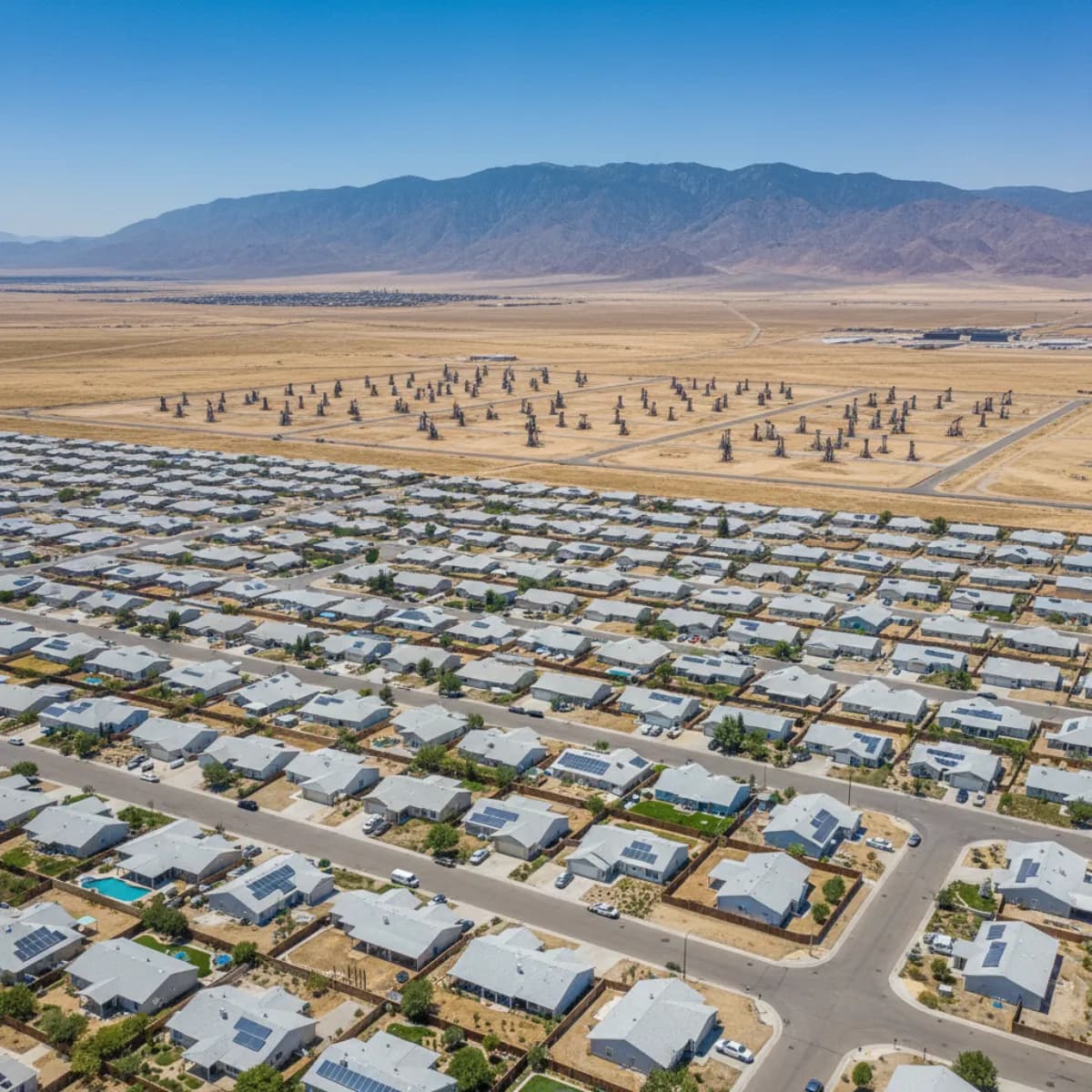
Southern San Joaquin Valley
Instant Roof Replacement Quotes in Bakersfield, CA
California's hottest major city demands roofing built for extreme heat. With summer temperatures exceeding 110 degrees F, Bakersfield homeowners need cool-rated materials that meet Title 24 climate zone 14 requirements while keeping energy costs manageable. Get instant quotes from pre-vetted contractors who specialize in the San Joaquin Valley's unique climate challenges.
Free Quotes
no obligations ever
Contractor Bids
standardized scope comparison
Until You Choose
no spam, no lead resale
CA Contractors
licensed, insured, reviewed
Bakersfield at a Glance
Population
9th largest city in California
Peak Summer Temps
Hottest major CA city
Sunny Days / Year
Extreme UV exposure
Permit Cost
City of Bakersfield
Title 24 Climate Zone
Most extreme inland zone
Roofing Cost in CA
Most affordable large city
Roofing Challenges Unique to Bakersfield
Located at the southern end of the San Joaquin Valley, Bakersfield is the hottest major city in California and one of the hottest in the entire United States. With an oil industry heritage that shaped its growth, affordable housing stock, and a rapidly expanding suburban footprint, Bakersfield presents roofing challenges that differ dramatically from coastal California. Every material choice must prioritize heat resistance, energy efficiency, and durability against the valley's harsh environmental conditions.
! Extreme Heat & UV Degradation
Bakersfield regularly exceeds 110 degrees F during summer months, with roof surface temperatures reaching 170-190 degrees F on dark materials. This extreme thermal cycling causes asphalt shingles to age 25-35% faster than the national average. UV radiation is relentless across 270+ sunny days per year, breaking down petroleum-based roofing compounds and fading colors. Thermal expansion and contraction stress fasteners, flashings, and seams daily from May through October.
- - Cool-rated materials mandatory (Title 24 zone 14)
- - Roof surface temps reach 170-190 degrees F
- - Shingles age 25-35% faster than national average
- - Daily thermal cycling stresses all fasteners
~ Dust Storms & Airborne Particulates
The San Joaquin Valley's agricultural landscape and oil field operations generate significant airborne dust and particulate matter. Seasonal dust storms driven by strong valley winds can sandblast roofing surfaces, stripping protective granules from asphalt shingles and scratching reflective coatings on metal roofs. Accumulated dust on cool-roof surfaces reduces their solar reflectance over time, diminishing the energy efficiency that Title 24 compliance is designed to achieve.
- - Dust degrades shingle granules over time
- - Reduces cool-roof reflectance effectiveness
- - Annual roof cleaning recommended
- - Concrete tile most resistant to abrasion
= Energy Efficiency & Cooling Costs
Bakersfield has the highest cooling degree days of any major California city, meaning air conditioning runs longer and harder here than anywhere else in the state. The average Bakersfield household spends $2,500-$4,000 annually on electricity, with cooling accounting for 40-60% of that cost during summer months. Your roof is the single largest factor in determining how much heat enters your home, making material selection a direct financial decision.
- - Highest cooling costs of any major CA city
- - Cool roofs save 15-30% on cooling bills
- - Radiant barriers amplify roof efficiency
- - Proper attic ventilation critical in valley heat
# Oil Field Subsidence & Valley Flooding
Western and southwestern Bakersfield areas near active and legacy oil fields experience ground subsidence from decades of petroleum extraction. This gradual settling can shift foundations, warp roof framing, and create uneven planes that compromise drainage. Additionally, the flat valley floor is susceptible to flooding during heavy winter storms when the Kern River and irrigation canals overflow, particularly in low-lying neighborhoods along the river corridor.
- - Structural assessment needed near oil fields
- - Foundation shifts stress roof framing
- - Valley flooding can damage lower rooflines
- - Proper drainage design prevents pooling
Bakersfield Roof Replacement Cost by Material
Bakersfield offers the most affordable roof replacement pricing of any major California city. Lower labor rates ($45-$65/hour vs. $85-$120 in coastal cities), proximity to Central Valley material distribution centers, and streamlined Kern County permitting ($150-$350) all contribute to significant savings compared to the Bay Area, Los Angeles, or San Diego markets. However, Title 24 climate zone 14 requirements mean all materials must be cool-rated, which adds 10-15% compared to standard non-compliant options.
Concrete Tile
#1: Concrete Tile
The dominant roofing material in Bakersfield for good reason. Concrete tile provides exceptional thermal mass that absorbs heat slowly during the day and releases it after sunset, reducing peak cooling loads by up to 20%. With a 50+ year lifespan and Class A fire rating, concrete tile handles Bakersfield's extreme UV, thermal cycling, and dust storms better than any other material. Light-colored and white concrete tile profiles easily exceed Title 24 zone 14 cool-roof requirements. The weight of concrete tile (900-1,100 lbs per 100 sq ft) requires adequate roof framing, but most Bakersfield homes built after 1980 are designed for tile loads.
Best For:
Most Bakersfield homes, extreme heat zones
Lifespan:
50-75 years
Cost Range:
$15,000 - $35,000
Energy Savings:
15-20% cooling reduction
Standing Seam Metal
#2: Standing Seam Metal
Gaining popularity rapidly in the Bakersfield market, particularly for commercial buildings and modern residential construction. Metal roofing with factory-applied cool-roof coatings can reflect up to 70% of solar energy, making it the most thermally efficient option for Bakersfield's extreme heat. Standing seam metal is also highly resistant to dust abrasion, requires minimal maintenance, and is compatible with solar panel clamp-on mounting systems. The expansion and contraction characteristics of metal are well-suited to Bakersfield's extreme daily temperature swings of 30-40 degrees.
Best For:
Commercial, modern homes, solar-ready
Lifespan:
40-70 years
Cost Range:
$14,000 - $32,000
Energy Savings:
20-30% cooling reduction
Cool-Rated Shingles
#3: Cool-Rated Architectural Shingles
The most affordable compliant option for Bakersfield homeowners. Cool-rated architectural shingles use specialized reflective granules to meet Title 24 climate zone 14 SRI requirements while maintaining traditional shingle aesthetics. However, Bakersfield's extreme heat significantly shortens shingle lifespan compared to the manufacturer's warranty expectations based on national averages. Expect 15-22 years of useful life in Bakersfield versus the 25-30 year rated lifespan. This remains the best value option for budget-conscious homeowners, especially on homes that aren't framed for the weight of concrete tile.
Best For:
Budget-conscious, lighter-framed homes
Lifespan:
15-22 years (Bakersfield climate)
Cost Range:
$8,000 - $18,000
Requirement:
Must be Title 24 cool-rated
TPO / White Membrane
#4: TPO & White Membrane (Flat Roofs)
The standard choice for Bakersfield's numerous flat-roofed commercial buildings, warehouses, and agricultural structures. White TPO (Thermoplastic Polyolefin) membrane reflects up to 85% of solar energy, easily exceeding Title 24 low-slope requirements. In Bakersfield's extreme heat, white membrane can reduce building cooling loads by 30-40% compared to dark built-up roofing. Heat-welded seams provide superior waterproofing for the rare but intense valley rainstorms. Oil field service buildings and agricultural processing facilities throughout Kern County rely heavily on TPO for cost-effective, energy-efficient roofing.
Best For:
Flat roofs, commercial, agricultural
Lifespan:
20-30 years
Cost Range:
$6,000 - $16,000
Compliance:
Exceeds Title 24 low-slope SRI
Bakersfield Average Roof Cost: Cool-rated asphalt shingles $8,000-$18,000. Concrete tile $15,000-$35,000. Metal $14,000-$32,000. Flat/TPO $6,000-$16,000. Bakersfield costs run 30-50% below coastal California markets, making it the most affordable large-city roofing market in the state. Get your exact price with a free instant estimate.
Bakersfield Building Requirements
Important Local Regulations
City of Bakersfield Permits
All roof replacements within the City of Bakersfield require building permits from the City's Building Department. Permit fees range from $150-$350 depending on project scope and valuation. The process is considerably faster than coastal California cities, typically taking 1-2 weeks for approval. Inspections are required at three stages: after tear-off to verify deck condition, after underlayment installation, and final inspection upon completion. Online permit applications are available through the city's online portal.
Kern County Permits (Unincorporated Areas)
Properties outside Bakersfield city limits fall under Kern County Building and Development Services jurisdiction. Many suburban developments in the greater Bakersfield metropolitan area, including portions of Rosedale, areas along Highway 178, and communities toward Tehachapi, require county permits. Kern County fees and timelines are similar to the city's, but the permitting office handles a larger geographic area so processing may vary.
Title 24 Climate Zone 14 Requirements
Bakersfield is in California Title 24 climate zone 14, the most extreme inland heat zone in the state. This imposes the strictest cool-roof requirements for any California city. All steep-slope roofing must meet minimum aged solar reflectance of 0.20 and thermal emittance of 0.75. Low-slope (flat) roofs must achieve even higher values: aged solar reflectance of 0.63 and thermal emittance of 0.75. Non-compliant materials will fail building inspection regardless of quality or installation. Always verify that your chosen material is CRRC (Cool Roof Rating Council) listed for zone 14 compliance.
California Contractor Licensing
California requires all roofing contractors to hold a valid C-39 Roofing Contractor License from the Contractors State License Board (CSLB). Verify any contractor at cslb.ca.gov. Licensed contractors must carry workers' compensation insurance and a minimum $25,000 contractor bond. Bakersfield's proximity to unregulated labor markets makes license verification especially important for homeowner protection.
Energy Code Compliance Documentation
Bakersfield building inspectors require CRRC (Cool Roof Rating Council) product ratings documentation at final inspection. Your contractor must provide the manufacturer's CRRC certification showing the installed product's solar reflectance, thermal emittance, and SRI values meet zone 14 thresholds. Failure to provide this documentation will result in a failed inspection regardless of product quality.
Bakersfield Neighborhoods We Serve
From the master-planned communities of Seven Oaks to the established neighborhoods along Stockdale Highway and the sprawling developments along Panama Lane, our pre-vetted contractors serve every corner of the Bakersfield metro. Each area has unique considerations based on home age, construction style, proximity to oil fields, and flood zone designation.
Seven Oaks & Haggin Oaks
- - Master-planned luxury communities
- - Larger homes (2,500-5,000+ sq ft)
- - Concrete tile predominant
- - HOA architectural requirements
- - Newer construction (2000s-present)
Stockdale & The Marketplace
- - Established residential corridor
- - Mix of tile and shingle roofs
- - 1970s-2000s construction
- - Stockdale Highway commercial district
- - Well-maintained mature neighborhoods
Riverwalk & Park at Riverwalk
- - Newer planned community
- - Near Kern River Parkway
- - Check flood zone designations
- - Modern construction standards
- - Mix of tile and architectural shingles
Rosedale & Northwest
- - Rapidly growing suburban area
- - Mix of city and county jurisdiction
- - Newer tract home developments
- - Concrete tile standard on new builds
- - Agricultural land converting to residential
Panama Lane & Southwest
- - Major growth corridor
- - New construction 2010s-present
- - Master-planned communities
- - Energy-efficient new builds
- - Near oil field areas (check subsidence)
Oildale & North Bakersfield
- - Historic oil industry community
- - Older housing stock (1940s-1970s)
- - Many homes need re-framing for tile
- - Budget-friendly shingle replacements
- - Kern County jurisdiction (unincorporated)
Downtown & East Bakersfield
- - Historic downtown buildings
- - Mix of residential and commercial
- - Flat roof commercial properties
- - Older residential stock
- - City of Bakersfield permits
Tehachapi (Nearby Mountain Community)
- - Mountain climate at 4,000 ft elevation
- - Snow loads require reinforced framing
- - Different Title 24 zone than valley
- - Wind exposure from Tehachapi Pass
- - Kern County permits required
Why Cool Roofs Matter More in Bakersfield Than Anywhere Else in California
The Economics of Cool Roofing in Zone 14
Bakersfield homeowners face the highest residential cooling costs in California. The combination of 110+ degree summers, long cooling seasons stretching from April through October, and affordable housing with sometimes older insulation creates energy bills that can exceed $400 per month during peak summer. Your roof is the primary barrier between your home and the sun's heat, and the difference between a conventional dark roof and a properly installed cool roof is dramatic.
Cool Roof Benefits in Bakersfield
- - Reduce roof surface temperature by 50-60 degrees F
- - Lower attic temperatures by 20-30 degrees F
- - Cut cooling costs 15-30% annually ($300-$800/year)
- - Extend roof lifespan by reducing thermal stress
- - Reduce HVAC wear and maintenance costs
Maximizing Energy Savings
- - Combine cool roof with radiant barrier in attic
- - Ensure proper soffit and ridge ventilation
- - Add R-38 or higher attic insulation
- - Consider solar panels during re-roof
- - Schedule annual dust cleaning for reflectance maintenance
Over a 25-year roof lifespan, Bakersfield homeowners can save $7,500-$20,000 in cooling costs with a properly installed cool roof compared to a non-reflective alternative. Our pre-vetted contractors understand zone 14 requirements and recommend the optimal combination of cool roofing, ventilation, and insulation for maximum energy savings.
How Bakersfield Roofing Costs Compare to Coastal California
Bakersfield offers the most affordable roofing in any major California city. Understanding why helps homeowners appreciate the value available in the Kern County market while recognizing the specific investments needed for the valley's extreme climate.
| Cost Factor | Bakersfield | Coastal CA (LA/SF) |
|---|---|---|
| Labor Rate | $45-$65/hour | $85-$120/hour |
| Permit Fees | $150-$350 | $350-$800 |
| Shingle Replacement | $8,000-$18,000 | $15,000-$35,000 |
| Concrete Tile | $15,000-$35,000 | $35,000-$85,000 |
| Permit Timeline | 1-2 weeks | 2-4 weeks |
| Scheduling Wait | 1-3 weeks | 3-8 weeks |
Costs as of 2026. Actual pricing varies by home size, roof complexity, material selection, and contractor. Get your personalized instant estimate for accurate Bakersfield pricing.
Frequently Asked Questions About Bakersfield Roofing
How much does a roof replacement cost in Bakersfield, CA?
Roof replacement in Bakersfield typically costs between $8,000 and $18,000 for cool-rated asphalt shingles on a standard home, making it the most affordable large-city roofing market in California. Concrete tile roofs, the most popular premium option in the valley, range from $15,000 to $35,000 depending on tile profile, home size, and roof complexity. Standing seam metal runs $14,000-$32,000. Bakersfield's lower labor rates ($45-$65/hour compared to $85-$120 in LA or San Francisco), efficient material distribution from Central Valley hubs, and streamlined Kern County permitting ($150-$350) all contribute to significantly lower costs. However, all materials must meet Title 24 climate zone 14 cool-roof requirements, which adds approximately 10-15% compared to standard non-cool-rated options. The cool-roof premium is easily offset by the 15-30% reduction in annual cooling costs that compliant materials provide.
What roofing materials work best in Bakersfield's extreme heat?
Bakersfield is California's hottest major city, with summer temperatures regularly exceeding 110 degrees F and roof surface temperatures reaching 170-190 degrees F on dark materials. Cool-rated materials are not optional here - they're mandatory under Title 24 climate zone 14, the most restrictive heat zone in the state. Concrete tile is the preferred choice, providing natural thermal mass that reduces peak cooling loads by up to 20% while lasting 50-75 years despite the harsh conditions. Standing seam metal with factory-applied cool-roof coatings reflects up to 70% of solar energy and can reduce cooling costs by 20-30%. Cool-rated architectural shingles with reflective granules are the most affordable compliant option but have a shorter effective lifespan in Bakersfield (15-22 years vs. 25-30 elsewhere). For flat commercial roofs, white TPO membrane reflects up to 85% of solar energy. All products must be CRRC (Cool Roof Rating Council) listed and meet minimum aged solar reflectance of 0.20 and thermal emittance of 0.75 for steep-slope applications.
What permits are required for roof replacement in Bakersfield?
Roof replacements in Bakersfield require permits from either the City of Bakersfield Building Department (for properties within city limits) or the Kern County Building and Development Services Department (for unincorporated areas including portions of Rosedale and areas toward Tehachapi). City permits cost $150-$350 depending on project scope and valuation. The process is considerably faster and more straightforward than coastal California cities, typically taking 1-2 weeks for approval versus 2-4 weeks in LA or San Francisco. Three inspections are required: after tear-off to verify deck condition and structural integrity, after underlayment installation to confirm proper cool-roof rated material placement, and final inspection upon completion. CRRC product certification documentation must be provided at final inspection to verify Title 24 compliance. Failing to pull permits can result in fines, stop-work orders, and complications when selling the property. Our pre-vetted contractors handle the entire permitting process.
How does Bakersfield's climate zone 14 affect roofing requirements?
California's Title 24 Building Energy Efficiency Standards divide the state into 16 climate zones. Bakersfield falls in zone 14, the most extreme inland heat zone, which imposes the strictest cool-roof requirements in the entire state. All steep-slope roofing (over 2:12 pitch) must achieve minimum aged solar reflectance of 0.20 and thermal emittance of 0.75. Low-slope roofing (less than 2:12) faces even stricter requirements: aged solar reflectance of 0.63 and thermal emittance of 0.75. These requirements exist because Bakersfield has the highest cooling degree days of any major California city, meaning that roofing choices directly impact home energy consumption more here than anywhere else in the state. Non-compliant materials will fail building inspection regardless of quality or installation craftsmanship. Homeowners should verify that their chosen products carry CRRC (Cool Roof Rating Council) certification and meet zone 14 thresholds specifically, as materials rated for milder climate zones may not qualify.
Are dust storms a concern for Bakersfield roofs?
Yes, dust and airborne particulates are a significant roofing concern in the Bakersfield area. The southern San Joaquin Valley's combination of agricultural operations, oil field activities, and natural desert wind patterns generates substantial airborne dust, particularly during spring and fall wind events. Seasonal dust storms driven by strong valley winds can sandblast roofing surfaces, stripping protective granules from asphalt shingles and scratching reflective coatings on metal and tile surfaces. Perhaps most importantly, accumulated dust on cool-roof surfaces progressively reduces their solar reflectance, diminishing the energy efficiency that Title 24 compliance is designed to achieve. A dusty cool roof can lose 10-20% of its reflective performance. Regular roof cleaning every 1-2 years is recommended to maintain cool-roof performance and maximize energy savings. Concrete tile is the most resistant to dust abrasion damage, followed by standing seam metal. Asphalt shingles are most vulnerable to granule loss from particulate exposure.
How long does a roof replacement take in Bakersfield?
Most Bakersfield roof replacements take 2-4 days for cool-rated asphalt shingles and 4-7 days for concrete tile installations. Standing seam metal typically requires 3-5 days. Bakersfield's dry climate with 270+ sunny days per year allows roofing work nearly year-round, but extreme summer heat changes the work schedule significantly. From June through September, when temperatures regularly exceed 110 degrees F, most crews work early morning shifts from 5 AM to 1 PM to avoid the dangerous afternoon heat. This can extend project timelines by 1-2 days compared to cooler seasons. Winter (November through March) is the ideal installation window, with mild temperatures in the 50s-60s allowing full-day work with minimal weather delays. The shorter permitting timeline (1-2 weeks vs. 2-4 weeks in coastal cities) also reduces overall project duration. Scheduling availability is generally better in Bakersfield than coastal markets, with typical wait times of 1-3 weeks versus 3-8 weeks in LA or the Bay Area.
Does oil field subsidence affect roofing in Bakersfield?
Some areas of Bakersfield, particularly in the southwestern and western portions near active and legacy oil fields in the Kern River Oil Field and South Belridge Oil Field areas, experience measurable ground subsidence from decades of petroleum extraction. This gradual settling - sometimes as much as several inches over years - causes foundation shifting that stresses the entire building envelope, including the roof structure. Signs of subsidence-related roof problems include uneven rooflines, cracked interior walls, doors and windows that stick or won't close properly, and visible gaps between fascia boards and roof edges. Homes in affected areas should receive a pre-replacement structural assessment that evaluates roof deck flatness, framing integrity, and rafter alignment before new roofing is installed. In some cases, contractors may need to re-level framing members or add structural shims to create a proper plane for the new roof. This additional structural work can add $1,500-$5,000 to project costs but is essential for a proper installation that will last its full expected lifespan.
What energy savings can I expect from a cool roof in Bakersfield?
Bakersfield homeowners see the highest cooling cost savings from cool roofs of any major California city, thanks to the combination of extreme summer heat (110+ degrees F), the longest cooling season in the state (April through October), and high baseline cooling costs. A properly installed cool roof reduces roof surface temperatures by 50-60 degrees F compared to a dark conventional roof, which translates directly to lower attic temperatures (20-30 degrees F cooler) and reduced air conditioning demand. Homeowners typically see 15-30% reductions in annual cooling costs, saving $300-$800 per year depending on home size, insulation quality, and HVAC efficiency. Over a 25-year roof lifespan, that represents $7,500-$20,000 in cumulative energy savings - often exceeding the cost difference between a cool-rated and conventional roof. For maximum savings, combine your cool roof with proper attic ventilation (balanced soffit and ridge vents), radiant barrier installation on attic rafters, and R-38 or higher insulation. Many Bakersfield homeowners also pair their roof replacement with solar panel installation, further reducing electricity costs from the abundant valley sunshine.
California Roofing Resources
California State Overview
All California roofing resources and city pages
California Roof Replacement Cost Guide
Detailed pricing for all CA regions and materials
Best Roofing Materials for California
Climate-specific material recommendations
California Roofing Building Codes
Title 24, fire codes, and local requirements
California Contractor Licensing
C-39 license requirements and CSLB verification
Fresno Roofing Quotes
Nearby Central Valley city roofing services
Get Your Bakersfield Roof Quote in Minutes
Enter your address to compare instant quotes from pre-vetted California contractors who specialize in Bakersfield's extreme heat, Title 24 zone 14 compliance, and cool-roof energy savings