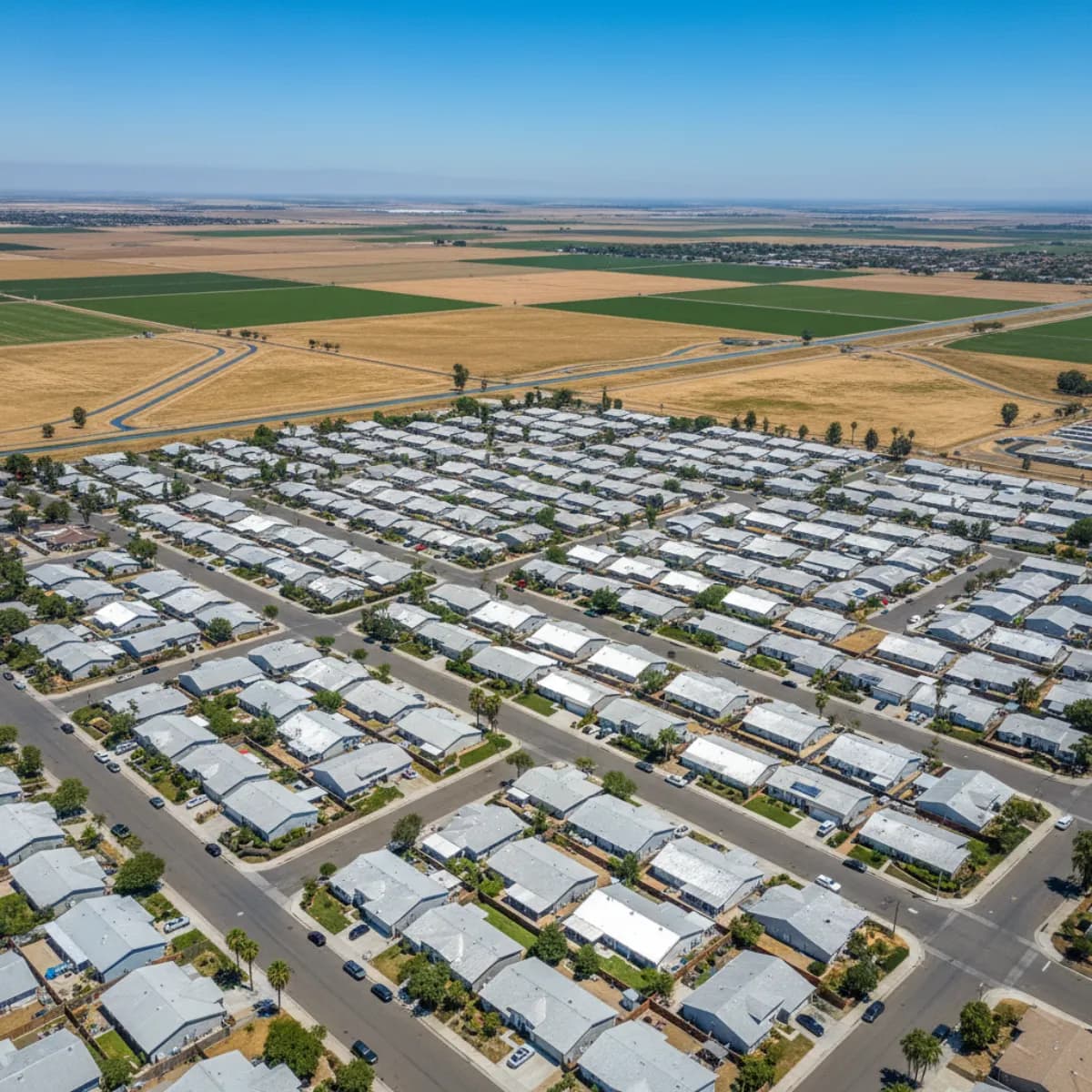
Central Valley's Most Affordable Roofing Market
Instant Roof Replacement Quotes in Fresno, CA
Over 540,000 residents across the Fresno metro face some of California's most extreme roofing conditions: 105-degree F summers, relentless UV, and mandatory Title 24 cool roof compliance. Get instant quotes from pre-vetted Central Valley contractors who specialize in heat-resistant roofing for Fig Garden estates, Woodward Park homes, Clovis neighborhoods, and every corner of the Valley.
Free Quotes
no obligations ever
Contractor Bids
standardized scope comparison
Until You Choose
no spam, no lead resale
CA Contractors
licensed, insured, reviewed
Fresno at a Glance
Population
5th largest city in California
Peak Summer Temps
Among hottest CA cities
Sunny Days / Year
Extreme UV exposure
Permit Cost
Fresno Building & Safety
CA Climate Zone
Strictest cool roof requirements
Cool Roof Mandatory
SRI compliance required
Roofing Challenges Unique to Fresno & the Central Valley
As California's fifth-largest city and the heart of the San Joaquin Valley agricultural region, Fresno presents a unique combination of roofing challenges. Extreme summer heat, intense UV radiation, poor air quality, tule fog, and dust storms create conditions that punish roofing materials unlike anywhere else in the state. The good news: Fresno's roofing costs are significantly lower than coastal California, making it possible to invest in higher-quality materials that stand up to Valley conditions.
! Extreme Heat & UV Degradation
Fresno experiences some of the most extreme heat in California, with summer temperatures regularly exceeding 105 degrees F and occasionally reaching 110-115 degrees F. Roof surface temperatures can soar to 170-190 degrees F on peak days, far hotter than coastal cities. This extreme thermal stress causes asphalt shingles to crack, curl, and lose granules 30-40% faster than the national average. UV exposure across 271 sunny days per year compounds the damage, breaking down petroleum-based roofing materials at an accelerated rate.
- - Roof surface temps reach 170-190 degrees F
- - Asphalt degrades 30-40% faster than national avg
- - Thermal cycling causes expansion/contraction stress
- - Cool-rated materials are mandatory (Title 24)
~ Title 24 Cool Roof Requirements
Fresno falls in California Climate Zone 13, which carries some of the most stringent cool roof requirements in the state. Title 24 mandates minimum Solar Reflectance Index (SRI) values for all steep-slope and low-slope roofing installations. Standard dark-colored shingles are simply not code-compliant in Fresno. Every re-roof must use materials with documented cool-roof ratings, and compliance documentation must be submitted with permit applications. Non-compliant installations will fail final inspection.
- - Climate Zone 13: strictest SRI requirements
- - Standard dark shingles are non-compliant
- - Cool-rated materials add 10-15% to cost
- - Compliance docs required with permit apps
= Air Quality & Dust Storms
The San Joaquin Valley consistently ranks among the worst regions in the United States for air quality. Agricultural operations, vehicle emissions, and geographic trapping of pollutants by surrounding mountain ranges create persistent particulate matter. Dust storms driven by Central Valley winds deposit fine agricultural sediment on rooftops, reducing cool roof reflectivity over time. Nearby Sierra Nevada wildfire smoke adds tar and soot deposits during fire season, further degrading roofing materials and coating surfaces.
- - Dust reduces cool roof reflectivity over time
- - Periodic cleaning needed for SRI performance
- - Wildfire smoke deposits tar and soot
- - Smooth surfaces (metal, TPO) shed dust better
# Tule Fog & Winter Moisture
From November through February, Fresno and the Central Valley experience tule fog, a thick ground-level radiation fog unique to the region. This persistent moisture saturates roofing materials for days or even weeks at a time, promoting algae and moss growth particularly on north-facing surfaces. The repeated wet-dry cycling between fog season and the bone-dry summer months creates thermal and moisture stress that accelerates material degradation, especially at flashings, penetrations, and valley intersections.
- - Persistent fog November through February
- - Promotes algae and moss on north faces
- - Wet-dry cycling stresses flashings
- - Proper attic ventilation critical
Energy Efficiency: Why Your Roof Matters More in Fresno
Fresno homeowners face some of the highest air conditioning costs in California and the nation. With summer temperatures regularly exceeding 105 degrees F for weeks at a time, central air conditioning runs nearly continuously from May through October. The average Fresno household spends $300-$500 per month on electricity during peak summer months, with air conditioning accounting for 50-70% of that total. Your roof is the single largest factor in how much heat enters your home.
Cool Roof Savings
Reduction in cooling costs with Title 24-compliant cool roof vs. standard dark roof
Annual Savings
Typical yearly energy savings for Fresno homeowners after cool roof installation
25-Year Value
Cumulative energy savings over the lifespan of a cool roof in Fresno's climate
Combining a cool roof with proper attic insulation (R-38 minimum recommended for Fresno), radiant barriers, and adequate soffit ventilation maximizes energy efficiency. Our pre-vetted contractors can recommend the optimal combination for your home's orientation and design.
Fresno Roof Replacement Cost by Material
Fresno is the most affordable major roofing market in California. Labor rates run $45-$65 per hour, compared to $85-$120 in Los Angeles and the Bay Area. Permitting is straightforward and affordable at $150-$400 through Fresno Building & Safety Services. However, Title 24 cool roof requirements mean you cannot simply use the cheapest shingle available. All materials must meet Climate Zone 13 SRI requirements, which adds 10-15% to material costs compared to non-cool-rated options.
Cool-Rated Shingles
#1: Cool-Rated Architectural Shingles
The most popular and affordable roofing option in Fresno. Title 24 requires cool-rated shingles with reflective granules in Climate Zone 13, which means standard dark shingles are not code-compliant. Cool-rated shingles use specially engineered granules that reflect infrared radiation while still offering a range of color options. They are available from every major manufacturer including Owens Corning Duration Cool, GAF Timberline Cool Series, and CertainTeed Landmark Solaris. These shingles reduce roof surface temperature by 20-40 degrees F compared to standard options.
Best For:
Budget-conscious Fresno homeowners
Lifespan:
20-30 years (Fresno climate)
Cost Range:
$8,000 - $18,000
Requirement:
Must be Title 24 cool-rated
Concrete Tile
#2: Concrete Tile
An excellent choice for Fresno's extreme heat. Concrete tile's natural thermal mass slows heat transfer into the home, reducing peak cooling loads during the hottest hours of the day. Light-colored concrete tile easily meets Title 24 cool roof requirements and maintains its reflective properties longer than shingles because the color is integral to the material rather than surface granules. Concrete tile is also highly resistant to UV degradation, lasting 50-75 years in Fresno's climate. It handles the wet-dry cycling of tule fog season without significant degradation.
Best For:
Long-term value, extreme heat
Lifespan:
50-75 years
Cost Range:
$15,000 - $35,000
Heat Performance:
Superior thermal mass
Standing Seam Metal
#3: Standing Seam Metal
Rapidly growing in popularity across Fresno and the Central Valley. Metal roofing with cool-roof coatings can reflect up to 70% of solar energy, making it one of the most energy-efficient options available. Standing seam metal's smooth surface sheds agricultural dust and particulates far more effectively than textured shingles or tile, maintaining cool roof performance longer between cleanings. Metal is also ideal for solar panel installations using clamp-on mounting systems that avoid roof penetrations. In Fresno's dry climate, metal's primary vulnerability (rust) is minimal, and lifespans of 40-60 years are common.
Best For:
Maximum energy savings, solar-ready
Lifespan:
40-60 years
Cost Range:
$14,000 - $30,000
Energy Savings:
Reflects up to 70% solar energy
TPO Flat Roof
#4: TPO & Modified Bitumen (Flat Roofs)
White TPO membrane is the standard choice for flat and low-slope roofs in Fresno, common on commercial buildings, agricultural structures, and some residential designs. TPO's highly reflective white surface easily exceeds Title 24 cool roof requirements for low-slope applications and can reduce cooling costs by 20-30% compared to dark built-up roofing. Modified bitumen is a more traditional option that provides excellent waterproofing for the occasional heavy rain events that can overwhelm Fresno's drainage systems. Both materials handle Fresno's extreme heat well when properly installed with adequate insulation.
Best For:
Flat and low-slope roofs
Lifespan:
20-30 years
Cost Range:
$6,000 - $16,000
Compliance:
Exceeds Title 24 SRI
Fresno Average Roof Cost: Cool-rated shingles $8,000-$18,000. Concrete tile $15,000-$35,000. Metal $14,000-$30,000. Flat/TPO $6,000-$16,000. Fresno costs run 30-50% below coastal California due to lower labor rates and simpler permitting. All materials must meet Title 24 Climate Zone 13 SRI requirements. Get your exact price with a free instant estimate.
Fresno Building Requirements & Permits
Important Local Regulations
Fresno Building & Safety Services
All roof replacements within the City of Fresno require permits through the Building & Safety Services division (formerly part of the Development & Resource Management Department). Permit fees typically range from $150 to $400 depending on project scope. Plan review takes 1-2 weeks for standard re-roofs. Inspections are required at pre-construction and final completion stages. Online permit applications are available through the city's portal.
Title 24 Energy Standards (Climate Zone 13)
Fresno's California Climate Zone 13 has among the strictest cool roof requirements in the state. All steep-slope roofing must meet minimum Solar Reflectance Index (SRI) values, and low-slope roofs have even higher thresholds. Compliance documentation from the material manufacturer must be submitted with permit applications. Title 24 energy calculations (CF-1R forms) are required for all re-roofing projects. Non-compliant installations will fail final inspection and must be corrected at the contractor's expense.
California Contractor Licensing
California requires all roofing contractors to hold a valid C-39 Roofing Contractor License from the Contractors State License Board (CSLB). Verify any contractor at cslb.ca.gov before signing a contract. Licensed contractors must carry workers' compensation insurance and a minimum $25,000 contractor bond. All RoofVista contractors are pre-verified through CSLB.
Clovis & Fresno County Permitting
Properties in the City of Clovis follow separate permitting through Clovis Planning & Development Services. Unincorporated Fresno County properties are permitted through the Fresno County Department of Public Works & Planning. Requirements are similar but fees and processing times may differ. Always confirm which jurisdiction your property falls under before applying for permits.
Air Quality Considerations
The San Joaquin Valley Air Pollution Control District (SJVAPCD) may issue Spare the Air advisories that can affect outdoor construction activities including roofing. Contractors should monitor air quality forecasts and may need to adjust schedules during extreme pollution events. Dust control measures are required during tear-off to prevent adding to Valley particulate matter.
Fresno Neighborhoods We Serve
From the established estates of Fig Garden to the newer developments of Woodward Park and the adjacent City of Clovis, our pre-vetted contractors serve every neighborhood across the Fresno metropolitan area. Each area has distinct housing stock, price points, and roofing needs shaped by the Central Valley's extreme climate.
Fig Garden & Northwest Fresno
- - Established luxury homes (1950s-1980s)
- - Large lots with mature tree canopy
- - Many original tile and shake roofs
- - Fig Garden Financial District area
- - Higher-end materials common
Woodward Park & North Fresno
- - Newer construction (2000s-present)
- - Planned communities and HOAs
- - Concrete tile and shingle roofs
- - Near Woodward Park amenities
- - HOA color and material restrictions
Clovis
- - Separate city permits required
- - Mix of established and new homes
- - Clovis Unified School District area
- - Strong community HOA standards
- - Growing northeast developments
Tower District
- - Historic homes (1920s-1940s)
- - Craftsman and Art Deco architecture
- - Older roof structures may need decking
- - Cultural hub of Fresno
- - Character preservation important
Sunnyside & Southeast Fresno
- - Affordable housing stock
- - Many homes with original roofs
- - Budget-friendly cool shingles ideal
- - Agricultural area adjacency
- - Higher dust exposure from farms
Bullard & Northeast Fresno
- - Upper-middle-class neighborhoods
- - Mix of 1970s-2000s construction
- - Concrete tile and composition roofs
- - Near River Park shopping area
- - Active HOA oversight in many areas
McLane & Central Fresno
- - Diverse housing stock
- - Near Fresno State University
- - Older homes with upgrade opportunities
- - Central location for contractor access
- - Mix of flat and pitched roofs
West Fresno & Southwest
- - Affordable entry-point homes
- - Many homes due for re-roofing
- - Cool-rated shingles most economical
- - Community revitalization underway
- - Significant energy savings potential
Best Time to Replace Your Roof in Fresno
Fresno's climate allows year-round roofing work, but some seasons offer distinct advantages. Understanding the seasonal patterns helps you plan your project for optimal results and potentially better pricing.
Best Season: Spring (March-May)
Mild temperatures (65-85 degrees F) allow comfortable all-day work. Tule fog has cleared, rain is minimal, and extreme heat has not arrived. Shingle adhesive strips seal properly without excessive heat. Contractor availability is good before the summer rush. This is the ideal window for Fresno roof replacements.
Good Season: Fall (September-November)
Temperatures cool from summer extremes to 70-90 degrees F. Extended dry weather continues. Contractors may offer competitive pricing as the busy season winds down. Early fall is excellent; late November brings fog risk. Complete projects before tule fog season begins.
Challenging: Summer (June-September)
Extreme heat (105F+) limits roofing crews to early morning hours (5 AM-noon) for safety. Roof surfaces exceeding 170 degrees F make afternoon work dangerous. Projects take longer due to shortened work days. Material handling requires extra care as shingles become pliable in extreme heat.
Variable: Winter (December-February)
Tule fog can delay morning starts and create slippery conditions on roof surfaces. Occasional rain events (11 inches annually, mostly in winter) may cause brief work stoppages. However, Fresno winters are mild enough for roofing most days. Contractor pricing is often lowest during this season.
Fresno: California's Most Affordable Roofing Market
Fresno offers a significant cost advantage over coastal California cities for roofing projects. Lower labor rates, affordable permitting, and a competitive contractor market mean your roofing dollar goes considerably further in the Central Valley. This makes it possible to invest in higher-quality materials or energy-efficient upgrades that would be cost-prohibitive in Los Angeles or San Francisco.
Fresno Cost Advantages
- - Labor rates: $45-$65/hr (vs. $85-$120 in LA)
- - Permit fees: $150-$400 (vs. $350-$800 in LA)
- - Shorter contractor wait times: 1-3 weeks
- - Lower overhead and transport costs
- - Competitive local contractor market
Smart Upgrades Within Reach
- - Upgrade from shingles to concrete tile for long-term value
- - Add radiant barrier for enhanced cooling efficiency
- - Install solar-ready mounting infrastructure
- - Upgrade attic insulation to R-38+ during re-roof
- - Add ridge vents and soffit ventilation improvements
Frequently Asked Questions About Fresno Roofing
How much does a roof replacement cost in Fresno, CA?
Roof replacement in Fresno typically costs between $8,000 and $18,000 for cool-rated asphalt shingles on a standard home, making it the most affordable major market in California. Concrete tile ranges from $15,000 to $35,000 and provides superior thermal mass for extreme heat. Standing seam metal costs $14,000 to $30,000 and offers the highest energy efficiency with cool-roof coatings reflecting up to 70% of solar energy. Fresno's affordability is driven by labor rates of $45-$65 per hour (compared to $85-$120 in Los Angeles), straightforward permitting through Fresno Building & Safety Services ($150-$400), and a competitive local contractor market with shorter wait times. However, Title 24 cool roof requirements for Climate Zone 13 add approximately 10-15% to material costs compared to non-cool-rated options. All materials installed in Fresno must meet minimum SRI values for code compliance.
Why is Title 24 cool roof compliance so important in Fresno?
Fresno falls in California Climate Zone 13, which has among the strictest cool roof requirements in the entire state due to extreme summer heat. Title 24 mandates minimum Solar Reflectance Index (SRI) values for all roofing materials installed in this zone, meaning standard dark-colored shingles are simply not code-compliant. In practical terms, cool roofs reduce roof surface temperatures by 50-60 degrees F on peak summer days when Fresno hits 105F+ and roof surfaces can reach 170-190 degrees F. This translates to 15-25% reduction in air conditioning costs, which is substantial given that Fresno homeowners spend $300-$500 per month on summer electricity. The energy savings from a compliant cool roof typically pay for the 10-15% material cost premium within 3-5 years. Over a 25-year roof lifespan, cumulative savings can reach $12,000-$37,000. Compliance documentation from the material manufacturer must be submitted with your permit application, and non-compliant installations will fail final inspection.
What are the best roofing materials for Fresno's extreme heat?
For Fresno's extreme heat (105F+ summers with roof surfaces reaching 170-190 degrees F), material selection is critical for both code compliance and energy efficiency. Cool-rated architectural shingles are the most affordable option ($8,000-$18,000) and use specially engineered reflective granules to meet Title 24 requirements while still offering color variety. Major brands include Owens Corning Duration Cool, GAF Timberline Cool Series, and CertainTeed Landmark Solaris. Concrete tile ($15,000-$35,000) provides superior thermal mass that slows heat transfer, keeping homes cooler during peak afternoon hours. Light-colored concrete tile maintains reflective properties longer than shingles. Standing seam metal with cool-roof coatings ($14,000-$30,000) reflects up to 70% of solar energy and sheds agricultural dust more effectively than textured surfaces, maintaining performance between cleanings. Its smooth surface is also ideal for solar panel clamp-on mounting systems. For flat roofs, white TPO membrane exceeds Title 24 requirements easily. All materials must meet Climate Zone 13 SRI values; dark-colored standard shingles are not code-compliant in Fresno.
How does Fresno's air quality affect roofing decisions?
Fresno and the San Joaquin Valley consistently rank among the worst U.S. regions for both particulate matter (PM2.5) and ozone pollution. This directly affects roofing in several ways. Agricultural dust, vehicle emissions, and pollutants trapped by surrounding mountain ranges deposit fine sediment on roof surfaces, gradually reducing the reflectivity of cool roofs and diminishing their energy-saving performance. Periodic cleaning (every 1-3 years) is recommended to maintain SRI values. During wildfire season, smoke from Sierra Nevada fires can deposit tar and soot on roofing materials, accelerating degradation. The San Joaquin Valley Air Pollution Control District (SJVAPCD) may issue Spare the Air advisories that can affect outdoor construction schedules. When choosing materials, smooth surfaces like standing seam metal and TPO membrane shed dust and particulates more effectively than textured shingle surfaces, maintaining cool roof performance longer between cleanings. Light-colored materials also show soiling less visibly than dark options.
What permits are required for roof replacement in Fresno?
All roof replacements in Fresno require permits through Fresno Building & Safety Services. Permit fees typically range from $150 to $400 depending on project scope, significantly less than coastal California cities. The process includes plan review, which takes 1-2 weeks for standard re-roofs. Title 24 energy compliance documentation (CF-1R forms) must be submitted with permit applications, including manufacturer documentation showing the selected materials meet Climate Zone 13 SRI requirements. Inspections are required at pre-construction (verifying scope matches permit) and final completion (confirming Title 24 compliance, proper installation, and flashing details). Properties in the City of Clovis follow separate permitting through Clovis Planning & Development Services with similar but independent requirements. Unincorporated Fresno County properties are permitted through the Fresno County Department of Public Works & Planning. Our pre-vetted contractors handle the entire permitting process, including Title 24 compliance documentation.
How long does a roof replacement take in Fresno?
Most Fresno roof replacements take 2-4 days for cool-rated asphalt shingles, 4-7 days for concrete tile, and 3-5 days for standing seam metal. Fresno's dry, sunny climate allows year-round roofing work, but extreme summer heat (105F+ from June through September) limits crews to early morning hours (typically 5 AM to noon) for safety, effectively doubling project duration during peak summer. Tule fog from November through February can delay morning starts and create slippery conditions on roof surfaces, though most winter days still allow productive work. Unlike coastal California cities where contractor wait times stretch to 4-8 weeks, Fresno typically offers 1-3 week scheduling windows due to a competitive local contractor market. The permitting process through Fresno Building & Safety Services adds 1-2 weeks to overall project planning. Spring (March-May) and fall (September-November) offer the optimal balance of comfortable working temperatures and full-day productivity.
Does Fresno's tule fog damage roofs?
Tule fog, the thick ground-level radiation fog unique to California's Central Valley, creates persistent moisture conditions from November through February that can significantly affect roofing systems. Extended fog exposure saturates roofing materials for days or weeks at a time, promoting algae and moss growth particularly on north-facing and shaded roof surfaces. The repeated wet-dry cycling between fog season and Fresno's bone-dry summer months creates thermal and moisture stress that can accelerate granule loss on asphalt shingles, degrade sealant at flashings and pipe penetrations, and promote moisture infiltration at valley intersections. Proper attic ventilation is critical in Fresno to prevent condensation buildup during fog season, which can lead to decking deterioration and mold growth. Algae-resistant shingles with copper or zinc granules are recommended for homes in areas with heavy fog exposure. During re-roofing, ensuring adequate soffit and ridge ventilation addresses both the moisture challenges of fog season and the heat dissipation needs of summer.
How much can I save on energy bills with a new cool roof in Fresno?
Fresno homeowners have some of the highest air conditioning costs in California, often spending $300-$500 per month on electricity during summer with AC accounting for 50-70% of that total. A Title 24-compliant cool roof can reduce cooling costs by 15-25% compared to a dark, non-reflective roof by reducing roof surface temperatures by 50-60 degrees F. For a typical Fresno home, that translates to $500-$1,500 in annual energy savings. Over a 25-year roof lifespan, cumulative savings can reach $12,000-$37,000, often exceeding the cost of the roof itself. Standing seam metal with cool-roof coatings and light-colored concrete tile provide the greatest energy savings due to superior reflectivity and thermal mass. To maximize efficiency, combine a cool roof with attic insulation upgraded to R-38 or higher (recommended for Fresno's climate), radiant barriers installed on the underside of roof decking, and adequate soffit-to-ridge ventilation that allows hot attic air to escape naturally. Our pre-vetted contractors can perform an energy assessment and recommend the optimal combination of cool roof materials and insulation upgrades for your specific home.
California Roofing Resources
California State Overview
All California roofing resources and city pages
California Roof Replacement Cost Guide
Detailed pricing for all CA regions and materials
Best Roofing Materials for California
Climate-specific material recommendations
California Roofing Building Codes
Title 24, fire codes, and local requirements
California Contractor Licensing
C-39 license requirements and CSLB verification
Los Angeles Roofing Quotes
Compare quotes in California's largest city
Get Your Fresno Roof Quote in Minutes
Enter your address to compare instant quotes from pre-vetted Central Valley contractors who specialize in Title 24 cool roof compliance, extreme heat protection, and energy-efficient roofing for Fresno homes