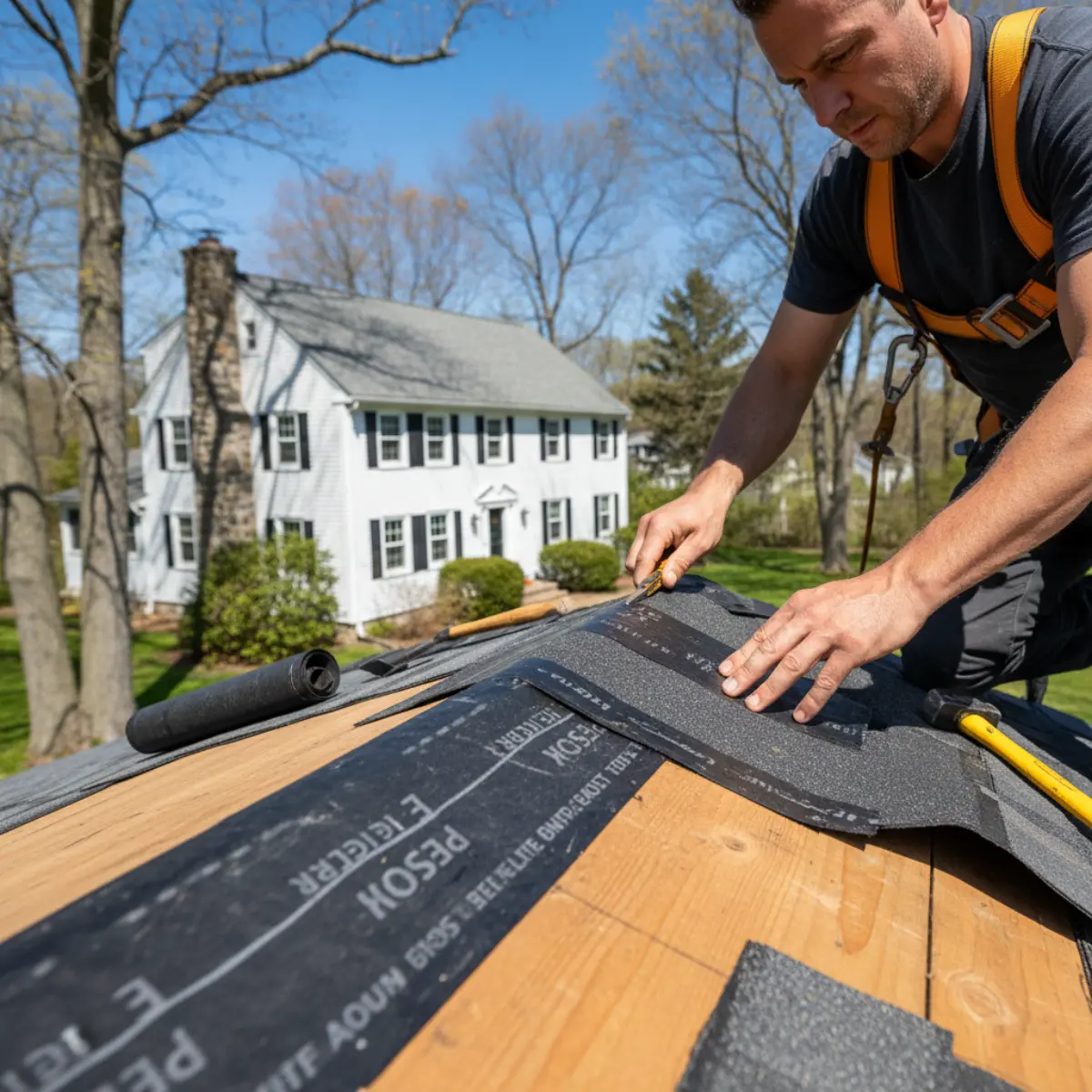
Why Connecticut Building Codes Matter for Your Roof Replacement
Connecticut uses the Connecticut State Building Code (CSBC), which is based on the ICC International Building Code (IBC) and International Residential Code (IRC) with Connecticut-specific amendments. The residential roofing portions set minimum standards for materials, installation methods, structural capacity, and safety that every contractor must follow.
As a homeowner, understanding these codes protects you in three critical ways:
- Safety. Connecticut roofs face ice dams, heavy snow loads, and coastal storms. Code requirements for ice barriers, ventilation, structural capacity, and wind resistance are engineered for Connecticut's specific weather patterns. A code-compliant roof handles them; a non-compliant roof may not.
- Insurance protection. If your roof was installed without a permit or in violation of building codes, your homeowners insurance company can deny claims related to roof damage. This applies even years after installation.
- Home value. When you sell your home, unpermitted work is a red flag during inspections and title searches. Buyers may demand price reductions, require retroactive permits, or walk away from the deal.
One important note: while the CSBC sets statewide baseline requirements, each Connecticut municipality's building department can enforce additional local requirements. Towns like Greenwich, Westport, New Canaan, and many coastal communities have adopted stricter standards. This guide covers the state baseline — always confirm local requirements with your building department before work begins.
What This Guide Covers
Permit requirements, shingle layer limits, ice and water shield, ventilation ratios, snow load, wind speed zones, drip edge and flashing, underlayment, contractor licensing, coastal vs. inland requirements, historic district considerations, and a code compliance checklist you can use before and during your project.
Do You Need a Permit to Replace Your Roof in Connecticut?
The short answer: almost certainly yes. Most Connecticut municipalities require a building permit for a full roof replacement. The permit process ensures your contractor's work is inspected for code compliance — which protects you, not just the town.
Quick Decision Guide
Permit Required
- Full roof replacement (tear-off and re-roof)
- Structural repairs to rafters, trusses, or decking
- Changing roofing material type (e.g., shingles to metal)
- Adding or modifying roof penetrations (skylights, vents)
- Any work altering the roof structure or profile
May Not Require a Permit
- Minor repairs (replacing a few damaged shingles)
- Patching small areas after storm damage
- Re-roofing (overlay) in some municipalities
- Gutter replacement (in most towns)
Exemptions vary by town. Always call your local building department to confirm.
The CT Permit Process
- Application. Your contractor (or you) submits a permit application to the local building department. This includes the property address, scope of work, contractor HIC registration number, and proof of insurance.
- Review and issuance. The building department reviews the application and issues the permit. Turnaround is typically 1 to 7 business days. Fees range from $100 to $500 depending on the municipality and project scope.
- Work begins. The permit must be posted visibly at the property during construction. Work should not begin until the permit is issued.
- Inspection. After completion, the building inspector verifies code compliance. Some municipalities require an inspection before shingles are installed (so the inspector can verify ice and water shield, underlayment, and flashing) in addition to a final inspection.
- Close-out. The inspector signs off on the work, closing the permit. This becomes part of the permanent property record.
Red Flag: “Let's Skip the Permit”
If a contractor suggests working without a permit to “save you money” or “speed things up,” that is a warning sign. A reputable Connecticut contractor will never suggest skipping the permit. The permit process exists to catch code violations that protect your home and your investment. The $100 to $500 permit fee is negligible compared to the cost of correcting non-compliant work later.
Key Connecticut Roofing Code Requirements
The following are the most important Connecticut roofing code requirements for residential projects. Each directly affects how your roof is installed and how well it performs over its lifespan.
Ice & Water Shield
Self-adhering waterproof membrane required from the eave edge extending at least 24 inches (2 feet) past the interior wall line. All of Connecticut falls within the ice dam risk zone.
Also required in valleys, around chimneys, plumbing vents, skylights, and at all roof-to-wall intersections. This is the single most common area where contractors cut corners. Without it, ice dam backup will leak into your home.
Wind Speed Design
Coastal CT (Fairfield, New Haven, New London counties): 110–130 mph design wind speed. Requires 6-nail pattern and high-wind-rated shingles.
Inland CT: 100–110 mph design wind speed. Standard 4-nail pattern is acceptable. Shingles must carry ASTM D3161 Class F or ASTM D7158 Class H rating.
Snow Load
Most of CT: 30 psf ground snow load minimum. Northwest hills (Litchfield County, northwest Hartford County): up to 50 psf.
If switching to a heavier material (asphalt to slate, for example), a structural engineer must verify the framing can handle the new material weight plus the design snow load. Roof snow load is typically 70% of the ground snow load for standard pitches.
Ventilation
1:150 ratio without a vapor barrier (1 sqft ventilation per 150 sqft attic space). 1:300 ratio with a vapor barrier and balanced intake/exhaust (per IRC R806).
Balanced ventilation (ridge vent + soffit vents) is the most effective system for Connecticut homes. It prevents ice dams by keeping the attic cold, controls moisture, and extends shingle life.
Maximum 2 Shingle Layers
CT allows a maximum of 2 layers of asphalt shingles. Two existing layers means a full tear-off is mandatory. Most codes and experienced contractors recommend 1 layer for proper deck inspection.
Excessive layers add dangerous structural weight (500-700 lbs per square for two layers), hide deck rot, void manufacturer warranties, and compromise fire ratings.
Drip Edge & Flashing
Drip edge is required at all eaves and rakes per 2018 IRC R905.2.8.5. This metal edge prevents water from wicking back under the shingles and protects the fascia from rot.
Flashing is required at all wall-to-roof intersections, valleys, chimneys, and roof penetrations. Step flashing must be interwoven with shingles — caulk alone is never an acceptable substitute.
Underlayment Requirements
Connecticut code requires a minimum of ASTM D226 Type I or ASTM D4869 Type I underlayment (commonly known as #15 felt paper) on the entire roof deck beneath the shingles. This serves as a secondary water barrier. In areas where ice and water shield is not required (the upper portions of the roof above the eave membrane), standard underlayment must be installed with a minimum 2-inch overlap at horizontal joints and 4-inch overlap at vertical joints.
Many premium installations use synthetic underlayment instead of traditional felt paper. Synthetic products are lighter, more tear-resistant, and lay flatter, but they cost more. Either type satisfies CT code as long as the product meets the ASTM standard.
Energy Code: Attic Insulation
The CT Energy Code requires a minimum of R-49 attic insulation. While this is technically separate from the roofing code, it becomes relevant during a roof replacement if the work exposes roof decking or if the building inspector checks insulation as part of the roofing permit inspection. Many older Connecticut homes have R-19 or less — well below current standards.
A roof replacement is the most cost-effective time to upgrade insulation, especially if the tear-off exposes the attic space from above. R-49 is equivalent to approximately 16 to 20 inches of blown-in cellulose or fiberglass. Some insulation methods — such as adding rigid foam above the roof deck — can only be done while the roof surface is removed.
Coastal vs. Inland Connecticut: Different Requirements
Connecticut's geography creates meaningfully different roofing requirements between the coast and the interior. Understanding which zone your property falls in helps you evaluate whether a contractor's proposal meets the correct standards.
| Requirement | Coastal CT (Fairfield, New Haven, New London) | Inland CT (Hartford, Litchfield, others) |
|---|---|---|
| Design wind speed | 110–130 mph | 100–110 mph |
| Nailing pattern | 6 nails per shingle | 4 nails (standard) |
| Ground snow load | 30 psf | 30–50 psf (higher in NW hills) |
| Ice & water shield | Required (24" past interior wall) | Required (24" past interior wall) |
| Salt air corrosion | Stainless steel or coated fasteners recommended | Standard galvanized fasteners acceptable |
| FEMA flood zones | May apply (check flood maps) | Generally not applicable |
| Primary risk | Wind uplift, nor'easters, salt corrosion | Heavy snow, ice dams |
Coastal Properties: Additional Considerations
If your property is within a FEMA-designated flood zone (common along the CT shoreline from Greenwich to Stonington), a roof replacement on a “substantially damaged” structure may trigger the 50-percent rule, requiring the entire structure to be brought into compliance with current flood elevation standards. Check your property's flood zone status with your town's planning and zoning office before starting a roofing project. Properties near tidal wetlands may also require a Coastal Area Management (CAM) review.
Connecticut Contractor Licensing: HIC Registration
Connecticut requires all contractors performing residential roofing work to be registered as a Home Improvement Contractor (HIC) through the Department of Consumer Protection (DCP). This is not optional — it is state law, and working without HIC registration is illegal.
What HIC Registration Means
- Registration number. Every registered contractor receives an HIC registration number that must appear on all contracts, proposals, advertisements, and business cards. If the number is missing from any of these, that is a violation.
- Background check. DCP performs a background check on applicants. Contractors with certain criminal convictions or histories of consumer complaints may be denied registration.
- Guaranty Fund. Connecticut maintains a Home Improvement Guaranty Fund that provides limited restitution to homeowners who suffer financial loss due to a registered contractor's failure to perform. This protection only applies to work done by registered contractors.
Required Insurance
Connecticut law requires contractors to maintain:
- Workers' compensation insurance — covers injuries to workers on your property. Without this, you as the homeowner could be held liable for medical costs and lost wages if a worker is injured on your roof.
- General liability insurance — covers damage to your property caused by the contractor's work. Minimum $500,000 is standard; $1 million or more is recommended for roofing projects.
How to Verify a Contractor
You can verify any contractor's HIC registration status at ct.gov/dcp or by calling the DCP at (860) 713-6110. Ask for the contractor's HIC number before signing anything, then verify it yourself. Also request certificates of insurance (COI) and call the insurance company directly to confirm the policies are active — certificates can be forged or expired.
Pre-Vetted Contractors on RoofVista
Every contractor on the RoofVista marketplace is verified for Connecticut HIC registration, workers' compensation, and general liability insurance before they can receive quote requests. Enter your address to get instant quotes from pre-vetted Connecticut contractors and compare scope of work details side by side.
For a detailed walkthrough of Connecticut contractor licensing and how to protect yourself, see our Connecticut Contractor Licensing Guide.
Permit Process by Municipality
Connecticut has 169 municipalities, each with its own building department. While the underlying code (CSBC) is the same statewide, the permit process, fees, and turnaround times vary. Here is what you can generally expect.
| Detail | Typical Range |
|---|---|
| Permit fee | $100 – $500 |
| Processing time | 1 – 7 business days |
| Inspections | 1 (final) or 2 (rough + final) |
| Who pulls it | Contractor (typical) or homeowner |
| Validity period | 6 months to 1 year from issuance |
Larger cities — Hartford, New Haven, Bridgeport, Stamford — tend to have more formal processes and may require online submissions. Smaller towns may still accept paper applications at the town hall. In all cases, your building department phone number is the fastest way to get answers about local-specific requirements.
Each Connecticut town may also have additional requirements beyond the CSBC. Some towns require a zoning review in addition to the building permit, especially if the property is in a historic district, flood zone, or area with specific aesthetic standards. Your contractor should know the requirements for your specific town, but it is wise to call the building department yourself to confirm.
For a broader overview of the permit process and why it matters, see our Roof Replacement Permit Guide.
Historic District Considerations
Connecticut is home to some of the oldest communities in the United States, and many towns have established local historic district commissions that regulate exterior changes to properties within designated districts. If your home is in a historic district, replacing your roof requires additional approvals beyond the standard building permit.
Towns with Notable Historic District Requirements
Litchfield
One of CT's most stringent districts. May require natural slate or materials matching original construction. Synthetic alternatives reviewed case-by-case.
Essex
Strict material and color guidelines. Cedar shake or slate preferred for period homes. Modern materials must be visually compatible with the district character.
Guilford
Historic commission review required for most exterior alterations. Material samples may need to be submitted for approval before work begins.
Old Lyme
Commission reviews focus on maintaining the character of the historic art colony. Color and texture considerations for roofing materials.
Madison
Historic district covers the town center. Roofing material changes may require a Certificate of Appropriateness from the commission.
Wethersfield
Old Wethersfield is one of the largest historic districts in CT. Material and color restrictions apply. Application review timelines: 4–6 weeks.
What Historic District Review Involves
- Application. Submit a request to the local historic district commission describing the proposed roofing work, materials, and colors.
- Material restrictions. Some commissions restrict roofing to natural slate, cedar, or materials that match the original construction. Others accept modern materials (including architectural shingles) as long as the appearance is compatible with the district character.
- Timeline. Commission reviews typically take 2 to 8 weeks, depending on the town and meeting schedules. Factor this into your project timeline.
- Certificate of Appropriateness. If approved, you receive a Certificate of Appropriateness that authorizes the work. This is separate from and in addition to the building permit.
Plan Ahead for Historic Districts
The historic district review process adds weeks to your timeline. If your property is in a designated district, start the commission application process well before you plan to begin work. Your contractor should be familiar with the requirements of your specific district commission. If they are not, that may indicate limited experience working in your area.
CT Code Compliance Checklist
Use this checklist to verify that your contractor's proposal meets Connecticut building code requirements. Check each item before work begins and verify during the project. Print this list or save it on your phone for reference during the installation.
Your Compliance Progress
0 of 16 itemsCheck each item as you verify it with your contractor.
Before Work Begins
Materials & Installation
After Completion
This checklist is based on the Connecticut State Building Code (CSBC) and 2018 IRC requirements.
Frequently Asked Questions
Do I need a permit to replace my roof in Connecticut?
In most Connecticut municipalities, yes. A building permit is required for a full roof replacement. Some towns exempt simple re-roofing (overlay of a second layer) from the permit requirement, but a full tear-off and replacement always requires a permit. Permit fees typically range from $100 to $500 depending on the municipality and project scope. Your contractor usually handles the permit application, but you as the homeowner are ultimately responsible for confirming one was obtained. Always call your local building department to verify requirements before work begins.
How many layers of shingles are allowed in Connecticut?
Connecticut building code allows a maximum of two layers of asphalt shingles on a residential roof. If your roof already has two layers, a complete tear-off down to the deck is required before new shingles can be installed. Most building inspectors and experienced contractors recommend a single-layer installation with a full tear-off, because it allows inspection of the roof deck for rot, water damage, and structural issues that would be hidden under an existing layer.
What is the ice and water shield requirement in Connecticut?
Connecticut code requires an ice barrier membrane (commonly called ice and water shield) installed from the eave edge extending at least 24 inches past the interior wall line. All of Connecticut falls within a climate zone where ice dams are a significant risk. The membrane must also be installed in roof valleys, around chimneys, plumbing vents, skylights, and at roof-to-wall intersections. This self-adhering waterproof membrane seals around nail penetrations and prevents water from ice dam backup from entering the building.
What are the wind speed requirements for roofing in coastal Connecticut?
Coastal Connecticut counties (Fairfield, New Haven, and New London) have design wind speed requirements of 110 to 130 mph. This means shingles must be rated for these wind speeds and installed with a 6-nail pattern instead of the standard 4-nail pattern. Inland areas of Connecticut typically have design wind speeds of 100 to 110 mph. Shingles in high-wind zones must carry an ASTM D3161 Class F or ASTM D7158 Class H wind resistance rating.
Does my roofer need a license in Connecticut?
Yes. Connecticut requires all roofing contractors to be registered as Home Improvement Contractors (HIC) through the Department of Consumer Protection (DCP). The HIC registration number must appear on every contract, proposal, and advertisement. You can verify a contractor's registration at ct.gov/dcp. Connecticut law also requires contractors to carry workers' compensation insurance and general liability insurance. Never hire a contractor who cannot provide their HIC number and proof of current insurance.
What snow load is my Connecticut roof designed for?
Connecticut requires a minimum ground snow load of 30 psf for most of the state. The northwest hills — including Litchfield County and parts of Hartford County — require designs for up to 50 psf ground snow load due to higher elevations and heavier snowfall. The actual roof snow load is typically about 70 percent of the ground snow load for standard pitched roofs. If you are switching to a heavier roofing material (such as from asphalt shingles to slate or tile), a structural engineer should verify that your roof framing can handle the combined weight of the new material plus the design snow load.
Can I replace my roof in a Connecticut historic district?
Yes, but additional approvals are typically required. Towns with historic district commissions — including Litchfield, Essex, Guilford, Old Lyme, Madison, and many others — may restrict roofing materials to maintain historic character. Some commissions require natural slate, cedar, or materials that match the original appearance. Synthetic alternatives that mimic traditional materials are sometimes accepted. You must apply to the local historic district commission before beginning work. Review timelines range from 2 to 8 weeks depending on the town, so plan accordingly.
What happens if I replace my roof without a permit in Connecticut?
Replacing your roof without a required permit in Connecticut can result in several problems. The building department can issue a stop-work order, require a retroactive permit at a higher fee (often double the original cost), and mandate removal of completed work for inspection. Unpermitted work can cause your homeowners insurance to deny claims related to roof damage. When you sell your home, a buyer's inspection or title search may reveal the unpermitted work, potentially forcing you to obtain retroactive permits, make corrections, or reduce the sale price.
Related Connecticut Roofing Resources
Connecticut Roof Replacement Cost Guide
Average costs by material, city-level pricing, and what drives price differences across Connecticut.
CT Contractor Licensing Guide
HIC registration details, how to verify a contractor, insurance requirements, and consumer protections.
Roof Replacement Permit Guide
General guide to the permit process across states — why permits matter, what to expect, and how to avoid common mistakes.
Get Instant Quotes from Code-Compliant Connecticut Contractors
Every contractor on RoofVista is verified for Connecticut HIC registration, insurance, and code compliance. Enter your address for a free instant estimate and compare standardized quotes side by side — including scope of work details like ice barrier coverage, ventilation, and tear-off.
Disclaimer: This guide is for informational purposes only and does not constitute legal or professional advice. Building codes are subject to change, and local municipalities may have additional requirements beyond the state baseline. Always consult your local building department and a licensed contractor for project-specific code requirements. Information is current as of March 2026 but should be verified before beginning any construction project.
Last updated: March 17, 2026 | Based on the Connecticut State Building Code (CSBC), 2018 IRC, and Connecticut Energy Code
Frequently Asked Questions
Do I need a permit to replace my roof in Connecticut?
In most Connecticut municipalities, yes. A building permit is required for a full roof replacement. Some towns exempt simple re-roofing (overlay of a second layer) from the permit requirement, but a full tear-off and replacement always requires a permit. Permit fees typically range from $100 to $500 depending on the municipality and project scope. Your contractor usually handles the permit application, but you as the homeowner are ultimately responsible for confirming one was obtained. Always call your local building department to verify requirements before work begins.
How many layers of shingles are allowed in Connecticut?
Connecticut building code allows a maximum of two layers of asphalt shingles on a residential roof. If your roof already has two layers, a complete tear-off down to the deck is required before new shingles can be installed. Most building inspectors and experienced contractors recommend a single-layer installation with a full tear-off, because it allows inspection of the roof deck for rot, water damage, and structural issues that would be hidden under an existing layer.
What is the ice and water shield requirement in Connecticut?
Connecticut code requires an ice barrier membrane (commonly called ice and water shield) installed from the eave edge extending at least 24 inches past the interior wall line. All of Connecticut falls within a climate zone where ice dams are a significant risk. The membrane must also be installed in roof valleys, around chimneys, plumbing vents, skylights, and at roof-to-wall intersections. This self-adhering waterproof membrane seals around nail penetrations and prevents water from ice dam backup from entering the building.
What are the wind speed requirements for roofing in coastal Connecticut?
Coastal Connecticut counties (Fairfield, New Haven, and New London) have design wind speed requirements of 110 to 130 mph. This means shingles must be rated for these wind speeds and installed with a 6-nail pattern instead of the standard 4-nail pattern. Inland areas of Connecticut typically have design wind speeds of 100 to 110 mph. Shingles in high-wind zones must carry an ASTM D3161 Class F or ASTM D7158 Class H wind resistance rating.
Does my roofer need a license in Connecticut?
Yes. Connecticut requires all roofing contractors to be registered as Home Improvement Contractors (HIC) through the Department of Consumer Protection (DCP). The HIC registration number must appear on every contract, proposal, and advertisement. You can verify a contractor registration at ct.gov/dcp. Connecticut law also requires contractors to carry workers compensation insurance and general liability insurance. Never hire a contractor who cannot provide their HIC number and proof of current insurance.
What snow load is my Connecticut roof designed for?
Connecticut requires a minimum ground snow load of 30 psf for most of the state. The northwest hills including Litchfield County and parts of Hartford County require designs for up to 50 psf ground snow load due to higher elevations and heavier snowfall. The actual roof snow load is typically about 70 percent of the ground snow load for standard pitched roofs. If you are switching to a heavier roofing material, a structural engineer should verify that your roof framing can handle the combined weight of the new material plus the design snow load.
Can I replace my roof in a Connecticut historic district?
Yes, but additional approvals are typically required. Towns with historic district commissions including Litchfield, Essex, Guilford, Old Lyme, Madison, and many others may restrict roofing materials to maintain historic character. Some commissions require natural slate, cedar, or materials that match the original appearance. Synthetic alternatives that mimic traditional materials are sometimes accepted. You must apply to the local historic district commission before beginning work. Review timelines range from 2 to 8 weeks depending on the town.
What happens if I replace my roof without a permit in Connecticut?
Replacing your roof without a required permit in Connecticut can result in several problems. The building department can issue a stop-work order, require a retroactive permit at a higher fee (often double the original cost), and mandate removal of completed work for inspection. Unpermitted work can cause your homeowners insurance to deny claims related to roof damage. When you sell your home, a buyer inspection or title search may reveal the unpermitted work, potentially forcing you to obtain retroactive permits, make corrections, or reduce the sale price.