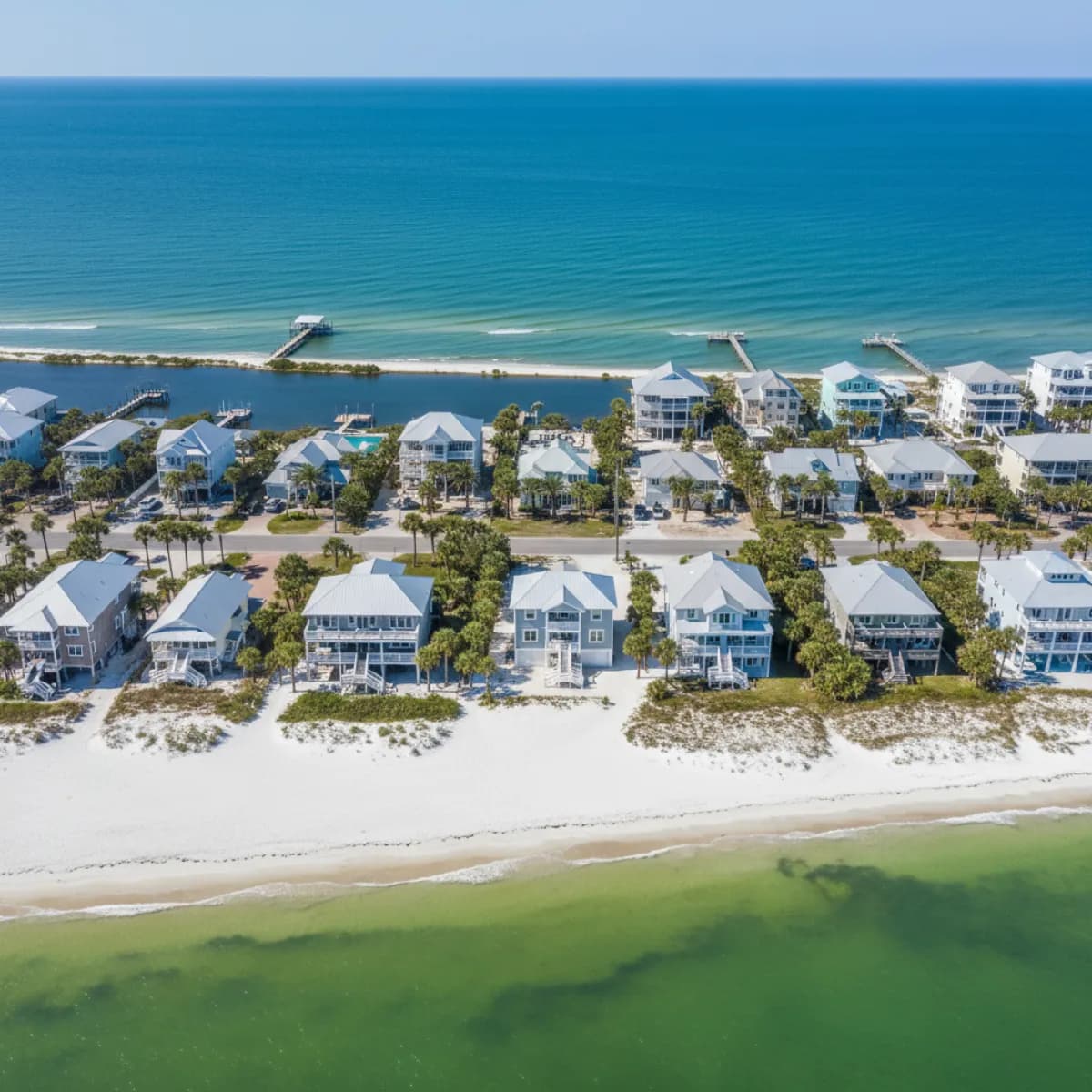
Florida's Western Panhandle
Instant Roof Replacement Quotes in Pensacola, FL
From Hurricane Ivan in 2004 to Hurricane Sally in 2020, Pensacola homeowners know the devastation Gulf storms bring to roofing systems. Get instant quotes from pre-vetted Panhandle contractors who specialize in hurricane-rated installations for East Hill bungalows, North Hill historic homes, Pensacola Beach cottages, and neighborhoods across Escambia County.
Free Quotes
no obligations ever
Contractor Bids
standardized scope comparison
Until You Choose
no spam, no lead resale
FL Contractors
licensed, insured, reviewed
Pensacola at a Glance
Population
Metro area 500K+
Wind Design Speed
Florida Building Code minimum
Named Storms Since 2000
Including Ivan & Sally direct hits
Permit Cost
Escambia County permits
Annual Rainfall
Among highest in U.S.
Thunderstorm Days
Per year on average
Why Pensacola Roofing Demands Hurricane-Grade Solutions
Pensacola occupies a unique position on the Gulf Coast. Situated at the western tip of Florida's Panhandle, the city faces a dual threat that few other communities endure at this intensity: direct hurricane strikes and relentless salt air corrosion. The warm waters of the Gulf of Mexico produce some of the most powerful storms in the Atlantic basin, and Pensacola's geography places it squarely in the crosshairs.
Hurricane Ivan made landfall just west of Pensacola in September 2004 as a Category 3 storm with sustained winds of 130 mph, destroying or severely damaging over 10,000 homes across Escambia County. Sixteen years later, Hurricane Sally stalled over the area in September 2020, dumping over 30 inches of rain in 24 hours and pushing a 6-foot storm surge into coastal neighborhoods. These are not distant memories for Pensacola homeowners - they are the lived experiences that shape every roofing decision in the region. A roof that cannot withstand 140+ mph winds and torrential rainfall is simply not adequate for this market.
! Hurricane-Force Winds
Pensacola's location on the northern Gulf Coast puts it in the path of hurricanes that intensify rapidly over the Gulf's warm loop current. Hurricane Ivan (2004) arrived with 130 mph sustained winds. Hurricane Sally (2020) brought 105 mph winds plus catastrophic rainfall. The Florida Building Code requires all Escambia County roofing to withstand 140 mph design wind speeds, among the highest thresholds in the state.
- - 140 mph minimum wind design speed (FBC)
- - Enhanced nail patterns: 6 nails per shingle minimum
- - Sealed roof decking with peel-and-stick underlayment
- - Ring-shank nails for decking attachment
# Salt Air Coastal Corrosion
The Gulf of Mexico's warm, humid air carries salt particles that attack every exposed roofing component. Homes within 3,000 feet of the coastline experience the most aggressive corrosion, but even inland Pensacola properties up to 5 miles from the water face accelerated material degradation. Standard galvanized fasteners can fail within 5-10 years in coastal Pensacola environments.
- - Stainless steel or hot-dipped galvanized fasteners required
- - Galvalume or aluminum standing seam panels resist salt
- - Shingle granule loss accelerated 20-30% near coast
- - Corrosion-resistant flashing and drip edge essential
= Torrential Rainfall & Humidity
Pensacola receives approximately 65 inches of rainfall annually, placing it among the wettest cities in the United States. Hurricane Sally demonstrated the catastrophic potential with 30+ inches in a single day. The subtropical humidity (averaging 75-80% year-round) creates ideal conditions for mold, algae, and moss growth on roofing surfaces, particularly on north-facing slopes that receive less direct sunlight.
- - Secondary water barrier required by FBC
- - Algae-resistant shingles (copper/zinc granules)
- - Proper attic ventilation to combat moisture
- - Ice-and-water shield at all penetrations
~ Subtropical Heat & UV Exposure
Pensacola's subtropical climate delivers 220+ sunny days per year with summer temperatures routinely exceeding 90 degrees F. Roof surface temperatures can reach 150-170 degrees F in direct sun. This persistent UV exposure and thermal cycling causes asphalt shingles to lose flexibility and crack, reducing their effective lifespan by 5-8 years compared to northern climates. Reflective materials significantly reduce both roof degradation and cooling costs.
- - Light-colored or reflective materials reduce cooling costs
- - Metal roofing reflects 60-70% of solar radiation
- - Shingle lifespan reduced 5-8 years vs. northern states
- - Proper ridge ventilation essential for attic heat
Pensacola Roof Replacement Cost by Material
Pensacola is one of the most affordable Gulf Coast roofing markets. Labor rates in the Panhandle ($45-$70/hour) are significantly lower than South Florida ($65-$100/hour) or the Tampa Bay area ($55-$85/hour), and material costs benefit from proximity to Alabama and Mississippi supply chains. Escambia County permit fees ($150-$400) are also more affordable than major Florida metros.
However, coastal properties on Pensacola Beach, Perdido Key, and Gulf Breeze should budget 15-25% more than inland estimates due to salt air corrosion protection requirements, barrier island material transport logistics, and enhanced wind-load engineering. Military families near NAS Pensacola and Corry Station will find the most competitive pricing in the region for inland properties.
Standing Seam Metal
#1: Standing Seam Metal
The dominant roofing choice across Florida's Panhandle, and for good reason. Standing seam metal with concealed fasteners eliminates the single biggest failure point during hurricanes - exposed fastener blow-off. Metal panels interlock and can withstand 150+ mph winds when properly installed. Galvalume-coated steel or aluminum panels resist salt air corrosion far better than any other metal option. The material reflects 60-70% of solar radiation, cutting cooling costs by 15-25% in Pensacola's hot summers. With a 40-70 year lifespan, metal outlasts shingles by 2-3 replacement cycles in the Panhandle climate.
Best For:
Hurricane zones, coastal homes, energy savings
Lifespan:
40-70 years
Cost Range:
$15,000 - $35,000
Wind Rating:
150+ mph (concealed fastener)
Impact-Resistant Shingles
#2: Impact-Resistant Architectural Shingles
The most affordable hurricane-rated option for Pensacola homeowners. Impact-resistant shingles (Class 3 or Class 4 hail rating) use a modified asphalt formulation with SBS polymer that makes them flexible enough to absorb impact without cracking. When installed with the 6-nail pattern required by Escambia County and sealed with peel-and-stick underlayment, these shingles handle 130+ mph winds. They cost significantly less than metal while still qualifying for insurance discounts. Algae-resistant variants with copper or zinc-infused granules combat Pensacola's humidity-driven algae growth.
Best For:
Budget-conscious homeowners, inland properties
Lifespan:
15-25 years (Panhandle climate)
Cost Range:
$7,500 - $18,000
Wind Rating:
130+ mph (6-nail pattern)
Stone-Coated Steel
#3: Stone-Coated Steel
Stone-coated steel panels combine the hurricane resistance of metal with the aesthetic appeal of tile, shake, or shingle profiles. The stone coating provides an additional layer of UV protection and sound dampening during Pensacola's frequent thunderstorms. These panels interlock and are rated for 155+ mph winds, exceeding even standing seam in some configurations. The stone granule surface resists algae better than bare metal and provides a more traditional look that suits Pensacola's historic neighborhoods. Particularly popular in East Hill and North Hill where homeowners want hurricane protection without sacrificing architectural character.
Best For:
Historic homes, traditional aesthetics
Lifespan:
40-60 years
Cost Range:
$12,000 - $28,000
Wind Rating:
155+ mph (interlocking panels)
Concrete Tile
#4: Concrete Tile
While less common in the Panhandle than in Central and South Florida, concrete tile is gaining popularity in Pensacola's higher-end communities like East Hill and along the waterfront. Concrete tile provides exceptional longevity (50+ years), natural thermal mass that moderates attic temperatures, and a Mediterranean aesthetic that complements Pensacola's historic architecture. However, the weight of concrete tile (9-12 lbs per square foot) requires structural verification, and many older Pensacola homes need truss reinforcement before tile installation. Proper hurricane clip and foam adhesive installation is critical for wind resistance.
Best For:
Upscale homes, Mediterranean styles
Lifespan:
50+ years
Cost Range:
$18,000 - $40,000
Consideration:
Structural verification required
Pensacola Average Roof Cost: Impact-resistant shingles $7,500-$18,000. Standing seam metal $15,000-$35,000. Stone-coated steel $12,000-$28,000. Concrete tile $18,000-$40,000. Pensacola costs run 20-35% below South Florida due to lower labor rates and accessible supply chains. Get your exact price with a free instant estimate.
Pensacola's Hurricane History: Why Your Roof Matters
Understanding Pensacola's hurricane history is essential for making informed roofing decisions. The city has endured some of the most destructive storms in Florida's history, and the lessons from each event have directly shaped the roofing standards enforced today. Every major hurricane that hits the Panhandle teaches contractors and building officials something new about how roofs fail and how they can be built stronger.
Hurricane Ivan (September 2004) - Category 3
Hurricane Ivan made landfall just west of Gulf Shores, Alabama, with the eastern eyewall passing directly over Pensacola. Sustained winds of 130 mph and a storm surge of 10-15 feet devastated the coastal areas. Over 10,000 homes in Escambia County sustained significant damage. The I-10 Pensacola Bay Bridge collapsed. Pensacola Beach was virtually destroyed, with the storm surge washing completely across the barrier island.
Roofing lessons from Ivan: Homes with standing seam metal roofs and ring-shank nail decking attachment survived at dramatically higher rates than those with standard 3-tab shingles and smooth-shank nails. The storm revealed that the fastener-to-decking connection was the critical failure point, not the roofing material itself. This finding directly influenced Florida Building Code revisions requiring enhanced fastener specifications in the Panhandle.
Hurricane Sally (September 2020) - Category 2
Though a Category 2 storm with 105 mph winds, Sally was devastating because it stalled over the Pensacola area. The storm dumped over 30 inches of rain in 24 hours, causing catastrophic inland flooding. A 6-foot storm surge inundated coastal communities. The slow movement meant sustained wind loading on roofing systems for over 12 hours, far longer than a typical fast-moving hurricane.
Roofing lessons from Sally: Prolonged wind loading exposed weaknesses in shingle adhesion that short-duration gusts would not have revealed. Roofs that passed wind-speed tests failed under the sustained force. The torrential rainfall overwhelmed secondary water barriers on homes with even minor shingle displacement, proving that the combination of wind and water penetration is more dangerous than either factor alone. Homes with sealed peel-and-stick underlayment performed vastly better than those with traditional felt paper.
Pensacola Building Requirements & Permits
Important Local Regulations
Escambia County Building Department
All roof replacements within Escambia County require permits through the county Building Inspections Department. Properties within the City of Pensacola limits file through the City's Development Services Department. Permit fees range from $150-$400 depending on project scope. Both jurisdictions require a nail pattern inspection during installation and a final inspection upon completion. Permit applications must include a product approval listing showing the roofing material is approved under the Florida Product Approval system.
Florida Building Code Wind Requirements
Escambia County falls under Florida Building Code wind speed zone requiring 140 mph minimum design wind speed for all structures. Roofing materials must be Florida Product Approved and tested to meet this threshold. Shingle installation requires a minimum 6-nail pattern. Roof decking must be attached with 8d ring-shank nails at 6-inch spacing along edges. A secondary water barrier (peel-and-stick or equivalent) is required on the entire roof deck.
Pensacola Beach & Santa Rosa Island
Properties on Pensacola Beach fall under the Santa Rosa Island Authority (SRIA) jurisdiction in addition to Escambia County. SRIA may require architectural review for exterior changes, including roofing material and color. Barrier island properties must meet enhanced wind-load engineering requirements. All coastal construction within the Coastal Construction Control Line (CCCL) requires additional structural documentation from a licensed engineer.
North Hill Preservation District
The North Hill Preservation District in downtown Pensacola includes over 300 homes from the late 1800s and early 1900s. Roof replacements in this historic district require approval from the Architectural Review Board to ensure materials and colors are consistent with the neighborhood's historic character. Metal roofing in historically appropriate profiles (standing seam with traditional dimensions) is generally approved.
Florida Contractor Licensing
Florida requires all roofing contractors to hold a valid Certified Roofing Contractor (CCC) or Registered Roofing Contractor (RCC) license through the Department of Business and Professional Regulation (DBPR). Verify any contractor at myfloridalicense.com. Licensed contractors must carry workers' compensation insurance and general liability insurance of at least $300,000.
Pensacola Neighborhoods We Serve
From the barrier island beaches to the historic neighborhoods downtown and the rapidly growing suburbs to the north, our pre-vetted contractors serve every community in the Pensacola metro. Each area has unique roofing challenges based on its proximity to the coast, architectural character, and exposure to prevailing storm paths.
East Hill
- - Tree-canopy residential neighborhood
- - Mix of Craftsman and ranch-style homes
- - Bayou Texar waterfront properties
- - Wind-driven debris from mature oaks
- - Mid-range pricing, excellent value
North Hill
- - Historic preservation district
- - Victorian and Queen Anne homes
- - Architectural Review Board approval
- - Period-appropriate materials required
- - Premium for historic compliance
Pensacola Beach
- - Maximum salt air corrosion exposure
- - Direct hurricane and storm surge zone
- - SRIA architectural review required
- - Elevated structures with complex rooflines
- - 15-25% premium over mainland costs
Perdido Key
- - Barrier island near Alabama border
- - Condominiums and beach houses
- - Extreme coastal wind exposure
- - Stainless steel fasteners mandatory
- - Limited contractor access via bridge
Gulf Breeze
- - Peninsula community between bays
- - Moderate salt air exposure
- - Newer construction meets recent codes
- - Santa Rosa County jurisdiction
- - Family neighborhoods, mid-range pricing
Pace & Milton
- - Rapidly growing suburban communities
- - Inland location reduces salt exposure
- - Most affordable roofing in the metro
- - Santa Rosa County permitting
- - Newer subdivisions with modern codes
Insurance Considerations for Pensacola Homeowners
Florida's Insurance Crisis & Your Roof
Florida's homeowner insurance market has been in crisis, with multiple carriers leaving the state and premiums increasing dramatically. Pensacola homeowners are among the hardest hit, given the city's hurricane exposure and history of major claims from Ivan and Sally. Many Pensacola homeowners with roofs older than 15 years are finding it increasingly difficult to obtain or renew coverage at affordable rates. Some insurers now require a roof inspection before issuing new policies, and roofs over 20 years old may be denied coverage entirely.
Insurance Challenges in Pensacola
- - Multiple carriers have left the Florida market
- - Citizens Property Insurance (state insurer) enrollment surging
- - Premiums increasing 25-60% annually in coastal areas
- - Roofs over 15 years old face non-renewal risk
- - Roof age is the #1 factor in underwriting decisions
How a New Roof Helps
- - New FBC-compliant roof can reduce premiums 15-40%
- - Impact-resistant shingles qualify for additional discounts
- - Wind mitigation inspection documents savings factors
- - Hip roof geometry earns the highest wind credits
- - Secondary water barrier documentation essential
Wind Mitigation Inspection: Essential for Pensacola
A Florida wind mitigation inspection ($75-$150) documents your roof's hurricane-resistance features and is required by law for insurers to apply wind-resistance credits. The inspection evaluates seven factors: roof covering type, roof deck attachment method, roof-to-wall connection, roof geometry (hip vs. gable), secondary water barrier, opening protection, and roof age. A new roof with optimal ratings on all seven factors can save Pensacola homeowners $1,500-$4,000+ annually on insurance premiums. Our pre-vetted contractors provide wind mitigation documentation with every installation.
Roofing for Pensacola's Military Community
Pensacola is known as the "Cradle of Naval Aviation," home to Naval Air Station Pensacola (NAS Pensacola), the Navy's premier flight training facility and home of the Blue Angels. The military community is a significant part of Pensacola's identity and economy, with thousands of active-duty personnel, retirees, and their families calling the area home. Corry Station Naval Technical Training Center and nearby Whiting Field in Milton add to the military presence.
Military families who own homes in the Pensacola area face unique roofing considerations. PCS (Permanent Change of Station) orders can create tight timelines for home improvement projects. VA renovation loans can finance roof replacements as part of home purchase or refinance. Homes in military-adjacent neighborhoods like Warrington, Ferry Pass, and Ensley typically offer the most affordable roofing in the metro area, with impact-resistant shingle replacements ranging from $7,500 to $15,000. Our pre-vetted contractors understand military scheduling constraints and can work within PCS timelines to complete projects efficiently.
Frequently Asked Questions About Pensacola Roofing
How much does a roof replacement cost in Pensacola, FL?
Roof replacement in Pensacola typically costs between $7,500 and $18,000 for impact-resistant asphalt shingles on a standard home. Standing seam metal roofing, the most popular choice in the Panhandle, ranges from $15,000 to $35,000 depending on panel type (Galvalume vs. aluminum), home size, and roof complexity. Stone-coated steel offers a middle ground at $12,000-$28,000. Pensacola is one of the most affordable Gulf Coast roofing markets, with labor rates of $45-$70 per hour compared to $65-$100 in South Florida. Escambia County permit fees ($150-$400) are also below major metro averages. However, barrier island properties on Pensacola Beach or Perdido Key should budget 15-25% above these estimates due to salt air corrosion protection requirements, enhanced wind-load engineering, and material transport logistics across the bridges. Hurricane seasons can also affect pricing due to demand surges following major storms.
What roofing materials withstand Pensacola hurricanes?
Pensacola's location on the northern Gulf Coast means hurricane resistance is not optional - it is the baseline requirement for every roofing installation. The city has been directly hit by Hurricane Ivan (2004, Category 3, 130 mph winds) and Hurricane Sally (2020, Category 2, 105 mph sustained winds with 30+ inches of rain). Standing seam metal roofing with concealed fasteners is the top choice, handling 150+ mph winds by eliminating exposed fastener blow-off risk. Impact-resistant architectural shingles (Class 3 or 4 rating) with SBS polymer modified asphalt resist cracking and handle 130+ mph winds when installed with the Escambia County-required 6-nail pattern. All materials installed in Escambia County must be Florida Product Approved and tested to meet the Florida Building Code's 140 mph minimum design wind speed. Stone-coated steel panels provide 155+ mph ratings with the aesthetic flexibility to match any architectural style.
What permits are required for roof replacement in Pensacola?
All roof replacements in the Pensacola area require permits. Properties within the City of Pensacola file through the Development Services Department, while unincorporated Escambia County properties file through the County Building Inspections Department. Gulf Breeze and Pace fall under Santa Rosa County jurisdiction. Permit fees range from $150 to $400 depending on project scope and jurisdiction. Applications must include Florida Product Approval numbers for all materials being installed. Two inspections are mandatory: a nail pattern inspection during installation to verify proper fastener spacing and attachment, and a final inspection upon completion to ensure overall Florida Building Code compliance. Properties on Pensacola Beach must also receive Santa Rosa Island Authority (SRIA) review. Homes within the North Hill Preservation District require Architectural Review Board approval for material and color selections. Our contractors handle the entire permitting and inspection process.
How does salt air affect roofs in Pensacola?
Salt air corrosion is a persistent and costly challenge for Pensacola homeowners. The Gulf of Mexico's warm, humid air carries microscopic salt particles that settle on every roofing surface. Homes within 3,000 feet of the coastline experience the most aggressive corrosion, but even inland properties 3-5 miles from the water face accelerated material degradation. Salt spray attacks metal fasteners, causing standard galvanized nails and screws to corrode and fail within 5-10 years in severe coastal environments. Asphalt shingle granules erode 20-30% faster in salt air, reducing effective lifespan from 25-30 years to 15-20 years. Flashing, drip edge, and gutter systems are particularly vulnerable. Coastal Pensacola homes should use stainless steel (316 grade) or hot-dipped galvanized fasteners, Galvalume or aluminum standing seam panels, and corrosion-resistant flashing. Regular roof inspections every 2-3 years are recommended for coastal properties to catch early signs of salt damage before they become structural problems.
Does a new roof lower insurance premiums in Pensacola?
Yes, and in Pensacola the savings can be substantial. Florida's insurance market has been especially volatile, with multiple carriers leaving the state and premiums skyrocketing. Pensacola homeowners with aging roofs face some of the highest premiums in the country due to the city's hurricane history. A new roof that meets current Florida Building Code wind resistance standards can reduce annual premiums by 15-40%, depending on the material and installation specifications. Impact-resistant shingles (Class 3 or 4 hail rating) may qualify for additional hail/impact discounts. The single most important step after a new roof installation is obtaining a Florida wind mitigation inspection ($75-$150). This inspection documents seven specific wind-resistance features and is required by law for insurers to apply credits. A new roof with optimal ratings - hip roof geometry, FBC roof covering, ring-shank nail decking, clips or straps roof-to-wall connection, and sealed secondary water barrier - can save $1,500-$4,000+ annually. Many Pensacola homeowners recoup their entire roofing investment through insurance savings within 5-8 years.
How long does a roof replacement take in Pensacola?
Most Pensacola roof replacements take 2-4 days for impact-resistant architectural shingles and 3-6 days for standing seam metal on a typical single-family home. Stone-coated steel installations fall in the 3-5 day range. Concrete tile, which requires additional structural preparation, typically takes 5-8 days. Pensacola's subtropical climate allows year-round roofing work, though the June-November hurricane season can introduce weather delays. Summer afternoon thunderstorms are common (Pensacola averages 80+ thunderstorm days per year) and may briefly interrupt work, though experienced Panhandle crews plan around the typical 2-4 PM storm window. Barrier island projects on Pensacola Beach or Perdido Key may add 1-2 days due to material transport logistics across the Bob Sikes or Perdido Key bridges. The Escambia County or City permitting process typically adds 1-2 weeks to the overall project timeline from application to approval. Post-hurricane demand surges can extend scheduling windows to 4-8 weeks.
Is metal roofing worth the investment in Pensacola?
Metal roofing is arguably the single best roofing investment a Pensacola homeowner can make, and the data supports it. Standing seam metal with concealed fasteners handles 150+ mph winds, making it the most hurricane-resistant residential roofing material available. Galvalume-coated steel and aluminum panels resist the salt air corrosion that destroys standard materials in coastal environments. Metal reflects 60-70% of solar radiation, reducing cooling costs by 15-25% in Pensacola's hot, humid summers. The 40-70 year lifespan means a metal roof outlasts shingles by 2-3 full replacement cycles in the Panhandle's harsh climate. When you add insurance premium reductions of $1,500-$4,000 per year and energy savings of $300-$700 annually, the total cost of ownership over 40 years is significantly lower than shingles despite the higher upfront cost ($15,000-$35,000 vs. $7,500-$18,000). For Pensacola Beach and Perdido Key properties, metal is essentially the only material that can deliver acceptable long-term value given the extreme salt and wind exposure.
What are NAS Pensacola military housing roofing options?
Military families stationed at NAS Pensacola, Corry Station, or Whiting Field who own homes in the Pensacola area have the same full range of roofing options available to civilian homeowners. VA loans do not restrict roofing material choices, and VA renovation loans (VA Reno loans) can be used to finance roof replacements as part of a home purchase or refinance. Homes in military-adjacent neighborhoods like Warrington, Ferry Pass, Ensley, and Bellview typically offer the most affordable roofing costs in the metro, with impact-resistant shingle replacements ranging from $7,500 to $15,000. These inland neighborhoods benefit from lower salt air exposure and straightforward access compared to coastal properties. Military families should prioritize impact-resistant materials that maximize wind mitigation inspection scores, as the insurance savings are especially valuable for families managing military budgets. Our pre-vetted contractors are experienced working with military families, understand PCS timeline constraints, and can schedule projects to align with deployment and transfer schedules.
Florida Roofing Resources
Florida State Overview
All Florida roofing resources and city pages
Florida Wind Mitigation Guide
How to maximize insurance savings with your new roof
Florida Insurance Crisis & Roofing
Navigate the insurance market with the right roof
Florida Roof Replacement Cost Guide
Detailed pricing for all FL regions and materials
Get Your Pensacola Roof Quote in Minutes
Enter your address to compare instant quotes from pre-vetted Florida contractors who specialize in hurricane-rated installations, salt air protection, and Panhandle building code compliance