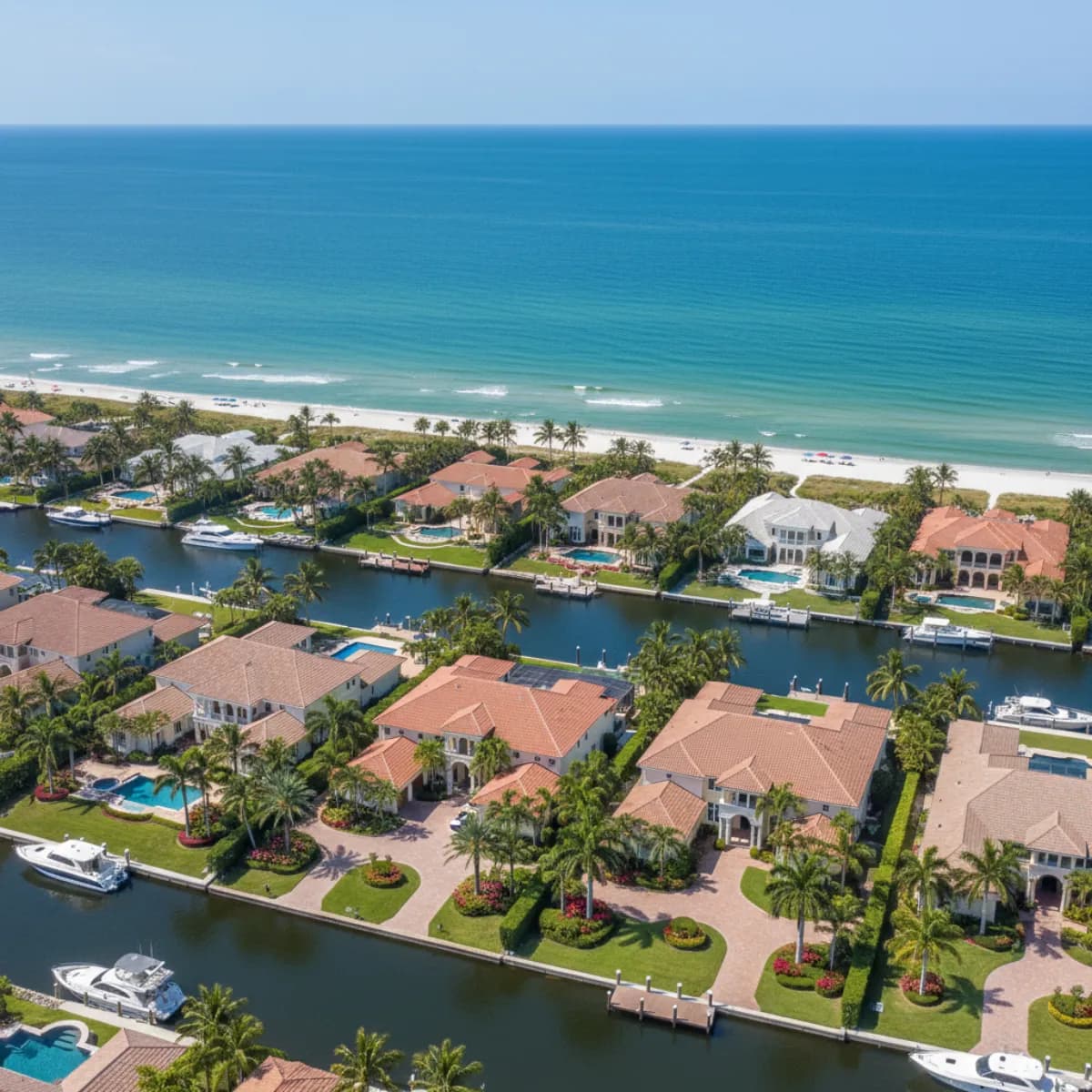
Southwest Florida's Premier Luxury Market
Instant Roof Replacement Quotes in Naples, FL
Naples is Southwest Florida's most affluent coastal market, where luxury homes demand premium roofing materials that withstand Gulf Coast hurricanes and salt air corrosion. From the waterfront estates of Port Royal to the gated communities of Pelican Bay, get instant quotes from pre-vetted Florida CCC-licensed contractors who specialize in premium tile, natural slate, and standing seam metal roofing across Collier County.
Free Quotes
no obligations ever
Contractor Bids
standardized scope comparison
Until You Choose
no spam, no lead resale
FL Contractors
CCC-licensed, insured, reviewed
Naples at a Glance
Population (City)
380K+ in Collier County
Median Home Value
Highest in Southwest FL
MPH Wind Design
FBC 7th Edition requirement
Permit Cost
Collier County re-roof permits
Hurricane Ian (2022)
150 mph winds, 12-18 ft surge
HOA Communities
ARC approval required
Roofing in Naples After Hurricane Ian: A Market Transformed
On September 28, 2022, Hurricane Ian made landfall near Cayo Costa Island as a high-end Category 4 hurricane with sustained winds of 150 mph. The storm's trajectory brought catastrophic wind and unprecedented storm surge directly into the heart of Collier County. Naples bore the full brunt of Ian's fury: storm surge of 12 to 18 feet inundated coastal neighborhoods from Port Royal to Vanderbilt Beach, while sustained winds exceeding 140 mph tore through communities miles inland. The scale of destruction was staggering — an estimated 30,000 homes in Collier County alone were damaged or destroyed, with roofing failures accounting for the vast majority of structural damage. Entire subdivisions lost every roof to wind uplift. Coastal homes that survived the surge often suffered total roof system failure from the combined forces of wind, rain, and flying debris.
The aftermath fundamentally transformed Naples' roofing landscape. Tens of thousands of re-roofing permits have been pulled in Collier County since Ian, creating the largest concentrated roofing replacement cycle in the region's history. Homeowners who once maintained aging tile roofs well past their expected lifespan now understand — viscerally — why building code compliance, modern installation methods, and hurricane-rated materials matter. The demand for premium, code-compliant roofing in Naples has never been higher, and the market has seen a corresponding surge in contractor activity, including unfortunately a rise in unlicensed storm-chasing operators that Collier County has aggressively pursued.
For Naples homeowners, Hurricane Ian underscored a critical truth: your roof is not merely an aesthetic element of your luxury home — it is the primary structural defense against Southwest Florida's hurricane threat. The homes that performed best during Ian shared common characteristics: modern, code-compliant installations using Florida Product Approved materials, properly fastened roof decking with ring-shank nails, hurricane straps at every truss connection, and secondary water resistance underlayment. RoofVista's pre-vetted contractors in Collier County understand these lessons, and our standardized quotes make it easy to compare pricing from contractors who all meet the same high bar for quality and compliance.
The Dual Threat: Hurricanes and Salt Air Corrosion
Naples sits on Florida's Gulf Coast, directly in the warm waters of the Gulf of Mexico that fuel the most powerful Atlantic hurricanes. Unlike Florida's Atlantic coast, which benefits from the northward-flowing Gulf Stream pushing storms away, the Gulf Coast faces a concave coastline geometry that can funnel storm surge into devastating concentrations — exactly what happened during Hurricane Ian. This geographic vulnerability, combined with year-round salt air exposure, extreme UV radiation, and tropical rainfall, creates a roofing environment that demands materials and installation methods far beyond what most U.S. markets require.
! Gulf Coast Hurricane Exposure
Naples' position on the Gulf Coast places it in the direct path of hurricanes that form in the warm Caribbean and Gulf waters. The Collier County coastline's shallow continental shelf amplifies storm surge — Ian's 12-18 foot surge was among the worst ever recorded on Florida's west coast. The Florida Building Code requires 150-160 mph wind design speeds for Collier County, depending on proximity to the coast and terrain exposure. Every roof system must be engineered to withstand not just wind, but the combined effects of wind uplift, wind-driven rain, and airborne debris impact. Post-Ian code reviews have reinforced the critical importance of proper roof-to-wall connections, sealed roof decks, and impact-resistant coverings.
- - 150-160 mph wind design speed (FBC requirement)
- - Gulf Coast storm surge amplification risk
- - Hurricane clips at every truss-to-wall connection
- - Secondary water resistance strongly recommended
~ Gulf Coast Salt Air Corrosion
Every property in Naples is exposed to Gulf Coast salt air, but the severity varies dramatically by proximity to the water. Homes in Port Royal, Old Naples, Aqualane Shores, Park Shore, and the barrier islands of Keewaydin and Marco Island face extreme salt exposure where standard galvanized fasteners begin corroding within 18-24 months. Even inland communities like Grey Oaks and Mediterra, located 5-10 miles from the coast, experience moderate salt corrosion that shortens the lifespan of unprotected metal components. The Gulf breeze that makes Naples living so pleasant is simultaneously a slow-acting corrosive agent that attacks every metallic element of your roofing system.
- - Stainless steel or marine-rated fasteners essential
- - Copper or aluminum flashing (never standard steel)
- - Marine-grade PVDF coatings for metal roofing
- - Annual inspections for coastal properties
= Extreme UV & Subtropical Heat
Naples averages 264 sunny days per year — one of the highest totals in the continental United States. The UV index regularly reaches 11+ (extreme) from April through October, and roof surface temperatures routinely exceed 160 degrees F during summer afternoons. This relentless UV bombardment causes accelerated breakdown of asphalt-based materials, degrades sealant strips and adhesives, and bleaches pigments in lower-quality roofing products. The combination of UV and heat is particularly damaging to flat roof membranes and asphalt shingles, which is one reason tile and metal dominate Naples' luxury market — their inherent UV resistance means they maintain both performance and aesthetics far longer than organic materials.
- - 264 sunny days per year (UV Index 11+ in summer)
- - Tile and metal resist UV degradation naturally
- - Light-colored roofing reduces cooling costs 15-25%
- - SBS-modified shingles offer best UV resistance in asphalt
# Tropical Rainfall & Storm Surge
Naples averages 54 inches of annual rainfall, concentrated heavily in the wet season from June through October when afternoon thunderstorms are a near-daily occurrence. These tropical downpours can deliver 2-4 inches of rain in under an hour, testing every seam, flashing detail, and valley in a roof system. During hurricanes, wind-driven rain becomes a horizontal force that exploits any gap in the roofing assembly. Hurricane Ian demonstrated that even structurally intact roofs can fail catastrophically from water intrusion when wind-driven rain penetrates inadequate underlayment or improperly sealed flashing. Secondary water resistance — a self-adhering peel-and-stick underlayment that seals the roof deck — provides critical backup waterproofing and qualifies homeowners for significant insurance premium discounts.
- - 54 inches annual rainfall (concentrated Jun-Oct)
- - Wind-driven rain penetration is leading failure mode
- - Peel-and-stick SWR underlayment recommended
- - Proper flashing details critical at valleys and walls
Naples Roof Replacement Cost by Material
Naples' roofing costs reflect its status as one of Florida's most affluent markets. The demand for premium materials, strict HOA requirements that often mandate specific (and expensive) products, the larger-than-average home sizes across Collier County's luxury communities, and the post-Hurricane Ian surge in demand have all pushed pricing above state averages. Labor rates in Naples average $60-$95/hour, reflecting the market's premium positioning and the skilled tradespeople required for complex tile and slate installations on architecturally significant homes.
Premium Tile
#1: Premium Concrete & Clay Tile
Tile roofing is the undisputed standard across Naples' luxury communities. Barrel-profile concrete and clay tile accounts for an estimated 70-80% of residential roofs in Collier County, complementing the Mediterranean Revival, Spanish Colonial, and coastal contemporary architecture that defines Naples' aesthetic. Premium concrete tile from manufacturers like Eagle, Boral, and Entegra provides 50-75 year lifespans, inherent wind resistance through individual tile weight (9-12 lbs), Class A fire rating, and exceptional UV resistance that maintains color integrity through decades of Gulf Coast sun. Clay tile, while more expensive, offers even greater longevity — 75-100+ years — and a natural terra cotta aesthetic that many HOAs in communities like Pelican Bay and Grey Oaks specify as the required material. Modern foam-adhesive installation methods, which replaced mechanical fastening in many Naples applications, provide superior wind uplift resistance and eliminate the galvanic corrosion issues that plagued older nail-fastened systems in the salt air environment.
Best For:
Most Naples homes, Mediterranean and coastal styles
Lifespan:
Concrete 50-75 years, Clay 75-100+ years
Cost Range:
$30,000 - $75,000
Wind Rating:
150+ mph (FBC-compliant)
Natural Slate
#2: Natural Slate
For the ultra-luxury estates that define Naples' most prestigious neighborhoods, natural slate represents the pinnacle of roofing materials. Port Royal — where median home values exceed $10 million — has seen growing adoption of both domestic Vermont slate and imported Spanish and Brazilian varieties. Natural slate offers an unmatched 75-100+ year lifespan (many slate roofs worldwide have lasted 200+ years), inherent fire resistance, complete immunity to UV degradation, and a distinctive aesthetic that signals quality and permanence. In Naples' salt air environment, slate's non-metallic composition means the roofing surface itself is impervious to corrosion. The primary engineering challenge is weight — natural slate tiles weigh 800-1,500 lbs per square (100 sq ft), requiring structural verification that the roof framing can support the load. Installation requires specialized slate craftsmen, and proper detailing with copper flashing and stainless steel fasteners is essential for longevity in the Gulf Coast environment. The investment is substantial, but for estate-caliber homes, slate provides a roof that will outlast the building itself.
Best For:
Ultra-luxury estates, Port Royal, Aqualane Shores
Lifespan:
75-100+ years (often 150+)
Cost Range:
$50,000 - $120,000+
Corrosion Risk:
None (non-metallic material)
Standing Seam Metal
#3: Standing Seam Metal
Standing seam metal roofing has gained significant traction in Naples, particularly for coastal contemporary and West Indies-style architecture that has become increasingly popular along the Gulf Coast. The concealed-fastener design eliminates the corrosion vulnerability that plagues exposed-fastener metal systems in Naples' salt air environment — with no penetrations through the panel surface, there are no fastener points to corrode and leak. For Naples installations, marine-grade material selection is critical: Galvalume steel with PVDF (Kynar 500) fluoropolymer coating provides 40-50 year corrosion resistance, while aluminum panels are naturally resistant to salt corrosion and are preferred for homes within a mile of the Gulf. Copper standing seam, while significantly more expensive, offers the ultimate in corrosion resistance and develops a distinctive patina that complements Naples' coastal aesthetic. Standing seam systems consistently achieve the highest wind ratings of any roofing material, with many products rated to 180+ mph — a key selling point in the post-Ian Naples market.
Best For:
Coastal contemporary, West Indies, waterfront homes
Lifespan:
40-70 years
Cost Range:
$25,000 - $60,000
Wind Rating:
180+ mph (concealed fastener)
Premium Shingles
#4: Impact-Resistant Architectural Shingles
While tile and metal dominate Naples' luxury tier, premium impact-resistant architectural shingles remain a practical choice for many Collier County homes — particularly in inland communities like Ave Maria, Golden Gate Estates, and Immokalee, where HOA restrictions are less common and the more accessible price point enables homeowners to invest in a quality, code-compliant roof. SBS-modified asphalt shingles provide superior flexibility and impact resistance compared to standard oxidized asphalt, allowing them to withstand the impact of wind-borne debris during hurricanes. Class 4 impact rating (UL 2218) and high-wind ratings (130-150 mph with enhanced nail patterns) make these shingles a viable hurricane-resistant option that also qualifies for insurance wind mitigation discounts. The designer-profile architectural shingles from manufacturers like CertainTeed, GAF, and Owens Corning can replicate the dimensional look of slate or wood shake at a fraction of the cost.
Best For:
Inland communities, Ave Maria, Golden Gate
Lifespan:
20-30 years (Naples climate)
Cost Range:
$15,000 - $35,000
Impact Rating:
Class 4 (UL 2218)
Naples Average Roof Cost: Premium shingles $15,000-$35,000. Concrete/clay tile $30,000-$75,000. Standing seam metal $25,000-$60,000. Natural slate $50,000-$120,000+. Naples costs reflect the luxury market premium — strict HOA material requirements, larger home sizes, post-Hurricane Ian demand, and skilled labor for complex tile and slate installations. Get your exact price with a free instant estimate.
Navigating HOA Roofing Requirements in Naples
Naples is one of the most heavily HOA-governed residential markets in the United States. An estimated 90%+ of residential properties in Collier County fall under some form of community association, from the master-planned developments of Pelican Bay and Grey Oaks to the smaller condominium associations along the Gulf Shore corridor. For homeowners planning a roof replacement, this means navigating the Architectural Review Committee (ARC) approval process is not optional — it is a mandatory prerequisite that must be completed before any roofing work begins.
ARC requirements vary significantly by community, but common mandates include specific approved roofing materials (often limited to certain tile profiles and colors), approved manufacturers and product lines, color restrictions that maintain visual consistency across the community, minimum material quality standards (many communities prohibit standard 3-tab shingles entirely), and in some cases, a pre-approved list of contractors authorized to work within the community. Violations of ARC guidelines can result in substantial fines, forced removal and replacement at the homeowner's expense, or legal action by the association.
RoofVista contractors in Naples are deeply experienced with the ARC submission process across Collier County's major communities. They can prepare the required documentation packages including material specifications, color samples, manufacturer data sheets, and installation methodology descriptions. This experience saves homeowners weeks of back-and-forth with their ARC and ensures approval on the first submission in most cases.
Typical ARC Approval Requirements
Documentation Required
- - Written application to ARC/review board
- - Material specification sheets with product approvals
- - Color samples matching community palette
- - Contractor license and insurance verification
- - Proposed timeline and staging plan
- - Neighbor notification (required by some HOAs)
Common Restrictions
- - Material type: tile-only in many luxury communities
- - Color: must match or complement existing palette
- - Profile: barrel, flat, or specific manufacturer style
- - Contractor: must be pre-approved or meet minimums
- - Timing: limited installation hours and staging areas
- - Disposal: debris removal and road protection required
Collier County Building Requirements for Roofing
Florida Building Code & Collier County Requirements
Florida Building Code (FBC) 7th Edition
Collier County enforces the Florida Building Code 7th Edition, which establishes wind design speeds of 150-160 mph for the Naples area depending on location, terrain exposure, and building risk category. Unlike Miami-Dade's HVHZ, Collier County uses the standard Florida Product Approval (FPA) system rather than the NOA system, though the wind resistance requirements are still among the highest in the state. All roofing products must carry a valid FPA number, which can be verified through the Florida Building Product Approval website.
Permit Process (Collier County)
Building permits are required for all roof replacements through the Collier County Growth Management Division or the City of Naples Building Department, depending on jurisdiction. Applications must include the contractor's active CCC or RC license number, Florida Product Approval numbers for all materials, a Notice of Commencement filed with the Collier County Clerk, and a detailed scope of work including square footage, materials, and installation methods. Tile and metal installations may require a signed and sealed engineer's drawing. Permit fees range from $250-$600. Inspections occur at dry-in (underlayment and deck preparation) and final (completed installation).
Post-Hurricane Ian Enforcement
Following Hurricane Ian, Collier County significantly increased building code enforcement, particularly targeting unlicensed contractors and storm-chasing operations that flooded the market in the months after the storm. The county launched public awareness campaigns urging homeowners to verify contractor licenses, and has pursued legal action against operators performing roofing work without proper licensing or permits. For homeowners, this heightened enforcement environment is a protection — it ensures that the work performed on your home meets code and will be properly inspected.
Wind Mitigation & Insurance Credits
Florida Statute 627.0629 mandates insurance discounts for verified wind mitigation features documented on the OIR-B1-1802 form. In the post-Ian insurance landscape, Collier County homeowners face some of the highest premium increases in the state. A properly documented new roof with hurricane straps, ring-shank nails at 6-inch spacing, secondary water resistance underlayment, and impact-resistant covering can qualify for 25-50% savings on the wind portion of the insurance premium, potentially saving $1,500-$4,000+ annually.
CCC Licensing Requirements
All roofing contractors working in Collier County must hold a valid Certified Roofing Contractor (CCC) or Registered Roofing Contractor (RC) license from the Florida DBPR, plus register with Collier County's contractor licensing division. Post-Ian, the county has imposed stricter verification requirements and actively investigates complaints against unlicensed operators. Verify any contractor's license at myfloridalicense.com. Every RoofVista contractor in Naples carries an active CCC license, full insurance coverage, and has demonstrated experience with Collier County's permitting process.
Naples Neighborhoods We Serve
From the $30 million waterfront estates of Port Royal to the planned community of Ave Maria 25 miles inland, our pre-vetted contractors serve every corner of Collier County. Each neighborhood presents unique roofing considerations based on its architectural character, proximity to the Gulf, HOA requirements, and Hurricane Ian damage profile.
Port Royal
- - Ultra-luxury waterfront estates ($10M+)
- - Natural slate and premium clay tile
- - Maximum salt air exposure
- - Significant Hurricane Ian surge damage
- - Strict architectural review board
Old Naples
- - Historic downtown district character
- - Mix of cottage and estate homes
- - Walking distance to Gulf beaches
- - Ian storm surge flooding zone
- - Tile and standing seam metal popular
Pelican Bay
- - 2,100-acre master-planned community
- - Single-family and high-rise condos
- - Strict ARC with tile-only mandate
- - Mature landscaping (debris risk)
- - HOA-coordinated community re-roofing
Vanderbilt Beach
- - Beachfront and near-beach properties
- - Extreme salt air and wind exposure
- - Many post-Ian total rebuilds
- - Marine-grade materials mandatory
- - Mix of condo buildings and single-family
Marco Island (Nearby)
- - Barrier island with maximum exposure
- - Devastated by Hurricane Ian surge
- - Accelerated salt corrosion environment
- - Standing seam metal increasingly popular
- - Separate city permits from Collier County
Ave Maria
- - Master-planned inland community
- - 25 miles from coast (reduced salt exposure)
- - Newer construction (post-2007)
- - Architectural shingles and tile mix
- - Growing community with active building
Grey Oaks & Mediterra
- - Premier golf course communities
- - Estate homes ($2M-$15M+)
- - Premium barrel tile required by HOA
- - Italian and Tuscan architecture
- - Detailed ARC submission process
Park Shore & The Moorings
- - Bay and Gulf waterfront neighborhoods
- - High-rise condos and luxury single-family
- - Walking distance to Venetian Village
- - Significant Ian wind and water damage
- - Premium tile and metal roofing
Golden Gate & Immokalee
- - Inland Collier County communities
- - Reduced salt exposure (10+ miles)
- - Fewer HOA restrictions
- - Architectural shingles more common
- - Most affordable Collier County market
Insurance After Hurricane Ian: What Naples Homeowners Must Know
Post-Ian Insurance Landscape in Collier County
Hurricane Ian triggered the largest insured loss event in Florida history, and Collier County was among the hardest-hit jurisdictions. The insurance impact has been profound: several carriers that served the Naples market have entered receivership or exited the state, premium increases of 40-100%+ have been common for Collier County properties, and underwriting criteria have become dramatically stricter. For many Naples homeowners, securing affordable property insurance now hinges directly on the age, condition, and wind-resistance features of their roof.
Post-Ian Insurance Reality
- - Multiple carriers exited Collier County post-Ian
- - Premium increases of 40-100%+ are common
- - Roof age is the primary underwriting criterion
- - Many insurers refuse policies on roofs over 15 years
- - Citizens Property Insurance growth in SW Florida
Wind Mitigation Savings
- - OIR-B1-1802 inspection documents wind-resistant features
- - Hurricane clips/straps: significant premium reduction
- - Secondary water resistance: major discount
- - Impact-resistant covering: additional 10-20% savings
- - New roof can save $1,500-$4,000+ annually on premiums
- - Cumulative savings may offset roof cost over its lifetime
Our pre-vetted Naples contractors understand the direct connection between roofing and post-Ian insurance. They can recommend installations specifically designed to maximize your wind mitigation credits, improve your insurability, and help control premium costs that have surged since the storm.
Why Naples Roofing Demands Specialized Expertise
Naples is not a typical Florida roofing market. The combination of luxury-tier home values, strict HOA governance, Gulf Coast hurricane exposure, pervasive salt air corrosion, and the post-Hurricane Ian transformation creates a roofing environment that demands contractors with specialized expertise far beyond basic code compliance. A Naples roof replacement is a complex project that intersects building science, architectural design, community governance, insurance optimization, and coastal engineering.
Consider what a typical Port Royal or Pelican Bay roof replacement involves: obtaining ARC approval from the HOA (a process that can take 4-8 weeks if the initial submission is incomplete), pulling Collier County permits with proper FPA documentation, selecting materials that satisfy both the HOA's aesthetic requirements and the FBC's wind resistance requirements, specifying marine-grade fasteners and flashing appropriate for the property's salt exposure zone, coordinating with a structural engineer if changing from one material weight class to another, installing the roof to maximize wind mitigation credits for insurance purposes, and passing all county inspections on the first attempt to avoid costly delays.
RoofVista's marketplace model is designed for exactly this kind of complexity. By providing standardized, apples-to-apples quotes from multiple pre-vetted contractors who have demonstrated competency with Naples' unique requirements, we eliminate the guesswork and give homeowners the confidence that every bid they compare meets the same high standard for materials, installation methods, code compliance, and HOA compatibility. Your information stays private until you choose a contractor — no spam calls, no lead resale, no pressure.
Frequently Asked Questions About Naples Roofing
How much does a roof replacement cost in Naples, FL?
Premium architectural shingles cost $15,000-$35,000 in Naples. Concrete and clay tile ranges $30,000-$75,000. Natural slate runs $50,000-$120,000 for estate homes. Standing seam metal costs $25,000-$60,000. Naples' luxury market, strict HOA requirements, and 150+ mph wind design speeds drive costs above the state average.
How did Hurricane Ian affect roofing in Naples?
Hurricane Ian struck as a Category 4 storm in September 2022 with 150 mph winds and 12-18 foot storm surge. Over 30,000 Collier County homes were damaged or destroyed. Post-Ian, the county has seen a massive surge in re-roofing permits and upgrades to modern code-compliant installations.
What roofing materials are most popular in Naples luxury homes?
Concrete and clay barrel tile dominates communities like Pelican Bay, Grey Oaks, and Tiburon. Natural slate is increasingly specified for ultra-luxury estates in Port Royal. Standing seam metal in copper, zinc, or marine-grade Galvalume provides a contemporary hurricane-resistant option.
What are the HOA roofing requirements in Naples communities?
Most Naples properties fall under HOA oversight. Architectural Review Committees require prior approval specifying approved materials, colors, profiles, and sometimes contractors. Communities like Pelican Bay, Grey Oaks, and Mediterra each have specific architectural standards.
How does coastal salt air affect roofs in Naples?
Gulf Coast salt air accelerates corrosion on metal components. Homes within 3 miles of the Gulf need stainless steel or marine-rated fasteners, copper or aluminum flashing, and corrosion-resistant coatings. Annual inspections are recommended for coastal properties.
What is the Collier County permit process for roof replacement?
Permits are required through the Collier County Growth Management Division or City of Naples Building Department. Applications need CCC license info, Florida Product Approval numbers, a Notice of Commencement, and detailed scope. Fees range $250-$600.
How do wind mitigation inspections save money on Naples insurance?
Florida mandates insurance discounts for verified wind mitigation features. Post-Hurricane Ian, Naples insurance rates have surged, making wind mitigation credits more valuable than ever. A new code-compliant roof can save $1,500-$4,000+ annually on premiums.
What contractor license is required for roofing in Naples, FL?
Florida requires a CCC or RC license from the DBPR. In Collier County, contractors must register with the county. Post-Hurricane Ian enforcement against unlicensed contractors has increased. Verify licenses at myfloridalicense.com.
Florida Roofing Resources
Florida State Overview
All Florida roofing resources and city pages
Florida Roof Replacement Cost Guide
Detailed pricing for all FL regions and materials
Hurricane-Resistant Roofing in Florida
Wind ratings, product approvals, and installation methods
Florida Roofing Building Codes
FBC, wind design speeds, and local requirements
Wind Mitigation Guide for Florida
Insurance discounts and inspection details
Florida Contractor Licensing
CCC license requirements and DBPR verification
Get Your Naples Roof Quote in Minutes
Enter your address to compare instant quotes from pre-vetted CCC-licensed Florida contractors who specialize in premium tile, slate, and standing seam metal roofing for Naples' luxury Gulf Coast homes