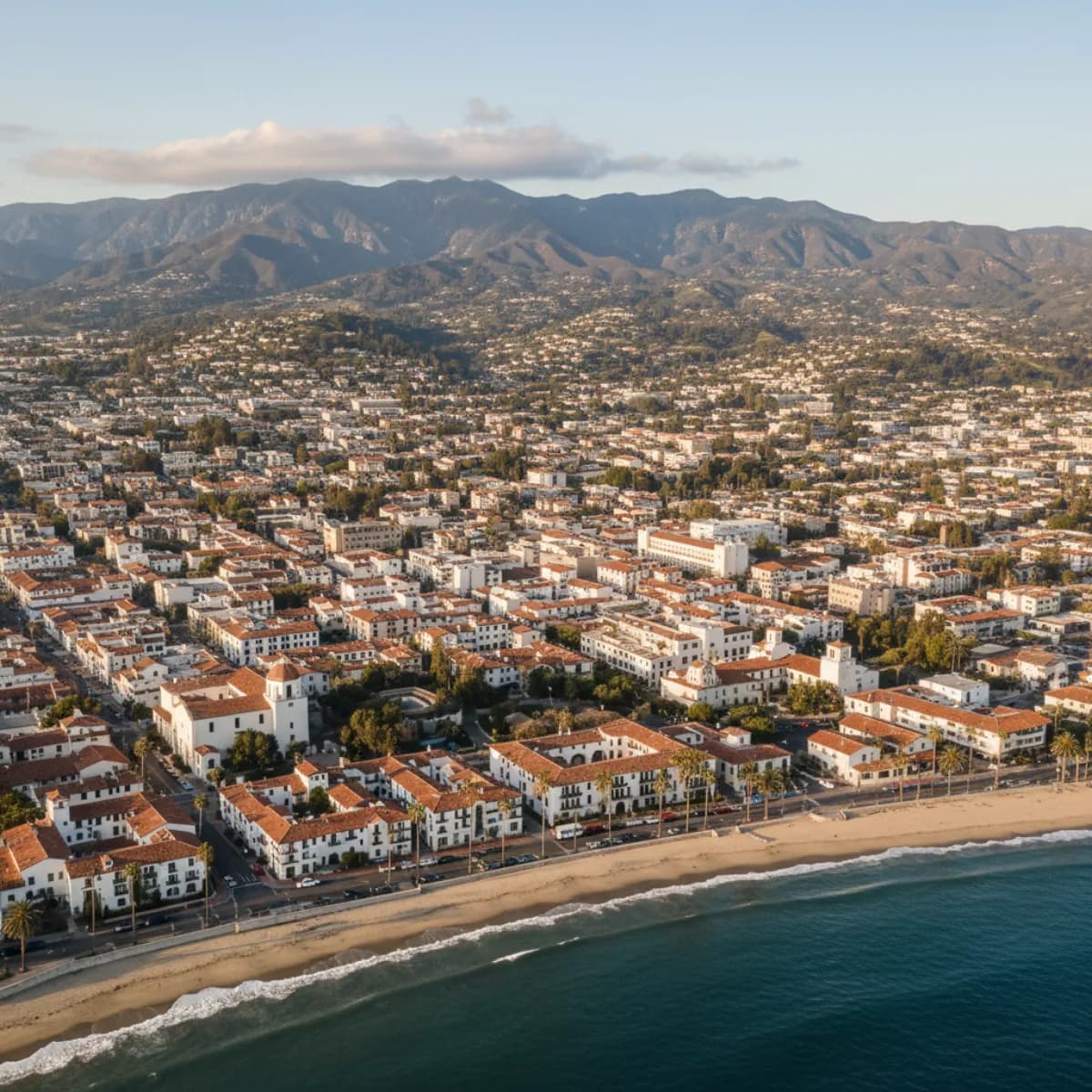
The American Riviera
Instant Roof Replacement Quotes in Santa Barbara, CA
Santa Barbara's iconic red clay tile rooftops define the American Riviera, but they face a dual threat: coastal salt air from the Pacific and wildfire risk from the Santa Ynez Mountains. Get instant quotes from pre-vetted California contractors who specialize in Historic Landmarks Commission-approved clay tile, mission barrel tile, and fire-rated roofing for Montecito estates, Hope Ranch properties, and Santa Barbara Riviera homes.
Free Quotes
no obligations ever
Contractor Bids
standardized scope comparison
Until You Choose
no spam, no lead resale
CA Contractors
licensed, insured, reviewed
Santa Barbara at a Glance
Population
Plus Montecito, Goleta, Carpinteria
Median Home Price
Luxury market, high-value roofs
Earthquake Rebuild
Spanish Colonial Revival mandated
Fire Rating Required
All Santa Barbara re-roofs
Threat Zone
Coastal salt + wildfire risk
Review Required
Historic Landmarks Commission
Why Santa Barbara Roofing Is Unlike Anywhere Else in California
Santa Barbara earned the nickname "The American Riviera" for its Mediterranean climate, oceanfront setting, and signature Spanish Colonial Revival architecture. After the devastating 1925 earthquake leveled much of the city, civic leaders made a bold decision: rebuild Santa Barbara in a unified Spanish Colonial Revival style. That decision established the red clay tile roof as the defining architectural element of the city, codified through design ordinances that remain in effect today.
This architectural mandate means Santa Barbara homeowners don't simply choose a roofing material based on cost or preference. In many zones, particularly the El Pueblo Viejo Landmark District that encompasses the historic core, red clay tile is required. The Historic Landmarks Commission (HLC) reviews exterior modifications to ensure they maintain Santa Barbara's cohesive Mediterranean character. This regulatory layer adds complexity, cost, and timeline to every roofing project, but it also preserves what makes Santa Barbara one of the most beautiful cities in America.
Beyond aesthetics, Santa Barbara roofs face a unique dual threat that few other cities in the nation contend with. The Pacific Ocean delivers constant salt-laden marine air that corrodes metal components and degrades certain roofing materials. Simultaneously, the Santa Ynez Mountains rising directly behind the city create severe wildfire corridors, as demonstrated catastrophically by the 2017 Thomas Fire and the January 2018 Montecito debris flow that killed 23 people and destroyed over 100 homes. A Santa Barbara roof must withstand both salt air corrosion from below and ember attack from above.
Roofing Challenges Unique to Santa Barbara
~ Coastal Salt Air Corrosion
Santa Barbara's stunning oceanfront location means every roof is under constant assault from salt-laden marine air. Prevailing onshore winds carry microscopic salt particles that corrode metal fasteners, degrade flashing, and accelerate wear on valley and ridge components. Properties closest to the coast, from the Mesa through Montecito's beachfront, experience the most aggressive exposure. Without marine-grade materials, metal components can fail in as little as 5-8 years.
- - Stainless steel or hot-dipped galvanized fasteners required
- - Marine-grade flashing and valley materials
- - Clay tile naturally resists salt corrosion
- - Annual salt deposit inspection recommended
! Wildfire & Debris Flow Risk
The 2017 Thomas Fire burned 281,893 acres across Santa Barbara and Ventura counties, making it one of the largest wildfires in California history at the time. Just weeks later, heavy rain on the burned hillsides triggered the Montecito debris flow on January 9, 2018. These events underscored Santa Barbara's extreme wildfire vulnerability. Mission Canyon, the foothills, upper Riviera, and Montecito's hillside estates sit in Very High Fire Hazard Severity Zones.
- - Class A fire-rated assemblies mandatory
- - Ember-resistant vents in VHFHSZ zones
- - Fire-resistant underlayment required
- - Non-combustible eave and fascia materials
# Historic Preservation Requirements
Santa Barbara's El Pueblo Viejo Landmark District is one of the largest historic districts in California, encompassing the downtown core and surrounding neighborhoods. The Historic Landmarks Commission (HLC) reviews all exterior modifications within the district, including roofing material selection, color, and profile. Even outside El Pueblo Viejo, the city's design review process strongly favors Spanish Colonial Revival aesthetics, making clay tile the default expectation for most residential re-roofing projects.
- - HLC approval required in El Pueblo Viejo
- - Red clay tile mandated in many zones
- - Material and color must match neighborhood
- - Review adds 4-8 weeks to project timeline
= Coastal Commission Jurisdiction
Properties within the California Coastal Zone, which extends roughly 1,000 yards inland from the mean high tide line in Santa Barbara, fall under California Coastal Commission jurisdiction. Significant roof modifications, material changes, or height alterations may require a Coastal Development Permit. This additional regulatory layer primarily affects beachfront properties on Padaro Lane, Fernald Point, portions of the Mesa, and properties along Cabrillo Boulevard. Processing can add 3-6 months to project timelines.
- - Coastal Development Permit may be required
- - Like-for-like replacements often exempt
- - Visual impact assessment for material changes
- - 3-6 month additional review timeline
Santa Barbara Roof Replacement Cost by Material
Santa Barbara is one of California's most expensive roofing markets. High luxury home values, specialized clay tile labor, Historic Landmarks Commission compliance costs, and limited contractor availability in a relatively small market all drive prices significantly above state averages. The requirement for marine-grade fasteners and coastal-rated materials adds further to the cost. Below are typical costs for a standard Santa Barbara home (2,000-3,000 sq ft roof).
Red Clay Tile
#1: Red Clay Tile (Mission & S-Tile)
The signature roofing material of Santa Barbara, required by ordinance in the El Pueblo Viejo Landmark District and strongly encouraged throughout the city. After the 1925 earthquake, the Spanish Colonial Revival rebuild established red clay tile as Santa Barbara's architectural identity. Mission barrel tile features the distinctive half-cylinder profile seen on the courthouse and Mission Santa Barbara, while S-tile offers a flatter profile suitable for a wider range of home styles. Clay tile provides exceptional longevity (75-100 years), natural Class A fire resistance, and inherent resistance to salt air corrosion. The weight of clay tile (900-1,200 lbs per square) requires adequate structural support, which should be verified during the estimation process.
Best For:
Most Santa Barbara homes (often required)
Lifespan:
75-100 years
Cost Range:
$45,000 - $120,000
Fire Rating:
Class A (non-combustible)
Concrete Tile
#2: Concrete Tile (Clay Look-Alike)
Concrete tile offers the Spanish Colonial Revival aesthetic at a lower price point than authentic clay. Modern concrete tile manufacturing produces profiles virtually indistinguishable from clay, including mission barrel, S-tile, and flat tile profiles. Concrete tile achieves Class A fire rating and resists salt air well, though it may require resealing every 10-15 years in heavy coastal exposure areas. It is heavier than clay (1,000-1,300 lbs per square), so structural verification is essential. Concrete tile is most commonly approved by the HLC as an alternative to clay in areas where budget constraints make authentic clay prohibitive.
Best For:
Budget-conscious clay tile alternative
Lifespan:
50-75 years
Cost Range:
$30,000 - $75,000
Fire Rating:
Class A (non-combustible)
Standing Seam Metal
#3: Standing Seam Metal (Marine-Grade)
Standing seam metal is gaining acceptance in Santa Barbara neighborhoods outside the historic district, particularly for contemporary and ranch-style homes in Goleta, parts of Carpinteria, and newer developments. In coastal Santa Barbara, marine-grade aluminum or Galvalume-coated steel is essential to withstand salt air exposure. Standard galvanized steel will corrode rapidly within 1 mile of the coast. Standing seam metal provides excellent fire resistance (Class A), solar panel compatibility via clamp-on mounting, and superior wind resistance for homes exposed to Santa Ana wind events and coastal gusts.
Best For:
Modern homes outside historic districts
Lifespan:
40-70 years
Cost Range:
$28,000 - $60,000
Coastal Note:
Marine-grade coatings required
Class A Shingles
#4: Class A Fire-Rated Architectural Shingles
Architectural shingles are the most affordable re-roofing option in Santa Barbara, though they are typically only approved in neighborhoods outside the El Pueblo Viejo district and areas without strict design review requirements. All shingles installed in Santa Barbara must be Class A fire-rated and meet Title 24 cool roof standards. In the coastal environment, premium-grade shingles with algae-resistant granules perform better than standard products. Shingles have the shortest lifespan of any common Santa Barbara material (20-30 years) and will need replacement 3-4 times within the life of a single clay tile roof, making long-term cost comparisons important.
Best For:
Non-historic areas, budget projects
Lifespan:
20-30 years
Cost Range:
$25,000 - $50,000
Requirement:
Must be Class A fire-rated & Title 24
Santa Barbara Average Roof Cost: Clay tile $45,000-$120,000. Concrete tile $30,000-$75,000. Metal $28,000-$60,000. Shingles $25,000-$50,000. Santa Barbara costs run 30-50% above the California state average due to luxury market pricing, historic compliance requirements, and marine-grade material mandates. Get your exact price with a free instant estimate.
The 1925 Earthquake and Santa Barbara's Red Tile Legacy
On June 29, 1925, a magnitude 6.8 earthquake struck Santa Barbara, destroying much of the downtown business district and damaging hundreds of homes. Rather than rebuild piecemeal, community leaders organized the Architectural Board of Review and established unified design guidelines requiring Spanish Colonial Revival architecture throughout the rebuilt downtown. This visionary decision transformed Santa Barbara into the cohesive Mediterranean-style city we see today.
The red clay tile roof became the centerpiece of this architectural identity. Nearly a century later, these design standards remain codified through the El Pueblo Viejo Landmark District and the Historic Landmarks Commission. For homeowners in these zones, the choice of roofing material is not optional: red clay tile, in mission barrel or S-tile profiles, is the standard. Even outside the formal historic district, neighborhood design review committees throughout Santa Barbara strongly favor clay tile to maintain the city's unified aesthetic.
This means finding a roofing contractor with genuine clay tile expertise is essential in Santa Barbara. The installation techniques for mission barrel tile and S-tile differ significantly from standard shingle or flat tile work. Improper installation of clay tile can lead to cracking, water intrusion at the barrel overlaps, and premature failure of the underlayment. Our pre-vetted contractors include specialists with documented experience in Santa Barbara's specific clay tile requirements and HLC compliance processes.
Santa Barbara Building & Design Requirements
Important Local Regulations
Historic Landmarks Commission (HLC)
Properties within the El Pueblo Viejo Landmark District must obtain HLC approval before any exterior modification, including roofing material, color, or profile changes. The HLC meets twice monthly and reviews applications for conformance with Spanish Colonial Revival design guidelines. Applications require detailed material specifications, color samples, and photographs. Allow 4-8 weeks for HLC review and approval. Our contractors can prepare HLC-compliant applications as part of the project scope.
City Building Permits
All roof replacements in Santa Barbara require building permits from the Community Development Department. Permit fees range from $300 to $700 depending on project scope. Processing takes 2-4 weeks for standard re-roofs. Properties in wildfire zones, the Coastal Zone, or the historic district may require additional review periods. Inspections are mandatory at multiple stages. The city's online permit portal allows application tracking.
California Coastal Commission
Properties within the Coastal Zone (approximately 1,000 yards from the mean high tide line) may require a Coastal Development Permit for significant roof modifications. Like-for-like material replacements typically qualify for an exemption. Material changes, height modifications, or changes visible from public viewpoints may trigger full Coastal Commission review, which can add 3-6 months to the project timeline.
Wildfire Zone Compliance (Chapter 7A)
Properties in Very High Fire Hazard Severity Zones must comply with California Building Code Chapter 7A, which mandates Class A fire-rated roof assemblies, ember-resistant vents, fire-resistant underlayment, and non-combustible eave materials. Fire zones in Santa Barbara include Mission Canyon, the foothills above State Street, the upper Riviera, and portions of Montecito bordering the Los Padres National Forest. Check your property's fire zone designation at the Santa Barbara County Fire Department.
California C-39 Contractor License
All roofing contractors in California must hold a valid C-39 Roofing Contractor License from the Contractors State License Board (CSLB). Verify any contractor at cslb.ca.gov. Licensed contractors must carry workers' compensation insurance and a minimum $25,000 contractor bond. In Santa Barbara, contractors should also have documented experience with clay tile installation and HLC compliance.
Santa Barbara Neighborhoods We Serve
From the oceanfront estates of Hope Ranch to the hillside villas of the Santa Barbara Riviera, our pre-vetted contractors serve every neighborhood in the Santa Barbara area. Each community has distinct roofing requirements based on its proximity to the coast, wildfire zone designation, historic district status, and architectural character.
Santa Barbara Riviera
- - Hillside homes with ocean views
- - Spanish Colonial Revival architecture
- - Upper Riviera in fire hazard zone
- - Clay tile mandated in most areas
- - Steep-slope access challenges
Montecito
- - Ultra-luxury estates ($3M-$30M+)
- - Thomas Fire & debris flow impact zone
- - Mix of clay tile and custom materials
- - County permitting (unincorporated)
- - Extensive fire mitigation requirements
Hope Ranch
- - Exclusive gated community
- - Oceanfront and equestrian estates
- - HOA architectural review required
- - Coastal salt air exposure
- - Large roof areas (4,000-10,000+ sq ft)
Mission Canyon
- - Very High Fire Hazard Severity Zone
- - Adjacent to Los Padres National Forest
- - Strict Chapter 7A compliance
- - Class A fire-rated materials only
- - Defensible space requirements
Goleta & UCSB Area
- - More material flexibility than SB proper
- - Mix of ranch homes and newer builds
- - Coastal wind and salt exposure
- - City of Goleta permitting
- - Title 24 cool roof requirements
Carpinteria
- - Beachside community south of SB
- - Heavy coastal salt exposure
- - Marine-grade materials essential
- - City of Carpinteria permitting
- - Mix of styles (less Spanish Colonial)
San Roque
- - Family-oriented neighborhood
- - Spanish and ranch-style homes
- - City design review applies
- - Moderate fire risk designation
- - Clay tile and shingle mix
The Mesa
- - Elevated coastal neighborhood
- - Direct ocean wind exposure
- - Coastal Commission jurisdiction
- - Salt air corrosion at maximum
- - Wind-rated installation critical
Insurance Considerations for Santa Barbara Homeowners
Dual Wildfire & Coastal Insurance Challenges
Santa Barbara homeowners face a unique insurance challenge found in few other California markets: dual exposure to both wildfire and coastal risks. The 2017 Thomas Fire and 2018 Montecito debris flow triggered a wave of insurer non-renewals throughout Santa Barbara County. Properties in foothill fire zones and coastal areas simultaneously face the highest premium increases and the greatest difficulty obtaining coverage.
Current Challenges
- - Major insurers non-renewing foothill zone policies
- - FAIR Plan enrollment surging in Santa Barbara County
- - Premiums in fire-prone areas up 40-150%
- - Coastal properties face separate wind/storm surcharges
- - Debris flow risk adds another coverage layer
How Your Roof Can Help
- - Class A clay tile roofing maximizes fire insurability
- - Ember-resistant vents may qualify for premium reductions
- - Marine-grade materials demonstrate coastal durability
- - Defensible space compliance improves policy options
- - Document all upgrades for insurance applications
Our pre-vetted contractors understand Santa Barbara's dual insurance requirements and recommend materials and installations that maximize both fire and coastal insurability while meeting Historic Landmarks Commission standards.
Coastal Salt Air + Wildfire: Santa Barbara's Dual Threat
Santa Barbara occupies a narrow coastal strip between the Pacific Ocean and the Santa Ynez Mountains. This geography creates a roofing challenge unique among California cities: materials must simultaneously resist salt air corrosion from the ocean and ember attack from wildfires that sweep down the mountain canyons. Few roofing materials handle both threats equally well, which is one reason clay tile has remained the dominant material for nearly a century.
Material Performance: Dual Threat Comparison
| Material | Salt Air Resistance | Fire Rating | Wind Resistance | HLC Approved |
|---|---|---|---|---|
| Clay Tile | Excellent | Class A | Good (with clips) | Yes (primary) |
| Concrete Tile | Good (seal needed) | Class A | Good (with clips) | Often approved |
| Marine Metal | Excellent (marine-grade) | Class A | Excellent | Case-by-case |
| Shingles | Fair | Class A (rated only) | Good (110 mph) | Limited zones |
Regardless of which material you select, certain dual-threat best practices apply to every Santa Barbara installation: use only stainless steel or hot-dipped galvanized fasteners (standard fasteners corrode in salt air); install fire-resistant synthetic underlayment rated for both fire and moisture; ensure all flashing and valley materials are marine-grade; and verify ember-resistant vents are installed if your property is in or near a fire hazard zone. These details may seem minor, but in Santa Barbara's demanding environment, they determine whether your roof lasts 15 years or 50.
Frequently Asked Questions About Santa Barbara Roofing
How much does a roof replacement cost in Santa Barbara, CA?
Roof replacement in Santa Barbara typically costs between $25,000 and $50,000 for architectural shingles on a standard home (2,000-3,000 sq ft roof). However, clay tile roofs, which are mandated in many Santa Barbara zones and dominate the city's Spanish Colonial Revival architecture, range from $45,000 to $120,000 depending on tile type (mission barrel vs. S-tile), home size, roof complexity, and whether structural reinforcement is needed to support the weight (900-1,200 lbs per square). Santa Barbara is one of California's highest-cost roofing markets. Luxury home pricing, Historic Landmarks Commission compliance requirements that add 4-8 weeks and engineering review costs, limited contractor availability in a market of only 92,000 residents, the specialized labor needed for authentic clay tile installation, and mandatory marine-grade fasteners and coastal-rated materials all drive prices 30-50% above the California state average. Montecito and Hope Ranch estates with large roof areas (4,000-10,000+ sq ft) can exceed $150,000 for premium clay tile installations.
Are red clay tile roofs required in Santa Barbara?
In many parts of Santa Barbara, yes. The requirement traces back to the city's 1925 earthquake rebuild, when civic leaders mandated Spanish Colonial Revival architecture to create a unified Mediterranean aesthetic. The El Pueblo Viejo Landmark District, which encompasses much of downtown Santa Barbara and the surrounding historic neighborhoods, requires exterior modifications to conform to Spanish Colonial Revival design guidelines, and red clay tile roofing is the primary standard. The Historic Landmarks Commission (HLC) reviews all exterior changes within the district. Even outside El Pueblo Viejo, the city's design review process strongly encourages clay tile. Neighborhood design committees in areas like the Riviera, San Roque, and the Mesa often require or strongly prefer clay tile to maintain community character. The two most common approved profiles are mission barrel tile (the half-cylinder shape seen on the Santa Barbara County Courthouse and Mission Santa Barbara) and S-tile (a flatter undulating profile). Concrete tile that closely mimics clay tile aesthetics is sometimes accepted as an alternative, particularly for budget-constrained projects, but requires specific HLC approval.
What permits are needed for roof replacement in Santa Barbara?
Santa Barbara has a multi-layered permitting environment that can involve up to three separate approval processes. First, all roof replacements require a standard building permit from the City of Santa Barbara Community Development Department, with fees ranging from $300 to $700 and processing times of 2-4 weeks. Second, properties within the El Pueblo Viejo Landmark District must obtain Historic Landmarks Commission (HLC) approval before any exterior work, including changes to roofing material, color, or profile. The HLC meets twice monthly, and applications require detailed material specifications, color samples, and photographs. Allow 4-8 weeks for HLC review. Third, properties within the California Coastal Zone (approximately 1,000 yards from the mean high tide line) may need a Coastal Development Permit from the California Coastal Commission, which can add 3-6 months to the timeline. Like-for-like material replacements in the Coastal Zone typically qualify for an exemption. Properties in the unincorporated areas of Santa Barbara County (including parts of Montecito) follow separate Santa Barbara County permitting processes rather than city permits.
How does coastal salt air affect Santa Barbara roofs?
Santa Barbara's oceanfront location means prevailing onshore winds carry a constant stream of microscopic salt particles across the city. This marine environment accelerates corrosion of metal fasteners, degrades flashing and valley materials, and shortens the lifespan of certain roofing products. Standard galvanized nails and screws can begin showing corrosion within 3-5 years in properties within 1 mile of the coast. Hot-dipped galvanized or stainless steel fasteners are essential for all Santa Barbara installations. Standing seam metal roofs require marine-grade aluminum or Galvalume coatings; standard steel will fail rapidly. Clay tile is naturally resistant to salt air corrosion, which is one of the practical reasons (beyond aesthetics and regulation) it has remained Santa Barbara's preferred material. Even clay tile roofs, however, rely on metal flashings, valley materials, and fasteners that must be marine-grade. Annual inspections focused on metal component condition are recommended for all coastal properties.
What are the wildfire roofing requirements in Santa Barbara?
Santa Barbara has extensive wildfire risk due to its geography: the city sits between the Pacific Ocean and the steeply rising Santa Ynez Mountains, which are covered in highly flammable chaparral. The 2017 Thomas Fire demonstrated this vulnerability catastrophically. Properties in Very High Fire Hazard Severity Zones (VHFHSZ), which include Mission Canyon, the upper foothills above State Street, the upper Riviera, and portions of Montecito bordering the Los Padres National Forest, must comply with California Building Code Chapter 7A. Requirements include Class A fire-rated roof assemblies (clay tile naturally qualifies), ember-resistant vents that prevent burning embers from entering the attic, fire-resistant synthetic underlayment beneath the roofing material, and non-combustible eave, fascia, and soffit materials. Even outside formal VHFHSZ zones, all re-roofs in Santa Barbara require a minimum Class A fire-rated assembly. The January 2018 Montecito debris flow, triggered by rain on Thomas Fire burn scars, added another dimension: roof drainage systems in the foothill areas must handle extreme water flow volumes.
What roofing materials work best in Santa Barbara's climate?
Clay tile is the clear top choice for Santa Barbara, offering an unmatched combination of benefits for the local environment. Its 75-100 year lifespan means fewer replacements over the life of a home. Natural Class A fire resistance protects against wildfire ember attack without requiring additional fire-rated treatments. Inherent resistance to salt air corrosion eliminates the coastal degradation issues that affect metal and asphalt products. The thermal mass of clay tile helps moderate interior temperatures in Santa Barbara's warm Mediterranean climate. And of course, clay tile is the only material that fully satisfies the city's Spanish Colonial Revival design requirements. Mission barrel tile (the traditional half-cylinder profile) and S-tile (a flatter undulating profile) are the two most common forms. For homes outside historic districts, concrete tile offers similar aesthetics at a lower price point with 50-75 year longevity. Standing seam metal with marine-grade coatings works well for contemporary designs but requires case-by-case HLC approval in design review areas. All materials must meet Title 24 cool roof energy standards.
How has the Thomas Fire affected Santa Barbara roofing insurance?
The 2017 Thomas Fire and the catastrophic January 2018 Montecito debris flow that followed fundamentally changed the insurance landscape in Santa Barbara County. The Thomas Fire burned 281,893 acres and destroyed over 1,000 structures. The Montecito debris flow killed 23 people and destroyed over 100 homes. These back-to-back disasters triggered a wave of insurer non-renewals throughout the county. Multiple major insurance carriers have reduced coverage or stopped writing new policies in fire-prone foothill and canyon areas. Premiums in high-risk zones have increased 40-150% where private coverage remains available. California's FAIR Plan, the state-backed insurer of last resort, serves as the primary option for many foothill and canyon properties. Santa Barbara homeowners face the compounding challenge of dual wildfire and coastal risk, making comprehensive roofing upgrades essential for insurance eligibility. Installing Class A fire-rated clay tile, ember-resistant vents, fire-resistant underlayment, and maintaining defensible space can materially improve insurability and potentially reduce premiums.
Do I need Coastal Commission approval for my Santa Barbara roof?
If your property is located within the California Coastal Zone, which extends approximately 1,000 yards inland from the mean high tide line in Santa Barbara, you may need a Coastal Development Permit (CDP) from the California Coastal Commission for significant roof modifications. Like-for-like replacements, where you are replacing your existing material with the same type, color, and profile, typically qualify for a categorical exemption from the CDP requirement. However, changes in material type (e.g., switching from shingles to tile), changes in color or profile that alter the visual appearance from public viewpoints, or changes that increase roof height may trigger full Coastal Commission review. Beachfront properties on Padaro Lane, Fernald Point, and portions of the Mesa are the most commonly affected. The Coastal Commission review process focuses on visual impact, public coastal view preservation, and environmental compatibility. If a full CDP is required, the process can add 3-6 months to your project timeline. Our contractors can help determine whether your specific project will require Coastal Commission review and assist with the application process if needed.
California Roofing Resources
California State Overview
All California roofing resources and city pages
Coastal Salt Air Roofing Guide
Marine-grade materials and coastal protection strategies
WUI Zone Roofing Requirements
Chapter 7A compliance for wildfire-urban interface zones
Wildfire-Resistant Roofing in California
Fire zone requirements and material recommendations
California Roof Replacement Cost Guide
Detailed pricing for all CA regions and materials
California Roofing Building Codes
Title 24, fire codes, and local requirements
Historic Home Roof Replacement Guide
Navigating landmark commissions and preservation requirements
California Contractor Licensing
C-39 license requirements and CSLB verification
Get Your Santa Barbara Roof Quote in Minutes
Enter your address to compare instant quotes from pre-vetted California contractors who specialize in clay tile, Historic Landmarks Commission compliance, wildfire protection, and coastal salt air resistance