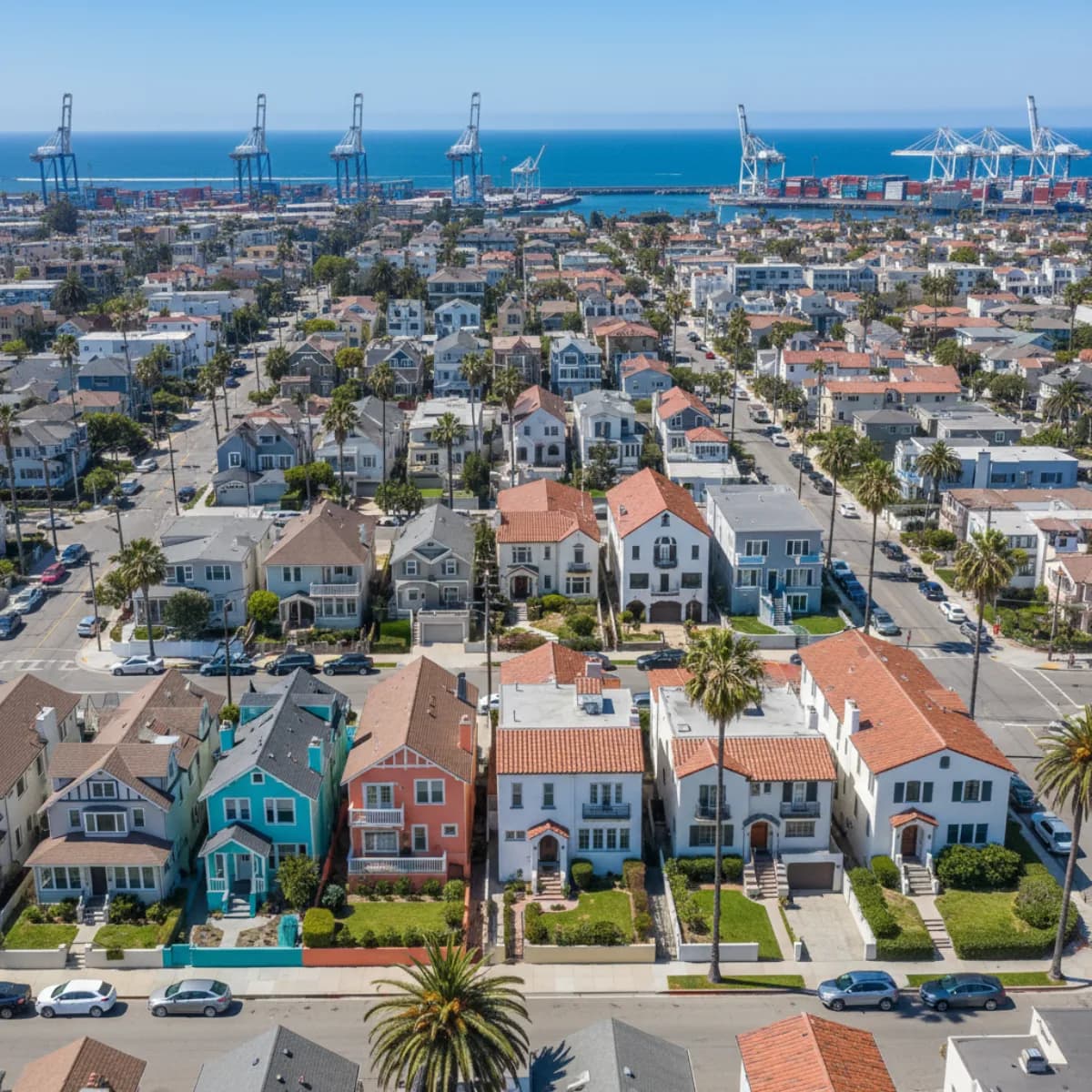
Southern California's Coastal Harbor City
Instant Roof Replacement Quotes in Long Beach, CA
Over 460,000 residents across Long Beach need roofing that withstands Pacific salt air corrosion, coastal winds, and earthquake risk along the Newport-Inglewood fault. Get instant quotes from pre-vetted California contractors for Belmont Shore beach homes, Naples Island waterfront properties, Bixby Knolls Craftsmans, and homes across every Long Beach neighborhood.
Free Quotes
no obligations ever
Contractor Bids
standardized scope comparison
Until You Choose
no spam, no lead resale
CA Contractors
licensed, insured, reviewed
Long Beach at a Glance
Population
7th largest city in California
Coastline
Extensive salt air exposure
1933 Earthquake
Newport-Inglewood fault
Permit Cost
City Development Services
Sunny Days / Year
Year-round UV exposure
Cool Roof Required
California energy standards
Roofing Challenges Unique to Long Beach
Long Beach occupies a unique position among Southern California cities. As a major coastal harbor city with 5.5 miles of Pacific coastline, home to the busiest port complex in the Western Hemisphere, and sitting directly atop the Newport-Inglewood fault, Long Beach roofs face a combination of salt air corrosion, seismic risk, coastal wind uplift, and intense UV exposure that demands specialized materials and installation techniques. The city's diverse architectural heritage -- from 1920s Craftsman bungalows in Cal Heights to Spanish Colonial Revival in Bluff Park to mid-century modern along the coast -- adds further complexity to material and style selection.
~ Salt Air Corrosion & Marine Exposure
Long Beach's 5.5-mile coastline and harbor proximity subject roofs to constant salt-laden marine air. This accelerates corrosion of metal components that most inland homeowners never worry about: flashing, fasteners, drip edges, ridge vents, pipe boots, and even metal underlayment clips. Standard galvanized steel components can begin corroding in as little as 5-7 years within 1 mile of the coast, compared to 15-20 years inland. Homes in Belmont Shore, Naples Island, the Peninsula, and Alamitos Beach are most severely affected.
- - Aluminum or stainless steel fasteners required near coast
- - Marine-grade flashing and drip edges essential
- - Salt deposits trap moisture, accelerating decay
- - Annual coastal roof inspections recommended
! Earthquake Risk & Seismic Codes
The Newport-Inglewood fault runs directly through Long Beach and produced the devastating 1933 earthquake (6.4 magnitude) that killed 120 people and destroyed thousands of buildings. This event literally changed California building codes. Today, seismic considerations directly impact roofing choices: heavy clay tile roofs increase seismic load on structures, requiring reinforced framing, upgraded connections, and sometimes structural engineering review. Older homes built before modern seismic codes are particularly vulnerable.
- - Lightweight materials reduce seismic risk
- - Roof-to-wall connections must meet seismic code
- - Pre-1933 homes may need structural evaluation
- - Tile requires reinforced framing for seismic loads
~ Coastal Wind Uplift
Long Beach experiences regular onshore Pacific winds that funnel through the harbor and along the coastline, plus occasional hot, dry Santa Ana winds from the east that can reach 60-80 mph. This dual wind exposure -- cool marine air from the west and Santa Ana gusts from the east -- creates unique uplift challenges, particularly for homes on Signal Hill (the highest point in the area at 365 feet), along the Peninsula, and in exposed coastal neighborhoods. Wind-driven rain during Pacific storms can penetrate poorly sealed roof edges.
- - High-wind rated shingles (130+ mph) recommended
- - Six-nail patterns for enhanced wind resistance
- - Tile clips and mechanical fastening for tile roofs
- - Sealed roof edges to prevent wind-driven rain entry
= UV Exposure & Title 24 Compliance
With 280+ sunny days per year and strong Southern California UV radiation, Long Beach roofs endure relentless solar degradation. Roof surface temperatures can reach 150-170 degrees F during summer months. California's Title 24 Building Energy Efficiency Standards mandate cool roofing materials for Long Beach's climate zone, requiring minimum Solar Reflectance Index (SRI) values that limit solar heat gain. This means standard dark-colored shingles are not code-compliant -- only cool-rated products with reflective granules pass inspection.
- - Title 24 cool roof compliance mandatory
- - Minimum SRI values for steep-slope roofing
- - UV-resistant materials extend roof lifespan
- - Reflective coatings reduce cooling costs 10-25%
Port of Long Beach & Industrial Heritage
Long Beach is home to the Port of Long Beach, the second-busiest container port in the United States and part of the largest port complex in the Western Hemisphere. The city also has a rich oil industry heritage, with active oil derricks still visible across the landscape, including the artificial THUMS islands offshore. This industrial character creates additional roofing considerations for nearby residential areas.
Port-Adjacent Neighborhoods
Homes in Wrigley, West Long Beach, and neighborhoods near the port complex may experience higher concentrations of airborne particulates that can settle on and degrade roofing materials. Diesel exhaust residue, salt air, and industrial fallout combine to create a uniquely harsh environment. These properties benefit from smooth-surface materials that are easier to clean and resist particulate buildup, such as standing seam metal or concrete tile with sealed surfaces.
Oil Heritage Areas
Long Beach's oil industry heritage means some neighborhoods, particularly around Signal Hill and parts of North Long Beach, were built on or near former oil extraction sites. While this primarily affects foundations, soil subsidence from historical oil extraction can create uneven roof planes over time. Regular roof inspections in these areas should include checks for settling-related stress on the roof structure, flashing separation, and drainage pattern changes.
Long Beach Roof Replacement Cost by Material
Long Beach roofing costs reflect Southern California's premium labor market plus the added expense of corrosion-resistant materials required for coastal installations. Marine-grade fasteners, aluminum flashing, stainless steel components, and specialized underlayment add 10-20% to material costs compared to inland installations. Title 24 cool roof compliance and city permitting ($250-$600) are also factored into total project costs.
Aluminum Standing Seam
#1: Aluminum Standing Seam Metal
The premier choice for coastal Long Beach homes. Unlike steel, aluminum is naturally immune to salt air corrosion -- it forms a protective oxide layer that actually strengthens over time in marine environments. Standing seam profiles with concealed fasteners eliminate the most common coastal failure point (exposed fastener corrosion). With cool-roof coatings, aluminum standing seam reflects up to 70% of solar energy, easily meeting Title 24 requirements while reducing cooling costs. Particularly popular in Belmont Shore, Naples, and the Peninsula where salt exposure is highest.
Best For:
Coastal homes, salt air zones
Lifespan:
40-60 years
Cost Range:
$22,000 - $50,000
Corrosion:
Naturally immune to salt air
Concrete & Clay Tile
#2: Concrete & Clay Tile
Deeply rooted in Long Beach's architectural identity. Spanish Colonial Revival homes in Bluff Park, Craftsman-era homes with Mission-style tile in Cal Heights, and Mediterranean estates across the city feature clay and concrete tile as their signature roofing material. Tile is naturally resistant to salt air corrosion (no metal content to corrode), provides excellent fire resistance (Class A), and offers thermal mass that moderates interior temperatures. However, tile is heavy -- a critical consideration given Long Beach's earthquake risk. Structural evaluation may be required for older homes.
Best For:
Spanish, Craftsman, Mediterranean styles
Lifespan:
50-75 years
Cost Range:
$30,000 - $65,000
Seismic Note:
May need structural reinforcement
Composite Shingles
#3: Cool-Rated Composite Shingles
The most affordable option for Long Beach homeowners. Modern composite and architectural shingles with algae-resistant granules and cool-roof ratings meet Title 24 requirements while resisting the moss and algae growth that marine moisture promotes. Lightweight construction is a seismic advantage over tile. For coastal installations, pair with stainless steel or aluminum fasteners and marine-grade flashing -- the shingles themselves resist salt air, but standard galvanized accessories will corrode. Popular in Bixby Knolls, Los Cerritos, and Wrigley where architectural styles suit shingle profiles.
Best For:
Budget-conscious, Ranch and Colonial styles
Lifespan:
20-30 years (coastal climate)
Cost Range:
$14,000 - $32,000
Requirement:
Must be Title 24 cool-rated
TPO Membrane
#4: TPO & Modified Bitumen (Flat Roofs)
Essential for Long Beach's many flat-roofed mid-century modern homes, commercial buildings, and contemporary designs along the coast. White TPO membrane is inherently reflective (exceeding Title 24 SRI requirements easily), resistant to salt air degradation, and provides seamless waterproofing against wind-driven rain. Modified bitumen offers excellent waterproofing with a multi-layer approach suited to Long Beach's rare but intense Pacific storm events. Common along Ocean Boulevard, in downtown Long Beach mixed-use buildings, and throughout the Eastside commercial corridor.
Best For:
Flat and low-slope roofs
Lifespan:
20-30 years
Cost Range:
$10,000 - $25,000
Compliance:
Exceeds Title 24 SRI easily
Long Beach Average Roof Cost: Composite shingles $14,000-$32,000. Concrete tile $30,000-$65,000. Aluminum standing seam $22,000-$50,000. Flat/TPO $10,000-$25,000. Coastal properties within 1 mile of the shore should add 10-20% for marine-grade components. Get your exact price with a free instant estimate.
Long Beach's Historic Architecture & Roofing Considerations
Long Beach is home to one of Southern California's richest collections of early 20th-century residential architecture. From the Craftsman bungalows of Cal Heights to the Spanish Colonial Revival homes of Bluff Park to the Art Deco gems downtown, the city's architectural diversity creates both challenges and opportunities for roofing projects. Understanding the relationship between your home's style and appropriate roofing materials is critical, especially in designated historic districts where material choices may be regulated.
Craftsman & California Bungalow (1900s-1930s)
Found extensively in Cal Heights, Bixby Knolls, and Belmont Heights, these homes originally featured wood shingles or composition roofing with low-pitched gable or hip roofs. Modern replacements typically use architectural shingles that mimic the dimensional look of wood shakes while meeting fire and Title 24 codes. Some homeowners in historic districts opt for synthetic cedar shake for authenticity. The low-pitch roofs common to Craftsman design require careful water management given Long Beach's occasional heavy winter rains.
Spanish Colonial Revival (1920s-1940s)
Bluff Park, Naples, and parts of Belmont Shore feature stunning Spanish Colonial Revival homes with clay barrel tile roofs, stucco walls, and courtyard layouts. Maintaining the authentic clay tile is essential for these homes' character and value. When replacement is needed, S-tile (concrete or clay) in traditional terracotta tones is the standard. In the Bluff Park Historic District, the Historic Preservation Commission may require specific tile profiles and colors to maintain neighborhood character.
Long Beach Building Requirements
Important Local Regulations
City of Long Beach Permits
All roof replacements within Long Beach require permits through the Long Beach Development Services Department. Permit fees range from $250-$600 depending on project scope. Applications can be submitted online through the city's e-permitting portal. Inspections are mandatory at multiple stages including progress and final. Processing typically takes 1-3 weeks for standard residential re-roofs.
Title 24 Energy Standards
California's Title 24 Building Energy Efficiency Standards require cool roofing materials in Long Beach's climate zone. All steep-slope roofing must meet minimum Solar Reflectance Index (SRI) values. Low-slope (flat) roofs have even stricter requirements. Standard dark shingles without cool-rated granules will not pass inspection in Long Beach.
Historic Districts
The Bluff Park Historic District and other designated historic areas require Historic Preservation Commission review for exterior changes, including roofing material and color selections. Property owners must submit applications showing proposed materials, colors, and profiles. The commission ensures changes are compatible with the historic character of the neighborhood. Allow additional time (2-4 weeks) for historic review beyond standard permitting.
Signal Hill (Separate City)
Signal Hill is a separate incorporated city entirely surrounded by Long Beach. Properties in Signal Hill follow Signal Hill's own permitting process through the Signal Hill Community Development Department, not Long Beach Development Services. Permit requirements are similar but fees and processing times may differ. Confirm your property's jurisdiction before applying.
California Contractor Licensing
California requires all roofing contractors to hold a valid C-39 Roofing Contractor License from the Contractors State License Board (CSLB). Verify any contractor at cslb.ca.gov. Licensed contractors must carry workers' compensation insurance and a minimum $25,000 contractor bond. All RoofVista contractors are pre-verified for valid CSLB licensing.
Long Beach Neighborhoods We Serve
From the waterfront estates of Naples Island to the hilltop views of Signal Hill and the tree-lined streets of Bixby Knolls, our pre-vetted contractors serve every corner of Long Beach. Each neighborhood has distinct roofing needs based on its proximity to the coast, architectural style, historic status, and exposure to wind and industrial elements.
Belmont Shore & Belmont Heights
- - Heavy salt air exposure along 2nd Street
- - Beach cottages and Craftsman bungalows
- - Corrosion-resistant materials essential
- - Mix of residential and commercial flat roofs
- - Wind uplift from beach exposure
Naples Island
- - Surrounded by water on all sides
- - Maximum salt air corrosion risk
- - Canal-front waterfront homes
- - FEMA flood zone considerations
- - Mediterranean and coastal architecture
Bluff Park
- - Historic district with preservation rules
- - Spanish Colonial Revival homes
- - Ocean-facing bluff exposure
- - Historic Commission approval required
- - Clay tile most common material
Bixby Knolls & Los Cerritos
- - Tree-lined streets, larger lots
- - Craftsman and Ranch-style homes
- - Less coastal exposure than beach areas
- - Mature tree canopy affects roof drainage
- - Mix of shingle and tile roofs
Cal Heights (California Heights)
- - Dense Craftsman bungalow neighborhood
- - 1920s-1930s construction
- - Low-pitch roofs require careful drainage
- - Original wood shingle replacements
- - Character preservation important to residents
Signal Hill
- - Separate incorporated city
- - Highest elevation in area (365 ft)
- - Increased wind exposure at elevation
- - Oil heritage and soil subsidence areas
- - Own permitting separate from Long Beach
Wrigley & West Long Beach
- - Port-adjacent industrial exposure
- - Airborne particulate consideration
- - Mix of bungalows and post-war homes
- - Affordable housing stock
- - Smooth-surface materials preferred
Peninsula & Alamitos Beach
- - Direct oceanfront exposure
- - Severe salt air and wind conditions
- - FEMA flood zone properties
- - Beach cottages and condos
- - Marine-grade materials mandatory
North Long Beach
- - Farthest from coast, less salt exposure
- - Post-war Ranch and tract homes
- - Standard material options viable
- - More affordable roofing costs
- - Growing revitalization area
Insurance Considerations for Long Beach Homeowners
Coastal & Flood Zone Insurance Challenges
Long Beach homeowners face a complex insurance landscape shaped by coastal exposure, earthquake risk, and FEMA flood zone designations. While Long Beach is not in a wildfire zone like some LA neighborhoods, its coastal and flood risks create their own insurance complications. California's broader insurance market challenges -- with major carriers reducing coverage statewide -- add further pressure.
Key Insurance Factors
- - FEMA flood zones along Alamitos Bay, Naples canals, and low-lying coastal areas
- - Separate flood insurance required in designated zones
- - Coastal wind exposure adds 15-30% to premiums
- - Earthquake insurance is separate and optional (but recommended)
- - California FAIR Plan available as insurer of last resort
How Your Roof Can Help
- - Wind-rated roofing installations can reduce wind surcharges
- - Corrosion-resistant materials demonstrate reduced maintenance risk
- - Impact-resistant shingles may qualify for premium discounts
- - Newer roofs (under 10 years) are preferred by insurers
- - Document all marine-grade upgrades for insurance applications
Our pre-vetted contractors understand Long Beach's coastal insurance requirements and can recommend materials and installations that maximize your insurability and may reduce premiums.
Frequently Asked Questions About Long Beach Roofing
How much does a roof replacement cost in Long Beach, CA?
Roof replacement in Long Beach typically costs between $14,000 and $32,000 for cool-rated architectural shingles on a standard home. Concrete tile, found on many of Long Beach's Spanish Colonial Revival and Craftsman-style homes, ranges from $30,000 to $65,000 depending on tile type, home size, and roof complexity. Aluminum standing seam metal -- the top choice for coastal corrosion resistance -- runs $22,000-$50,000. Long Beach costs are influenced by Southern California labor premiums, the added expense of marine-grade fasteners and corrosion-resistant accessories, city permitting through Development Services ($250-$600), and mandatory Title 24 energy code compliance. Homes within 1 mile of the coastline, including Belmont Shore, Naples Island, and the Peninsula, should budget an additional 10-20% for stainless steel fasteners, aluminum flashing, marine-grade pipe boots, and corrosion-resistant underlayment clips. Homes on Signal Hill may also pay more due to access challenges on steep hillside lots.
How does salt air affect roofs in Long Beach?
Long Beach's location along the Pacific Coast subjects roofs to continuous salt-laden marine air that creates unique corrosion challenges. The primary concern is metal component degradation: standard galvanized steel flashing, fasteners, drip edges, ridge vents, and pipe boots can begin corroding in as little as 5-7 years within 1 mile of the shoreline, compared to 15-20 years for identical components on inland homes. Homes in the most exposed neighborhoods -- Naples Island (surrounded by water), Belmont Shore, the Peninsula, and Alamitos Beach -- experience the highest salt concentrations. Beyond metal corrosion, salt deposits trap moisture against roofing materials, promoting algae and moss growth that can lift shingle edges and compromise waterproofing. Salt crystals can also work into asphalt shingle granule surfaces, accelerating UV degradation. For a comprehensive guide on protecting coastal roofs, see our California Coastal Salt Air Roofing Guide.
What are the best roofing materials for Long Beach's coastal climate?
The ideal roofing material for Long Beach must resist three simultaneous challenges: salt air corrosion, intense UV degradation, and coastal wind uplift. Aluminum standing seam metal ranks first for coastal durability -- it is naturally immune to salt corrosion, reflects solar heat with cool-roof coatings, and its standing seam profile provides superior wind resistance. Concrete and clay tile (50-75 years) offer excellent natural salt resistance since they contain no metal to corrode, Class A fire ratings, and thermal mass benefits, but their weight is a seismic concern for older Long Beach homes near the Newport-Inglewood fault. Cool-rated composite shingles are the most affordable option (20-30 years in coastal climate) and resist salt air well, though their metal fasteners and flashing must be upgraded to marine-grade stainless steel or aluminum. TPO membrane is the clear choice for flat roofs, offering salt resistance, UV stability, and easy Title 24 compliance. Regardless of primary material chosen, every coastal Long Beach installation should use stainless steel or aluminum fasteners, marine-grade flashing, and corrosion-resistant vent boots.
What are the earthquake considerations for Long Beach roofing?
Long Beach has a deeply personal relationship with earthquake risk. The 1933 Long Beach earthquake (6.4 magnitude on the Newport-Inglewood fault) killed 120 people and destroyed or severely damaged thousands of buildings, fundamentally changing California building codes. The Newport-Inglewood fault runs directly through the city, and the threat of future seismic events directly impacts roofing decisions. Heavy roofing materials like clay tile (900-1,200 lbs per square) significantly increase the seismic load on structures, requiring reinforced roof framing, upgraded roof-to-wall connections, and sometimes structural engineering review -- particularly for homes built before modern seismic codes. Lightweight alternatives like aluminum standing seam metal (50-150 lbs per square) or composite shingles (200-350 lbs per square) dramatically reduce seismic risk. If you prefer the aesthetic of tile but are concerned about weight, synthetic tile products offer tile appearance at a fraction of the weight. All roof-to-wall connections in Long Beach must meet current California seismic code requirements regardless of material choice.
What permits are required for roof replacement in Long Beach?
All roof replacements within the City of Long Beach require building permits through the Long Beach Development Services Department. Permit fees typically range from $250-$600 based on project scope and valuation. Applications can be submitted through the city's online e-permitting portal. Standard residential re-roof permits are processed in 1-3 weeks, with inspections required at progress and final completion stages. Properties in the Bluff Park Historic District or other designated historic areas face additional requirements: the Historic Preservation Commission must review and approve exterior changes including roofing material type, color, and profile. This adds 2-4 weeks to the timeline and requires detailed material specifications. Important note: Signal Hill, though entirely surrounded by Long Beach, is a separate incorporated city with its own permitting through the Signal Hill Community Development Department. Verify your property's jurisdiction before applying for permits. All contractors must hold a valid California C-39 Roofing Contractor license verifiable through the CSLB.
How do coastal wind uplift ratings affect Long Beach roofing?
Long Beach's dual wind exposure -- regular onshore Pacific breezes from the west and occasional Santa Ana wind events from the east reaching 60-80 mph -- creates significant uplift challenges for roofing installations. Homes along the shoreline, on the Peninsula, and at elevated positions like Signal Hill (365 feet above sea level) face the highest wind exposure. For shingle roofs, high-wind rated products (130+ mph rating) with six-nail patterns (rather than standard four-nail) and starter strip adhesion along all roof edges are essential. Tile roofs require mechanical fastening with wire ties or clips and mortar or foam adhesive -- gravity-set tile will fail in Santa Ana events. Standing seam metal panels need closer fastener spacing (12-inch intervals rather than standard 24-inch) along coastal edges and at ridge lines. All roof edge details, including drip edges, rakes, and fascia caps, should be sealed and mechanically fastened to resist wind-driven rain infiltration that is common during Pacific storm events.
Are there insurance surcharges for coastal Long Beach properties?
Yes, Long Beach properties near the coast face layered insurance considerations. Properties in FEMA-designated flood zones -- common along Alamitos Bay, the Naples canal system, the Peninsula, and other low-lying coastal areas -- are required to carry separate flood insurance, which can add $800-$2,500+ annually to insurance costs. Standard homeowner's insurance policies do not cover flood damage. Beyond flood zones, coastal wind exposure can increase standard homeowner's premiums by 15-30% compared to inland properties. California's broader insurance market challenges, with State Farm, Allstate, and other major carriers reducing coverage statewide, have made policies harder to obtain in some coastal areas. The California FAIR Plan remains available as an insurer of last resort. Homeowners can improve their insurability and potentially reduce premiums by installing wind-rated roofing materials, upgrading to corrosion-resistant components, choosing impact-resistant shingles, and documenting all coastal-grade upgrades. A new roof under 10 years old is strongly preferred by most insurers when underwriting coastal California properties.
How long does a roof replacement take in Long Beach?
Most Long Beach roof replacements take 3-5 days for cool-rated architectural shingles, 5-8 days for concrete or clay tile installations, and 4-7 days for aluminum standing seam metal. Long Beach's year-round mild weather with over 280 sunny days per year makes scheduling highly reliable -- a significant advantage over weather-dependent regions. However, the "June Gloom" marine layer common from May through July can delay early morning starts by 1-2 hours as contractors wait for moisture to evaporate from roof surfaces. Properties in the Bluff Park Historic District or other designated areas may have extended timelines due to preservation review requirements (2-4 additional weeks for approval). Coastal properties requiring specialized corrosion-resistant materials like marine-grade aluminum flashing or stainless steel fasteners may need additional lead time for material procurement. Signal Hill properties with steep hillside access may require extra staging time. The city permitting process adds 1-3 weeks before work can begin, so plan for 3-6 weeks total from contract to completion.
California Roofing Resources
California State Overview
All California roofing resources and city pages
California Coastal Salt Air Roofing Guide
Protecting your roof from marine corrosion
California Roof Replacement Cost Guide
Detailed pricing for all CA regions and materials
Best Roofing Materials for California
Climate-specific material recommendations
California Roofing Building Codes
Title 24, fire codes, and local requirements
California Contractor Licensing
C-39 license requirements and CSLB verification
Get Your Long Beach Roof Quote in Minutes
Enter your address to compare instant quotes from pre-vetted California contractors who specialize in coastal corrosion resistance, earthquake-resilient installations, and Long Beach's unique marine climate