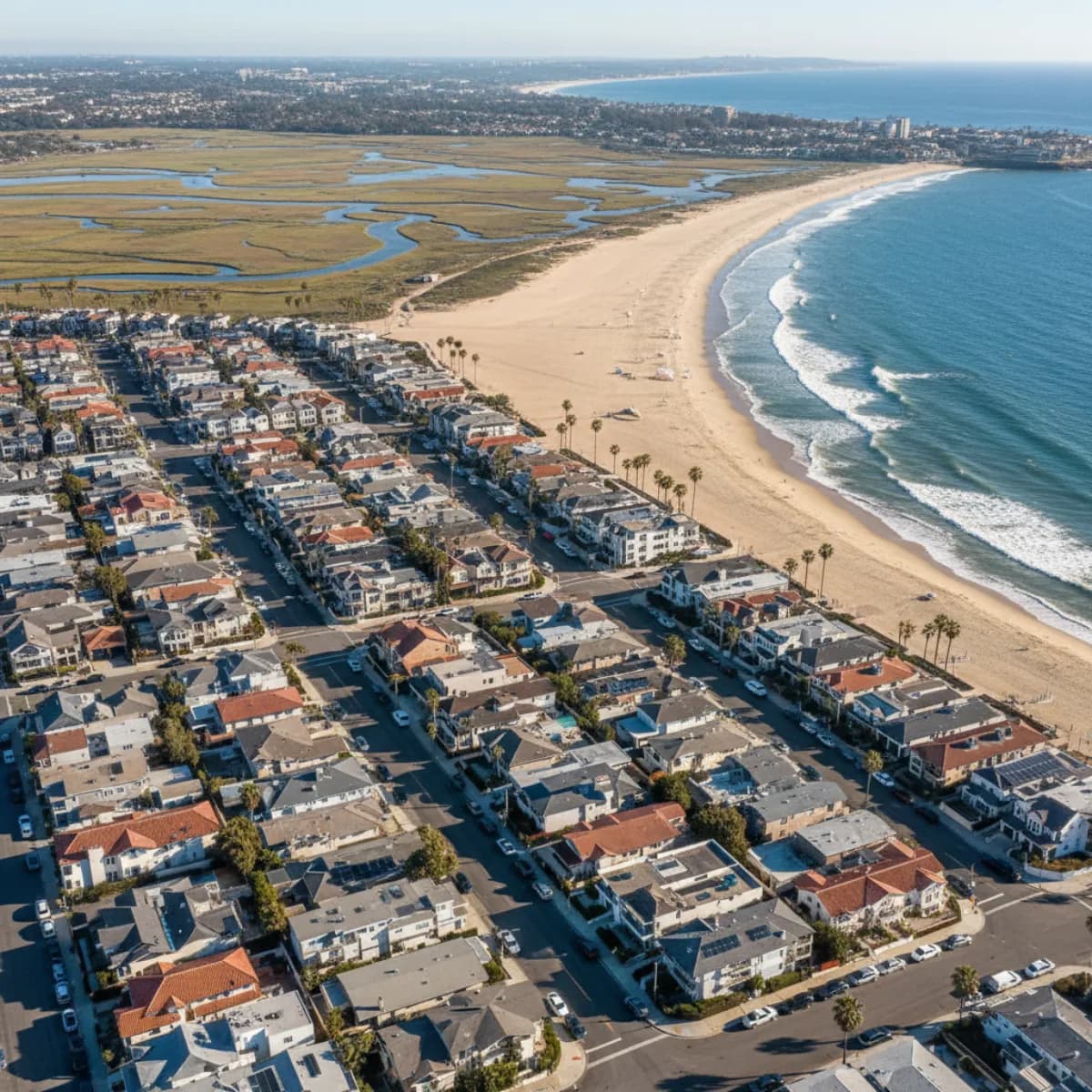
Surf City USA - Coastal Roofing Specialists
Instant Roof Replacement Quotes in Huntington Beach, CA
With 10 miles of coastline and relentless salt air, Huntington Beach roofs face corrosion challenges most inland cities never encounter. Get instant quotes from pre-vetted California contractors who specialize in marine-grade materials, stainless steel fasteners, and corrosion-resistant installations for Huntington Harbour waterfront homes, Bolsa Chica coastal properties, and neighborhoods throughout Surf City USA.
Free Quotes
no obligations ever
Contractor Bids
standardized scope comparison
Until You Choose
no spam, no lead resale
CA Contractors
licensed, insured, reviewed
Huntington Beach at a Glance
Population
Largest beach city in OC
Coastline
Continuous ocean exposure
Sunny Days / Year
Extreme UV exposure
Permit Cost
City of HB re-roof permits
Fastener Grade Required
Marine-grade stainless steel
Cool Roof Compliance
Climate zone 6
Roofing Challenges Unique to Huntington Beach
Known worldwide as Surf City USA, Huntington Beach is defined by its relationship with the Pacific Ocean. That same ocean that draws 11 million visitors annually to its iconic pier creates one of the harshest roofing environments in Southern California. Salt-laden marine air, persistent coastal winds, intense UV reflected off sand and water, and occasional flooding near the Bolsa Chica wetlands combine to create challenges that demand specialized roofing expertise and marine-grade materials.
~ Salt Air Corrosion
Huntington Beach's 10 miles of uninterrupted coastline exposes every neighborhood to salt-laden marine air. Properties within a half-mile of the ocean face the most severe corrosion, but salt air penetrates 2-3 miles inland - reaching neighborhoods from Downtown to Goldenwest and Edwards Hill. Standard galvanized steel nails, flashing, and drip edge corrode in as little as 5-8 years, compared to 20+ years inland. This invisible degradation can cause catastrophic roof failures when fasteners lose their holding strength.
- - 316-grade stainless steel fasteners mandatory near coast
- - Corrosion-resistant aluminum or copper flashing
- - Avoid dissimilar metals (galvanic corrosion)
- - Annual inspections recommended within 1 mile of ocean
# Coastal Wind Exposure
Ocean-facing properties in Huntington Beach experience sustained onshore winds of 15-25 mph daily, with afternoon sea breezes frequently reaching 30-40 mph. During Santa Ana wind events, hot dry air from the inland deserts reverses direction, creating gusts of 50-70 mph that have historically caused significant roof damage across Orange County. Wind-driven rain during winter storms compounds the challenge, forcing water under improperly sealed roofing materials.
- - Wind ratings of 110+ mph for all roofing materials
- - Hurricane clips or foam adhesive for tile installations
- - Enhanced 6-nail pattern for shingles near ocean
- - Sealed ridge caps and roof edges essential
= UV Exposure & Heat
Huntington Beach receives 280+ sunny days per year, and the combination of direct sunlight plus UV reflected off sand and ocean surfaces creates accelerated material degradation. Asphalt shingle granules erode 15-25% faster in coastal Huntington Beach than in comparable inland Orange County cities. The marine layer provides some morning relief, but afternoon UV intensity from March through October is among the highest in the continental United States.
- - Title 24 cool roof compliance (climate zone 6)
- - High Solar Reflectance Index (SRI) materials preferred
- - UV-resistant underlayment extends roof life
- - Concrete tile provides natural thermal mass
* Moisture & Flood Zones
While Southern California is arid overall, Huntington Beach's coastal location brings unique moisture challenges. Morning marine layer creates condensation on roof surfaces 200+ days per year. Properties adjacent to the Bolsa Chica Ecological Reserve and low-lying areas of Sunset Beach fall within FEMA flood zones. During El Nino years, heavy rains combined with king tides can create localized flooding, and wind-driven rain tests the waterproofing integrity of every coastal roof system.
- - Waterproof (not just water-resistant) underlayment
- - Enhanced attic ventilation to prevent condensation
- - Proper drainage and gutter sizing for coastal storms
- - Flood insurance required in FEMA-designated zones
Huntington Beach Roof Replacement Cost by Material
Huntington Beach roofing costs reflect Orange County's premium labor market ($80-$110/hour), the mandatory use of marine-grade fasteners and corrosion-resistant components, and city permitting fees ($250-$600). Beachfront properties within California Coastal Commission jurisdiction may face additional costs of 10-20% for the Coastal Development Permit process. All materials must meet California Title 24 energy standards for climate zone 6.
Concrete Tile
#1: Concrete Tile
The dominant roofing material in Huntington Beach and the ideal choice for coastal environments. Concrete tile is completely impervious to salt air corrosion - unlike metal or asphalt, it contains no materials that oxidize in marine conditions. Its thermal mass keeps homes cooler during summer while meeting Title 24 requirements without special coatings. Concrete tile is available in profiles that match Huntington Beach's predominantly Mediterranean and California ranch architectural styles, and its 50-75 year lifespan means one installation can last a generation in even the harshest coastal conditions. Many HOA communities including Huntington Harbour and Seacliff require concrete tile.
Best For:
Most HB homes, HOA communities
Lifespan:
50-75 years
Cost Range:
$30,000 - $65,000
Corrosion Risk:
None (non-metallic)
Aluminum Standing Seam
#2: Aluminum Standing Seam Metal
The premium metal roofing choice for coastal Huntington Beach. Unlike steel standing seam (which requires coatings to resist salt corrosion), aluminum is naturally corrosion-proof in marine environments - the same reason it is used in boat construction and harbor infrastructure. Aluminum standing seam with Kynar 500 finish reflects up to 70% of solar energy, dramatically reducing cooling costs. It is the preferred material for modern and contemporary homes throughout Huntington Beach, and its concealed fastener system eliminates exposed metal that could corrode. Critical note: never mix aluminum roofing with copper flashing or steel components, as dissimilar metals in salt air create accelerated galvanic corrosion.
Best For:
Modern coastal homes, solar-ready
Lifespan:
40-60 years (coastal)
Cost Range:
$28,000 - $55,000
Energy Savings:
10-25% cooling reduction
Composite / Synthetic
#3: Composite & Synthetic Shingles
Engineered polymer composites are gaining popularity in Huntington Beach as a lightweight, corrosion-proof alternative to concrete tile. Brands like DaVinci and Brava offer synthetic slate and shake profiles that replicate the look of natural materials without the weight or maintenance concerns. These materials contain no metal components, making them inherently resistant to salt air corrosion. They weigh 60-75% less than concrete tile, reducing structural load on older homes. Composite shingles carry Class A fire ratings and can be manufactured to meet Title 24 cool roof requirements. They are particularly well-suited for homes with existing lightweight framing that cannot support concrete tile.
Best For:
Lightweight coastal applications
Lifespan:
40-50 years
Cost Range:
$22,000 - $48,000
Weight:
60-75% lighter than tile
Cool-Rated Shingles
#4: Cool-Rated Architectural Shingles
The most affordable option for Huntington Beach homeowners, but with important caveats for coastal properties. Cool-rated architectural shingles meet Title 24 requirements and provide adequate protection when installed with marine-grade stainless steel fasteners and corrosion-resistant flashing. However, salt air accelerates granule loss by 15-25% compared to inland installations, reducing the effective lifespan from 25-30 years to approximately 18-22 years on the coast. Best suited for budget-conscious homeowners or properties more than 2 miles from the ocean where salt exposure is reduced. Standard asphalt shingles (non-cool-rated) will not pass inspection in Huntington Beach's climate zone.
Best For:
Budget-conscious, inland HB areas
Lifespan:
18-22 years (coastal HB)
Cost Range:
$16,000 - $38,000
Requirement:
Must be Title 24 cool-rated
Huntington Beach Average Roof Cost: Cool-rated shingles $16,000-$38,000. Concrete tile $30,000-$65,000. Aluminum metal $28,000-$55,000. Composite $22,000-$48,000. Add 10-20% for beachfront properties requiring Coastal Commission permits and enhanced marine-grade specifications. Get your exact price with a free instant estimate.
Understanding Salt Air Corrosion in Huntington Beach
Salt air corrosion is the single most important factor that differentiates Huntington Beach roofing from inland Orange County installations. Understanding how marine air attacks roofing components can save homeowners thousands of dollars in premature repairs and replacements. Our pre-vetted contractors specialize in coastal installations and understand the specific material and fastener requirements for every Huntington Beach neighborhood based on its distance from the ocean.
How Salt Air Attacks Your Roof
Direct Corrosion
Sodium chloride particles carried in ocean spray and marine fog settle on roof surfaces and absorb moisture from the air. This creates a thin electrolyte film on metal surfaces that accelerates oxidation. Standard galvanized steel nails and flashing lose their zinc coating within 5-8 years in Huntington Beach, after which the underlying steel corrodes rapidly. Rusted fasteners lose 50-80% of their pull-out strength, meaning your shingles or tiles could blow off in the next Santa Ana wind event.
Galvanic Corrosion
When two different metals touch in the presence of salt air moisture, the less noble metal corrodes at an accelerated rate. Common examples in roofing: copper flashing touching aluminum gutters, steel nails in aluminum flashing, or zinc-coated screws in stainless steel panels. In Huntington Beach, galvanic corrosion can destroy metal components in as little as 2-3 years. All metals in a coastal roofing system must be compatible - ideally all stainless steel (316 marine grade) or all aluminum.
Corrosion Zones by Huntington Beach Neighborhood
0-0.5 miles from ocean
Sunset Beach, beachfront Downtown/Main Street, Pacific Coast Highway properties, Huntington Beach Pier area. 316-grade stainless steel fasteners and all-aluminum or non-metallic roofing mandatory. Annual roof inspections recommended.
0.5-1.5 miles from ocean
Huntington Harbour, Bolsa Chica area, Seacliff, most of Downtown. Marine-grade fasteners required. Hot-dipped galvanized steel acceptable with enhanced inspection schedule. Biennial inspections recommended.
1.5-3 miles from ocean
Goldenwest, Edwards Hill, inland neighborhoods east of Beach Blvd. Hot-dipped galvanized fasteners are acceptable. Standard maintenance schedule applies, but marine-grade materials are still preferred for maximum lifespan.
Huntington Beach Building Requirements
Important Local Regulations
City of Huntington Beach Permits
All roof replacements within Huntington Beach require a building permit through the City's Community Development Department. Permit fees range from $250 to $600 depending on scope. Applications can be submitted at the permit counter or online. Processing typically takes 1-3 weeks for standard re-roofs. Inspections are required at multiple stages including final inspection before project closeout. Permits are separate from any Coastal Commission requirements that may apply to beachfront properties.
California Coastal Commission Jurisdiction
Properties within the Coastal Zone - generally west of Pacific Coast Highway and in designated beachfront areas including Sunset Beach and portions of Bolsa Chica - may require a Coastal Development Permit (CDP) for roofing work that changes the roofline height, profile, or materials. Standard like-for-like re-roofs using the same material type are typically exempt. CDP review can add 4-8 weeks to the permitting timeline and carries additional fees. Your contractor should determine whether your property falls within Coastal Commission jurisdiction before beginning work.
Title 24 Energy Standards
Huntington Beach falls within California's climate zone 6 for Title 24 compliance. All steep-slope roofing materials must meet minimum Solar Reflectance Index (SRI) values. Cool-rated asphalt shingles with reflective granules are required - standard non-rated shingles will fail inspection. Low-slope (flat) roofs have stricter SRI requirements. Concrete tile and aluminum metal roofing typically meet Title 24 requirements without modification.
Wind Uplift Requirements
Huntington Beach's coastal location subjects it to wind exposure category C under California Building Code. Roofing materials must be rated for 110+ mph wind speeds. Tile installations require mechanical fastening (not gravity-set) using hurricane clips, wire ties, or foam adhesive. Shingle installations in wind-exposed areas should use enhanced 6-nail patterns. All ridge caps, hip caps, and roof edges must be sealed against wind-driven rain.
California Contractor Licensing
California requires all roofing contractors to hold a valid C-39 Roofing Contractor License from the Contractors State License Board (CSLB). Verify any contractor at cslb.ca.gov. Licensed contractors must carry workers' compensation insurance and a minimum $25,000 contractor bond. In Huntington Beach, look specifically for contractors with documented coastal roofing experience and knowledge of marine-grade material requirements.
Huntington Beach Neighborhoods We Serve
From the waterfront estates of Huntington Harbour to the family-friendly streets of Goldenwest, our pre-vetted contractors serve every corner of Huntington Beach. Each neighborhood has unique roofing requirements based on its distance from the ocean, architectural style, and HOA regulations. We match you with contractors who have specific experience in your neighborhood's requirements.
Huntington Harbour
- - 600+ waterfront homes on harbor islands
- - Strict HOA tile requirements
- - Direct salt water exposure on three sides
- - Boat dock access may affect staging
- - Severe corrosion zone (316 SS required)
Bolsa Chica
- - Adjacent to Bolsa Chica Ecological Reserve
- - FEMA flood zone properties
- - Coastal Commission jurisdiction likely
- - Wetland proximity adds moisture concerns
- - Enhanced waterproofing essential
Sunset Beach
- - Beachfront community on PCH
- - Most severe salt air exposure
- - Coastal Development Permits likely required
- - Compact lots with access challenges
- - Flood zone insurance requirements
Seacliff
- - HOA-governed planned community
- - Mediterranean architectural style enforced
- - Earth-tone concrete tile required
- - High corrosion zone (near coast)
- - HOA approval before roofing starts
Goldenwest & Edwards Hill
- - Family neighborhoods inland of Beach Blvd
- - Moderate salt air exposure (1.5-3 mi)
- - Mix of ranch and two-story homes
- - Wider material options available
- - Some areas have view preservation rules
Downtown / Main Street
- - Mix of residential and commercial
- - Walking distance to ocean (high corrosion)
- - Older homes may need structural upgrades
- - Historic character considerations
- - Parking and staging can be tight
Insurance Considerations for Huntington Beach Homeowners
Coastal Insurance Challenges in Orange County
Huntington Beach homeowners face a unique insurance landscape shaped by coastal exposure, flood risk, and California's tightening insurance market. Understanding how your roofing choices affect insurance coverage and premiums is critical in a city where coastal surcharges can add 15-30% to standard homeowner's premiums.
Current Challenges
- - Coastal surcharges of 15-30% on standard premiums
- - FEMA flood zones near Bolsa Chica and Sunset Beach
- - Separate flood insurance required in designated zones
- - Insurers increasingly scrutinizing coastal roof condition
- - Older roofs (15+ years) may trigger non-renewal notices
How Your Roof Can Help
- - Impact-resistant materials may reduce premiums 5-15%
- - Concrete tile and metal roofs preferred by insurers
- - Wind-rated installations (110+ mph) demonstrate reduced risk
- - Marine-grade fasteners show proactive maintenance
- - Document all corrosion-resistant upgrades for claims
Our pre-vetted contractors understand Huntington Beach's insurance requirements and can recommend materials and installations that maximize your insurability and may reduce premiums. California's FAIR Plan is available as a last resort for homeowners unable to obtain private coastal coverage.
Navigating HOA Roofing Rules in Huntington Beach
A significant portion of Huntington Beach homes are governed by homeowner associations with specific roofing requirements. Failing to obtain HOA approval before beginning work can result in costly removal and reinstallation, fines, and legal action. Here is what to expect in the city's major HOA communities.
Huntington Harbour
The city's most prestigious waterfront community requires concrete or clay tile in approved profiles and colors that match the existing Mediterranean architectural character. Material samples must be submitted to the Architectural Review Committee before approval. Turnaround is typically 2-4 weeks. Some islands within the Harbour have additional sub-association rules.
Seacliff
Earth-tone concrete tile is required throughout the Seacliff community to maintain its cohesive Mediterranean aesthetic. The HOA provides a specific list of approved tile profiles and color palettes. Flat-profile (Boral or Eagle equivalent) tiles in Desert Tan, Autumn Brown, and similar earth tones are standard. Architectural review is mandatory before commencing work.
Other HOA Communities
Numerous planned communities throughout Huntington Beach - including neighborhoods along Yorktown Avenue, Warner Avenue corridor, and newer developments near Bella Terra - have varying levels of architectural control. Always check your CC&Rs and submit an Architectural Improvement Application before selecting materials. Our contractors are familiar with common HOA requirements across the city and can help navigate the approval process.
Frequently Asked Questions About Huntington Beach Roofing
How much does a roof replacement cost in Huntington Beach, CA?
Roof replacement in Huntington Beach typically costs between $16,000 and $38,000 for cool-rated architectural shingles on a standard home. Concrete tile - the most common and recommended material for coastal Huntington Beach - ranges from $30,000 to $65,000 depending on tile type, home size, and roof complexity. Aluminum standing seam metal runs $28,000-$55,000, and composite shingles range $22,000-$48,000. Costs are driven by Orange County's premium labor rates ($80-$110/hour), the mandatory use of marine-grade stainless steel fasteners and corrosion-resistant components, city permitting fees ($250-$600), and Title 24 cool roof compliance. Beachfront properties within Coastal Commission jurisdiction may pay an additional 10-20% due to CDP requirements and stricter material specifications. Post-pandemic contractor demand in Orange County remains elevated, making advance scheduling (3-6 weeks) essential.
How does salt air affect roofs in Huntington Beach?
Huntington Beach's 10 miles of uninterrupted coastline expose the entire city to salt-laden marine air, though severity varies by distance from the ocean. Within a half-mile of the shoreline (Sunset Beach, beachfront Downtown, PCH corridor), standard galvanized steel fasteners can corrode in as little as 5-8 years. The salt deposits attract and hold moisture, creating a persistent electrolyte film that accelerates oxidation of any ferrous metal. Salt air also degrades asphalt shingle granules faster, accelerates wood rot in shake roofs, and causes galvanic corrosion where dissimilar metals meet. For coastal properties, all fasteners should be 316-grade marine stainless steel, all flashing should be aluminum or stainless steel (never galvanized), and material choices should favor non-metallic options like concrete tile or composite. Even homes 2-3 miles inland (Goldenwest, Edwards Hill) experience measurable salt exposure during onshore wind events and should use at minimum hot-dipped galvanized components.
What are the best roofing materials for Huntington Beach's coastal climate?
The ideal roofing material for Huntington Beach must resist salt air corrosion, withstand coastal winds, and handle intense UV exposure. Concrete tile (50-75 year lifespan) is the top choice - it is completely non-metallic, meaning salt air cannot corrode it, while providing excellent thermal mass for cooling and a Class A fire rating. Aluminum standing seam metal (40-60 years coastal) is the premium option for modern homes because aluminum naturally forms a protective oxide layer that resists marine corrosion. Composite/synthetic shingles (40-50 years) from brands like DaVinci offer tile-like aesthetics at lighter weight with zero corrosion risk. Cool-rated asphalt shingles (18-22 years coastal) are the budget option but have a significantly shorter coastal lifespan due to accelerated granule loss from salt and UV. Regardless of material, all installations must use 316-grade stainless steel fasteners, corrosion-resistant flashing, and should avoid mixing dissimilar metals anywhere in the roof system.
Does the California Coastal Commission affect roofing in Huntington Beach?
Yes, certain Huntington Beach properties fall within the California Coastal Commission's jurisdiction, which can significantly impact roofing projects. The Coastal Zone generally includes properties west of Pacific Coast Highway and in designated beachfront areas including Sunset Beach and portions of the Bolsa Chica area. Within this zone, roofing projects that alter the roofline height, change materials significantly (e.g., from flat shingles to raised tile), or modify the visual profile of the structure may require a Coastal Development Permit (CDP). The CDP process involves review by the local coastal program and potentially the state Coastal Commission, adding 4-8 weeks and additional fees to the timeline. Standard like-for-like re-roofs using the same material type and maintaining the same roofline profile are typically exempt from CDP requirements. Your contractor should verify your property's coastal zone status before work begins. Properties not in the Coastal Zone follow standard city permitting only.
What wind uplift ratings do Huntington Beach roofs need?
Huntington Beach's direct ocean exposure creates persistent wind challenges. Daily onshore sea breezes reach 15-25 mph, with afternoon gusts frequently hitting 30-40 mph. During Santa Ana wind events - which typically occur October through March - hot, dry air from the inland deserts reverses direction and can produce sustained winds of 40-50 mph with gusts exceeding 60-70 mph across the city. Under California Building Code, Huntington Beach falls into wind exposure category C for coastal areas, requiring roofing materials rated for 110+ mph winds. Concrete tile must be mechanically fastened using hurricane clips, wire ties, or polyurethane foam adhesive - gravity-set (unlocked) tile is not acceptable in Huntington Beach. Asphalt shingles should use enhanced 6-nail patterns (versus the standard 4-nail) in all areas within 1 mile of the ocean, and throughout the city during Santa Ana season. Standing seam metal requires concealed clip systems designed for coastal wind zones. Ridge caps, hip caps, and all roof edges must be sealed against wind-driven rain, which is the primary source of roof leaks during winter storms.
How do HOA rules affect roofing in Huntington Beach?
HOA regulations are a major consideration for many Huntington Beach homeowners. Huntington Harbour, the city's premier waterfront community with over 600 homes on man-made harbor islands, requires concrete or clay tile in approved profiles and colors that match the Mediterranean character. The Seacliff community mandates earth-tone concrete tile to maintain its cohesive look. Other planned communities throughout Huntington Beach - from neighborhoods near Yorktown Avenue to newer developments around Bella Terra - have varying architectural controls. Non-compliance can result in fines, forced removal, and legal action at the homeowner's expense. Before beginning any roofing project, review your HOA CC&Rs, submit an Architectural Improvement Application, and obtain written approval. This process typically takes 2-4 weeks. Our pre-vetted contractors are experienced with Huntington Beach HOA requirements and can help prepare compliant material submissions that match your community's architectural standards.
What insurance challenges do Huntington Beach homeowners face for roofing?
Huntington Beach homeowners face a complex insurance landscape shaped by coastal proximity. Coastal surcharges of 15-30% above standard Orange County premiums are common for properties near the ocean. Properties near the Bolsa Chica wetlands, low-lying areas of Sunset Beach, and parts of Huntington Harbour may fall within FEMA-designated flood zones, requiring separate flood insurance policies that can cost $500-$3,000 annually. Insurers increasingly scrutinize coastal roof condition, and homes with roofs older than 15-20 years may face non-renewal notices. The good news: upgrading to impact-resistant, wind-rated, corrosion-proof roofing materials can reduce premiums by 5-15% with many insurers. Concrete tile and metal roofs are generally preferred by insurers over asphalt shingles for coastal properties. Document all marine-grade material upgrades (stainless steel fasteners, corrosion-resistant flashing) for your insurance file. California's FAIR Plan is available as last-resort coverage for homeowners unable to obtain private insurance, though FAIR Plan premiums are typically higher than private market rates.
How long does a roof replacement take in Huntington Beach?
Most Huntington Beach roof replacements take 3-5 days for cool-rated asphalt shingles, 5-10 days for concrete tile installations, and 4-7 days for aluminum standing seam metal. The city's year-round mild coastal weather with 280+ sunny days allows roofing work in every season - the marine layer burns off by late morning most days, providing consistent working conditions. City permitting takes 1-3 weeks for standard re-roofs. Properties requiring California Coastal Commission review for a Coastal Development Permit should allow an additional 4-8 weeks for the CDP process. Homes in Huntington Harbour with water-adjacent access may need specialized equipment staging, potentially adding 1-2 days. HOA communities require 2-4 weeks for architectural review approval before permitting can begin. Orange County's strong housing market drives consistent contractor demand, making it advisable to schedule 3-6 weeks in advance. During peak roofing season (April through October), wait times may extend to 6-8 weeks for the most sought-after contractors.
California Roofing Resources
California State Overview
All California roofing resources and city pages
Coastal Salt Air Roofing Guide
Complete guide to protecting your roof from marine corrosion
California Roof Replacement Cost Guide
Detailed pricing for all CA regions and materials
Best Roofing Materials for California
Climate-specific material recommendations
California Roofing Building Codes
Title 24, fire codes, and local requirements
California Contractor Licensing
C-39 license requirements and CSLB verification
Get Your Huntington Beach Roof Quote in Minutes
Enter your address to compare instant quotes from pre-vetted California contractors who specialize in salt air corrosion protection, marine-grade installations, and coastal wind resistance for Surf City USA homes