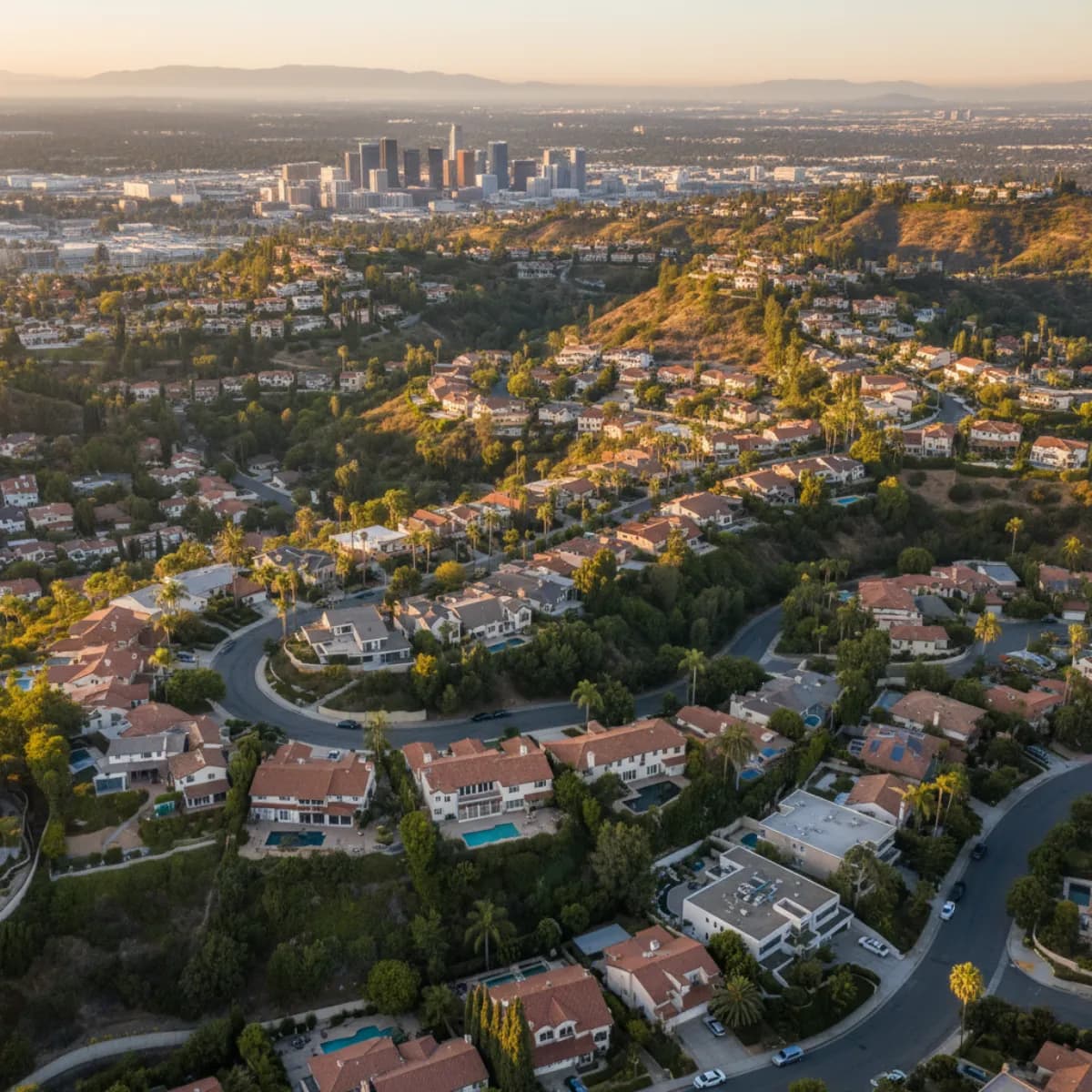
The Jewel City — Verdugo Mountains Foothills
Instant Roof Replacement Quotes in Glendale, CA
Nestled between the Verdugo Mountains and the San Fernando Valley, Glendale's 200,000 residents need roofing that handles WUI fire zones, earthquake risk from the Verdugo fault, and relentless Southern California heat. Get instant quotes from pre-vetted California contractors for hillside estates in Adams Hill, Spanish Revival homes in Montrose, and homes across every Glendale neighborhood.
Free Quotes
no obligations ever
Contractor Bids
standardized scope comparison
Until You Choose
no spam, no lead resale
CA Contractors
licensed, insured, reviewed
Glendale at a Glance
Population
3rd largest city in LA County
Summer Highs
Inland valley heat exposure
Acres Burned
La Tuna Fire, 2017
Permit Cost
Glendale Building & Safety
Fire Rating Required
All re-roofs, stricter in WUI zones
Title 24 Climate Zone
Cool roof SRI compliance
Why Glendale Roofing Requires Specialized Expertise
Glendale is the third-largest city in Los Angeles County, with roughly 200,000 residents spread across a uniquely varied landscape. The city stretches from the dense urban core along Brand Boulevard up into the rugged foothills of the Verdugo Mountains, creating two fundamentally different roofing environments within a single municipality. Flatland neighborhoods like Tropico, Pacific-Edison, and the Galleria area present standard Southern California roofing challenges — intense heat, UV exposure, and Title 24 compliance. But the hillside communities of Adams Hill, Glenoaks Canyon, Verdugo Woodlands, and upper Rossmoyne add wildfire risk, steep-grade access difficulties, and significantly stricter building code enforcement to the equation.
What makes Glendale truly distinctive is the intersection of fire risk, earthquake vulnerability, and cultural diversity that shapes roofing decisions. The Verdugo fault runs directly beneath the city, creating seismic demands that require careful material selection and structural reinforcement. Meanwhile, Glendale is home to one of the largest Armenian communities outside of Armenia, along with significant Middle Eastern populations whose architectural preferences often favor Mediterranean-style tile roofs, decorative parapets, and masonry elements that require specialized roofing integration. This cultural dimension adds a layer of aesthetic expectation that goes beyond standard Southern California roofing.
Unlike neighboring Los Angeles, Glendale operates its own Department of Building & Safety with a separate permitting system that is generally faster and more accessible than LA's notoriously complex LADBS process. However, Glendale's hillside ordinances are rigorous, and properties in fire zones face multiple layers of compliance. Homeowners who understand these local nuances — and work with contractors experienced in Glendale's specific requirements — save significant time and avoid costly compliance failures.
Roofing Challenges Unique to Glendale
! WUI Fire Zones & the Verdugo Mountains
Glendale's northern and eastern hillside neighborhoods sit directly against the Verdugo Mountains, placing them squarely in Wildland-Urban Interface (WUI) fire zones. The 2017 La Tuna Fire burned over 7,000 acres across the Verdugo Mountains, forcing evacuations in Glenoaks Canyon, Verdugo Woodlands, and La Crescenta-adjacent areas. The fire demonstrated how quickly flames move through the brush-covered hillsides that border residential neighborhoods, and it prompted stricter enforcement of Chapter 7A building codes throughout Glendale's hillside communities.
- - Class A fire rating mandatory for all WUI re-roofs
- - Ember-resistant vents (ASTM E2886) required
- - Fire-resistant underlayment in hillside zones
- - Non-combustible eave and fascia materials
= Earthquake Risk & the Verdugo Fault
The Verdugo fault runs directly beneath Glendale, and the nearby Raymond fault adds additional seismic exposure. A significant earthquake on either fault could generate strong ground motion throughout the city, with amplified shaking in the soft sediment of the valley floor. Heavy roofing materials like concrete and clay tile become dangerous projectiles when displaced by seismic forces. California Building Code Seismic Design Category D requires enhanced fastening for all tile installations, including seismic clips, mortar-set systems, and reinforced roof-to-wall connections.
- - Seismic clips mandatory for tile roofs
- - Lightweight composites reduce seismic load
- - Hurricane ties for roof-to-wall connections
- - Reinforced decking for heavy materials
~ Inland Heat & Santa Ana Winds
Glendale sits in a transition zone between the San Fernando Valley and the San Gabriel Valley, experiencing the extreme inland heat common to both. Summer temperatures routinely reach 95-105 degrees F, with heat waves pushing above 110 degrees F. Roof surface temperatures can exceed 160 degrees F, accelerating material degradation 20-30% faster than coastal areas. Santa Ana wind events drive hot, dry air through the Verdugo Mountain passes at 50-70 mph, creating both direct wind damage risk and elevated wildfire danger from ember transport.
- - Title 24 cool roof compliance (climate zone 9)
- - High SRI materials reduce cooling costs
- - Wind-rated installation (110+ mph) for hillsides
- - Enhanced fastening patterns for wind resistance
# Dense Urban Core & Older Housing Stock
Glendale's urban core along Brand Boulevard and the surrounding flatland neighborhoods contain a dense mix of residential buildings spanning nearly a century of construction. Many homes in the Tropico, Pacific-Edison, and Grandview areas date to the 1920s-1950s, with original roof structures that may need significant reinforcement before supporting modern materials. Multi-family buildings, common throughout central Glendale, present additional complexities including shared walls, limited staging areas, and HOA coordination requirements for roofing projects.
- - Structural assessment for older homes
- - Multi-family building coordination
- - Limited staging in dense neighborhoods
- - Code upgrades triggered by re-roofing
Glendale's Cultural Architecture & Roofing Preferences
Glendale is one of the most culturally diverse cities in the San Gabriel and San Fernando Valley corridors. The city is home to the largest Armenian diaspora community in the United States, with an estimated 40% of the population claiming Armenian heritage. This community, along with significant Middle Eastern populations, has deeply influenced the architectural character of Glendale's residential neighborhoods. Mediterranean-style homes with clay and concrete tile roofs, decorative parapet walls, and stone accents are pervasive throughout the city, reflecting aesthetic traditions rooted in the architecture of the Mediterranean basin, the Caucasus, and the Middle East.
For roofers working in Glendale, understanding these cultural preferences is not optional — it is essential to client satisfaction. Many homeowners request specific tile profiles, colors, and patterns that echo traditional Mediterranean or Armenian architectural styles. Barrel tile in warm earth tones, S-profile concrete tile, and decorative ridge treatments are among the most common requests. The preference for masonry-integrated roofing means contractors must be skilled in flashing around parapet walls, integrating tile with stucco facades, and maintaining the visual continuity that defines Glendale's residential streetscapes.
Beyond the Mediterranean influence, Glendale's historic Brand Boulevard corridor features early 20th-century commercial and residential buildings with flat and low-slope roofs. The Montrose and La Crescenta neighborhoods contain many 1920s-1950s ranch-style and Spanish Revival homes. Adams Hill and Rossmoyne showcase hillside estates from multiple architectural periods, from Tudor Revival to mid-century modern. This architectural diversity means no single roofing solution fits all of Glendale — each neighborhood demands contractors with broad material expertise and sensitivity to local design context.
Glendale Roof Replacement Cost by Material
Glendale roofing costs are comparable to the broader LA metro area, driven by California labor rates ($80-$115/hour), Glendale Building & Safety permit fees ($300-$700), Title 24 energy compliance, and fire zone requirements for hillside properties. Costs for hillside homes in Adams Hill, Glenoaks Canyon, and Verdugo Woodlands run 15-25% above flatland rates due to site access challenges and mandatory fire-rated assemblies.
Concrete Tile
#1: Concrete & Clay Tile
The dominant roofing material in Glendale, reflecting both the Mediterranean architectural tradition and Southern California's climate demands. Concrete tile provides Class A fire rating, natural thermal mass that reduces cooling loads, and a 50-75 year lifespan. Clay tile adds premium aesthetics with traditional barrel and S-profiles favored by Glendale's Armenian and Mediterranean-heritage homeowners. Both materials meet Title 24 cool roof requirements naturally. Seismic clips are mandatory in Glendale due to the Verdugo fault, adding to installation cost but providing critical earthquake protection.
Best For:
Mediterranean, Spanish Revival homes
Lifespan:
50-75 years
Cost Range:
$30,000 - $65,000
Fire Rating:
Class A (non-combustible)
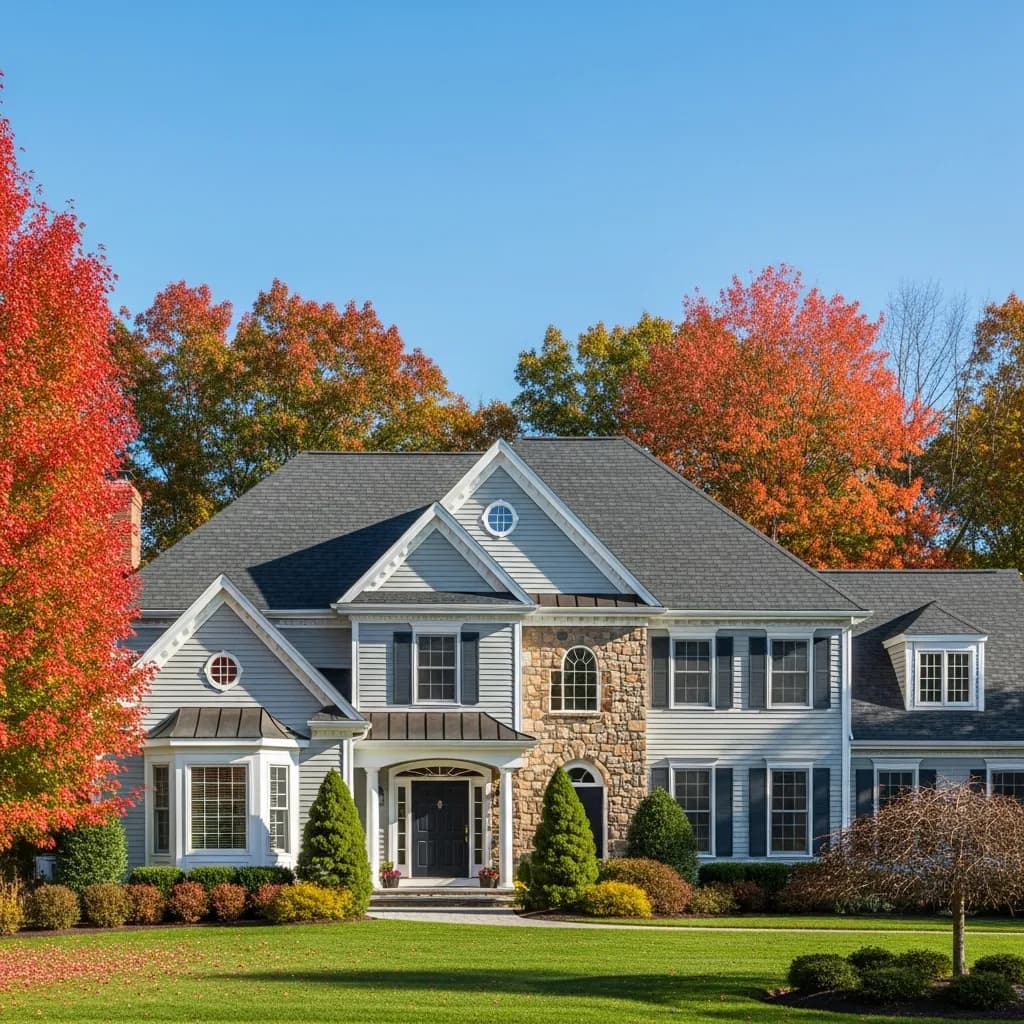
#2: Cool-Rated Architectural Shingles
The most affordable roofing option for Glendale homeowners. Title 24 requires cool-rated shingles in Glendale's climate zone 9, featuring reflective granules that exceed minimum SRI values. Architectural shingles are the standard choice for budget-conscious homeowners and for homes where tile is not architecturally appropriate, particularly mid-century ranch homes in the flatland neighborhoods and multi-family buildings throughout central Glendale. With proper cool-rated selection and 110+ mph wind-rated installation, architectural shingles provide reliable 20-30 year performance in Glendale's demanding climate.
Best For:
Budget-conscious, ranch-style homes
Lifespan:
20-30 years (Glendale climate)
Cost Range:
$16,000 - $32,000
Requirement:
Must be Title 24 cool-rated
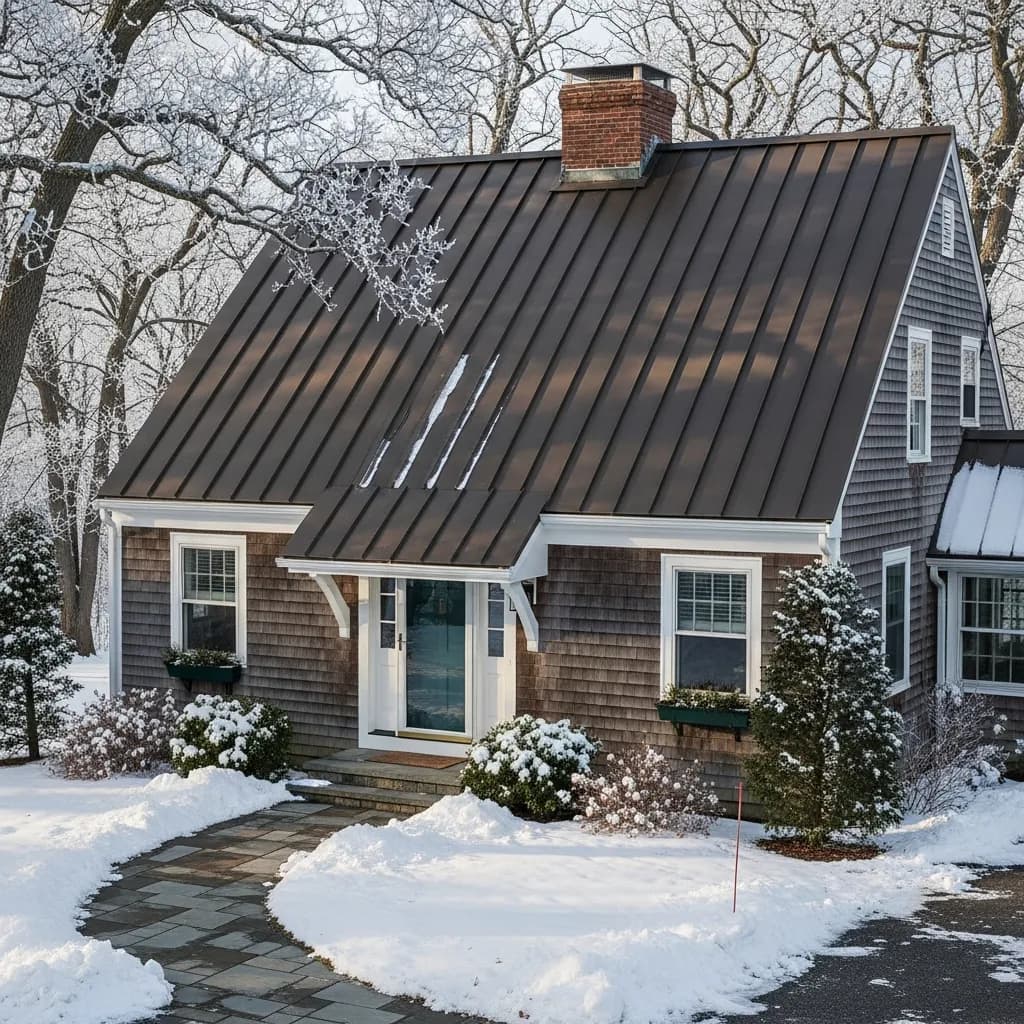
#3: Standing Seam Metal
Increasingly popular in Glendale for its superior heat reflection, Class A fire resistance, lightweight profile (reducing seismic load), and compatibility with solar panel installations. Standing seam metal with cool-roof coatings can reflect up to 70% of solar energy, dramatically reducing cooling costs during Glendale's intense summers. The concealed fastener system provides excellent wind resistance for hillside properties exposed to Santa Ana gusts. Metal is the preferred choice for modern and contemporary homes in Adams Hill and for commercial buildings along Brand Boulevard.
Best For:
Modern homes, solar-ready, hillsides
Lifespan:
40-70 years
Cost Range:
$24,000 - $50,000
Energy Savings:
10-25% cooling reduction
Composite Slate
#4: Composite Slate & Synthetic Tile
An excellent option for Glendale homeowners who want the aesthetic of natural slate or traditional tile with dramatically reduced weight — a critical advantage given the city's earthquake risk. Composite slate products weigh 60-75% less than natural stone, reducing seismic load on the roof structure while maintaining the premium appearance. Class A fire rating is standard, and the 50+ year lifespan eliminates the maintenance headaches of natural materials. Particularly well suited for older homes in Rossmoyne, Sparr Heights, and the Brand Boulevard corridor where structural reinforcement for heavy natural materials would be prohibitively expensive.
Best For:
Earthquake zones, older structures
Lifespan:
50+ years
Cost Range:
$28,000 - $52,000
Weight:
60-75% lighter than natural stone
Glendale Average Roof Cost: Architectural shingles $16,000-$32,000. Concrete/clay tile $30,000-$65,000. Metal $24,000-$50,000. Composite slate $28,000-$52,000. Hillside properties in WUI fire zones add 15-25% for fire-rated assemblies and site access. Get your exact price with a free instant estimate.
Glendale Building Requirements & Codes
Important Local Regulations
Glendale Building Permits (Separate from LA)
Glendale is an incorporated city with its own Department of Building & Safety — permits are NOT handled through the City of Los Angeles or LA County. All roof replacements require a Glendale building permit. Fees range from $300-$700 depending on project scope. Standard processing takes 1-3 weeks, which is generally faster than LA's LADBS system. Permit applications can be submitted at Glendale City Hall. Multiple inspections are mandatory including roof deck inspection and final sign-off.
Hillside Development Ordinance
Properties in Glendale's hillside zones are subject to the city's Hillside Development Ordinance, which imposes additional review requirements for exterior modifications. Re-roofing in these areas requires fire compliance documentation, evidence of defensible space maintenance, and in some cases, a geotechnical evaluation for structural adequacy. Hillside permits may require additional processing time and involve consultation between Building & Safety and the Fire Department.
Title 24 Energy Standards (Climate Zone 9)
Glendale falls in California Title 24 climate zone 9. All steep-slope roofing must meet minimum Solar Reflectance Index (SRI) values. Cool-rated materials are required for both new construction and re-roofs. Low-slope (flat) roofs have stricter SRI requirements. Non-compliant materials will fail final inspection. This particularly affects homes in the flatland neighborhoods where asphalt shingles are common — only cool-rated varieties are permitted.
WUI Fire Zone Compliance
Properties in Glendale's designated WUI zones must comply with California Building Code Chapter 7A. Requirements include Class A fire-rated roof assemblies, ember-resistant vents (ASTM E2886), fire-resistant underlayment, non-combustible eave and fascia materials, and maintained defensible space. The Glendale Fire Department enforces WUI compliance during both permitting and annual inspections of hillside properties.
Seismic Fastening Requirements
Due to the Verdugo fault, all tile roof installations in Glendale must include seismic clips and enhanced fastening per California Building Code Seismic Design Category D. This applies to concrete tile, clay tile, and natural slate. Mortar-set tile systems are restricted in favor of mechanically fastened systems with individual tile clips. Roof-to-wall connections must include approved hurricane ties. These seismic requirements add $2,000-$5,000 to tile installation costs but provide critical earthquake protection.
California C-39 Contractor Licensing
All roofing contractors must hold a valid C-39 Roofing Contractor License from the Contractors State License Board (CSLB). Verify at cslb.ca.gov. Licensed contractors carry workers' compensation insurance and a minimum $25,000 contractor bond. Glendale's hillside properties and diverse architectural styles warrant additional verification of contractor experience with fire zone compliance and culturally appropriate material installation.
Glendale Neighborhoods We Serve
From the bustling Brand Boulevard corridor to the secluded hillside estates of Verdugo Woodlands, our pre-vetted contractors serve every Glendale neighborhood and surrounding community. Each area has distinct roofing requirements based on its terrain, fire zone designation, architectural character, and building age.
Adams Hill
- - WUI fire zone hillside properties
- - Mixed architectural periods
- - Steep grades and limited access
- - Class A fire-rated assemblies required
- - Panoramic views (aesthetic sensitivity)
Montrose
- - 1920s-1950s residential character
- - Spanish Revival and ranch homes
- - Montrose Shopping Park district
- - Tile and shingle mix
- - Community-conscious aesthetics
Glenoaks Canyon
- - High WUI fire risk (La Tuna Fire area)
- - Verdugo Mountains boundary
- - Full Chapter 7A compliance required
- - Limited staging and vehicle access
- - Ember exposure from brush fires
Verdugo Woodlands
- - Upscale hillside neighborhood
- - WUI fire zone designation
- - Large custom homes
- - Mature tree canopy (debris risk)
- - Premium materials expected
Rossmoyne
- - Historic residential neighborhood
- - 1920s-1940s period homes
- - Mediterranean and Tudor Revival styles
- - Tile roofs predominant
- - Strong neighborhood character
Sparr Heights
- - Transitional hillside/flatland
- - Mixed 1940s-1970s housing
- - Some WUI zone overlap
- - Older structures may need reinforcement
- - Standard city permitting
Kenneth Village
- - Walkable residential neighborhood
- - 1930s-1950s bungalows and cottages
- - Small-lot properties
- - Charming commercial corridor
- - Standard flatland permitting
La Crescenta
- - Unincorporated LA County area
- - Separate permitting (LA County DPW)
- - Foothill fire zone exposure
- - Ranch and custom hillside homes
- - Adjacent to Angeles National Forest
Tropico & Pacific-Edison
- - Dense flatland neighborhoods
- - Older housing stock (1920s-1960s)
- - Multi-family buildings common
- - Standard fire zone (not WUI)
- - Adjacent to Burbank border
Insurance Considerations for Glendale Homeowners
Wildfire Risk & Insurance: Hillside vs. Flatland
Insurance availability in Glendale is sharply divided between the city's two distinct geographies. Flatland neighborhoods in central and southern Glendale — along Brand Boulevard, in Tropico, Pacific-Edison, and the Galleria area — enjoy standard insurance rates comparable to other urban LA County communities. However, hillside properties in Adams Hill, Glenoaks Canyon, Verdugo Woodlands, upper Rossmoyne, and Sparr Heights face the full weight of California's wildfire insurance crisis.
Hillside Challenges
- - Major insurers restricting hillside coverage
- - FAIR Plan as insurer of last resort for WUI properties
- - Premiums 40-80% higher in hillside vs. flatland
- - La Tuna Fire history impacts underwriting
- - Annual defensible space inspections required
How Your Roof Can Help
- - Class A fire-rated roofing improves insurability
- - Ember-resistant upgrades may reduce premiums
- - Non-combustible materials (tile, metal) preferred
- - Defensible space compliance improves coverage
- - Document all fire-resistant upgrades for applications
Our pre-vetted contractors understand Glendale's insurance landscape and can recommend materials and installations that maximize your insurability. For hillside properties, investing in premium fire-resistant roofing often pays for itself through improved insurance access and reduced premiums.
Adjacent Communities & Permitting Notes
Glendale borders several cities and unincorporated areas, each with its own permitting authority. Understanding which jurisdiction your property falls under is critical before beginning any roofing project.
Burbank (West)
Separate incorporated city with its own Building Division. Different permit fees and processing times. Media district commercial properties have specific requirements.
La Cañada Flintridge (North)
Affluent foothill community with its own building department. High WUI fire zone coverage. Premium materials standard. Separate permitting from both Glendale and LA County.
Pasadena (East)
Own Building & Safety department. Historic preservation overlay zones add review layers. Design Review required in landmark districts. Separate permitting from Glendale.
Eagle Rock / Los Angeles (South)
Part of the City of Los Angeles. Permits through LADBS (LA Department of Building and Safety). Longer processing times. Different fee structure from Glendale.
Frequently Asked Questions About Glendale Roofing
How much does a roof replacement cost in Glendale, CA?
Roof replacement in Glendale typically costs $16,000-$32,000 for cool-rated architectural shingles on a standard home. Concrete and clay tile — the most popular material in Glendale due to the city's Mediterranean architectural character — ranges from $30,000 to $65,000. Standing seam metal runs $24,000-$50,000. Composite slate and synthetic tile cost $28,000-$52,000. Glendale's costs are driven by California labor rates ($80-$115/hour), Glendale Building & Safety permit fees ($300-$700, which is separate from LA's LADBS system), Title 24 energy compliance for climate zone 9, and WUI fire zone requirements for hillside properties. Homes in Adams Hill, Glenoaks Canyon, and Verdugo Woodlands can add 15-25% to standard costs due to mandatory fire-rated assemblies, steep-grade site access challenges, and limited staging areas on hillside lots.
What are the WUI fire zone roofing requirements in Glendale?
Glendale's hillside neighborhoods along the Verdugo Mountains — including Glenoaks Canyon, Verdugo Woodlands, Adams Hill, and upper Sparr Heights — fall within Wildland-Urban Interface (WUI) fire zones designated by CAL FIRE. The 2017 La Tuna Fire burned over 7,000 acres across the Verdugo Mountains and forced evacuations in multiple Glendale neighborhoods, demonstrating the severe and immediate risk these properties face. All re-roofs in WUI zones must be Class A fire-rated assemblies, the highest fire resistance classification. Additional requirements under California Building Code Chapter 7A include ember-resistant vents meeting ASTM E2886, fire-resistant underlayment compliant with ASTM E108, non-combustible eave and fascia materials, and maintained 100-foot defensible space clearance. The Glendale Fire Department enforces WUI compliance during both the permitting process and through annual inspections of hillside properties. Non-compliance can affect insurance eligibility and property sale readiness.
Does Glendale have its own building permits for roofing?
Yes, Glendale is an incorporated city with its own Department of Building & Safety, completely separate from the City of Los Angeles LADBS and LA County permitting systems. All roof replacements require a Glendale building permit. Fees range from $300 to $700 depending on project scope and property size. Standard re-roof permits are typically processed within 1-3 weeks, which is generally faster than LA's more complex LADBS system. Permit applications are submitted at Glendale City Hall. Multiple inspections are required including roof deck review and final sign-off. Properties in hillside zones require additional fire compliance documentation and may involve consultation between Building & Safety and the Glendale Fire Department. Important note for homeowners near city boundaries: La Crescenta is unincorporated LA County (permits through LA County DPW), Burbank has its own Building Division, and La Cañada Flintridge has a separate building department. Verify your jurisdiction before applying.
What roofing materials are best for Glendale's climate?
Glendale's inland valley position creates extreme thermal demands: summer temperatures regularly reach 95-105 degrees F, with occasional heat waves exceeding 110 degrees F. Roof surface temperatures can surpass 160 degrees F, accelerating material degradation 20-30% faster than coastal areas. Concrete and clay tile are the most popular choice in Glendale, providing natural thermal mass that reduces cooling loads, Class A fire rating, and a 50-75 year lifespan — they also align with the Mediterranean architectural preferences of Glendale's culturally diverse population. Cool-rated architectural shingles offer the most affordable Title 24 compliance for climate zone 9. Standing seam metal provides the best heat reflection and the lightest weight, making it ideal for earthquake-prone hillside properties. Composite slate and synthetic tile offer the premium look of natural materials at 60-75% less weight, a critical advantage given the Verdugo fault. All steep-slope materials must meet California Title 24 SRI values for zone 9. Hillside homes must additionally select materials with Class A fire ratings regardless of material type.
How does earthquake risk affect roofing choices in Glendale?
Glendale sits directly above the Verdugo fault and in proximity to the Raymond fault, placing the entire city in a high seismic hazard zone. Earthquakes create unique roofing challenges: heavy concrete and clay tile roofs, which are popular throughout Glendale for their Mediterranean aesthetics, can become dangerous when seismic forces displace unsecured tiles. California Building Code Seismic Design Category D — which covers all of Glendale — requires seismic clips and enhanced mechanical fastening for tile roofs. Mortar-only tile attachment is no longer code-compliant. Each tile must be individually clipped to battens or directly fastened to the roof deck. These seismic fastening requirements add approximately $2,000-$5,000 to a standard tile installation. For homeowners concerned about seismic safety, lightweight alternatives like composite slate (60-75% lighter than natural materials), architectural shingles, and standing seam metal dramatically reduce the seismic load on the roof structure. Roof replacement is also the ideal time to inspect and upgrade roof-to-wall connections with hurricane ties and to reinforce cripple wall bracing — structural improvements that prevent catastrophic roof separation during strong earthquakes.
What insurance challenges do Glendale hillside homeowners face?
Insurance availability in Glendale is sharply divided by geography. Flatland neighborhoods in central and southern Glendale — along Brand Boulevard, in Tropico, Pacific-Edison, and the Galleria area — enjoy standard insurance access and rates comparable to other urban LA County communities. However, hillside properties in Adams Hill, Glenoaks Canyon, Verdugo Woodlands, upper Rossmoyne, and Sparr Heights face the full weight of California's wildfire insurance crisis. Several major insurers have restricted new policy issuance in California fire zones. Hillside homeowners may see premiums 40-80% higher than flatland properties of comparable value, and some may be limited to California's FAIR Plan (the state-backed insurer of last resort) or surplus lines carriers. The La Tuna Fire history specifically impacts underwriting for Verdugo Mountains-adjacent properties. Installing Class A fire-rated roofing, ember-resistant vents, and non-combustible materials meaningfully improves both insurability and premium rates. Document every fire-resistant upgrade with manufacturer specifications and installation photographs for insurance applications.
How long does a roof replacement take in Glendale?
Most Glendale roof replacements take 3-5 days for architectural shingles and 5-10 days for concrete tile or standing seam metal. Glendale's year-round mild weather allows roofing work in every season, with brief delays only during rare rain events. Hillside properties in Adams Hill, Glenoaks Canyon, and Verdugo Woodlands may require additional time due to several factors: steep driveway grades that limit delivery truck access, narrow roads that restrict equipment staging, and additional inspection requirements for WUI fire zone compliance. Multi-family buildings in central Glendale may also take longer due to shared-wall coordination and HOA approval processes. Permit processing through Glendale Building & Safety adds 1-3 weeks before work begins, with hillside properties potentially taking longer if fire compliance documentation is required. Overall project timelines from permit application to final inspection typically run 4-8 weeks for standard homes and 6-12 weeks for hillside properties with full WUI compliance.
Are there architectural style requirements for roofing in Glendale?
While Glendale does not have formal historic preservation overlay districts like neighboring Pasadena, the city's rich architectural heritage and culturally diverse population create strong informal expectations for roofing aesthetics. Glendale's Armenian and Middle Eastern communities — comprising roughly 40% of the population — have deeply influenced the city's residential architecture, favoring Mediterranean-style homes with clay and concrete tile roofs, decorative parapets, and masonry accents. The Montrose and La Crescenta neighborhoods feature many 1920s-1950s Spanish Revival homes where tile roofs are both historically appropriate and community-expected. Adams Hill and Rossmoyne showcase period hillside estates where material choice must respect the neighborhood's established visual character. HOA restrictions in planned developments and condominium complexes throughout Glendale enforce specific material and color standards. The Glendale Community Development Department reviews exterior modifications in specific overlay zones and may require design review for properties in designated areas. While this is less restrictive than Pasadena's landmark district process, homeowners should verify any overlay zone designations before finalizing material selections.
California Roofing Resources
California State Overview
All California roofing resources and city pages
WUI Zone Roofing Requirements
Fire zone compliance guide for California homeowners
Earthquake & Seismic Roofing Guide
Seismic resilience for California roofs
California Roof Replacement Cost Guide
Detailed pricing for all CA regions and materials
Best Roofing Materials for California
Climate-specific material recommendations
Title 24 Cool Roof Guide
Energy efficiency requirements for California re-roofs
FAIR Plan Insurance & Roofing
Insurance options for high-risk California properties
California Contractor Licensing
C-39 license requirements and CSLB verification
Get Your Glendale Roof Quote in Minutes
Enter your address to compare instant quotes from pre-vetted California contractors who specialize in WUI fire zone compliance, earthquake-ready installations, and Glendale's diverse architectural styles