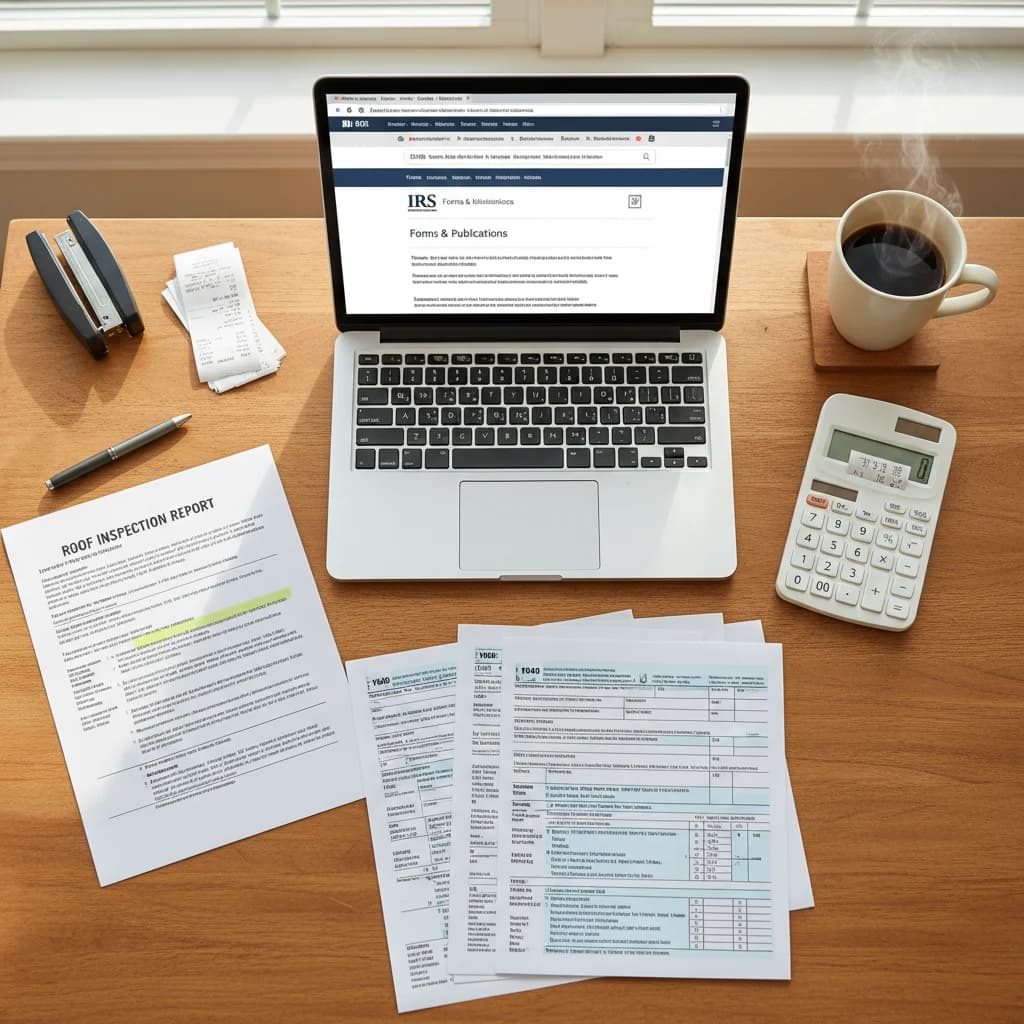
What Expired on December 31, 2025
Two major federal tax credits that impacted roofing projects reached their expiration at the end of 2025. Understanding what each covered helps clarify what you can no longer claim and where alternatives may exist.
Energy Efficient Home Improvement Credit (Section 25C)
ExpiredSection 25C was the primary federal tax credit for energy-efficient roofing. Originally part of the Inflation Reduction Act of 2022, it provided homeowners with a 30% credit on the cost of qualifying energy-efficient roofing materials, up to a maximum of $2,500 per year for roofing components specifically.
The credit applied only to the cost of materials, not labor. To qualify, the roofing product needed to meet ENERGY STAR certification standards or specific Department of Energy reflectance and emittance requirements. Homeowners claimed the credit by filing IRS Form 5695 with their federal tax return.
What It Covered
- ●ENERGY STAR-certified asphalt shingles
- ●Metal roofing with pigmented coatings meeting reflectance standards
- ●Cool roof products meeting DOE energy-efficiency standards
- ●Materials cost only (not installation labor)
Typical Savings
- ●$1,200-$2,500 per qualifying project
- ●30% of qualifying material costs
- ●$2,500/year cap for roofing specifically
- ●Could be combined with other 25C home improvement items (up to $3,200 total)
Residential Clean Energy Credit (Section 25D) — Roofing Component
Partially Expired for Non-Solar RoofingSection 25D covered residential clean energy systems. While the solar energy portion remains active through 2032 (more on this below), the credit no longer applies to non-solar roofing components that were bundled with clean energy installations. Previously, some homeowners were able to include a portion of roofing costs when they were structurally necessary for solar panel installation. The IRS has since clarified that only the solar energy equipment itself qualifies under 25D.
The distinction matters: solar shingles and solar tiles that generate electricity are still eligible for the 30% credit. Standard roofing materials beneath traditional rack-mounted solar panels are not. This is a common source of confusion, and getting it wrong can trigger an IRS audit adjustment.
Together, these credits saved American homeowners an estimated $1.8 billion annually on energy-efficient home improvements. The roofing industry had seen a measurable uptick in energy-efficient material adoption during the 2023-2025 period when the credits were most widely used. With their expiration, homeowners planning 2026 roof replacements need to recalibrate their budgets and explore alternative savings strategies.
Can I Still Claim Credits for 2025 Work?
Yes. If you had a qualifying energy-efficient roof installed and paid for on or before December 31, 2025, you are entitled to claim the Section 25C credit on your 2025 federal tax return. The credit is based on the tax year when the work was completed and paid for, not when you file your return.
This is an important point that many homeowners miss: the credit's expiration means no new installations in 2026 qualify. But claiming the credit for work already done in 2025 is a completely separate action with its own timeline. You have until your 2025 return filing deadline to claim it.
How to Claim the 2025 Roofing Tax Credit
Gather Documentation
Collect your contractor invoice, manufacturer's certification statement (confirming the product meets ENERGY STAR or DOE energy-efficiency requirements), and proof of payment dated on or before December 31, 2025. The manufacturer's certification is critical — it is the document the IRS specifically looks for during audits.
Complete IRS Form 5695
Fill out Part II of Form 5695 (Residential Energy Credits). Report the cost of qualifying roofing materials only on Line 12 (labor costs are not eligible). The form calculates 30% of your qualifying costs, subject to the $2,500 roofing cap. If you also made other qualifying 25C improvements (insulation, windows, doors), those are reported on separate lines with their own sub-caps.
Attach to Your 2025 Tax Return
Include the completed Form 5695 with your 2025 federal return (Form 1040). The credit amount transfers to Schedule 3, Line 5. Keep all receipts, the manufacturer's certification, and your copy of Form 5695 for at least three years in case of audit. If you use tax software like TurboTax or H&R Block, the form is built into the interview flow under “Energy Credits.”
Important Deadlines
Your 2025 tax return is due April 15, 2026. If you file an extension, you have until October 15, 2026. Do not confuse this with the credit expiration date (December 31, 2025) — the credit expired for new installations, but claiming the credit for 2025 work is a separate timeline tied to your tax filing schedule.
One common mistake: homeowners who signed a contract in 2025 but whose roof was not actually installed until January 2026. The IRS requires both installation and payment to be completed in the tax year you claim the credit. If your roof was not physically installed by December 31, 2025, you cannot claim the credit on your 2025 return, and the credit is no longer available for 2026 installations.
Similarly, if you made a deposit in 2025 but did not complete final payment until 2026, you may have difficulty claiming the full credit. The IRS position is that the credit applies in the year the property is “placed in service” — meaning fully installed and functional.
If you are unsure whether your materials qualify, check the ENERGY STAR federal tax credit guide or consult a tax professional. The manufacturer's certification statement is the definitive document the IRS accepts as proof of qualification.
What's Still Available in 2026: State-by-State Incentives
While the federal credit is gone, several states where RoofVista operates maintain active incentive programs for energy-efficient roofing and home improvements. These programs vary significantly in structure — some are direct rebates, others are low-interest financing, and a few offer property tax exemptions for qualifying upgrades. None fully replace the federal 25C credit, but they can meaningfully reduce costs.
Massachusetts
Active IncentivesMassSave Rebates: Massachusetts' MassSave program continues to offer rebates for energy-efficient home improvements, including cool roof products and insulation upgrades that pair with roof replacement. Rebates range from $500 to $2,000 depending on the scope of work and the energy efficiency gains documented through a home energy assessment. The program is funded by utility ratepayers, so it does not depend on federal appropriations.
Mass Clean Energy Center: Additional incentives are available for homes that combine roof replacement with solar installation. The state's SMART (Solar Massachusetts Renewable Target) program provides ongoing monthly payments for solar generation, which can offset the cost of a new roof when projects are bundled. Income-qualifying households may receive enhanced rebates through the Affordable Access program.
Related: Massachusetts Roofing Costs 2026
Connecticut
Active IncentivesEnergize Connecticut: The Energize CT program offers rebates and financing for energy-efficient home improvements. Their Home Energy Solutions assessment (typically $50 for income-qualifying households, $124 for others) can identify roof-related energy losses and unlock rebates of up to $1,500 for insulation and air sealing improvements performed during a roof replacement.
CT Green Bank: Low-interest financing through the Connecticut Green Bank's Smart-E Loan program covers energy-efficient roofing materials at rates as low as 4.49% APR with terms up to 20 years. This applies to cool roofs, metal roofing with reflective coatings, and roof-integrated solar. The program has funded over $400 million in clean energy projects since inception.
Related: Connecticut Roofing Costs 2026
Pennsylvania
Active IncentivesPennsylvania Home Energy Program: PA's state energy programs continue to support energy-efficient home upgrades. While not a direct roofing rebate, the program funds weatherization improvements that often coincide with roof replacement, including attic insulation (rebates up to $1,000) and ventilation upgrades. The Weatherization Assistance Program serves income-eligible households at no cost.
PACE Financing: Several Pennsylvania municipalities participate in Property Assessed Clean Energy (PACE) financing, which allows homeowners to finance energy-efficient roofing through their property tax assessment. This spreads the cost over 15-20 years with no money down, and the obligation transfers with the property if sold.
Related: Pennsylvania Roofing Costs 2026
Texas
Utility Rebates OnlyTexas does not offer state-level tax credits or rebates for energy-efficient roofing. However, several major utility companies provide their own incentive programs that can offset costs:
- ●Oncor: Offers rebates up to $800 for cool roof installations in their service territory (Dallas-Fort Worth area)
- ●CenterPoint Energy: Houston-area rebates for reflective roofing that reduces cooling loads
- ●Austin Energy: Up to $1,200 in rebates for qualifying cool roof products in Travis County
Texas homeowners benefit most from impact-resistant roofing discounts on homeowners insurance. Texas law requires insurers to offer discounts for Class 3 and Class 4 impact-rated roofing, which can reduce annual premiums by 10-35% depending on the carrier.
Related: Texas Roofing Costs 2026
New York
NYSERDA offers rebates through the EmPower and Assisted Home Performance programs for income-qualifying homeowners. The NY-Sun initiative provides additional solar integration incentives. New York also exempts solar energy systems from property tax increases for 15 years.
New Jersey
NJ Clean Energy Program provides Home Performance with ENERGY STAR incentives. Rebates up to $4,000 for comprehensive energy improvements that include roofing. New Jersey also offers sales tax exemptions on ENERGY STAR-certified building materials.
Rhode Island
Rhode Island Energy offers Home Energy Assessment programs and the Rhode Island Infrastructure Bank provides low-interest financing for energy-efficient building improvements including roofing upgrades and insulation.
New Hampshire, Vermont & Maine
NH's NHSaves program, Vermont's Efficiency Vermont, and Efficiency Maine Trust each offer weatherization rebates that can offset costs when combined with roof replacement projects. These programs typically cover insulation and air sealing work performed during reroofing.
Solar Roofing Still Has Federal Credits
While standard roofing materials lost their federal credit, there is an important exception that many homeowners overlook: solar roofing products that generate electricity remain eligible for the 30% Residential Clean Energy Credit (Section 25D) through 2032.
This distinction is based on the product's primary function. If the roofing material itself produces electricity — such as solar shingles (Tesla Solar Roof, GAF Energy Timberline Solar, CertainTeed Apollo II) or building-integrated photovoltaic (BIPV) tiles — the entire cost of those materials, including installation labor, qualifies for the 30% credit. Unlike the expired 25C credit, the 25D solar credit covers both materials and labor, and has no annual dollar cap.
Solar Roofing Credit Breakdown
Qualifies for 30% Credit
- ✓Solar shingles (e.g., Tesla Solar Roof)
- ✓BIPV solar tiles that replace standard roofing
- ✓Rack-mounted solar panels on any roof type
- ✓Solar installation labor costs
- ✓Associated electrical work, permits, and inverters
Does NOT Qualify
- ✗Standard asphalt shingles (even ENERGY STAR)
- ✗Metal roofing without solar generation
- ✗Roof structure beneath rack-mounted panels
- ✗Cool roof coatings (reflective only, no power generation)
- ✗Standard roof repair or replacement labor
Example: Solar Roof Tax Credit Calculation
Note: The 25D credit has no annual cap, unlike the expired 25C roofing credit. The credit can also be carried forward to future tax years if your tax liability is insufficient to use it in one year.
The solar credit timeline is important to understand. The 30% rate applies through 2032, then steps down to 26% in 2033 and 22% in 2034. After 2034, the residential credit expires entirely (unless Congress extends it). If solar roofing is on your radar, the next six years offer the maximum federal benefit.
One strategic consideration: if you need both a new roof and are interested in solar, doing both projects together can be more cost-effective than sequencing them. A combined project avoids double labor charges, and the solar portion brings the federal credit that standard roofing no longer provides.
For more on combining solar with traditional roof replacement, see our Solar Panel Roofing Integration Guide.
Will Congress Extend the Credits?
As of March 2026, there is no active legislation that would reinstate the Section 25C energy-efficient roofing credit. Here is what we know about the current legislative landscape and what industry watchers are tracking:
What Has Been Proposed
- ●The Energy Efficiency Incentive Act was introduced in the Senate in January 2026, which would extend 25C through 2028, but it has not advanced beyond committee introduction
- ●Several bipartisan housing bills include energy-efficiency provisions, but none specifically restore the roofing credit at the 25C levels
- ●Industry groups including ARMA (Asphalt Roofing Manufacturers Association) and the Metal Roofing Alliance are actively lobbying for reinstatement, citing the credit's role in driving energy-efficient material adoption
What to Watch For
- ●Any broader tax reform package in 2026-2027 could include energy credits as part of a larger deal — this is historically how expired credits get renewed in Congress
- ●The 2026 midterm elections could shift congressional priorities on energy policy, potentially creating a window for energy legislation in 2027
- ●If reinstated, credits are sometimes made retroactive — but do not plan your roofing budget around a speculative extension. Congress has failed to renew many expired energy provisions in recent years
Our Recommendation
Do not delay a necessary roof replacement waiting for Congress to act. If your roof needs attention in 2026, the cost of water damage, energy loss, and structural deterioration from waiting will far exceed any potential future credit. A leaking roof causes an average of $7,000-$12,000 in interior damage before homeowners act. Plan your budget based on current incentives and focus on the savings strategies below.
How to Maximize Savings Without Tax Credits
The loss of the federal credit does not mean there are no ways to reduce your roofing costs. In fact, several strategies can save you significantly more than the $1,500-$2,500 the federal credit provided. The key is being strategic about timing, materials, and how you source quotes.
Schedule During Off-Season
Roofing contractors are least busy from late October through early March in most markets. Off-season pricing is typically 10-20% lower than summer peak season quotes because contractors need work to keep crews employed. In states like Texas, the best window is mid-winter when demand drops significantly. In New England, early spring (March-April) offers the sweet spot of manageable weather and lower demand. On a $15,000 project, off-season timing alone can save $1,500-$3,000.
Choose Materials Strategically
Without a tax credit steering homeowners toward premium energy-efficient products, you have more flexibility to choose based on value. Architectural asphalt shingles offer the best balance of durability, appearance, and cost in most climates. If longevity is the priority, metal roofing's 50+ year lifespan means a lower cost per year despite higher upfront pricing. See our material selection guide for a detailed comparison.
Compare Multiple Quotes
The single biggest lever homeowners have is comparing standardized quotes from multiple contractors. Price variation between contractors for the same scope of work averages 25-40% in most markets. Using a marketplace that provides side-by-side quote comparison ensures you see the full range of pricing without spending weeks collecting individual bids. The savings from comparison shopping almost always exceed what the federal credit provided. Our guide to comparing roofing quotes covers what to look for.
Leverage Insurance Discounts
Many homeowners insurance carriers offer premium discounts of 5-15% for impact-resistant roofing materials (Class 3 or Class 4 rated). In hail-prone states like Texas, these annual savings compound over the life of the roof. An impact-resistant upgrade typically costs $500-$1,500 more but can save $200-$600 per year on premiums. Over a 20-year roof life, that is $4,000-$12,000 in insurance savings — far more than the expired tax credit ever provided in a single year.
Savings Comparison: Tax Credit vs. Smart Strategies
| Strategy | Typical Savings | Availability |
|---|---|---|
| Federal 25C Tax Credit | $1,500-$2,500 | EXPIRED |
| Off-season scheduling | $1,500-$3,000 | Available now |
| Comparing 3+ quotes | $2,000-$5,000 | Available now |
| Insurance premium discounts (impact-resistant) | $4,000-$12,000* | Available now |
| State rebate programs | $500-$2,000 | Varies by state |
* Insurance savings calculated over 20-year roof lifespan. Actual amounts vary by carrier and location.
The bottom line: homeowners who apply these strategies can typically save $8,000-$22,000 over the life of their roof — significantly more than the $2,500 maximum the expired federal credit provided in any single year. The federal credit was helpful, but it was never the primary driver of roofing affordability. Smart comparison shopping and strategic timing always mattered more.
For detailed pricing in your area, see our regional cost guides:
Frequently Asked Questions
Did the roofing tax credit expire in 2026?
Can I still claim a tax credit for a roof installed in 2025?
What is IRS Form 5695 and how do I use it for roofing?
Does solar roofing still qualify for a federal tax credit in 2026?
Are there any state tax credits for roofing in 2026?
Will Congress bring back the roofing tax credit?
How much did the 25C roofing tax credit save homeowners?
What roofing materials qualified for the 25C credit before it expired?
Related Reading
More guides to help you plan your roof replacement budget.

Roof Financing Guide 2026
Loans, payment plans, and financing options for your roof replacement.

How to Compare Roofing Quotes
What to look for when comparing contractor estimates side by side.

Roofing Insurance Claims Guide
Navigate the insurance process and maximize your coverage for roof damage.